


18 February 2026, Aleppo, Syrian Arab Republic – On a cold January morning, Dr Dima Jaabar listened carefully to the uneven breathing of two young boys brought into the Rajo health centre in the rural countryside of Afrin district, north of Aleppo, within days of each other. Both were struggling to breathe. Both needed urgent care. Both are now recovering.
 Dr Dima Jaabar examines Mohammad Ghazi at the Rajo health centre, where he received treatment and follow-up care for acute chest inflammation and breathing difficulties. Photo credit: WHO
Mohammad Ghazi was carried in by his family after developing acute chest inflammation and difficulty breathing caused by smoke inside the home. “He was gasping and could not sleep at night,” his father recalled. “We were afraid it would get worse.”
At the health centre, Dr Jaabar and her team quickly assessed him, provided treatment and scheduled close follow-up. Within days, Mohammad’s breathing began to stabilize.
“During winter, many families rely on indoor heating methods that expose children to heavy smoke,” said Dr Jaabar. “By the time they arrive, they are exhausted from coughing and shortness of breath. Timely treatment makes all the difference.”
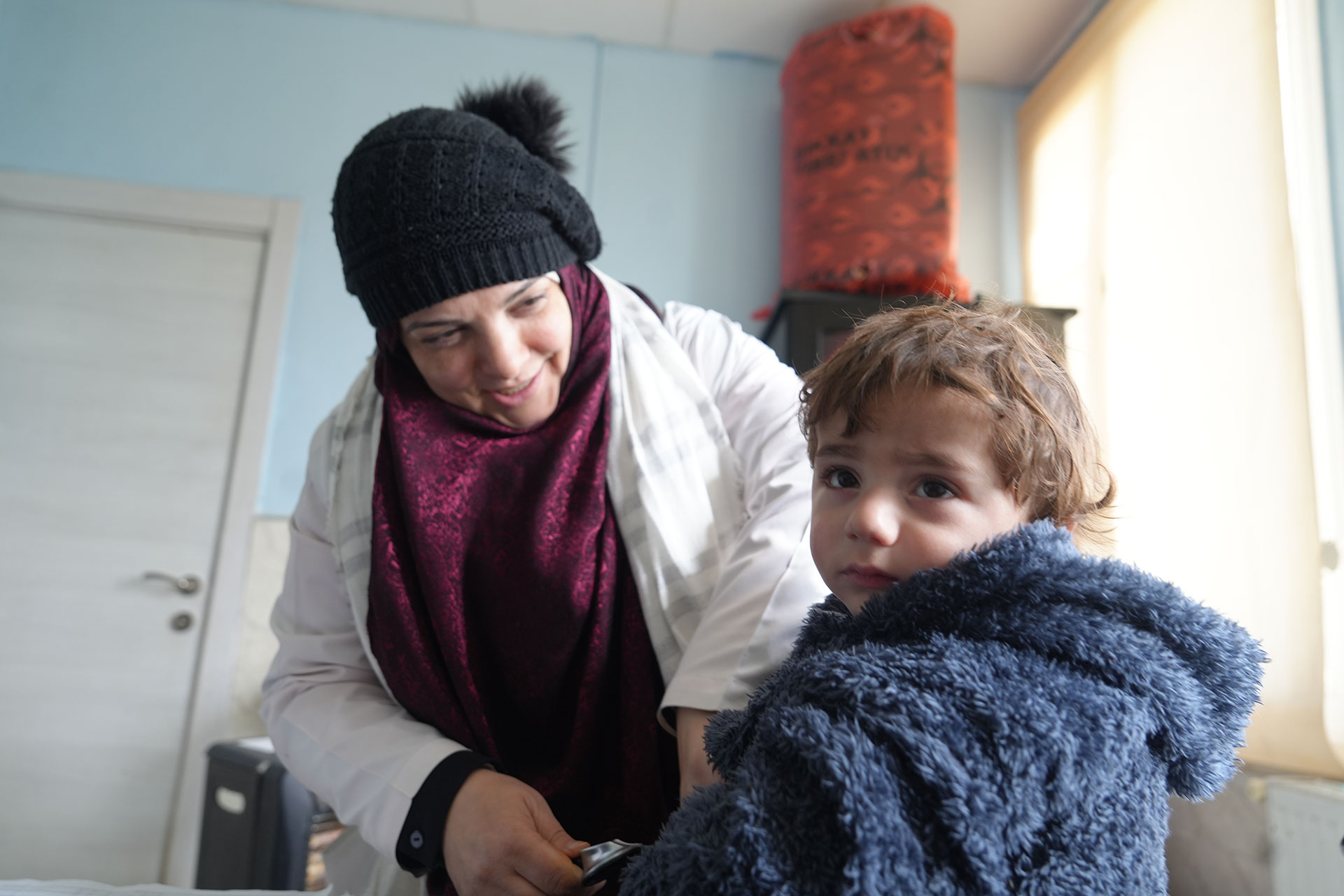 Dr Dima Jaabar examines young Rashid at the Rajo health, where he received treatment for fever and chest inflammation. Photo credit: WHO
Just days later, Rashid’s mother rushed him to the same centre. He had a high fever, persistent cough and chest inflammation. “He was burning with fever and crying from the pain,” she said. “I did not know what to do except bring him here.”
Rashid received treatment, medical consultation and practical guidance to support his recovery at home. His mother was counselled on symptom management, warning signs and how to reduce respiratory risks.
“I felt relieved when the doctor explained everything,” she said. “They did not just treat him; they helped me understand how to care for him.”
The Rajo health centre is one of 70 health facilities across Syria supported by the World Health Organization (WHO) with funding from the King Salman Humanitarian Aid and Relief Centre (KSrelief). Through this initiative, facilities receive essential primary health care medicines and medical supplies, operational support and staffing assistance to ensure services continue for communities affected by years of crisis.
Across Aleppo, Hama, Homs and Idlib governorates, the project strengthens integrated health services, improves access to primary and specialized care, and reduces preventable illness and complications. By securing medicines and consumables and supporting facility operations, WHO and KSrelief are helping centres like Rajo remain open and responsive to community needs.
“For us, the impact is immediate,” Dr Jaabar said. “With consistent supplies and operational support, we can treat children quickly and follow up properly. Families do not have to delay care.”
In Afrin, where many families continue to navigate economic hardship and fragile living conditions, accessible primary health care is not abstract policy – it is the difference between fear and reassurance.
For Mohammad and Rashid, it meant breathing easier again.
