


11 December 2025, Syrian Arab Republic – In the pediatric oncology ward of Aleppo University Hospital, nurse Nour Al-Huda Al-Yazji moves quietly between beds, checking IV lines, adjusting doses and bending down to catch the shy smiles of children who have learned to trust her.
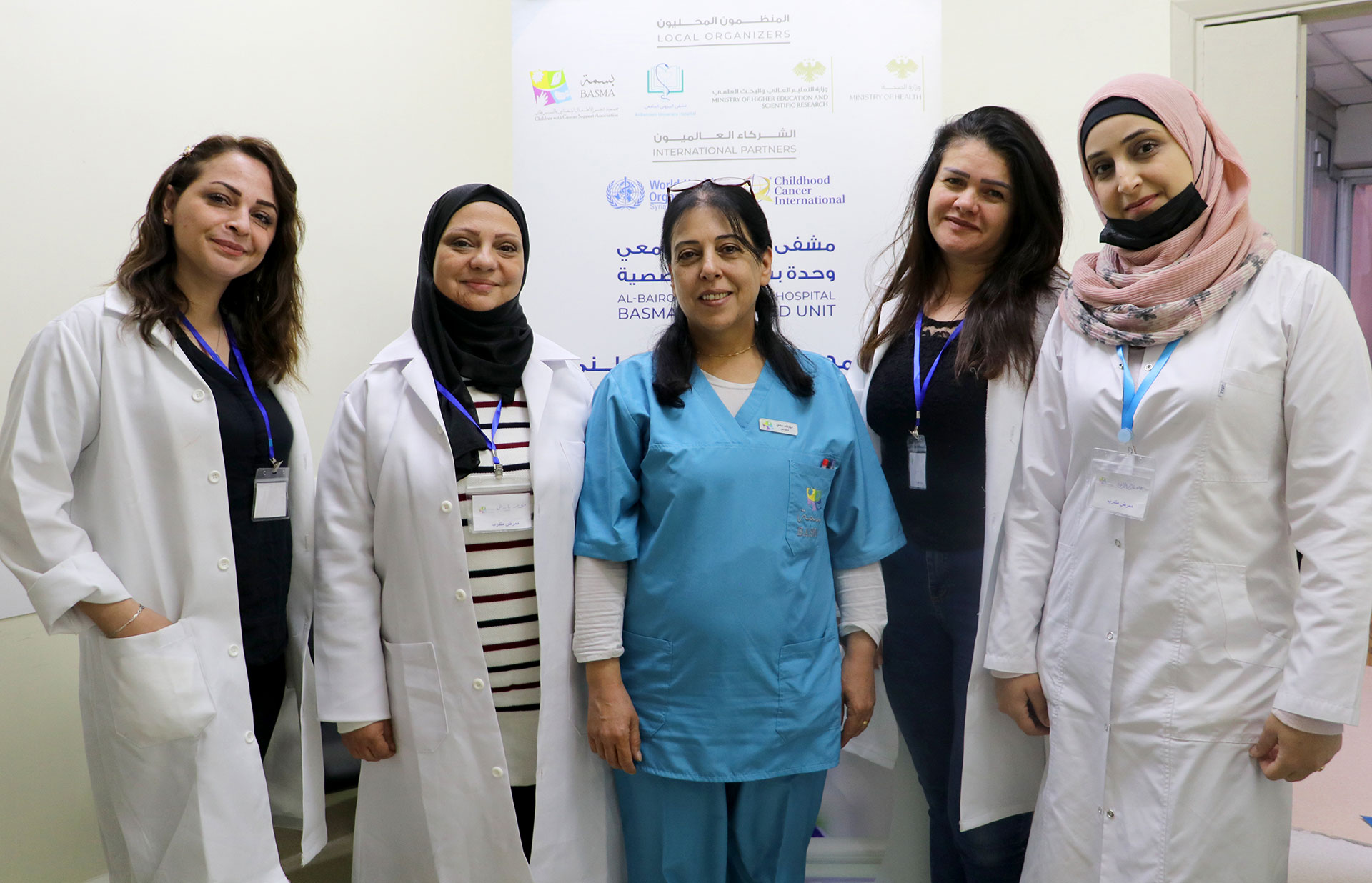 Nurses from Aleppo, Idlib, Lattakia and Damascus who participated in the national training of trainers on pediatric oncology nursing at the Basma Specialized Unit, Al-Bairouni University Hospital in Harasta, Damascus. Photo credit: WHO
For sixteen years, Nour has chosen to stay in this ward – a place of pain, progress and stubborn hope. She never saw nursing as “just a job”. For her, it is a commitment to walk alongside children and their families through some of the hardest days of their lives.
Recently, that commitment took her from Aleppo to Damascus, where she joined a new national training of trainers programme for pediatric oncology nurses – the first of its kind in Syria.
A national training built around nurses’ reality
Between 26 October and 20 November 2025, nurses from pediatric oncology units across Aleppo, Idlib, Lattakia and Damascus came together at the Basma Specialized Unit in Al-Bairouni University Hospital in Harasta for an intensive course.
The programme – developed jointly by the Ministry of Health, Ministry of Higher Education and Scientific Research, Al-Bairouni University Hospital, Basma Association, and WHO, with international partners including Childhood Cancer International – aims to raise the academic and clinical skills of pediatric oncology nurses and improve the quality of care they provide to children with cancer in Syria.
Over four weeks, nurses completed 20 hours of theoretical training and 80 hours of hands-on practical work, mastering more than 80 clinical skills – from safe chemotherapy preparation and infection prevention, to managing central lines, monitoring vital signs and responding to emergencies. They also joined 40 hours of joint rounds and case discussions (clinical sessions) with the wider medical team, reflecting the reality of day-to-day work in a busy oncology unit.
The goal is clear: each nurse will return to their governorate not only more confident at the bedside, but also prepared to train colleagues, spreading up-to-date knowledge and strengthening care across the country.
“We were used to inserting lines and monitoring fluids while doctors handled calculations and decisions,” Nour explains. “During the training, we learned to understand the treatment plans themselves – what each medication does, how doses are calculated and what side effects to watch for. It changed how I see my role as a nurse.”
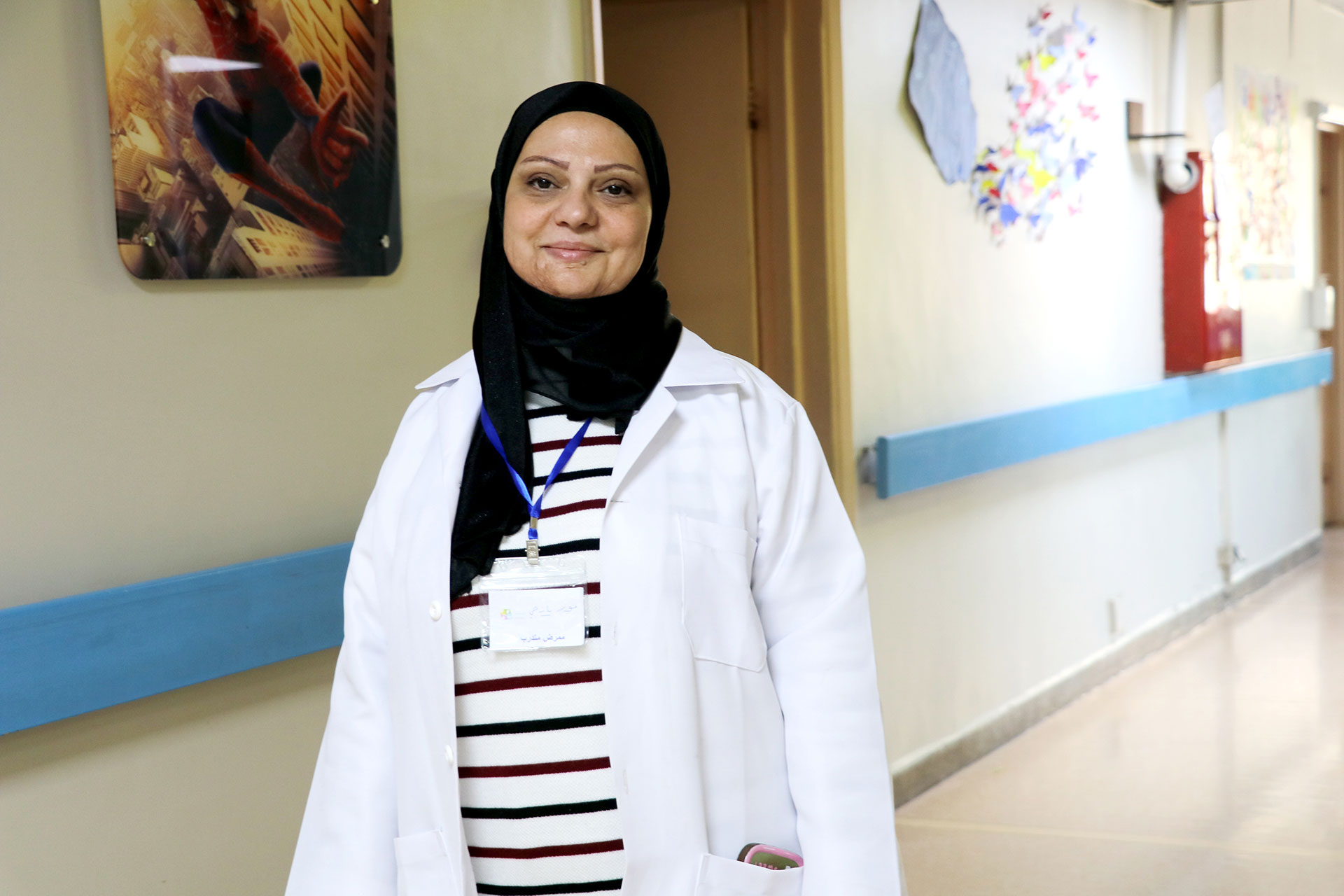 Pediatric oncology nurse Nour Al-Huda Al-Yazji at the training in Damascus. Photo credit: WHO
Learning to care for the whole child
The Basma Specialized Unit, opened in 2009, now includes 40 inpatient beds and 12 day-care beds, along with intensive care and palliative care services and specialized programmes for bone or eye cancer. Every day, it receives children and families from across Syria who are navigating new diagnoses, complex treatment schedules and long stays far from home.
For Nour, one of the most important parts of the training was the focus on psychological and social support – for children and for their families. “Some children accept treatment quickly. Others are afraid and need time to build trust,” she says. “We talked a lot about communication – how to explain what is happening in ways children can understand, how to support parents when they are overwhelmed, and how to be present even when we have many patients to see.”
Sessions on communication, psychosocial support and palliative care sat alongside lectures on chemotherapy, surgery, radiotherapy, infection prevention and tumor lysis syndrome, reflecting the reality that childhood cancer care is never just about medicines and machines.
“It was a reminder that nursing in pediatric oncology has to be both academic and deeply humane,” Nour says. “We have to look after the child’s body and their spirit at the same time – and we also have to prepare ourselves emotionally for this work.”
Back in Aleppo University Hospital’s pediatric oncology department, only five nurses currently cover the ward, which receives two to five new patients every day, in addition to around fifteen children who come regularly for their treatment sessions. Nour knows that every bit of knowledge she brings back matters.
“We still need many more trainings to serve our patients better,” she says. “Everything we learn reflects in the life of a small child waiting to get better. God willing, I will pass on what I’ve learned to my colleagues, because we are all working toward one goal – giving children the best possible chance to heal.”
At Al-Bairouni University Hospital in Damascus, 11-year-old Zahraa receives a routine check-up from a pediatric oncology nurse during her chemotherapy treatment.
Zahraa’s drawings of tomorrow
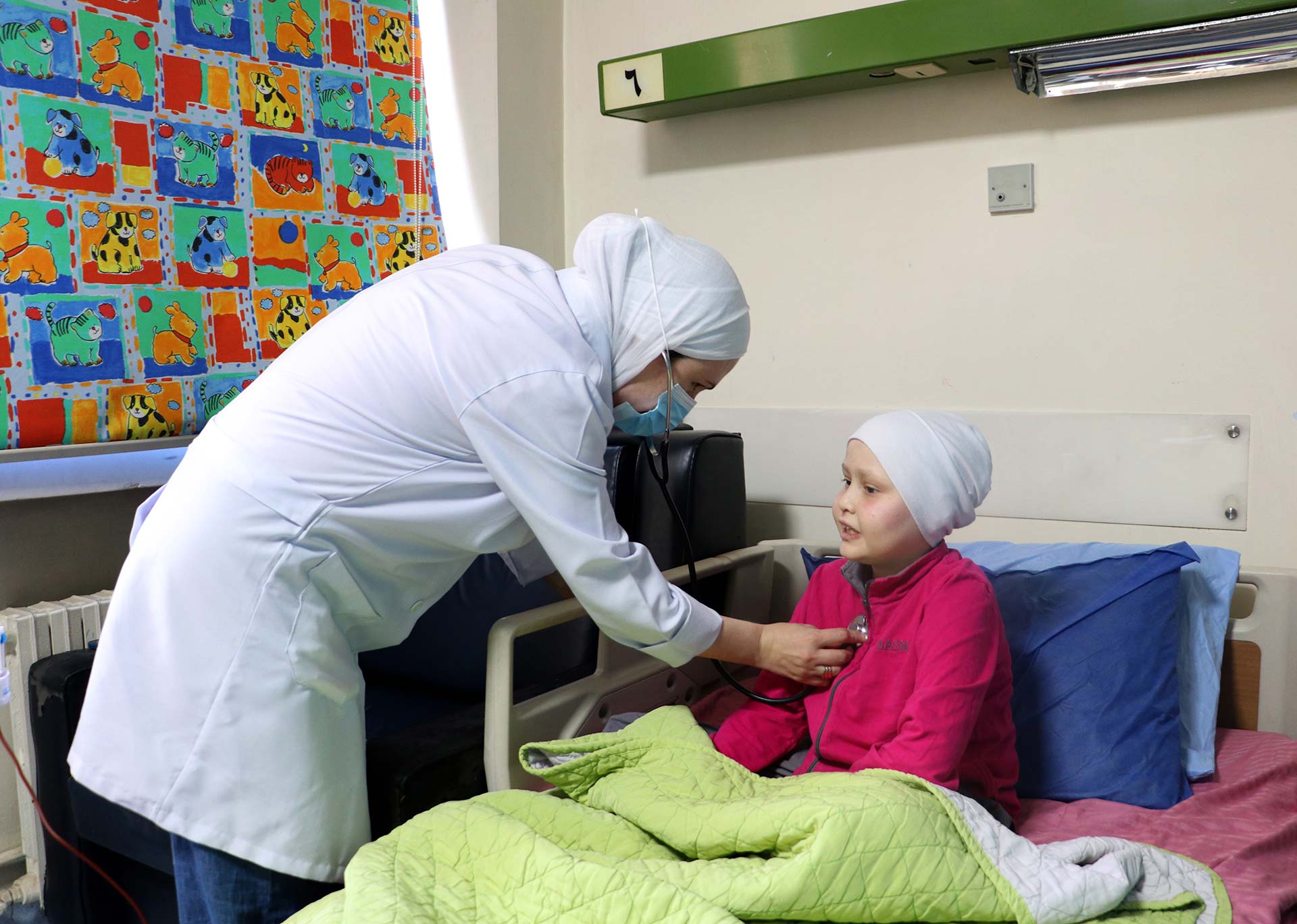 At Al-Bairouni University Hospital in Damascus, 11-year-old Zahraa receives a routine check-up from a pediatric oncology nurse during her chemotherapy treatment. At Al-Bairouni University Hospital in Damascus, 11-year-old Zahraa receives a routine check-up from a pediatric oncology nurse during her chemotherapy treatment. Photo credit: WHO
One of the children whose life intersects with this training is 11-year-old Zahraa Suleiman.
In the playroom, Zahraa is most often seen with coloured pencils in her hands and pink smudges on her fingertips. Pink is her favourite colour – the shade she chooses for flowers, dresses and the wide hearts she draws for the people she loves.
Among those people is “Ngham”, the doctor she talks about like a friend, and Dr Khaled, whom she describes as “so kind”. She also mentions Dr Dima with the easy affection of a child who has built strong bonds with the adults around her. The ward is full of needles, tests and long hours, but for Zahraa, it is also a place of stories, jokes and drawings taped to the walls.
Behind her laughter is a story that began with pain in her joints.
At first, her father thought it was something simple – the kind of complaint many children have after a long day of play. But as the pain persisted, the family went from one clinic to another in Idlib, searching for answers. Tests ruled out inflammation. A neurologist could not find an explanation. Finally, a hematologist requested a bone marrow examination.
“A few days later, the doctor called me urgently,” her father recalls. “When I arrived, he told me: ‘Zahraa has leukemia.’ It felt like the world stopped. We thought it was something minor. We were not prepared to hear the word ‘cancer’.”
With chemotherapy unavailable in Idlib or Aleppo at that time, the family travelled to Al-Bairouni Hospital in Damascus, where the diagnosis was confirmed, and Zahraa’s treatment began. After the first chemotherapy dose, her immunity dropped and she developed a fever, requiring repeated hospital stays.
Ten months later, Zahraa is still in treatment – a plan expected to last two and a half years, followed by additional maintenance therapy. To stay close to the hospital and reduce the strain of travel, the family moved from Idlib to Harasta – just outside of the city of Damascus, renting a small home and enrolling their other children in nearby schools. Zahraa herself has also joined a local school, keen to learn alongside other children whenever her health allows.
Her father speaks with quiet pride: “Despite everything, Zahraa still smiles. She loves her teachers, her friends, and the doctors. When she is drawing, you can see her forget the pain for a while.”
Training that changes the ward – and the future
For Zahraa’s father, the way staff treat his daughter matters as much as the medicines themselves.
“The hospital team has been wonderful – from doctors to nurses,” he says. “They treat the children with respect and tenderness. We are grateful for their efforts.”
At the same time, he worries about the overcrowded children’s ward and hopes additional sections can be opened to ease the pressure on young patients and health workers. His reflections echo one of the central aims of the new training programme: to strengthen pediatric oncology services across Syria so that families like his can access high-quality care closer to home.
By equipping nurses with stronger clinical and teaching skills, the training creates a network of nurse-trainers who can support colleagues in different hospitals, standardize safe practices and advocate for the needs of children and their families.
“Childhood cancer care is a team effort,” Nour says. “Doctors, nurses, psychologists, social workers, parents – all of us are part of the journey. When nurses are given the tools and trust to lead, we can make a real difference.”
A shared commitment to children with cancer
The national training of trainers for pediatric oncology nurses is one step in a longer process of strengthening cancer care for children in Syria. By centring the voices and experiences of nurses like Nour, and children like Zahraa, it highlights what health system strengthening looks like in practice: listening, learning and building together.
For Nour, the path ahead is clear. Back in Aleppo, between early morning rounds and late-night shifts, she is already planning how to adapt the training materials and share them with her team.
“In every lecture and every practical session, I was thinking of the children waiting for us at home,” she says. “If we can improve our skills, update our knowledge and support each other as nurses, then every new patient who walks into our ward will feel the difference.”
