


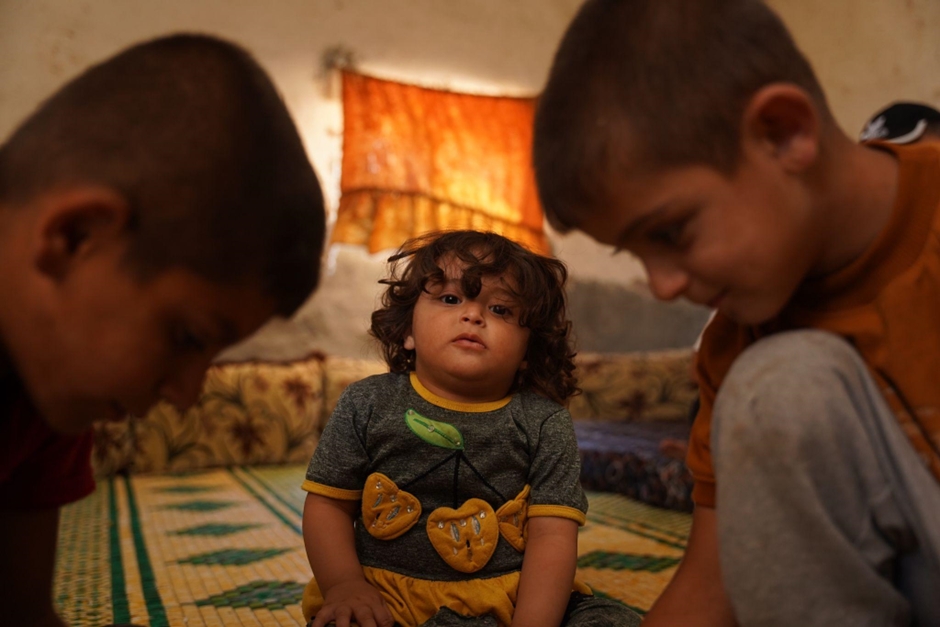
 Abu Tarek’s youngest son sits on the floor of their shelter. Photo credit: WHO
21 December 2025, Idlib, Syrian Arab Republic – In a displacement camp in Afrin, Abu Tarek sits with his youngest son as the morning vaccination round begins. Since arriving at Khazan Camp five years ago, he has made one decision without hesitation: to keep every one of his eight children up to date on their routine vaccines.
“We were new here, but the vaccination team came to us,” he says. “They had a clear schedule. Once a month, they reached the camp, vaccinated the children, and left. May God bless them — they never stopped showing up.”
The national immunization programme, led by the Ministry of Health with support from WHO, UNICEF, Gavi, the Vaccine Alliance and health partners, continues to reach families in all parts of Syria. For communities living in camps, Expanded Programme on Immunization (EPI) outreach teams ensure consistent access and follow-up.
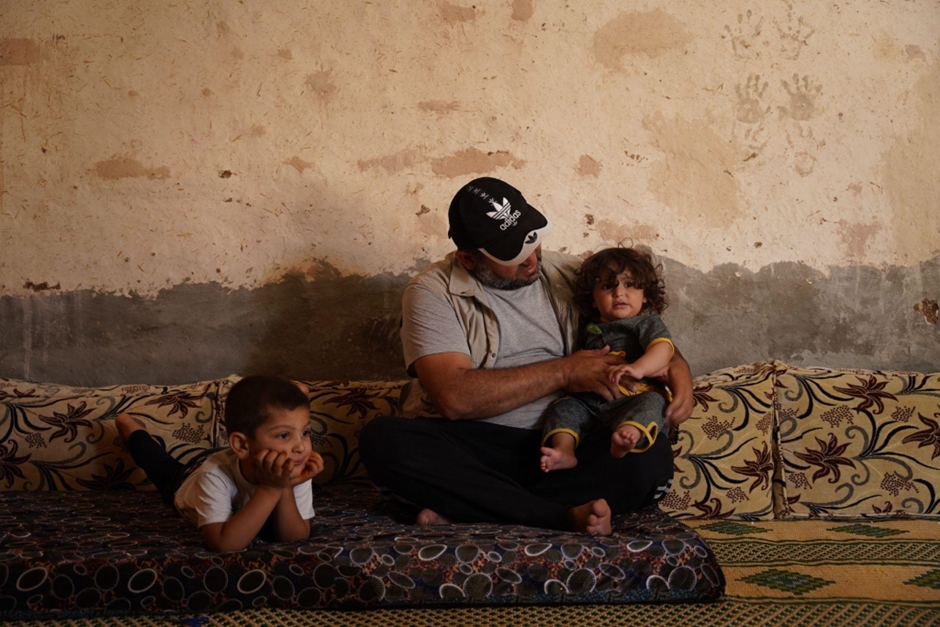 Abu Tarek sits with his youngest son while one of his older children rests nearby. Photo credit: WHO
The teams’ coordination is clear and predictable.
“They inform the camp administration in advance,” Abu Tarek explains. “Announcements go out on loudspeakers and WhatsApp groups. If a child misses a dose, they follow up. They don’t leave anyone behind.”
But trust, he adds, was not always easy. “At one point, we stopped vaccinating,” he recalls. “Rumours spread. People were scared. I was scared.”
What changed his mind was a visit from the health workers themselves. “They explained — kindly and clearly — that the case we heard about had nothing to do with vaccines. They reminded us we were vaccinated as children too. So we returned. And I felt reassured.”
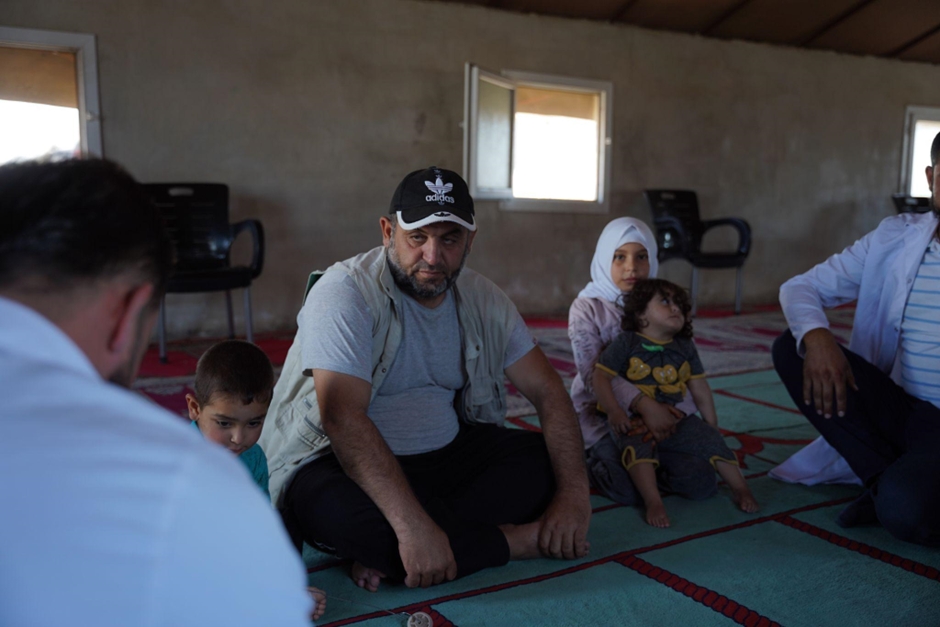 Abu Tarek speaks with a health worker during a vaccination session at the camp. Photo credit: WHO
Like many families across Syria, Abu Tarek’s choice is now informed by what he has seen. “I’ve seen children who weren’t vaccinated — paralysis, fever, suffering. No father wants that. Vaccines protect our children.”
These individual decisions mirror broader progress across the country. Throughout 2025, the Ministry of Health — with support from WHO, UNICEF, Gavi, the Vaccine Alliance and health partners — carried out nationwide efforts to strengthen routine immunization. A Big Catch-Up and measles drive in October reached 1.7 million children under five and vaccinated more than 270,000 children in all areas of Syria. In November, around 428,000 children received their measles and rubella vaccines in Idlib, Aleppo, Raqqa and Tal Abyad. Earlier in the year, during World Immunization Week, WHO supported vaccination for 3.4 million children. Together, these actions help rebuild confidence in immunization and protect communities from preventable diseases.
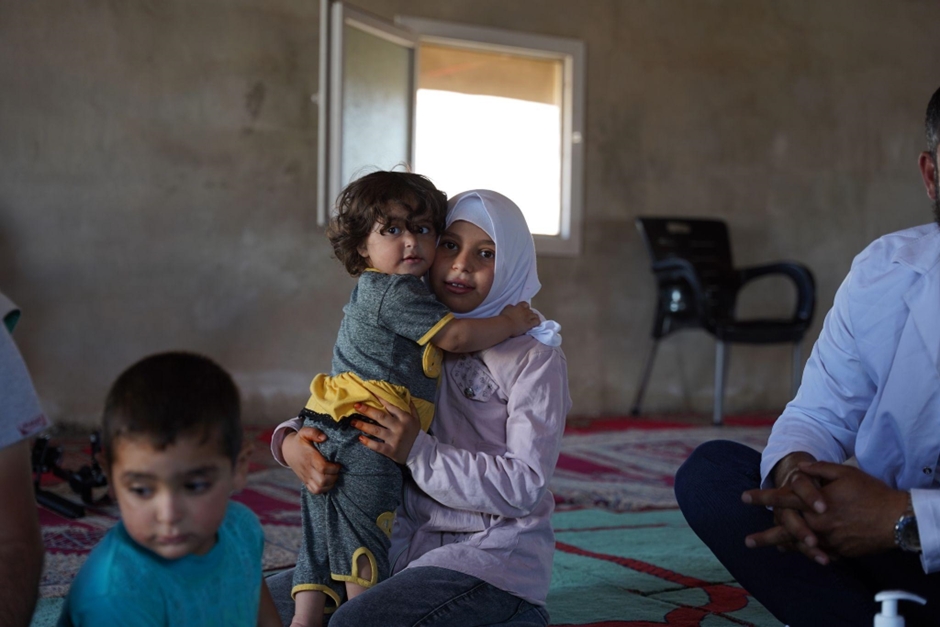 Two of Abu Tarek’s children wait at the vaccination site inside the camp. Photo credit: WHO
At the heart of this work are health workers like Yasser, a vaccination nurse from the Ashrafieh EPI team who visits Khazan Camp each month. “Every vaccine we give protects a generation,” he says. “Parents worry sometimes, and that’s normal. So we explain everything — possible mild fever, soreness, and how to manage it. We answer every question with honesty. Vaccines are safe, effective and free.”
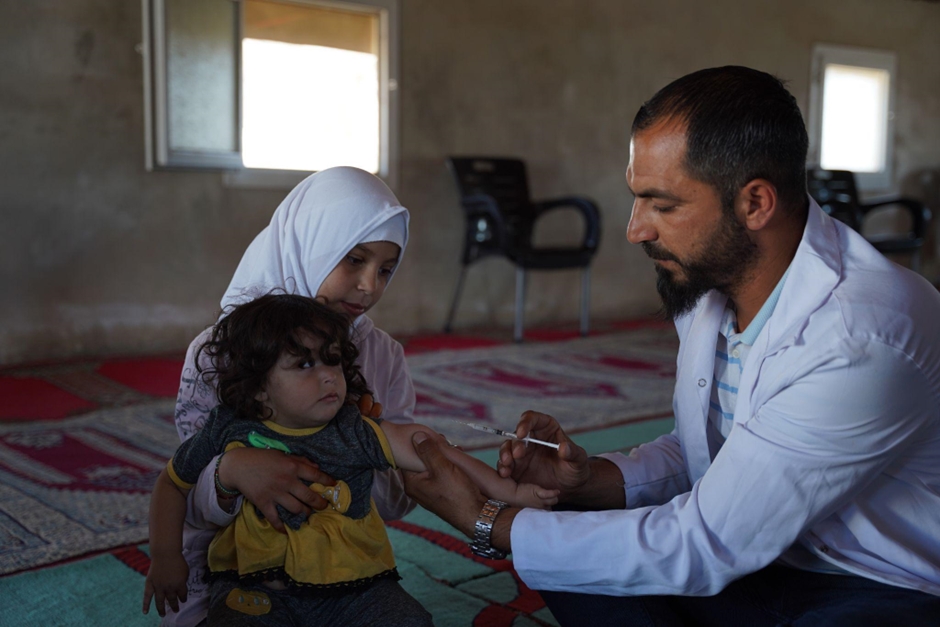 One of Abu Tarek’s daughters holds her younger brother close as Yasser administers a vaccine. Photo credit: WHO
When misinformation briefly halted vaccination in the camp, Yasser and his colleagues responded immediately. “It wasn’t true, but people stopped coming,” he says. “So we went tent to tent, explaining, listening. Slowly, families returned. Trust can always be rebuilt.”
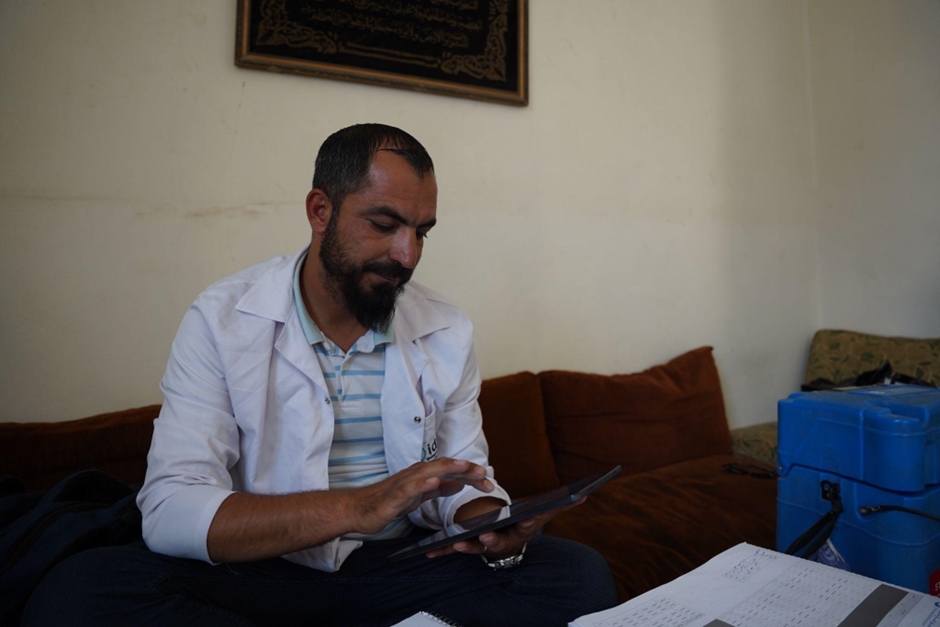 Yasser reviews vaccination records during a routine immunization visit. Photo credit: WHO
“What makes me happiest,” Yasser adds, “is knowing we’re helping create a safe environment — for every child, every parent and the whole community. We’re not just giving vaccines; we’re giving reassurance.”
From Amal’s careful explanations to Abu Yassin’s steady walk to each appointment, Syria’s immunization progress is driven by the choices families make every day.
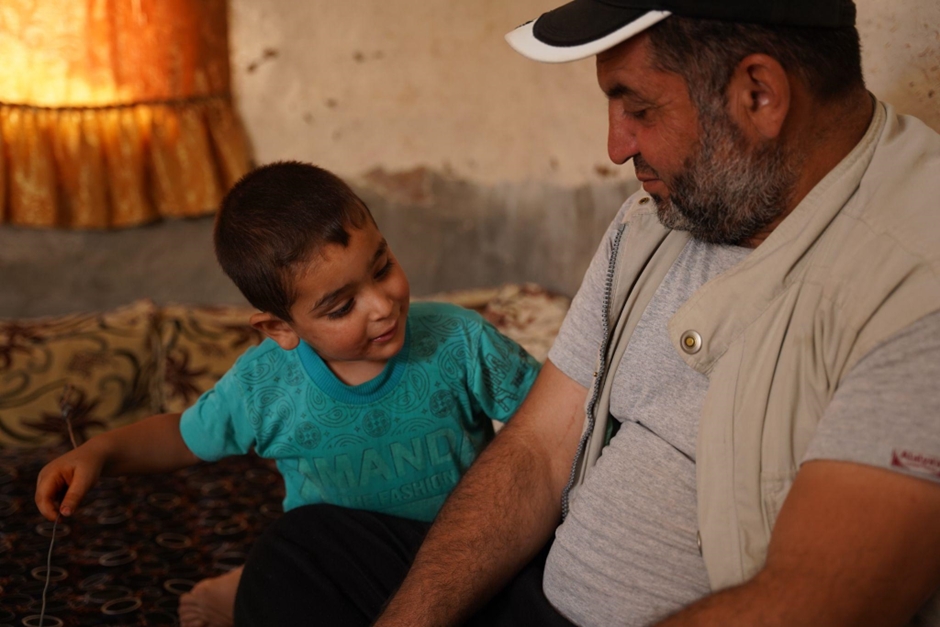 Abu Tarek shares a tender moment with his son inside their shelter. Photo credit: WHO
Before the team leaves each month, Abu Tarek shares one message with other parents in the camp: “Please support the teams when they come. They are here for your children — for their health and safety. No one wants to see a child suffer from something we could have prevented.”
