


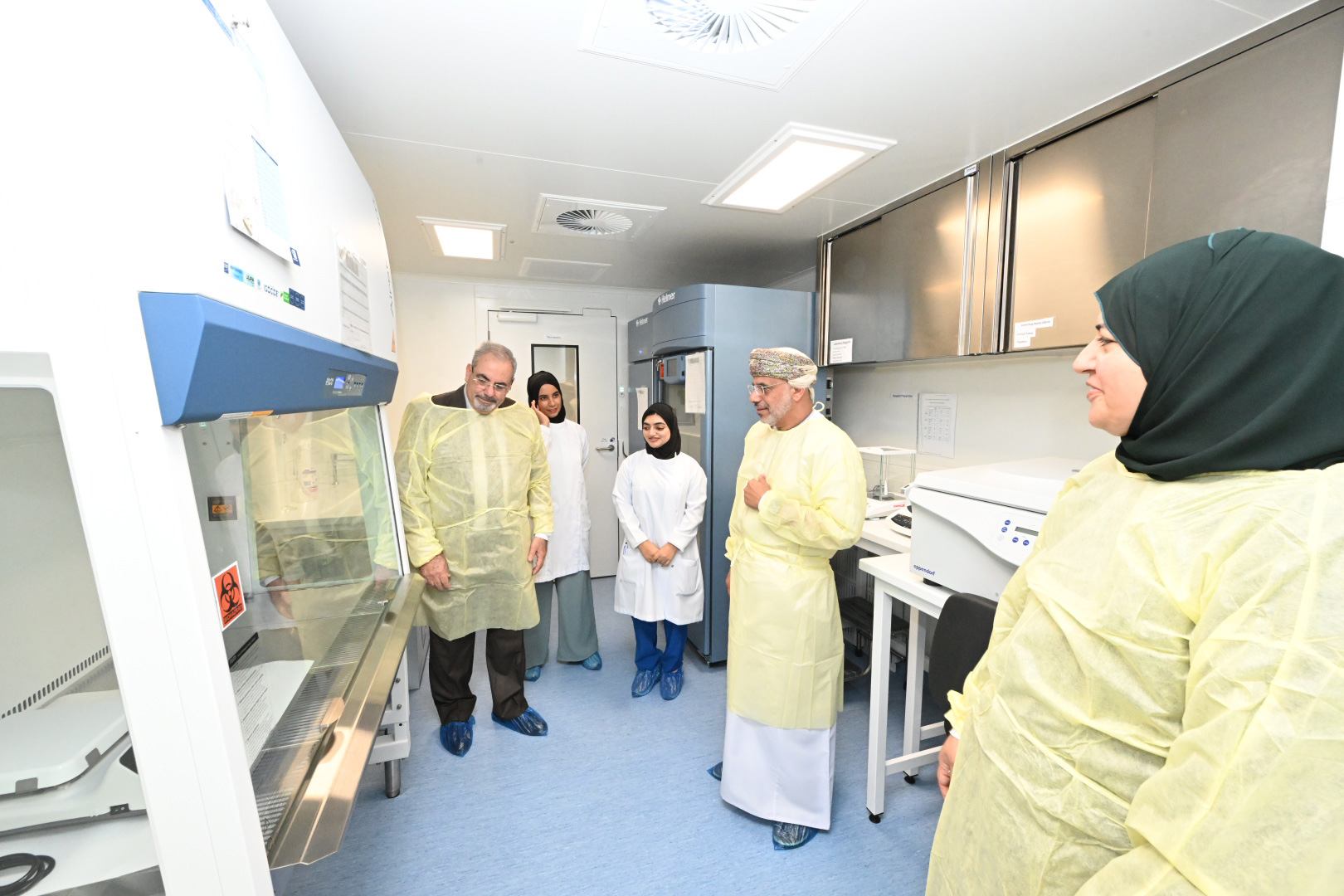
 Inauguration of the modular environmental surveillance lab, Muscat, Oman. Photo credit: WHO/Oman2 December 2025, Muscat, Oman – In the effort to end polio, the last mile is the hardest. As long as the virus continues to find refuge in fragile health systems and conflict zones, it will continue to threaten children well beyond the borders of the areas in which it remains.
This year, in an important step for the Eastern Mediterranean Region, the Sultanate of Oman, supported by the World Health Organization (WHO), inaugurated a modular, state-of-the-art poliovirus environmental surveillance diagnostic laboratory.
For over 2 decades, Oman’s National Polio Laboratory has played a key role in testing stool samples from children with acute flaccid paralysis from across the Gulf – including Bahrain, Qatar, the United Arab Emirates (UAE) and, since 2021, Yemen – providing critical support for rapid outbreak response. The new facility allows Oman to expand this role to cover environmental surveillance. It will screen wastewater samples collected from sites across the country and extend the service to neighbouring states.
Environmental surveillance is one of the most powerful tools in the fight against polio. It can detect silent circulation before a single child is paralysed, giving health workers vital time to respond.
The new facility advances commitments made during the Regional Subcommittee for Polio Eradication and Outbreaks, when countries pledged to strengthen preparedness, share technical resources and build regional capacity. The new modular lab, part of Oman’s National Polio Laboratory, is a tangible example of those commitments in action. It is a powerful example of how collective efforts by Member States, donors and Global Polio Eradication Initiative (GPEI) partners can advance health security for all.
The director of the Central Public Health Laboratories and the head of the polio lab, both women, are supported by a dedicated team of national scientists.
The Ministry of Health emphasised its committment to sustaining the gains achieved through polio eradication efforts and ensuring that Oman continues to contribute to regional and global health security. The new laboratory exemplifies Oman’s commitment to preparedness, innovation and collaboration.
Cooperation between the Ministry of Health and WHO to support the Central Public Health Laboratories reflects their shared commitment to enhance Oman’s health system and its laboratory infrastructure, strengthen surveillance and diagnostic capabilities and improve health sector readiness to respond to challenges and epidemics in line with international public health standards.
The collaboration embodies both parties' determination to advance national health security and ensure laboratory services safeguard and promote community health.
As part of the Global Polio Laboratory Network, the facility maintains the highest international quality standards and regularly hosts training sessions for experts from other countries. Serving as a regional hub, it is a model of how health cooperation can strengthen collective readiness, not only to combat polio but to face other health challenges.
Oman’s new laboratory reminds us that sustained investment and collective action are essential to finish the job and end polio once and for all. WHO is proud to stand with Oman on the final stretch to eradication.
