


Estimating Trauma Rehabilitation Needs in Gaza – May 2026 update
Jerusalem, 12 May 2026 - An estimated 43 000 of the 172 000 people injured in Gaza since October 2023 have sustained life-changing injuries, according to updated WHO estimates released today. Up to a quarter of those with life-changing injuries are children (approximately 10 000).
Since the last report in September 2025, almost 5000 additional injuries have been recorded. Nearly half occurred after the ceasefire was announced in October 2025.
Severe injuries span multiple categories. Major injuries to the limbs account for the largest share, with over 22 000 cases, followed by limb amputations due to traumatic injuries with over 5 000 recorded, spinal cord injuries with over 2 000 cases, major burns with over 3 400, and major traumatic brain injuries with over 1 300. More than 50,000 conflict-related injuries require long-term rehabilitation.
Nearly 14,000 patients registered for limb reconstruction services between July 2025 and May 2026, and of those assessed so far, almost half require further surgery. Meanwhile, of the 2 300 people with amputated limbs evaluated between September 2024 and May 2026, only 500 – less than 25% – have been fitted with permanent prosthetics due severe shortage in Gaza.
The report only reflects conflict-related injuries. People with chronic conditions, pre-existing disabilities, and age-related needs face the same overwhelmed health system and their rehabilitation needs are no less urgent.
Despite the scale of needs, rehabilitation services in Gaza remain critically constrained. No rehabilitation facility is fully functional. Fewer hospitals are providing specialist rehabilitation than before the conflict, and more than 400 patients are on waiting lists for specialized rehabilitation beds which results in admitted patients being discharged early, interrupting recovery and increasing the risk of permanent disability.
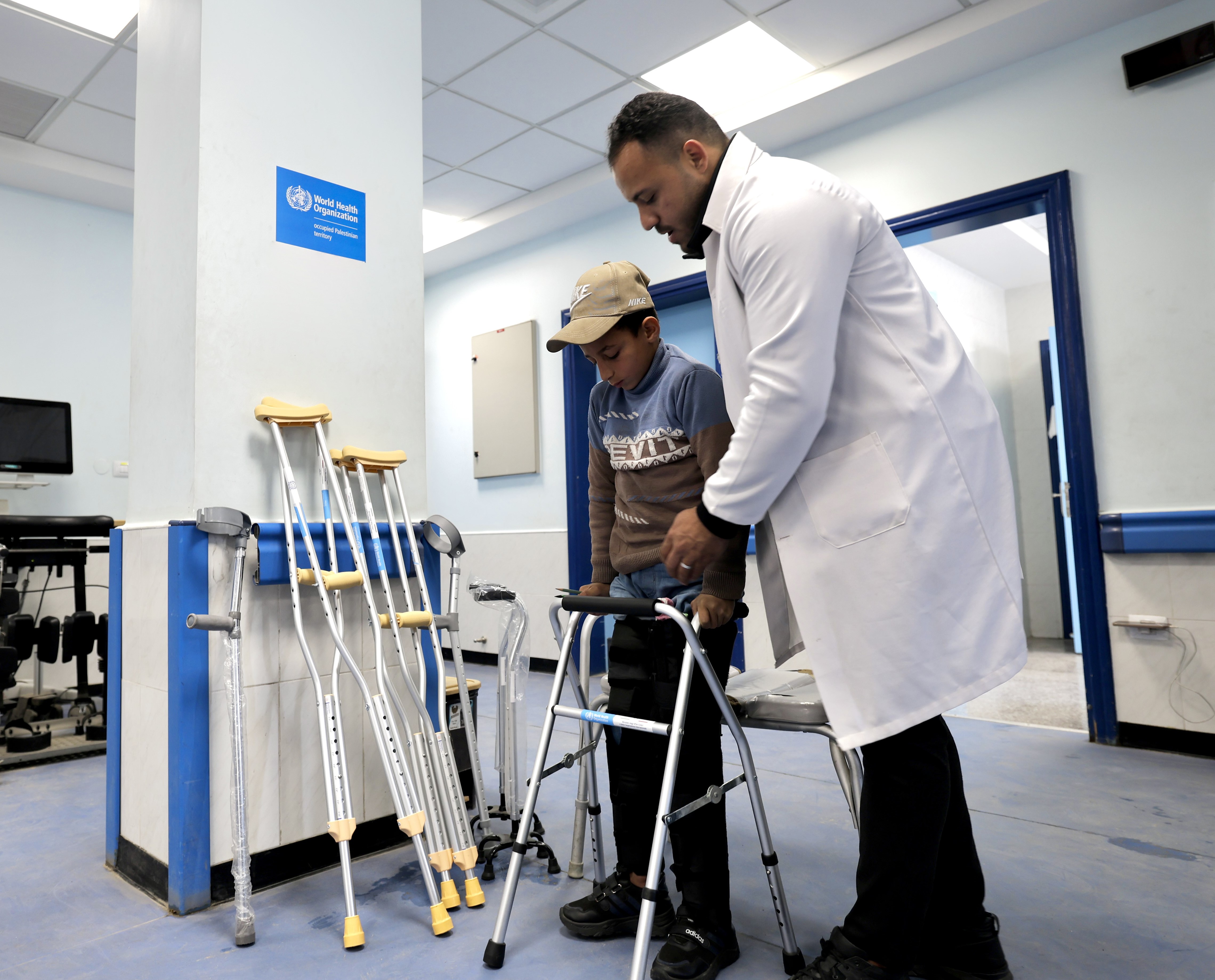
Access to rehabilitation equipment and assistive products and technology remains severely restricted. No rehabilitation equipment (for health facilities such as exercise equipment) entered Gaza over the last two years (between May 2024 and mid-April 2026). As of mid-April 2026, 18 shipments of rehabilitation-related supplies are pending clearance, with a waiting time so far of 130-520 days. Pending items include wheelchairs for adults and children, prosthetic limbs, and basic rehabilitation equipment such as stationary bicycles.
WHO estimated in December 2025 that nearly 33 000 assistive products and technology were needed to meet the demand. More than 12 000 mobility products were distributed between January 2025 and May 2026 and tracked through the assistive product tracking system, launched to strengthen accountability and reduce duplication in distribution. However, this only covered one third of the identified need. Over 90% of assistive products distributed were directly supported by WHO.
"Every day that rehabilitation services in Gaza remain under-resourced is a day that preventable disability risks becoming permanent," said Reinhilde Van De Weerdt, WHO Representative for the occupied Palestinian territory. "Gaza does not need stopgap measures, it needs sustained investment in the health workforce, in equipment, and in the systems and environment that allow people to recover, rebuild, and return to life."
WHO and its partners continue to support rehabilitation needs in Gaza, but urgent priorities must be addressed to ensure efforts can be scaled up. WHO calls for rehabilitation equipment, prosthetics, assistive products, and essential medicines to be cleared to enter Gaza without delay or rejection. WHO also calls for sustained investment in Gaza's health system to support restoration of services, reducing reliance on medical evacuations.
WHO thanks the health workers across Gaza, from those repairing wheelchairs with scarce resources to the psychologists and rehabilitation teams providing vital care under extraordinarily difficult conditions. Their dedication and resilience make a profound difference in the lives of those most severely affected by this conflict.
The people of Gaza have endured unimaginable suffering. They deserve not just emergency care, but the sustained support needed to recover and reclaim their lives.
