


Across the West Bank, increasing movement restrictions, including checkpoint and road closures, as well as other physical and administrative obstacles, are making it harder for communities to access health care and for health workers to reach patients. Health partners report that ambulances are frequently delayed, forced to take longer routes or caught up negotiating access at checkpoints. In emergencies, these delays can be the difference between life and death.
Persistent access issues remain in Hebron’s H2, limiting movement and access to services, including health. In Jerusalem's Old City, narrow alleyways and access restrictions make it difficult for ambulances to reach patients, delaying emergency response.
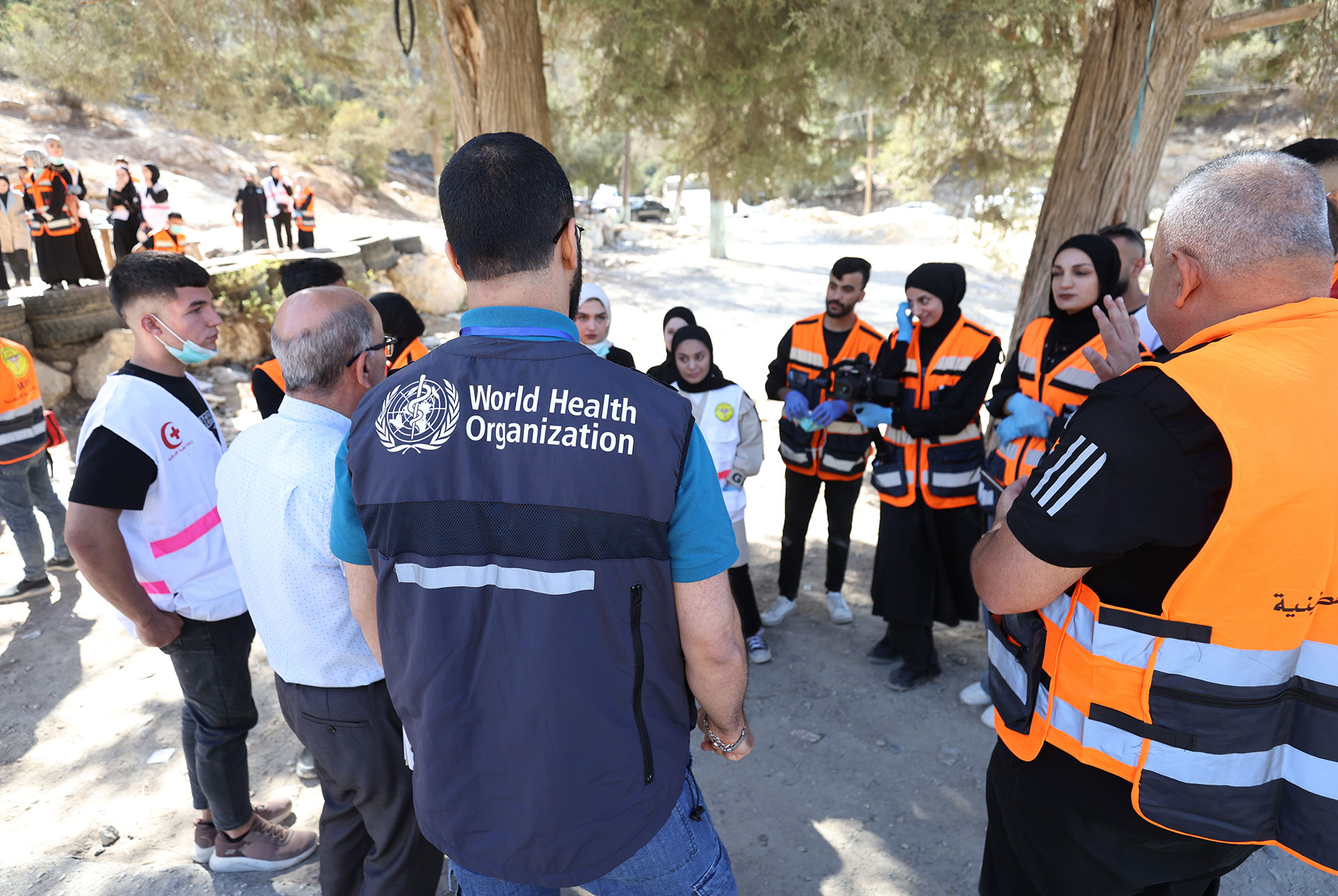
To address these challenges, under the leadership of Ministry of Health, WHO, in collaboration with the European Union and the Palestinian Medical Relief Society (PMRS), has provided a package of emergency response and early intervention trainings to 107 community volunteers across both locations: 84 from Hebron and 23 from the Old City of Jerusalem. Volunteers include nurses, physicians and non-medical community members who are deeply embedded in their communities and able to reach incident sites quickly when needed.
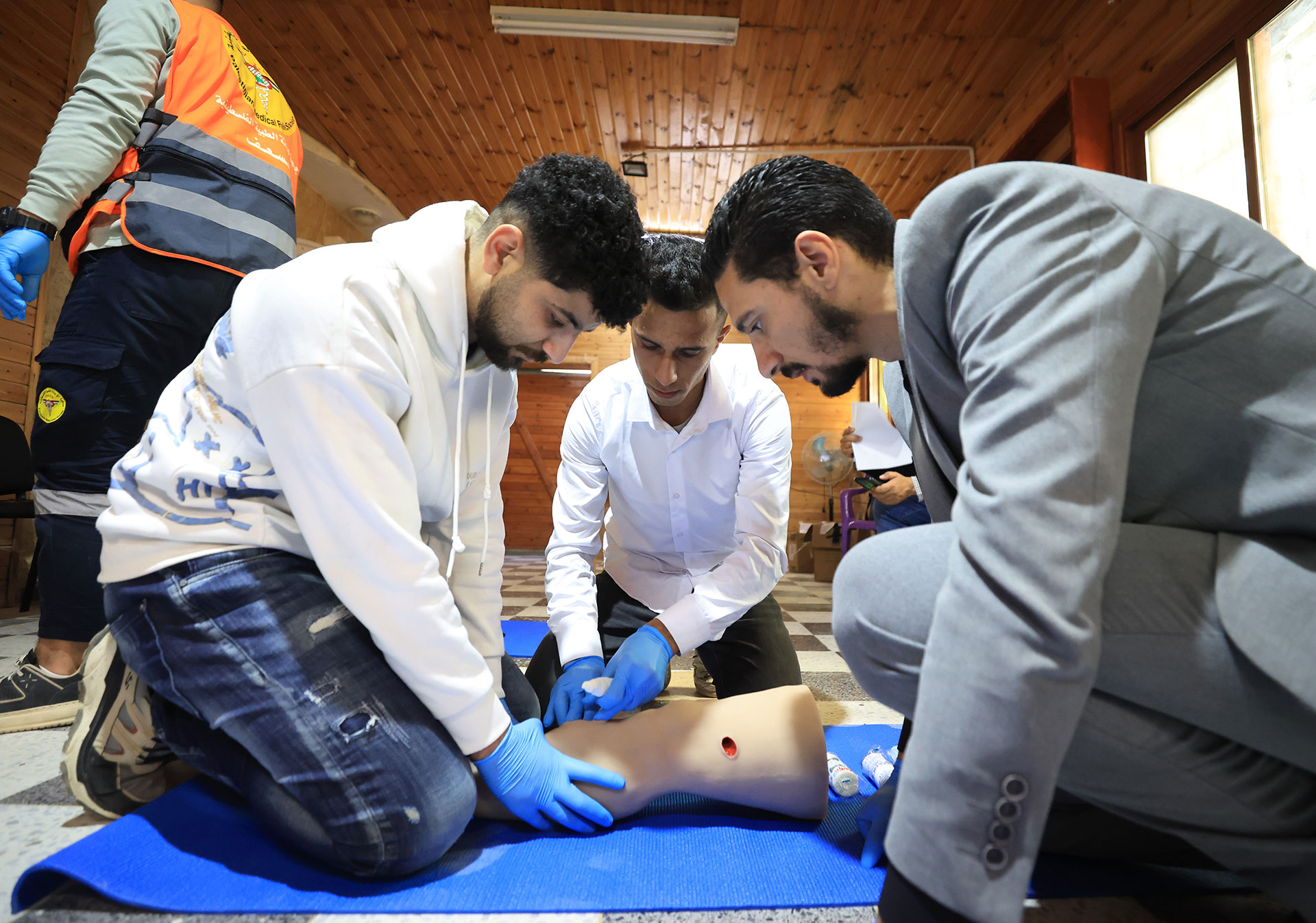
The training programme was hands-on and comprehensive, combining practical skills with simulation exercises across a range of emergency scenarios including gunshot wounds, road accidents, falls from height, tear gas inhalation and loss of consciousness. It covered the following areas:
Basic Life Support
Volunteers were trained in the fundamental steps to respond to common medical emergencies and injuries, including choking, loss of consciousness, heat stroke, burns, wounds and other conditions relevant to the local context. This training was designed for people of all ages and backgrounds, with no prior medical experience required.
Stop the Bleeding
Volunteers learned how to recognize and control catastrophic, life-threatening bleeding, a critical skill in a context where trauma injuries are common and ambulances may be delayed.
Emergency Response and Early Intervention
Focusing on coordination, leadership and team dynamics, this training prepared volunteers to respond effectively when an incident occurs. Working in groups, participants simulated real emergency scenarios and practiced skills including bleeding control, CPR, spinal injury stabilization, fracture management and contacting emergency services.
Communication During Emergencies
Volunteers practised clear and effective communication, both within response teams and with external agencies and services, to ensure a coordinated and timely response.
Psychological First Aid and Protection in Conflict Zones
This training equipped volunteers with tools to support community members and themselves in managing psychological distress and trauma following an incident. It also covered the basics of humanitarian principles and international law in conflict settings.
Fifty WHO community trauma bags and 1000 WHO first aid bags comprising lifesaving medical supplies were also distributed among participants to ensure availability at key locations.
By equipping community members with lifesaving skills and medical supplies, WHO and partners are helping to ensure that when ambulances cannot reach patients in time, trained volunteers are ready to provide critical first response reducing preventable deaths and strengthening the resilience of communities under pressure.
