


 MoH announces expansion of newborn screening and enhancement of pre-marital medical examination, 29 January 2025Before the 1970s, the Sultanate of Oman did not have a national system for newborn screening.
Many metabolic and endocrine disorders went unnoticed until severe complications set in. Families often faced preventable burdens, including long-term disability and social challenges, because opportunities for early detection did not exist.
Over the years, services were gradually introduced, including hearing checks, congenital hypothyroidism testing and general newborn assessments, but gaps remained. To address them, the Ministry of Health launched the Expanded Newborn Screening Programme on 16 February 2025. The first phase began in Muscat Governorate, chosen for the availability of specialized staff and tertiary care services and its high birth rate.
The Muscat pilot allowed the system to be tested in a real-world setting, refining processes and ensuring they are fit for purpose before extending coverage to other governorates.
According to estimates, Oman can expect to see around 114 cases of the diseases targeted by the screening each year. In the past, these conditions were often discovered only after irreversible damage had occurred. Studies showed that early detection would not only prevent hospitalizations and disabilities but save lives and reduce long-term health care costs.
The Expanded Newborn Screening Programme introduces a set of transformative interventions. Between 24 and 48 hours of birth, dried blood spot samples are collected and tested for 22 different conditions. A centralized laboratory has been established, with standardized protocols and a web-based platform for submitting requests and reporting results.
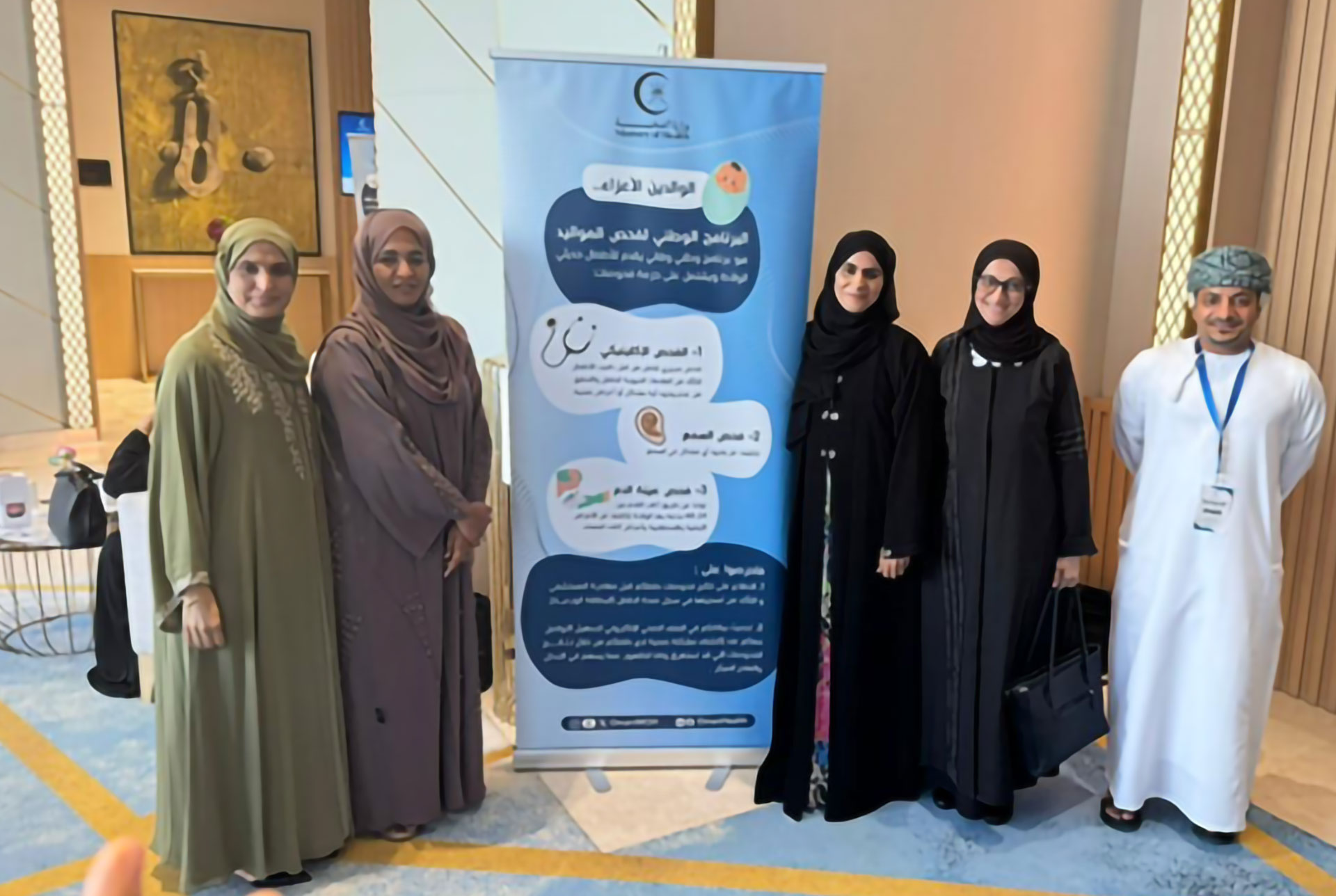 Workshop preparing for the expansion of newborn screening, 17th October 2025Health care workers across hospitals have received training, and informed consent and parental education are integral parts of the process. Public awareness campaigns through various media channels help families understand the importance of screening, building community trust and engagement and raising the profile of rare diseases.
The initiative is enshrined in Oman Vision 2040 as a strategic health priority. Underlining local ownership, a fully Omani task force leads the programme, supported by national guidelines for expanded screening. Training workshops were held for health care professionals and regular audits carried out to identify challenges early.
Between February and July 2025 more than 5000 newborns were screened. Conditions that would have otherwise gone undetected for months or years were now being diagnosed within days, allowing timely treatment.
There have been challenges along the way. The high cost of laboratory equipment and medications posed financial hurdles. Shortages of specialized health care providers created capacity constraints. Geography, too, constitutes a barrier to ensuring equal access across all regions.
The programme has addressed these obstacles head-on. Policy-makers have committed dedicated budgets, a national newborn screening clinic has been established and the Sultan Qaboos University Medical City is now a partner in managing complex cases. Emergency teams in each governorate have been trained to respond to urgent needs, and discussions are underway to involve the private sector in supporting transportation and logistics.
The programme has introduced health care improvements that will have a lasting impact. National screening protocols have been standardized and a web-based system now supports laboratory requests and follow-ups. Key performance indicators have been developed to monitor progress and guide decision-making.
The phased roll out allows challenges to be addressed ahead of expansion to cover other governorates. It gives time for medical and technical teams to identify gaps, find solutions and enhance data accuracy.
An integral part of the Ministry of Health’s strategic plans, when expanded to cover all governorates the programme will form the standard childcare package, ensuring that future generations of Omanis receive the best possible start in life.
