


Stories from the field: sharing successful strategies from the Eastern Mediterranean Region in mitigating noncommunicable diseases and mental health disorders during the COVID-19 pandemic and beyond
Publication date: 2023
This publication concentrates on unpublished accounts of what Eastern Mediterranean Region countries have done to address noncommunicable diseases and mental health issues, both before and during the COVID-19 pandemic. The aim is not to give a complete picture of each country’s overall strategy, but to share knowledge and experience with other countries around the world as we confront the global challenges of mental health and NCDs.
Call to action to address maternal and child undernutrition in the Middle East and North Africa, Eastern Mediterranean and Arab regions with a focus on Afghanistan, Djibouti, Lebanon, Pakistan, Somalia, Sudan, Syrian Arab Republic and Yemen
Publication date: 2022
Malnutrition in all its forms takes a heavy toll on the health, well-being and sustainable development of countries in the Middle East and North Africa, Eastern Mediterranean and Arab regions. Infants, young children, pregnant women and breastfeeding mothers, in particular, face significant risks to their nutritional status and well-being in contexts where access to essential health and nutrition services and affordable healthy diets is constrained. This call to action highlights some immediate priority areas to address the high undernutrition in the context of the current food security situation, the ongoing pandemic and the multiple crisis or post-crisis situations in the regions.
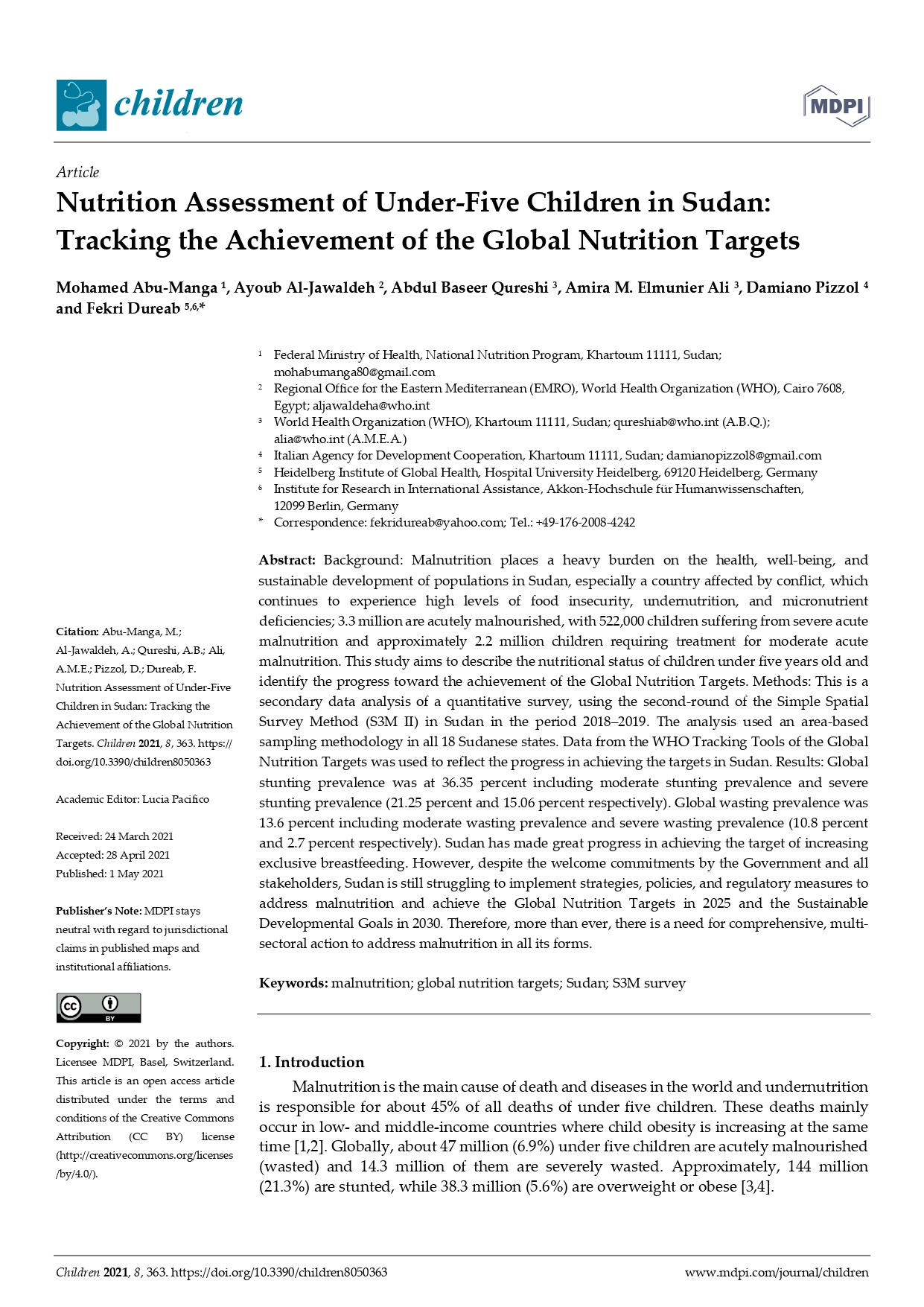
Nutrition assessment of under-five children in Sudan: tracking the achievement of the Global Nutrition Targets
Publication date: 2021
Malnutrition places a heavy burden on the health, well-being and sustainable development of populations in Sudan, especially a country affected by conflict, which continues to experience high levels of food insecurity, undernutrition, and micronutrient deficiencies. This study aims to describe the nutritional status of children under five years old and identify the progress toward the achievement of the Global Nutrition Targets. Despite the welcome commitments by the Government and all stakeholders, Sudan is still struggling to implement strategies, policies and regulatory measures to address malnutrition and achieve the Global Nutrition Targets in 2025 and the Sustainable Developmental Goals in 2030. Therefore, more than ever, there is a need for comprehensive, multi-sectoral action to address malnutrition in all its forms.
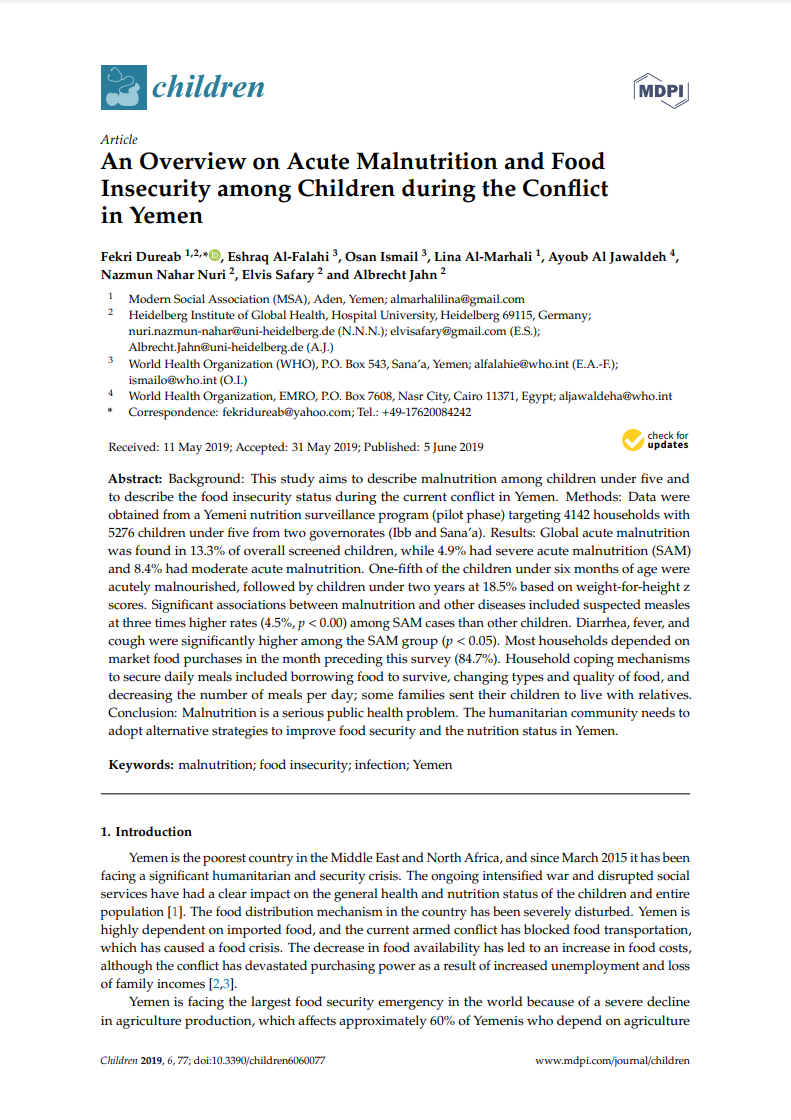
An overview on acute malnutrition and food insecurity among children during the conflict in Yemen
Publication date: 2019
This study aimed to describe malnutrition among children under five and to describe the food insecurity status during the current conflict in Yemen. Data were obtained from a Yemeni nutrition surveillance program (pilot phase) targeting 4142 households with 5276 children under five from two governorates (Ibb and Sana’a). Global acute malnutrition was found in 13.3% of overall screened children, while 4.9% had severe acute malnutrition and 8.4% had moderate acute malnutrition. One-fifth of the children under six months of age were acutely malnourished, followed by children under two years at 18.5%. Significant associations between malnutrition and other diseases were observed.
Building capacity in inpatient treatment of severe acute malnutrition in Yemen
Publication date: 2018
Complicated cases of severe acute malnutrition have a high mortality risk and require competent inpatient care. This study aims to explore the impact of a programme of in-service training and systems support on the inpatient care of malnourished children in Al-Sadakah Hospital, Aden Governorate, Yemen from 2010 to 2013. The findings show that community participation and access to community services have an important impact on health.
Field guide on rapid nutritional assessment in emergencies
Publication date: 1995
The WHO EMRO Consultation on Rapid Nutritional Emergencies was called to develop a set of guidelines for the rapid assessment of nutritional status needed in emergencies, with clear instructions for use in the field. Experts and WHO discussed and agreed on major problem areas in nutritional assessment such as choice of indicators, sampling requirements, methodology and analysis, use and users of the information. This field guide will guide the user through the entire process of designing, planning, implementing, and reporting reliable nutritional assessment. It will also be a useful companion for all those faced with disasters in the Eastern Mediterranean Region and outside.
