


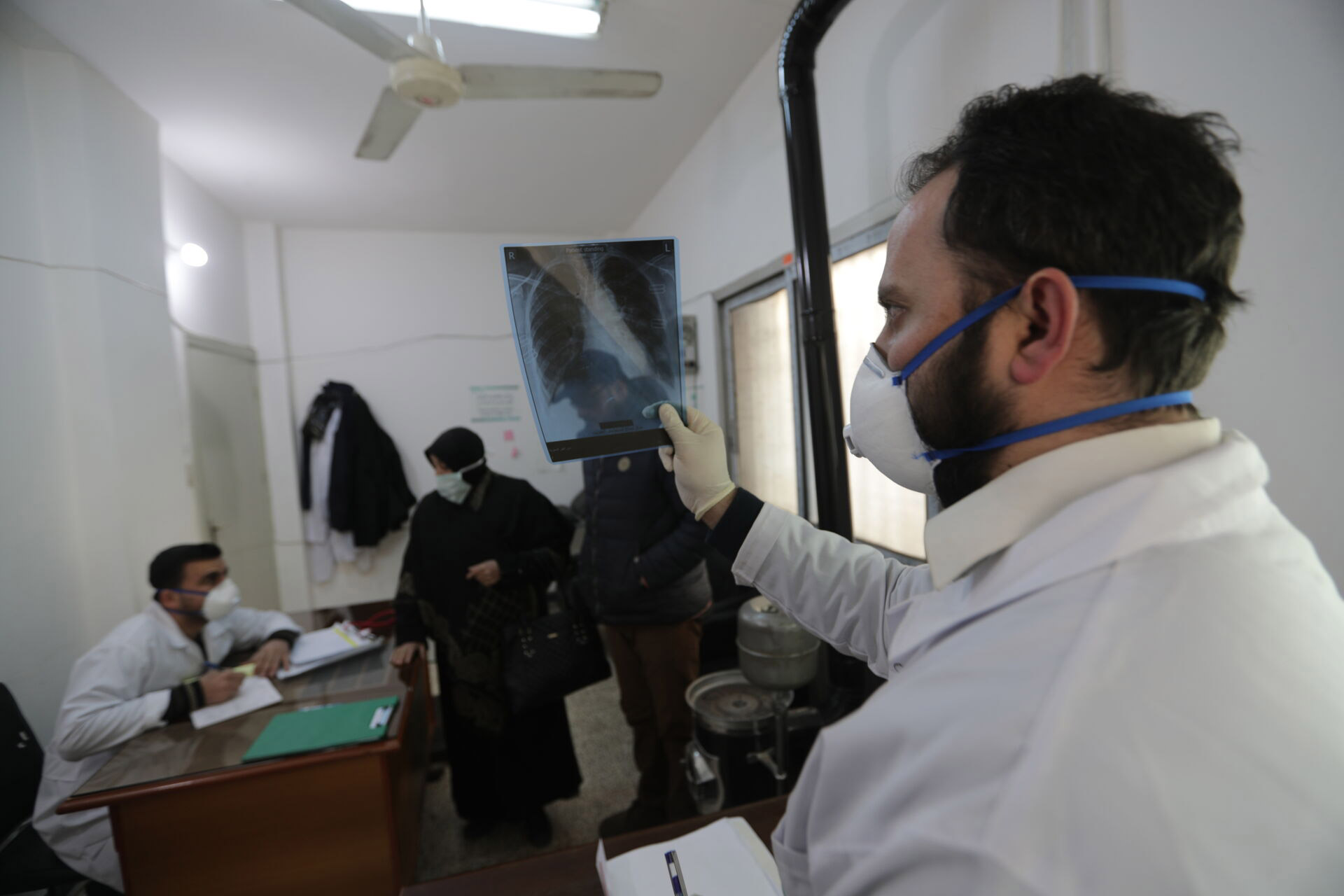
24 March 2026, Cairo, Egypt – Under the theme of this year’s World Tuberculosis Day (WTBD 2026) – Yes! We can end TB! Led by countries. Powered by people – the World Health Organization (WHO) is calling for urgent and sustained action to reverse the TB epidemic in the Eastern Mediterranean Region.
TB remains a significant public health concern across the Region. In 2024 alone, an estimated 920 000 new TB cases and nearly 85 000 deaths occurred in the Region. A third of TB cases go undetected, many in fragile and high-burden countries such as Djibouti, Somalia, Sudan, Libya, Afghanistan and Pakistan. Every 34 seconds, a person in the Region falls ill with TB. Every 6 minutes, a life is lost to the disease.
“Too many are diagnosed late—or not at all. Service gaps and treatment interruptions fuel transmission and drug resistance, while the cost of care pushes families into hardship,” says WHO Regional Director for the Eastern Mediterranean Dr Hanan Balkhy.
Gaps persist across the care cascade. Only 30% of estimated drug-resistant cases receive treatment and fewer than 1 in 4 patients benefit from shorter all-oral regimens. Preventive treatment coverage is alarmingly low among household contacts (7.9%) and people living with HIV (9.7%).
High loss to follow-up contributes to drug resistance, limited access to services hampers progress and TB-affected patients and their households face catastrophic costs to access the TB prevention and care. Yet despite challenges, there are signs of progress. Between 2020 to 2024, over 2.8 million TB cases were diagnosed and successfully treated – treatment success rates exceeded 90% – contributing to a significant reduction in the TB burden across the Region.
“This progress, though, is fragile,” cautions Dr Balkhy. “Without sustained investment and accountability, gains can quickly reverse.”
While the WHO Global Tuberculosis Report 2025 highlights a declining TB burden and advances in testing, treatment, social protection and research, the decline is too slow and progress remains uneven. Much more must be done to meet the targets set in the UN High-Level Meeting Political Declaration.
The theme of WTBW 2026, ‘Yes! We can end TB!, is a bold call to action and a message of hope, affirming that, even in today’s challenging global environment, it is possible to get back on track and scale up action against TB. With decisive country leadership, sustained domestic and international investment, rapid uptake of new WHO recommendations and innovations, accelerated action and robust multisectoral collaboration, ending TB is within reach.
Without urgent and sustained investments, hard-won gains risk being reversed. Inaction will result in more people falling ill and dying, erode years of progress and push elimination targets out of reach.
On WTBD 2026, WHO is urging governments, partners and communities across the Eastern Mediterranean Region to intensify efforts to raise awareness about TB, strengthen prevention and care services and reaffirm their commitment to ending TB once and for all.
WHO recommendations to expand access to TB diagnosis and reach the “missing millions”
WHO has issued 3 separate recommendations in 2026 to expand access to TB diagnosis. First, the rollout of near point-of-care molecular tests using low-complexity automated nucleic acid amplification tests (LC-aNAATs) to decentralize and strengthen early TB detection. Second, the use of tongue swab specimens – an easy-to-collect alternative sample – to improve access to testing, particularly for individuals unable to produce sputum. Third, the adoption of sputum pooling strategies to increase testing efficiency and reduce costs when using molecular platforms.
By enabling countries to reach underserved populations, identify the “missing millions” with TB and ensure earlier diagnosis and treatment, particularly in settings with limited laboratory access, these innovations represent potential game changers when it comes to bringing TB elimination back on track.
Note to editors:
Tuberculosis (TB) is an infectious disease primarily caused by Mycobacterium tuberculosis. TB mainly affects the lungs (“pulmonary TB”) but can attack any part of the body (“extra-pulmonary TB”).
TB spreads through the air. Only people who are sick with pulmonary TB are infectious. When infectious people cough, sneeze, talk, spit, laugh or sing they propel the TB germs (known as bacilli) into the air. If a healthy uninfected person inhales air containing TB bacilli they can become infected.
About a quarter of the world's population has latent TB, which means people have been infected by TB bacteria but are not (yet) ill with the disease and cannot transmit it.
WHO is working closely with countries, partners and civil society to scale up the TB response. High-level political commitment and support is needed to address key challenges, including: securing sustainable domestic financing; finding missing TB cases; addressing multidrug resistance and TB in children; fostering public–private partnerships; establishing enabling environments and using efficient electronic surveillance systems and innovative technologies.
Related links:
Global Tuberculosis Report 2025
Tuberculosis action plan for the WHO Eastern Mediterranean Region 2023 – 2030.
Political Declaration of the High-Level Meeting on the Fight Against Tuberculosis
Near point-of-care tests, tongue swabs, and sputum pooling for TB
Media contacts:
WHO Regional Office for the Eastern Mediterranean
