


Select your language

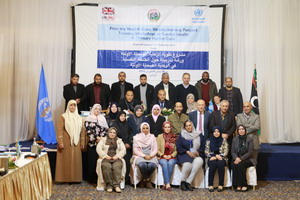
Training workshop on mental health in primary health care
30 January 2019 – The World Health Organization (WHO) in collaboration with Ministry of Health of Libya, has organized a one-week training of trainers workshop on mental health within the framework of family practice, which is taking place in Tunisia from 28 January to 1 February 2019. The aim of the workshop is to provide additional guidance,...
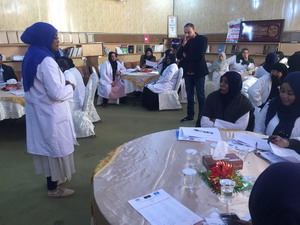
Training workshop for nurses on national guidelines to prevent and manage noncommunicable diseases
15 January 2019 – A training workshop for nurses on national guidelines to prevent and manage noncommunicable diseases (NCDs) was organized by the World Health Organization (WHO) and the Ministry of Health of Libya from the 12 to 14 January 2019 in Sabha, Libya. The workshop was attended by 30 nurses from the Algurda health centre in Sabha (800 km...
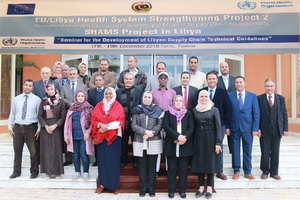
Seminar on developing Libyan supply chain technical guidelines
Participants at the workshop on improving the medicines supply chain in Libya30 December 2018 – A technical workshop on developing guidelines for medicines selection, procurement, storage and distribution in Libya was held between 17 and 19 December in Tunis. The workshop came as part of ongoing efforts to strengthen supply chain management systems...
Doctors from Tawerga trained to treat leishmaniasis
30 December 2018 ─ Intensive training in treating cutaneous leishmaniasis (CL) was provided by the WHO in Tunis for seven Libyan doctors from Tawerga city. The participant doctors take care of Internally Displaced Populations (IDPs) from Tawerga, with some working in IDP camps in Benghazi and Tripoli. The training was conducted by one of world’s...
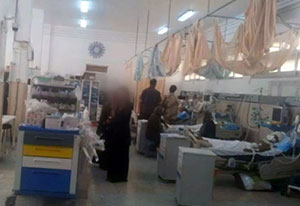
WHO condemns attack on Al Jala Hospital in Benghazi
27 December 2018 – The World Health Organization (WHO) strongly condemns the armed attack on Al Jala Hospital in Benghazi, Libya, on 25 December. The attack resulted in damage to the hospital infrastructure. Al Jala Trauma Hospital works with limited supplies and resources, and under extreme pressure, to save lives and provide medical services for...

EU supported training on medicines forecasting and quantification in Libya
Tripoli 27 December 2018 – A 2017 service availability and readiness assessment survey found general low availability (41%) of essential medicines in Libyan hospitals, and extremely low availability (10%) in primary health care facilities and pharmacies (13%). To bolster medicines supply planning in Libya and improve access to safe, effective and...
