


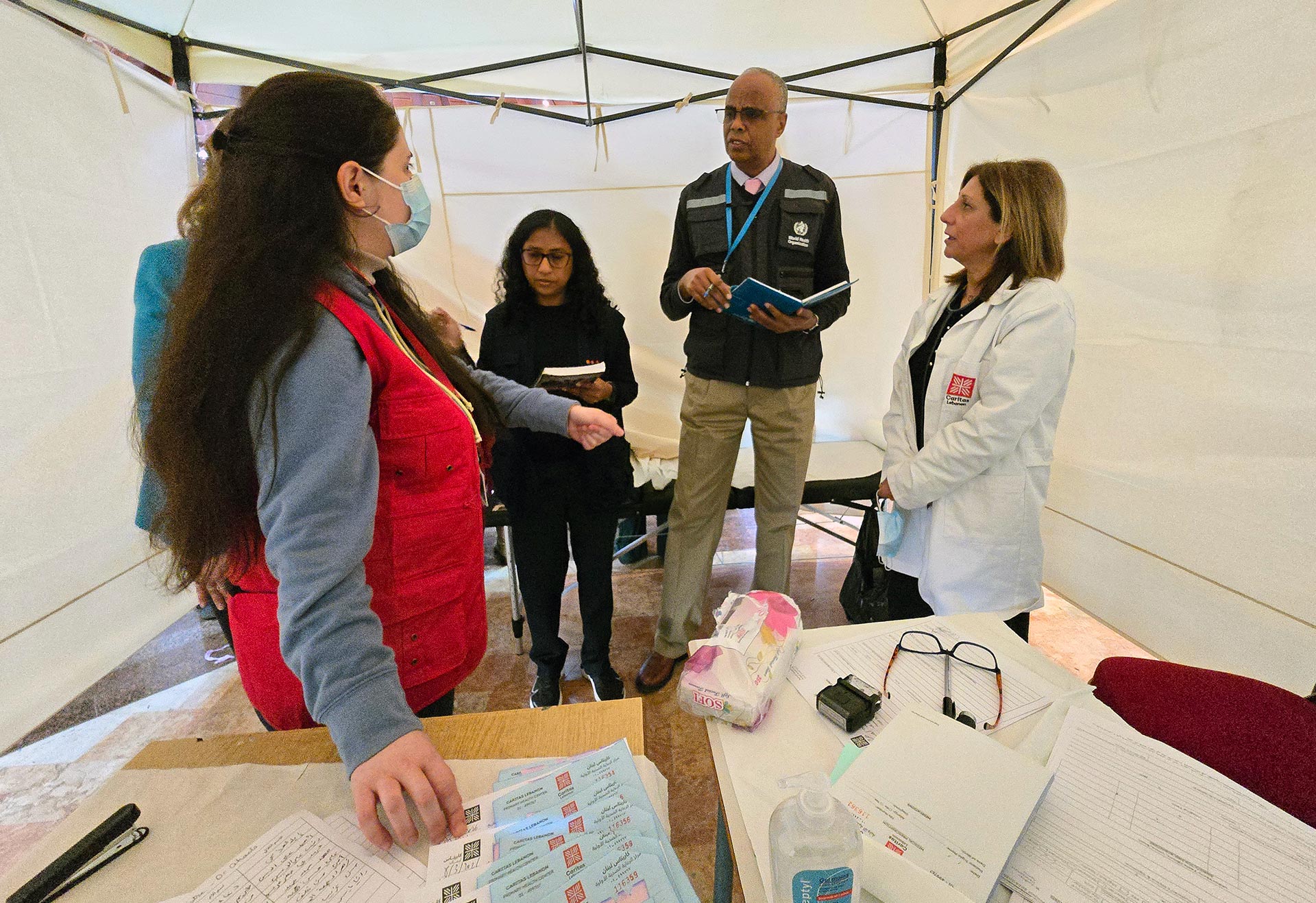
 WHO Representative in Lebanon and team visit the Dekwaneh shelter in Beirut, hosting internally displaced people and operated by health partner Caritas Lebanon. Photo credit: WHO
9 March 2026, Beirut, Lebanon – Following a visit to 2 shelters hosting internally displaced people (IDPs), the World Health Organization (WHO) is underlining the urgent need for support to ensure health, sanitation and psychosocial services for impacted families.
The visits to shelters operated with support from Caritas Lebanon, a key partner in the health sector response, were arranged as part of a joint mission involving WHO and the United Nations Population Fund (UNFPA). The first shelter currently hosts nearly 2600 displaced individuals, the second around 200. Many residents have been displaced from southern Beirut and areas in southern Lebanon, with some families having experienced multiple displacement since 2024.
During the visit, WHO assessed sanitation conditions, community support mechanisms and health service provision. The shelters are linked to nearby primary health care centres, with medical services delivered by a range of specialists, including paediatricians, gynaecologists and internal medicine physicians. Vaccination services to protect vulnerable children and reduce the risk of vaccine preventable disease outbreaks are also available.
During the visit, the team assessed water, sanitation and hygiene (WASH) conditions which are critical to prevent the spread of communicable diseases in crowded shelter settings. Although the shelters were deemed generally well-managed, sanitation facilities at both sites – particularly toilets – were found wanting. Concerns are being raised with the WASH sector and partners for appropriate follow-up action.
Psychosocial and mental health support is also provided to residents to address the stress and trauma associated with displacement.
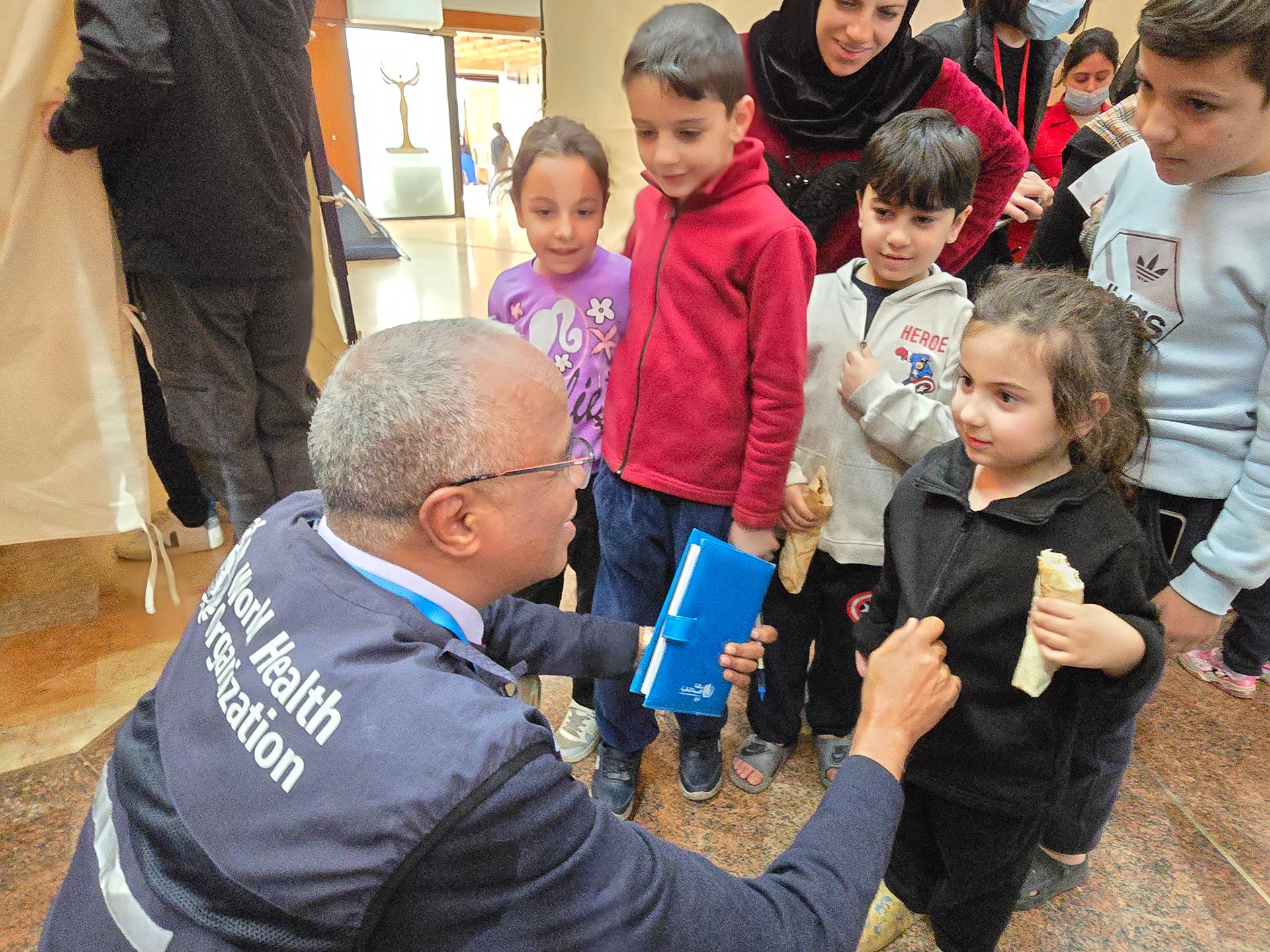
“There are significant health services currently available in these shelters, including paediatric care, internal medicine, gynaecology/obstetric services, vaccination programmes and mental health support. We acknowledge the commendable efforts of Caritas and other partners,” said a WHO representative. “Nevertheless, some gaps have been observed, particularly concerning sanitation facilities and medication availability. Addressing these areas will require coordinated action from the Ministry of Public Health and relevant partners to ensure that displaced communities continue to receive appropriate care and protection.”
WHO recognizes the collaborative efforts of the Ministry of Public Health and health sector partners in addressing the health care needs of displaced populations and commends the dedication of the health sector team in enhancing coordination for the emergency health response.
WHO will continue to monitor shelter conditions and, together with national authorities and humanitarian partners, work to strengthen the health response and ensure access to essential services for displaced individuals.
