


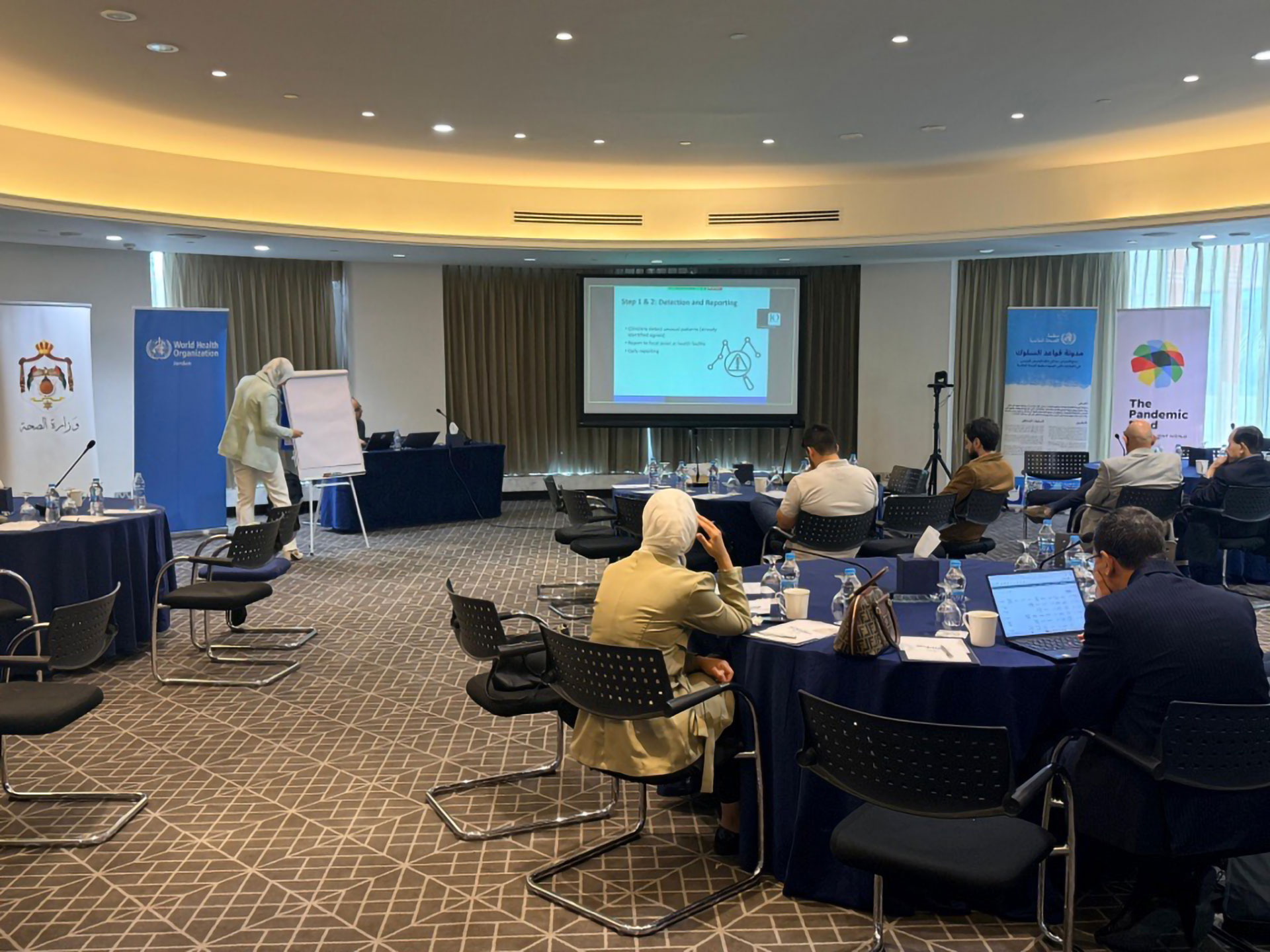
03 June 2026, Amman, Cairo – The WHO Regional Office for the Eastern Mediterranean, in collaboration with the Ministry of Health of Jordan, has concluded a workshop on event‑based surveillance in Amman.
The workshop, supported by the Pandemic Fund, marked an important step towards strengthening Jordan’s public health intelligence by expanding the existing event‑based surveillance into an all‑hazards, multisectoral system aligned with the One Health approach.
Event‑based surveillance is a core component of public health intelligence, supporting the early detection of unusual health events and emerging risks from diverse information sources.
In Jordan, event‑based surveillance has primarily focused on health facility‑based surveillance for respiratory diseases, which has contributed to the improved detection and reporting of priority respiratory events. However, this focus has been limited in scope and in the information sources it draws on.
The workshop aimed to review and update the existing event‑based surveillance guidelines to expand their coverage beyond respiratory diseases and health facilities. Participants worked together to develop an expanded event‑based surveillance framework that captures signals related to infectious, zoonotic, environmental and other public health threats, drawing information from a broad range of sources, including veterinary services, community observations, media, schools and environmental monitoring.
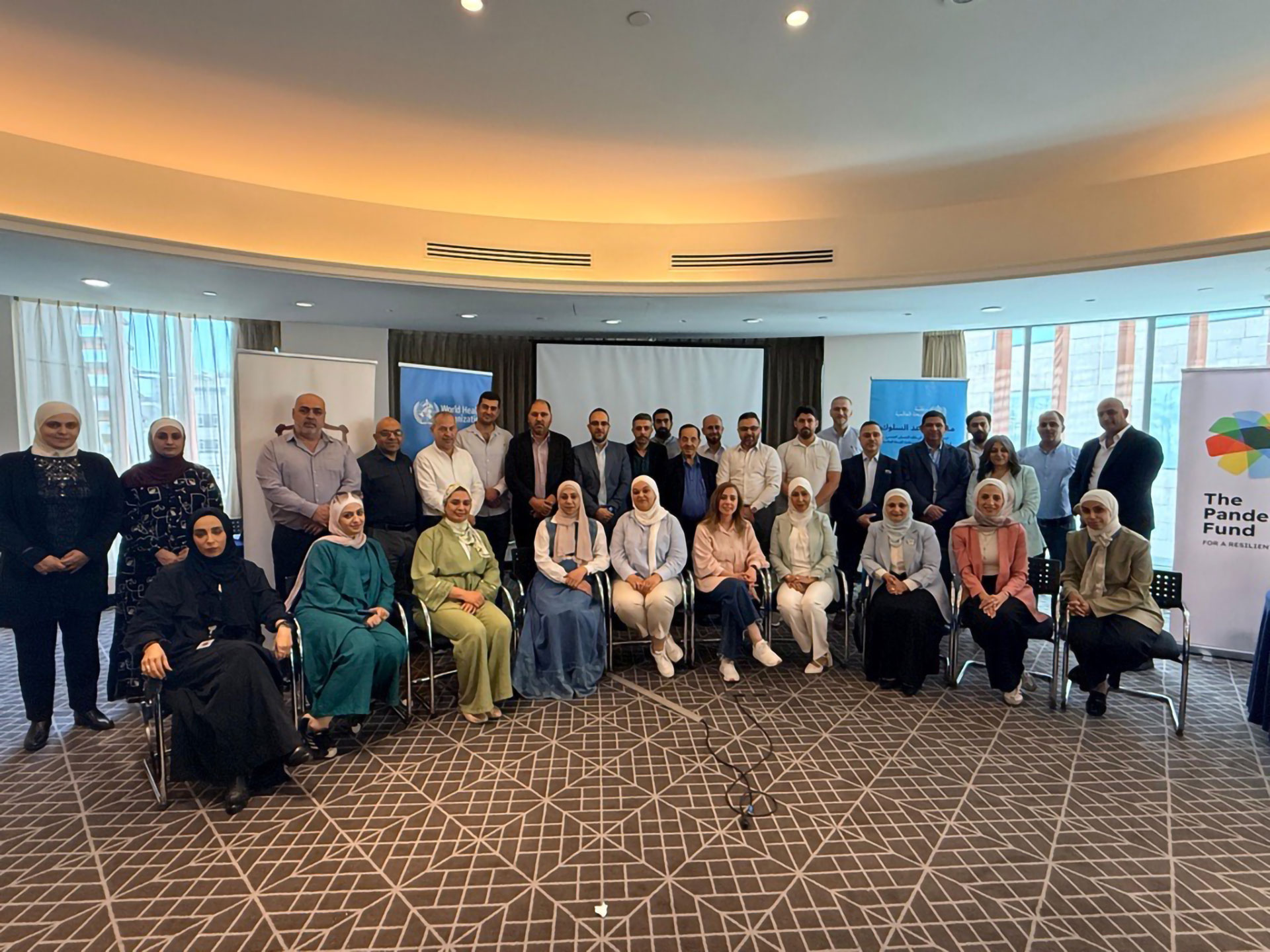
A key strength of the workshop was its strong multisectoral participation, reflecting the One Health and all‑hazards approach required for effective early warning and response. In addition to the Ministry of Health, there was active participation by the Ministry of Agriculture, environmental health departments and school health departments, as well as the Jordan Center for Disease Control. Regional and international partners, including the Eastern Mediterranean Public Health Network and the Civilian Research & Development Foundation (CRDF) Global, provided technical input and facilitated discussions.
Through structured group work and plenary discussions, participants from different sectors jointly:
- identified and prioritized hazards of national relevance for inclusion in the expanded event‑based surveillance guidelines;
- mapped potential signals and information sources beyond the health sector;
- reviewed and aligned event‑based surveillance processes, including detection, verification, risk assessment, reporting and response
The workshop also provided a platform to discuss and agree on roles and responsibilities across sectors and levels, ensuring clarity in reporting pathways and decision‑making during the early stages of public health events.
By the end of the workshop, participants had drafted a roadmap for expanding event‑based surveillance in Jordan, outlining priority actions, responsible stakeholders and the next steps required to operationalize the updated multi‑hazard event‑based surveillance guidelines.
The workshop demonstrated the added value of multisectoral collaboration and reinforced Jordan’s commitment to strengthening early warning capacities through a One Health, all‑hazards approach.
The outcomes will aid the finalization of expanded event‑based surveillance guidelines and guide their phased implementation to enhance the preparedness for and timely response to public health threats in Jordan.
