


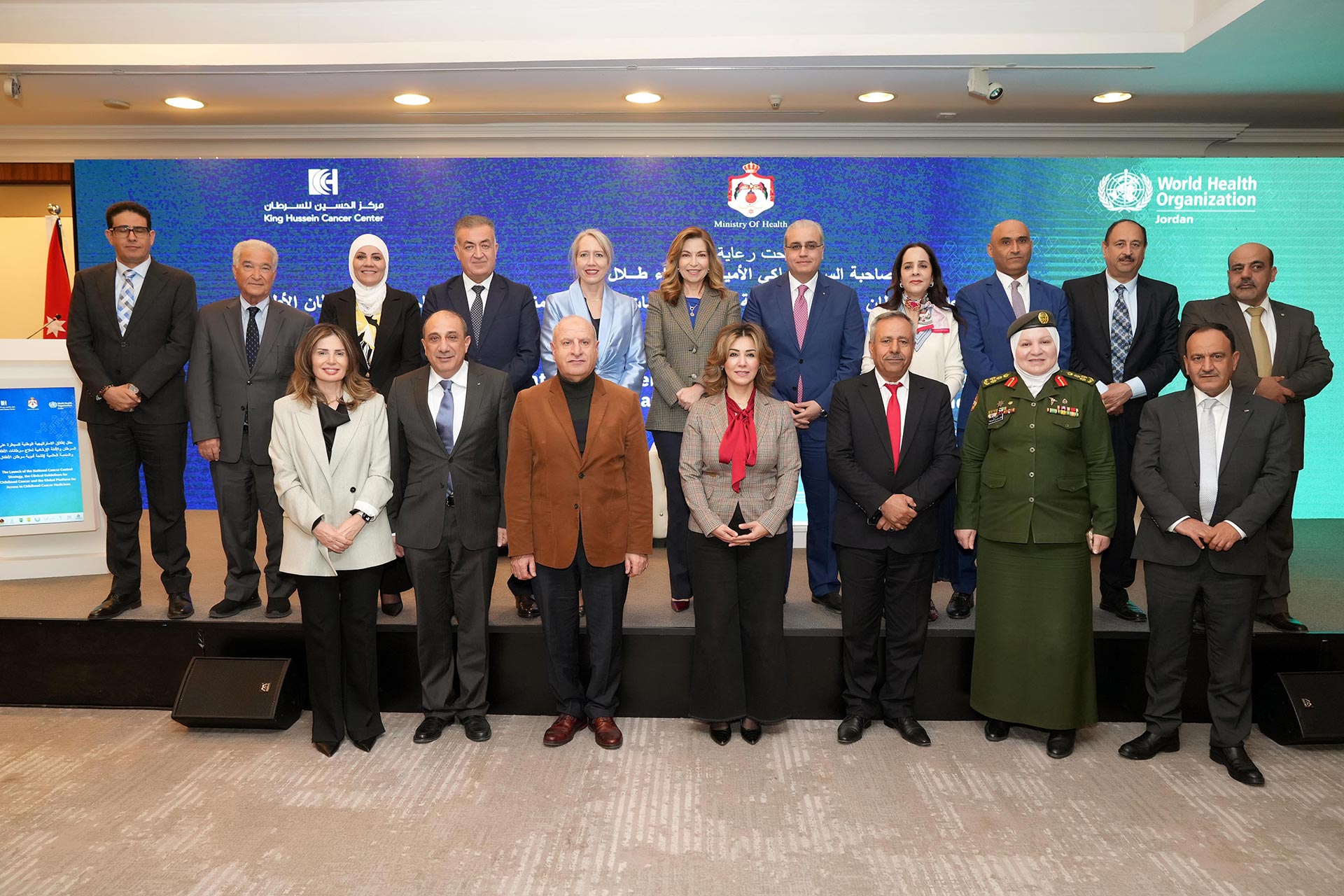
17 February 2026, Amman, Jordan - Under the patronage of Her Royal Highness Princess Ghida Talal, Chairperson of the King Hussein Cancer Foundation and King Hussein Cancer Center, Jordan commemorated International Childhood Cancer Day 2026 by unveiling three transformative national initiatives to strengthen the country’s cancer response.
The high-level event, jointly organized by the Ministry of Health and the World Health Organization (WHO), brought together partners from across the health sector, including the Jordanian Royal Medical Services, academia, the private sector and civil society. The gathering underscored a unified national commitment: no child with cancer should be left behind.
A strategic roadmap for the future
Central to the event was the launch of Jordan’s National Cancer Control Strategy 2026–2030, a comprehensive roadmap designed to enhance prevention, early detection, diagnosis, treatment, palliative care, research, surveillance and governance.
Aligned with Jordan’s Economic Modernization Vision, the strategy offers a structured, evidence-based framework to improve both the quality and sustainability of cancer services nationwide. Rather than implementing isolated interventions, it signals a shift towards a coordinated, system-wide response to deliver measurable improvements in patient outcomes.
Standardizing care for children with cancer
In parallel, six national paediatric cancer clinical guidelines were introduced. Developed by a multidisciplinary national committee representing all relevant sectors, the guidelines are rooted in international best practices and tailored to Jordan’s health care context.
With technical and financial support from WHO and St. Jude Children’s Research Hospital, the guidelines aim to standardize treatment pathways across the country, ensuring that every child, regardless of location, receives consistent, high-quality, evidence-based care. This initiative represents a critical step toward reducing variations in treatment and improving survival outcomes.
Securing sustainable access to life-saving medicines
A defining moment of the event was the operationalization of the Global Platform for Access to Childhood Cancer Medicines in Jordan. Following the signing of a Letter of Agreement between the Government of Jordan and WHO in August 2024, the platform now supports a continuous supply of quality-assured childhood cancer medicines.
Dr Ibrahim Al-Bdour, Minister of Health, remarked:
“Jordan has placed cancer care at the forefront of its national health priorities for decades, from expanding specialized oncology services to strengthening early detection and treatment programmes. The launch of the National Cancer Control Strategy and our accession to the Global Platform for Access to Childhood Cancer Medicines reflect our firm commitment to ensuring that every patient, especially every child, has access to advanced, high-quality care according to the highest medical standards. This is not only about treatment, but about improving survival rates, quality of life and the sustainability of cancer services across the Kingdom.”
Beyond procurement, the initiative strengthens Jordan’s pharmaceutical supply chain, enhances regulatory oversight, improves pharmacy services and ensures equitable distribution of medicines nationwide. The platform directly supports universal health coverage, translating policy into tangible impact for children and their families.
A strategic turning point
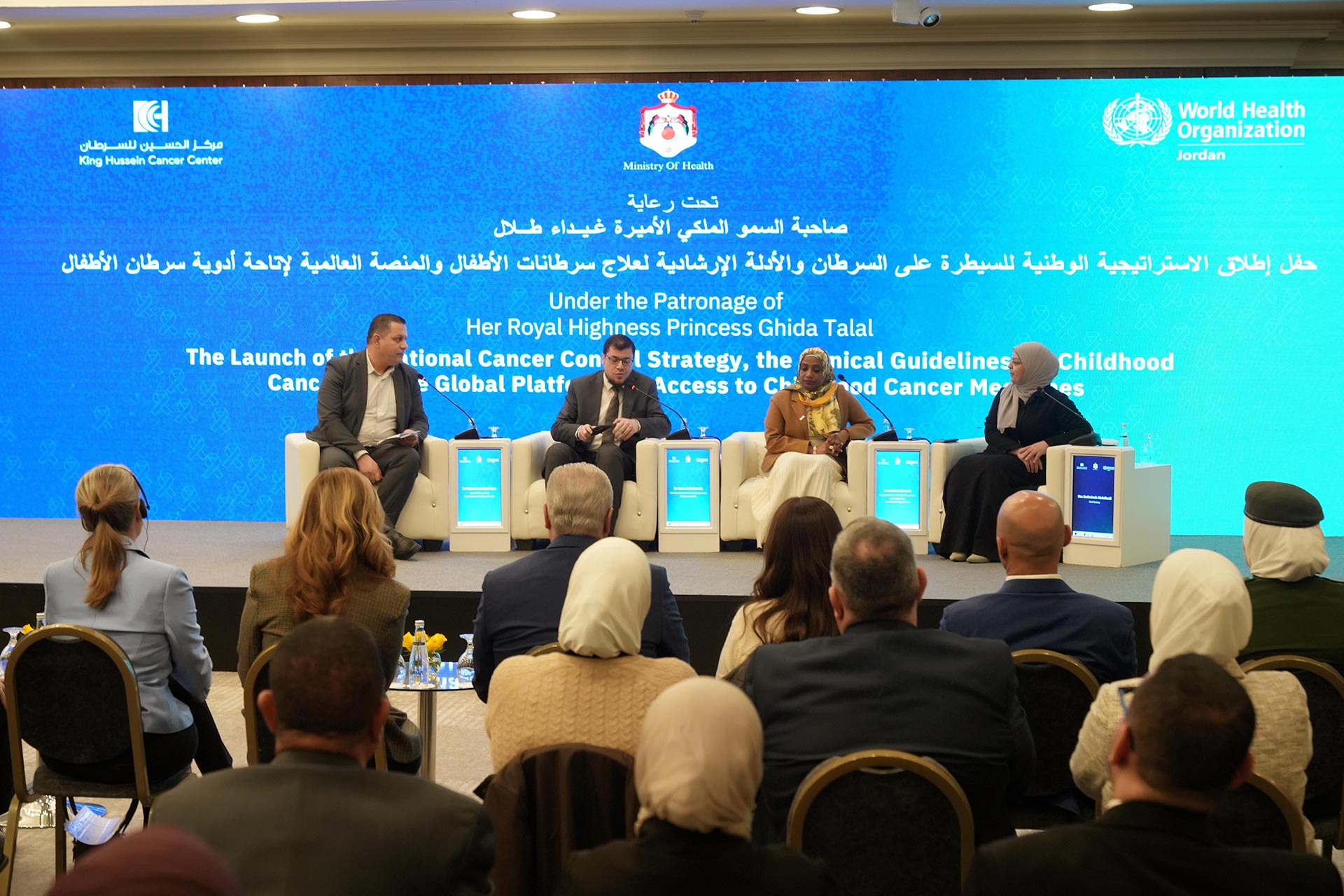
Commenting on the occasion, Dr Iman Shankiti, WHO Representative to Jordan, said:
“Today, the launch of these initiatives represents a strategic turning point in Jordan’s national cancer response. By standardizing treatment pathways, strengthening regulatory frameworks, and ensuring sustainable and equitable access to quality-assured cancer medicines, Jordan is establishing an integrated model that translates policies into tangible impact and directly improves patient health outcomes.”
Equity, protection and broader impact
Ms Sheri Ritsema-Anderson, UN Resident Coordinator in Jordan, added:
“This is what SDG 3 - Good Health and Well-being - means in real terms. Good health is linked to poverty, education, inequality and partnerships. By treating children early and including marginalized and refugee communities, Jordan builds a fairer society and protects families from catastrophic health costs.”
This perspective underscores the broader social impact of Jordan’s childhood cancer initiatives, emphasizing equity, financial protection and inclusion.
From vision to implementation
Together, the three milestones form a mutually reinforcing framework:
- The National Cancer Control Strategy provides overarching direction.
- The clinical guidelines operationalize standardized care.
- The global medicines platform ensures sustainable access to treatment.
Collectively, these initiatives demonstrate that Jordan’s national cancer response is not merely aspirational - it is actionable, institutionalized and already being implemented.
On International Childhood Cancer Day 2026, Jordan went beyond commemoration. The country marked a decisive transition from planning to systematic action, strengthening its health system so that every child diagnosed with cancer has a fair chance at survival and a healthier future.
