


2 December 2025, Baghdad, Iraq – Iraq has taken an important step towards strengthening national health security with the development of its first community protection strategy and new action plans for pandemic influenza preparedness and mass gatherings. These efforts represent the country’s most comprehensive move to date to place communities at the centre of preparedness and response in a way that reflects evolving health risks and national priorities.
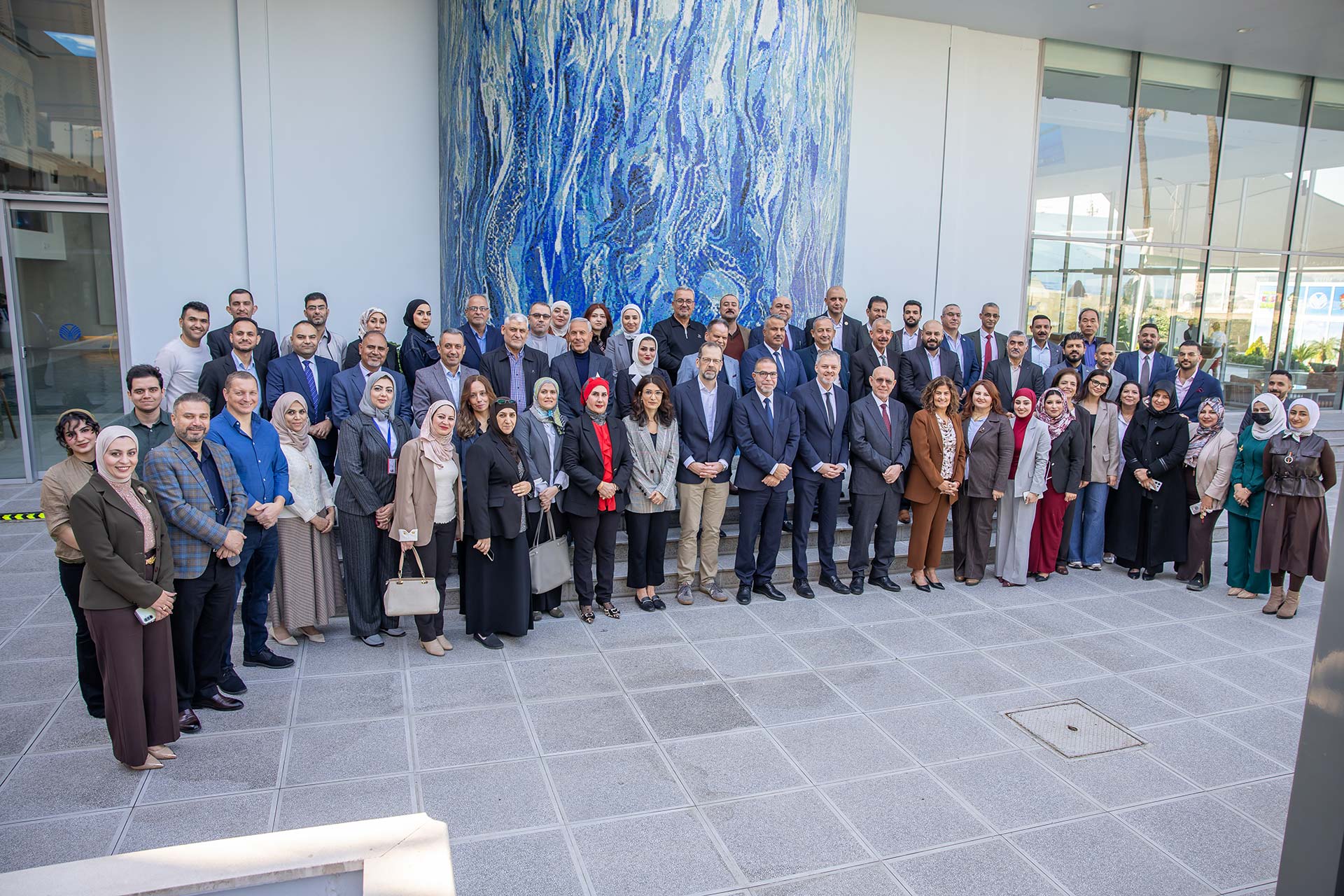 Participants in the national workshop to develop a community protection strategy for health emergencies in Iraq. Photo credit: WHO/Iraq
To drive work forward, the World Health Organization (WHO) and the Iraqi Ministry of Health, in collaboration with the Robert Koch Institute (RKI), held a 5-day national workshop in Baghdad from the 23 to 27 November 2025. The workshop brought together more than 60 representatives from national authorities, technical experts and community leaders.
Participants reviewed Iraq’s priority health risks, explored ways to strengthen community engagement and practiced rapid decision-making through strategic planning sessions and simulation exercises focused on pandemic influenza, mass-gathering risks and other emerging threats.
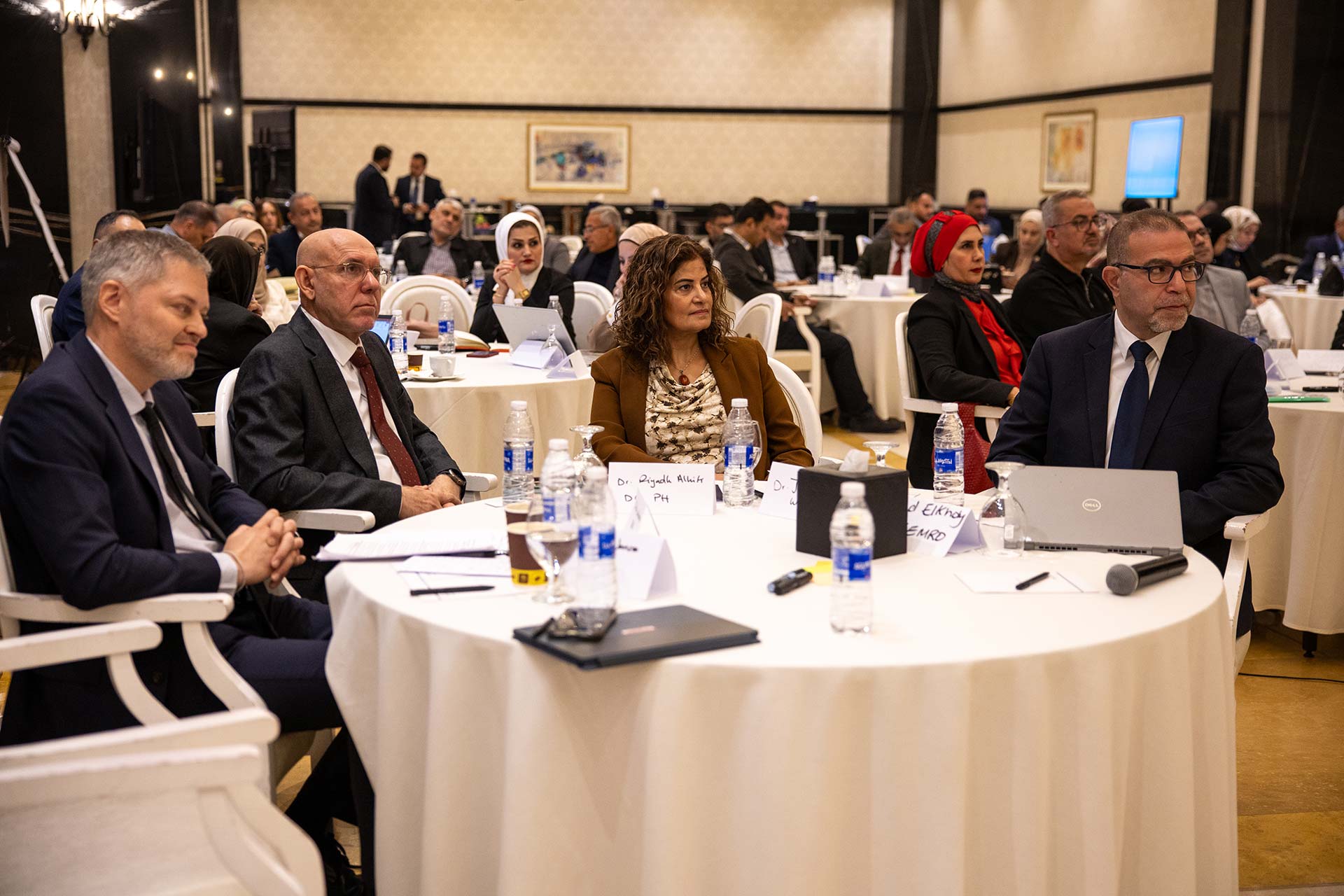 Dr Jamela Al-Raiby, WHO Representative in Iraq, Dr Riyadh Abdulameer Al-Halfi, Director General of the Public Health Directorate at the Iraq Ministry of Health, Amgad Abdalla El-Kholy, WHO Regional Office for the Eastern Mediterranean and Dr Kai von Harbou from WHO headquarters. Photo credit: WHO/Iraq
Sessions highlighted the importance of incorporating community perspectives into emergency planning to ensure that preparedness plans reflect the needs of local populations. Representatives from public health directorates, communicable disease units, risk communication and community engagement teams and emergency medical services shared insights from their daily work.
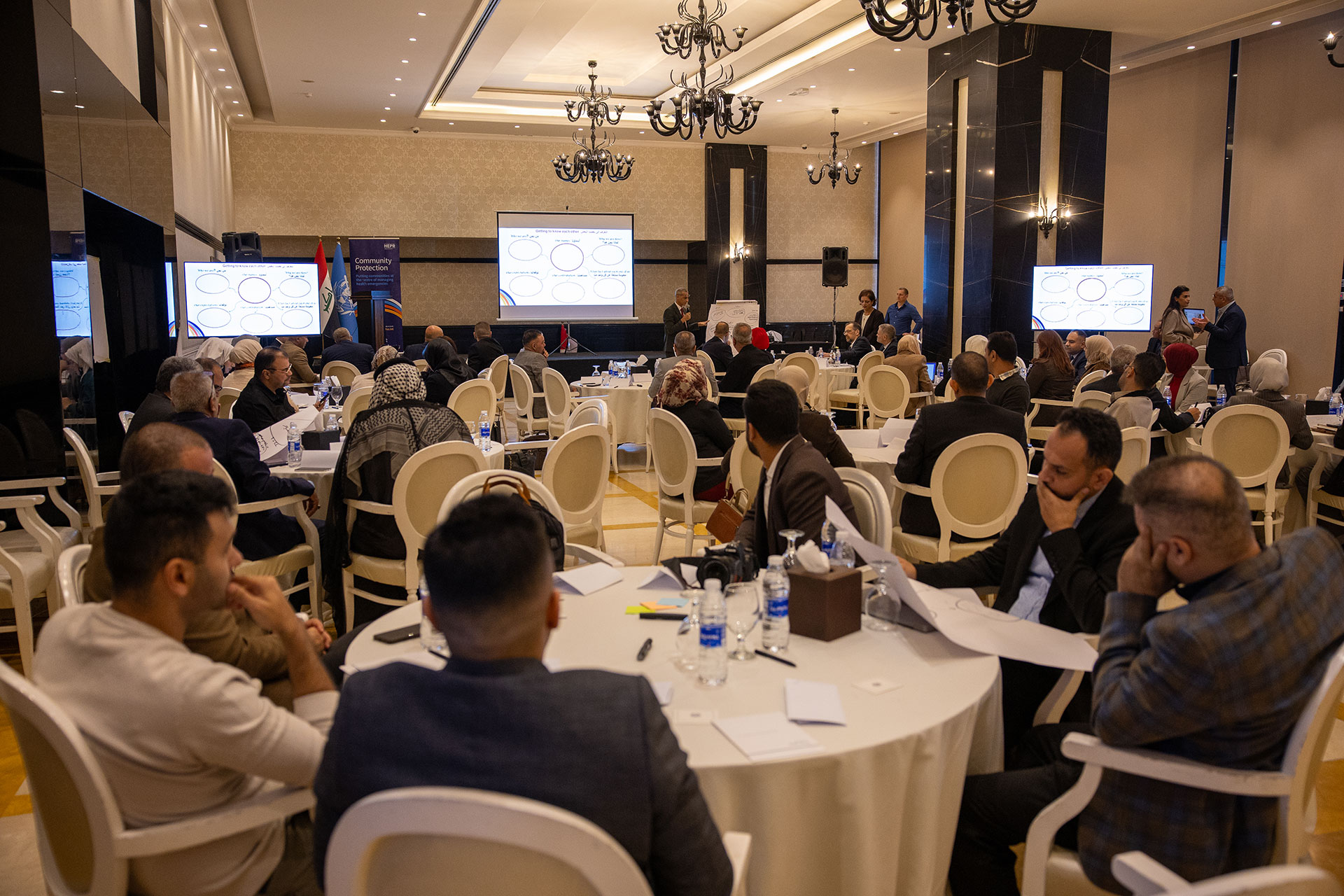 Participants during the national workshop. Photo credit: WHO/Iraq
Iraq’s complex, interconnected health landscape includes pandemic threats, climate-sensitive diseases, displacement-related vulnerabilities and the pressures that result from hosting religious mass gatherings such as Arbaeen, one of the world’s largest.
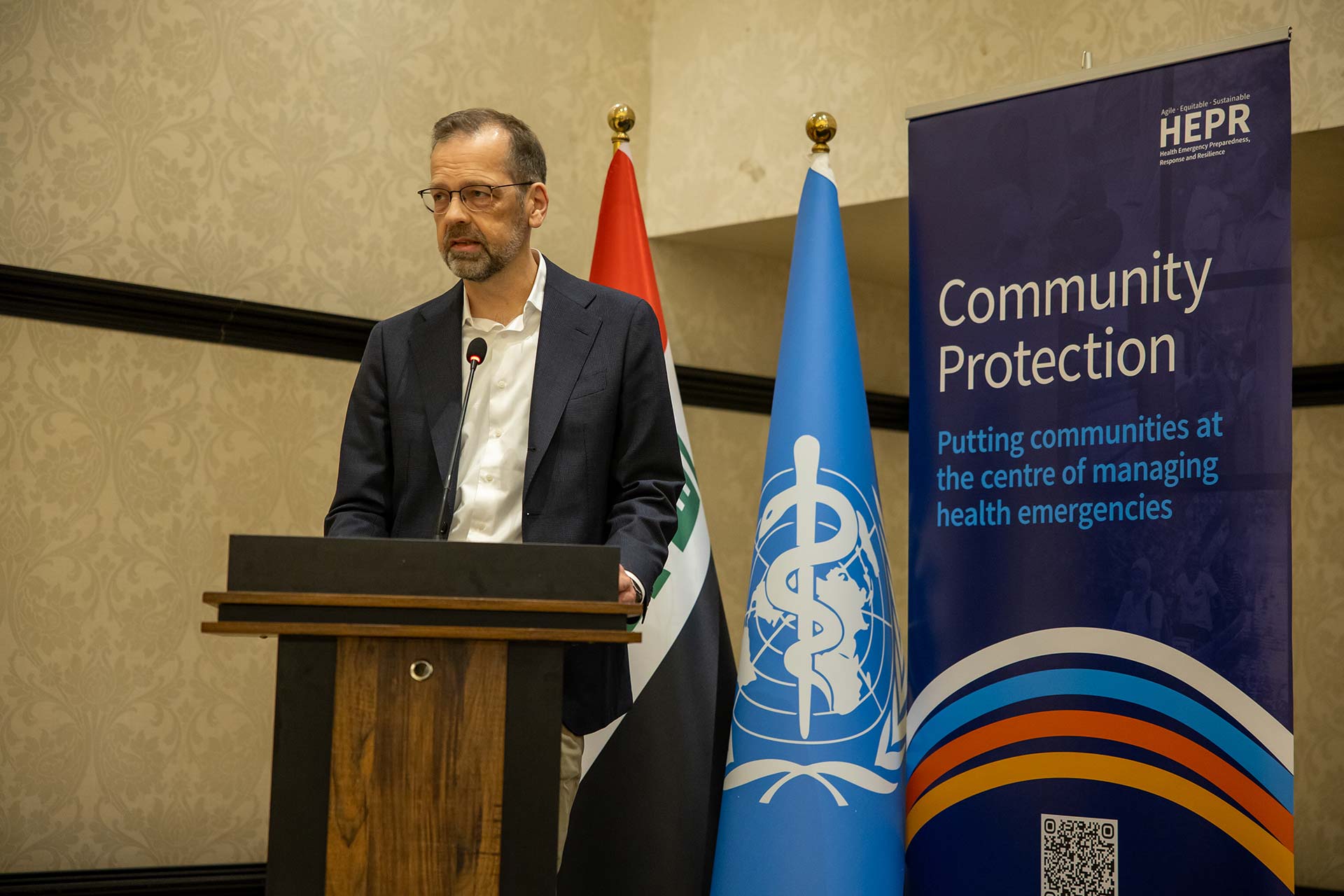 Dr Andreas Jansen, Robert Koch Institute. Photo credit: WHO/Iraq
WHO Representative in Iraq Dr Jamela Al-Raiby emphasized that “protecting communities during health emergencies should start long before a crisis occurs”.
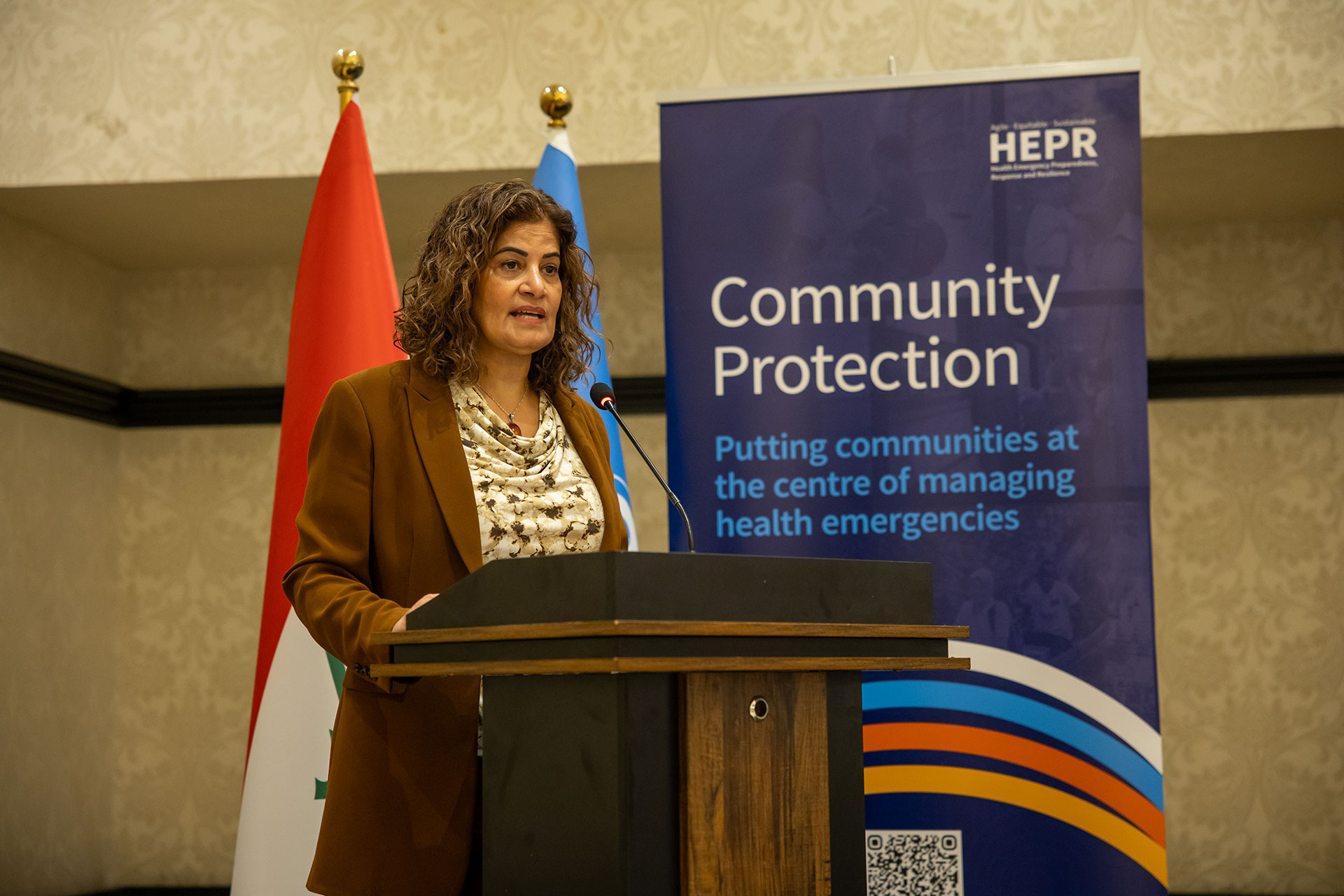 WHO Representative in Iraq Dr Jamela Al-Raiby. Photo credit: WHO/Iraq
“This workshop is critical to building a stronger, more resilient system that can respond quickly and effectively when it matters most,” she said.
The joint effort is a step towards building a public health emergency system in Iraq that is better prepared, better connected and more deeply rooted in community needs.
Participating institutions committed to transforming the week’s recommendations into actions that will strengthen Iraq’s capacity to protect communities during future emergencies by harmonizing cross-cutting areas and foregrounding community participation. Partners also acknowledged the value of sustained dialogue and coordination as Iraq advances its preparedness planning.
