


Select your language

World No Tobacco Day 2026
Unmasking the appeal – countering nicotine and tobacco addiction
Under the banner “Unmasking the appeal – countering nicotine and tobacco addiction”, this year’s World No Tobacco Day campaign will expose how the tobacco and nicotine industry continues to reinvent and repackage its products to hook a new generation, particularly children and adolescents, while evading stronger tobacco control measures.
Despite decades of progress, tobacco and nicotine products continue to cause millions of preventable deaths each year. Using an arsenal of deceptive tactics, attractive packaging designs, flavours and digital marketing, the tobacco industry is masking the dangers of addiction and targeting new generations.
Key facts
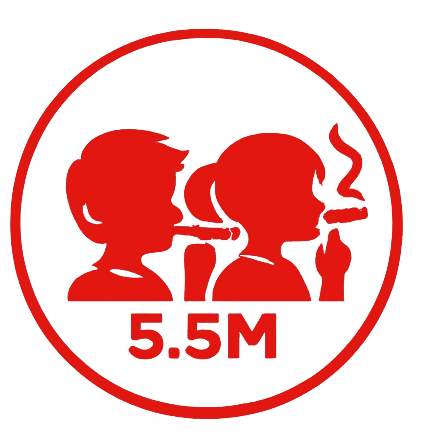
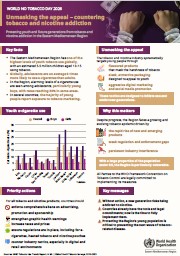
The Eastern Mediterranean Region has one of the highest levels of youth tobacco use globally, with an estimated 5.5 million children aged 13–15 using tobacco.
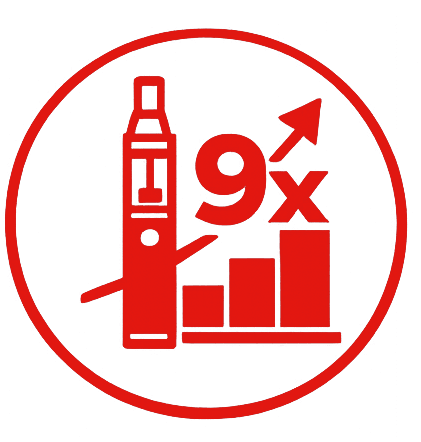
Globally, adolescents are on average 9 times more likely to use e-cigarettes than adults. In the Eastern Mediterranean Region, levels of e-cigarette use among adolescents, particularly among young boys, are alarming, with rates reaching 30% in some areas.
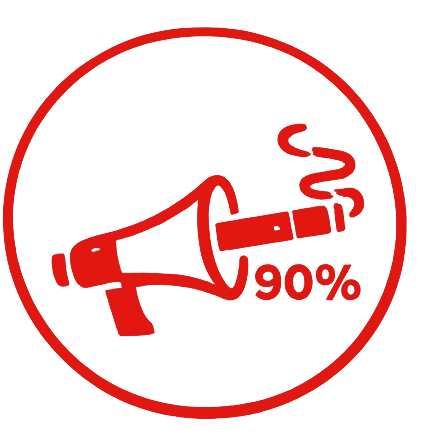
In many countries in the Region, a vast majority of young people report exposure to tobacco advertising and promotion, with some surveys showing levels approaching 80%–90%.
Why this matters
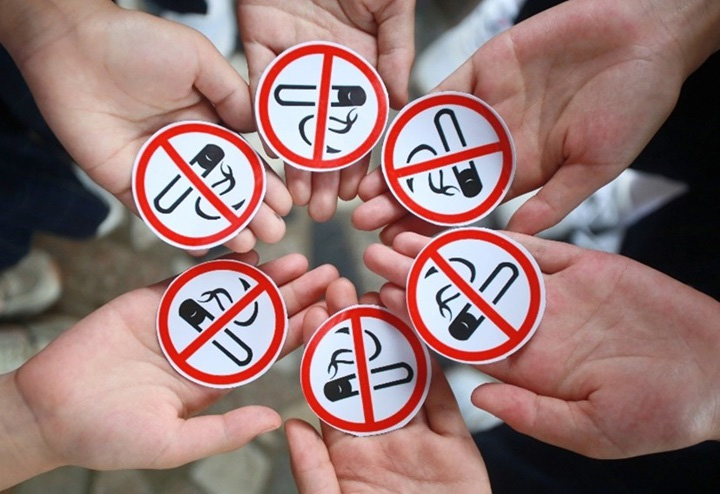 The Region faces a growing and evolving tobacco epidemic driven by:
- the rapid rise of new and emerging products;
- weak regulation and enforcement gaps; and
- persistent industry interference.
With a large proportion of the Region’s population under 30, without decisive action a new generation is at risk of becoming addicted to nicotine.
This year’s campaign calls on governments, partners and communities to advance policies that protect people from life-long addiction.
To counter tobacco and nicotine addiction, policy-makers must act now.
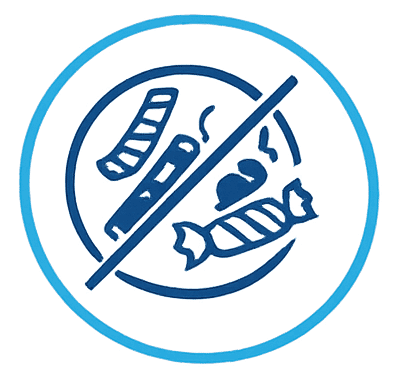
Make flavours a thing of the past
Flavours such as menthol, bubble gum and cotton candy mask the harshness of tobacco and nicotine products, turning toxic products into youth-friendly bait. Protect youth from addiction and disease by banning flavours across all tobacco and nicotine products.
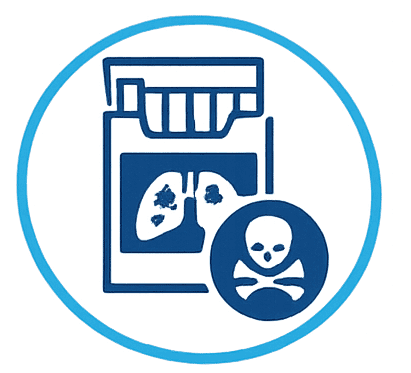
Regulate product design
Tobacco companies use packaging to make harmful tobacco products appear appealing and to distract from health risks. Use large, clear graphic health warnings on both the front and back of packages.
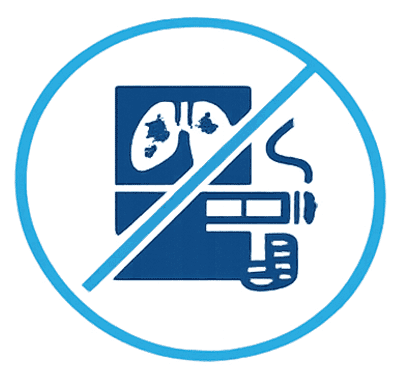
Reduce appeal, save lives
Standardize the appearance of tobacco products and packaging by prohibiting logos, colours, brand images and promotional information. Plain packaging reduces the attractiveness of tobacco products, limits advertising and increases health warning effectiveness.

Ban advertising, promotion and sponsorship
Enforce a total ban on all forms of tobacco advertising, promotion and sponsorship, including digital and social media marketing, and prevent the industry from shifting to nonregulated marketing channels. Out of sight means out of mind.

Clean air is everyone’s right
Implement a total ban on smoking in indoor public places, including workplaces, bars, restaurants and public transport. A total ban protects people from the harms of second-hand smoke, helps smokers quit and reduces youth smoking.
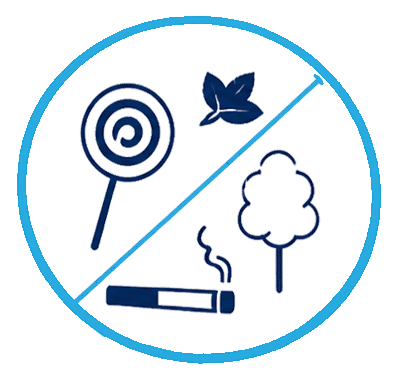
Break the cycle of nicotine addiction
Offer help to quit tobacco use through strengthening national tobacco cessation systems. Integrate brief tobacco interventions into primary care systems, develop national toll-free quit lines and expand mCessation projects.

Increase taxes on tobacco products
Higher prices lead to lower consumption and help prevent youth initiation.
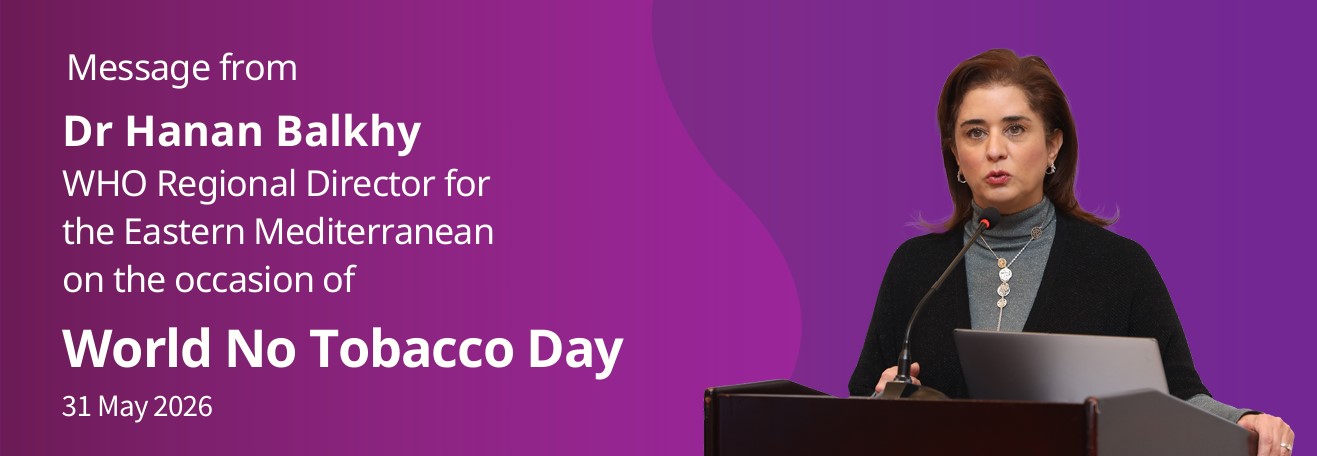
Regional Director's message
Factsheet
 |
The Eastern Mediterranean Region has one of the highest levels of youth tobacco use globally, with an estimated 5.5 million children aged 13–15 using tobacco. |
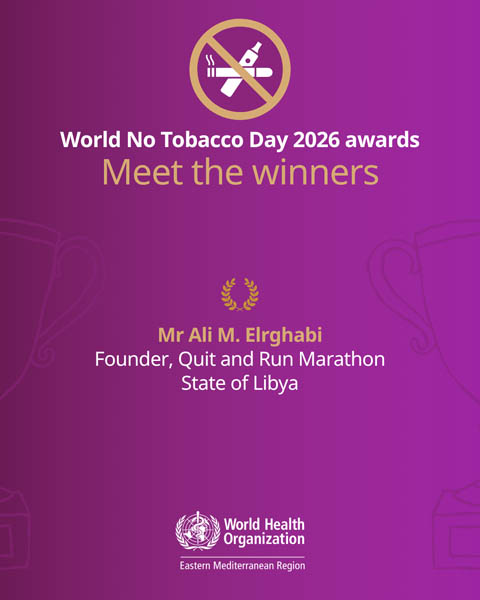
World No Tobacco Day 2026 awards – meet the winners
Each year, WHO honours individuals and organizations from each of the six WHO regions for their outstanding contributions to tobacco control. The recipients of the 2026 awards are:
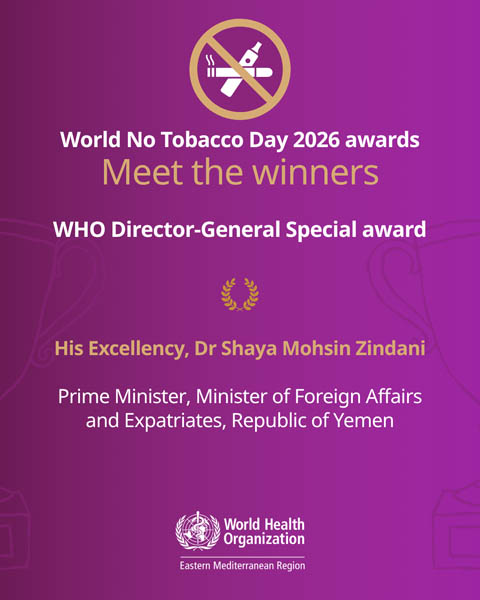
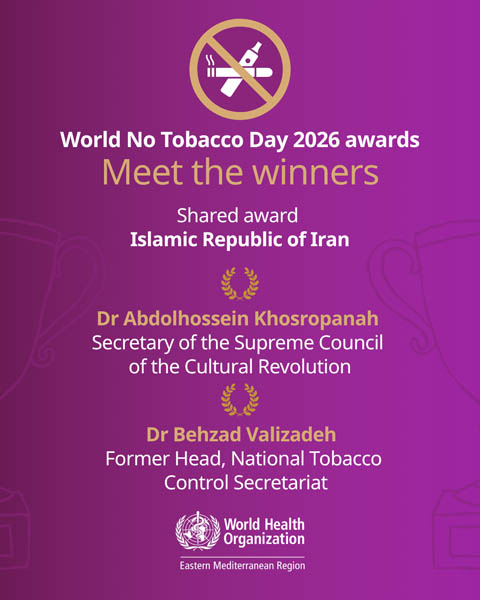
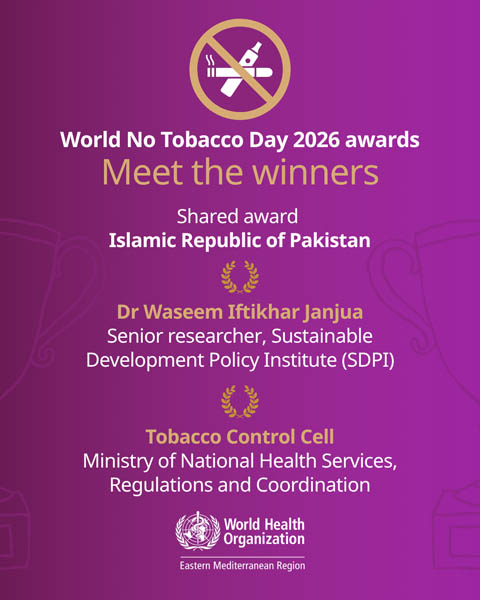
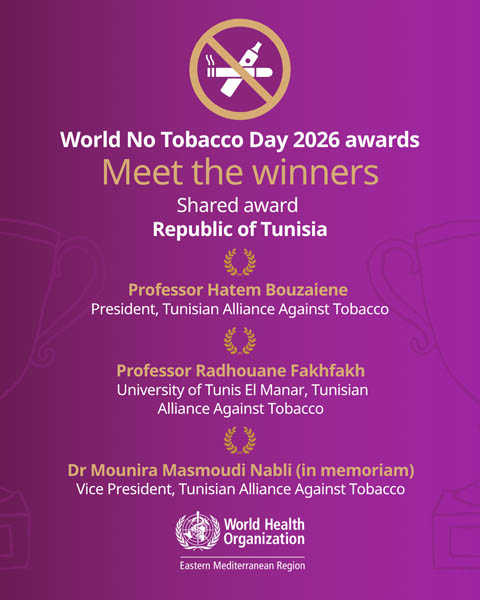
Professor Hatem Bouzaiene, President, Tunisian Alliance Against Tobacco shared award with Professor Radhouane Fakhfakh, University of Tunis El Manar, Tunisian Alliance Against Tobacco and Dr Mounira Masmoudi Nabli (in memoriam), Vice President, Tunisian Alliance Against Tobacco, Republic of Tunisia | Arabic
Related links
WHO report on the global tobacco epidemic, 2025: warning about the dangers of tobacco
