

Sélectionnez votre langue
World Malaria Day 2026: Yemen rallies to end malaria
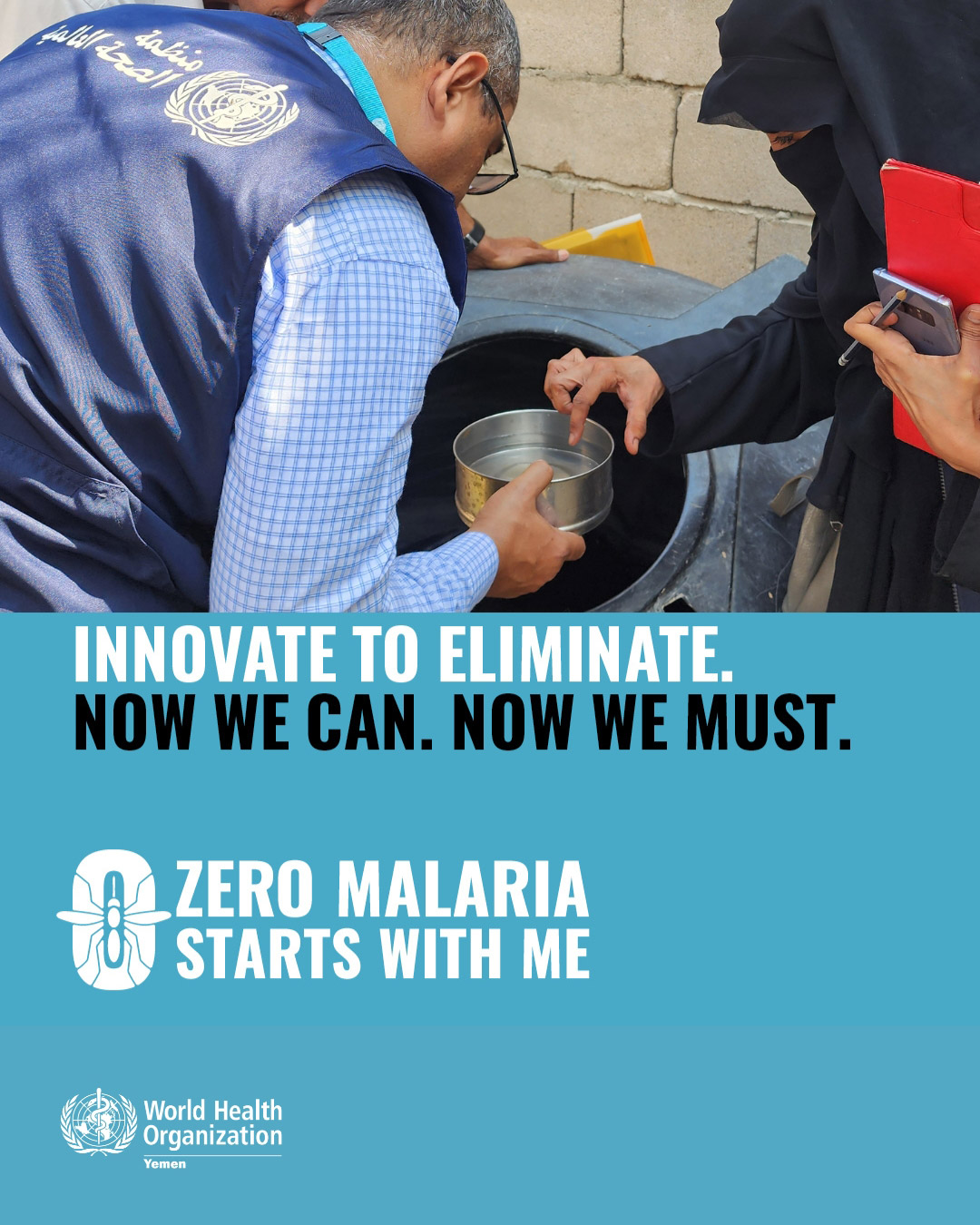 25 April 2026, Aden, Yemen – On World Malaria Day 2026, under the global theme “Driven to End Malaria: Now We Can. Now We Must”, the World Health Organization (WHO) joins the Ministry of Public Health and Population and partners in Yemen to reaffirm commitment to ending the disease.
Malaria remains a major public health concern in Yemen, with approximately 64% of the population residing in areas at risk of transmission. In 2025, 1,442,270 malaria cases were tested. The most vulnerable groups include pregnant women and children under five years of age. While malaria is endemic across the country, regions with historically low transmission rates are increasingly susceptible to outbreaks, particularly due to population movements, limited access to healthcare in remote areas, and climatic changes such as rising temperatures, heavy rainfall, and high humidity.
Despite ongoing conflict, climate shocks and strained health systems, progress is being made through coordinated national efforts and sustained partner support. Hope is within reach. Scientific advances are transforming the global malaria response. New vaccines, innovative treatments, next-generation mosquito nets and emerging technologies are bringing the world closer than ever to ending malaria.
Around the world, countries are scaling up lifesaving tools. The urgency is real. Malaria does not wait. Any disruption to funding and services can quickly reverse progress, putting lives at risk and increasing the burden on already fragile health systems. In Yemen, where access challenges and resource constraints persist, sustained investment is urgently needed to protect gains and prevent resurgence.
Action must be taken now. With support from partners, including the King Salman Humanitarian Aid and Relief Centre (KSrelief), WHO continues to implement large-scale malaria prevention and control interventions across multiple governorates. Efforts include the deployment of mobile health teams, distribution of essential medicines and supplies, strengthening surveillance systems and community awareness campaigns aimed at early detection and treatment.
“Yemen stands at a critical moment in the fight against malaria,” said WHO Representative in Yemen Dr Syed Jaffar Hussain. “We have the tools, the knowledge and the partnerships to end malaria. What we need now is sustained commitment and investment. Every delay risks lives – especially among the most vulnerable.”
WHO calls on all partners, donors and stakeholders to grasp the moment, protect lives now and fund a malaria-free future. Continued investment will ensure that lifesaving interventions reach those who need them most and that progress towards elimination is accelerated.
On this World Malaria Day, communities, health workers and partners across Yemen are united behind a shared message: Now We Can. Now We Must.
Media contacts
WHO Yemen Communications
Email:
About WHO
Founded in 1948, the World Health Organization (WHO) is the United Nations agency dedicated to promoting health, keeping the world safe and serving the vulnerable. WHO leads global efforts to expand universal health coverage, coordinate responses to health emergencies and advance well-being for all.