

Sélectionnez votre langue
Restoring dignity and safety through WASH – a new chapter for Marib and Matna hospitals
12 January 2026, Aden, Yemen – For years, stepping into Marib General Hospital meant entering a place fighting its own battles. Overcrowded corridors. Walls swollen with humidity. Bathrooms that constantly leaked or clogged. Floors cracked from overuse. Air heavy with the weight of too many patients and too few functional systems.
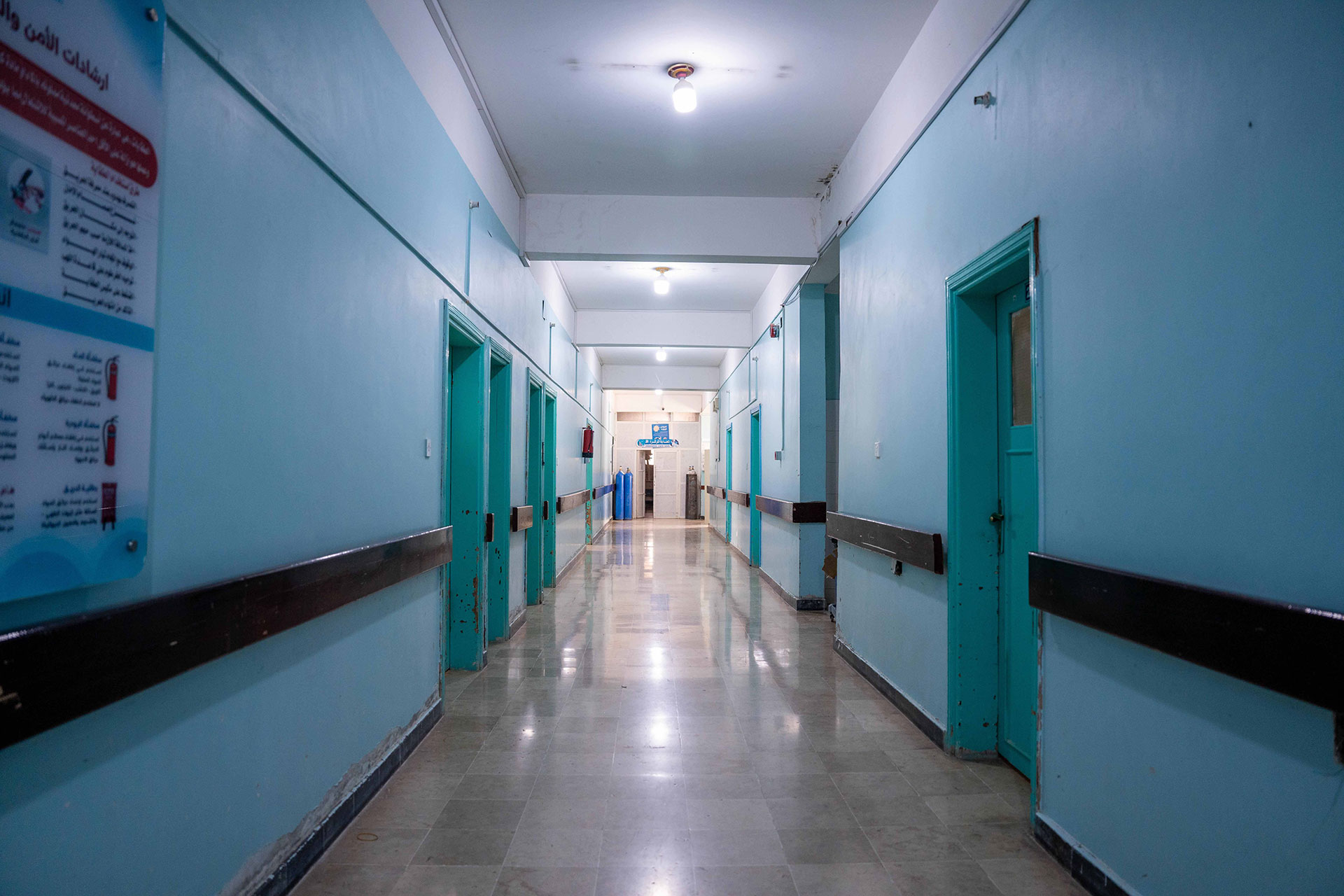 The hospital corridors are in poor condition, with peeling paint. Photo credit: WHO Yemen
It was a hospital doing its best – but one, where the environment itself worked against healing.
“Before the renovation, we faced constant humidity, water leaks and malfunctioning bathrooms,” recalls Abdulkarim Abdulhussein, Director of Marib General Hospital Authority.
“These issues affected medical services and even the psychological well-being of patients.” Yet thousands continued to walk through its doors, because they had nowhere else to go.
A transformation families can feel
Today that reality has changed – profoundly.
With generous support from King Salman Humanitarian Aid & Relief Centre, and in close partnership with the Ministry of Public Health and Population, WHO restored not just buildings but the sense of dignity and safety that families in Yemen have long deserved.
 Exterior view of the hospital building, showing the main structure and surrounding area with the signboard of Ksrelief. Photo credit: WHO Yemen
Across Marib and Matna hospitals, WASH rehabilitation has brought:
- modern, disability-inclusive restrooms
- reliable water systems built to withstand pressure
- clean, restored floors and walls
- sanitation systems that actually protect health
- proper ventilation and functioning air-conditioning
- infection-prevention upgrades in high-risk areas.
These improvements are more than infrastructure – they are a lifeline.
“The difference is very significant,” says Hussain, a long-time patient. “Before, we had to look for several hospitals to meet our needs. Now everything is here – better equipment, better services, better specialists and a clean environment.”
A hospital reborn in the eyes of its community
For patients like Ibrahim, who brings his family for treatment every few months, the change is immediate, visible and deeply felt.
“The renovations to the floors, walls and bathrooms created a real transformation,” he shares.
Families now walk into spaces that feel clean and safe, not stressful and uncertain.
On the frontlines: a safer emergency room
 Improved hospital corridors following rehabilitation and painting works. Photo credit: WHO Yemen
Inside one of Yemen’s busiest emergency departments, where 150 to 300 patients arrive every single day, the transformation has been lifesaving.
“Upgrading the sanitation system, installing hand-washing stations and adding epoxy floors made our work faster and safer,” explains Dr Malik Al-Faqih, Head of Emergency. “It improved the environment for patients, visitors and staff.”
For doctors treating war injuries, trauma cases and critical patients, a clean and organized environment is not a luxury – it is the difference between risk and safety, between delay and survival.
More than renovation – a renewal of trust
The impact of the WASH upgrades extends far beyond physical improvements. It restored something fragile, yet essential: trust.
Trust that a hospital can be a place of healing, not harm.
Trust that families can enter with fear and leave with relief.
Trust that health workers have the environment they need to save lives.
“This project created a positive impression among all patients,” says Director Abdulkarim. “It improved the working environment and the quality of health care we provide.”
A foundation for hope
Challenges remain – overcrowding, the need for expanded clinics and growing demand from a displaced population. But the WASH rehabilitation has already rewritten the daily experience of thousands.
 Doctor checks the patient and carefully place a feeding tube to ensure proper nutrition and medical care. Photo credit: WHO Yemen
Clean water now flows where it once barely reached.
Bathrooms are accessible, functional and safe.
Walls no longer leak; floors no longer pose infection risks.
Health workers stand taller, supported by a system that supports them back.
This transformation is more than a project. It is a promise fulfilled: that every person deserves dignity, safety and quality care.
It is a reminder that even in the most challenging contexts, rebuilding begins with restoring the basics – water, sanitation and the simple human right to heal in safety.
All of it made possible through the generous support of King Salman Humanitarian Aid & Relief Centre, whose contribution helped turn a long-standing struggle into a story of renewal and restored dignity.
To know more about the WASH project, read the full press release below: