

Sélectionnez votre langue
Acute diarrhoea
Communicable diseases
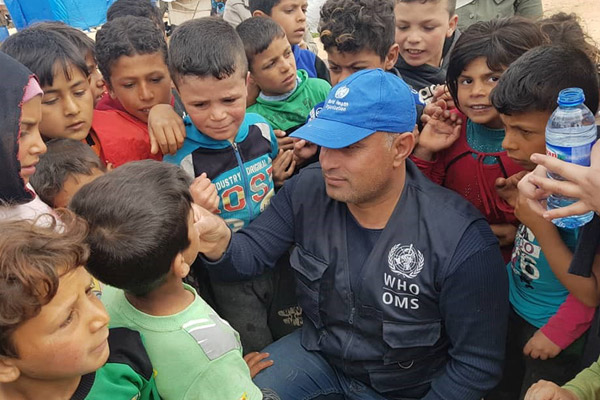
Reports from northern Syria indicated high rates of communicable diseases, acute diarrhoea and influenza-like illnesses among the newly displaced.
Although there were no cholera outbreaks in Syria, the disease remains an ever-present threat, particularly in overcrowded IDP settings where tens of thousands of people are living in dire conditions with limited supplies of safe water and sanitation. If left untreated, cholera can kill within hours. WHO trained health staff and pre-positioned contingency stocks in priority areas to prevent and respond to an eventual outbreak of this deadly disease.
Related links
Priority areas
WHO continues to provide humanitarian health support while helping strengthen essential functions for long-term recovery.
Ensuring access to healthcare
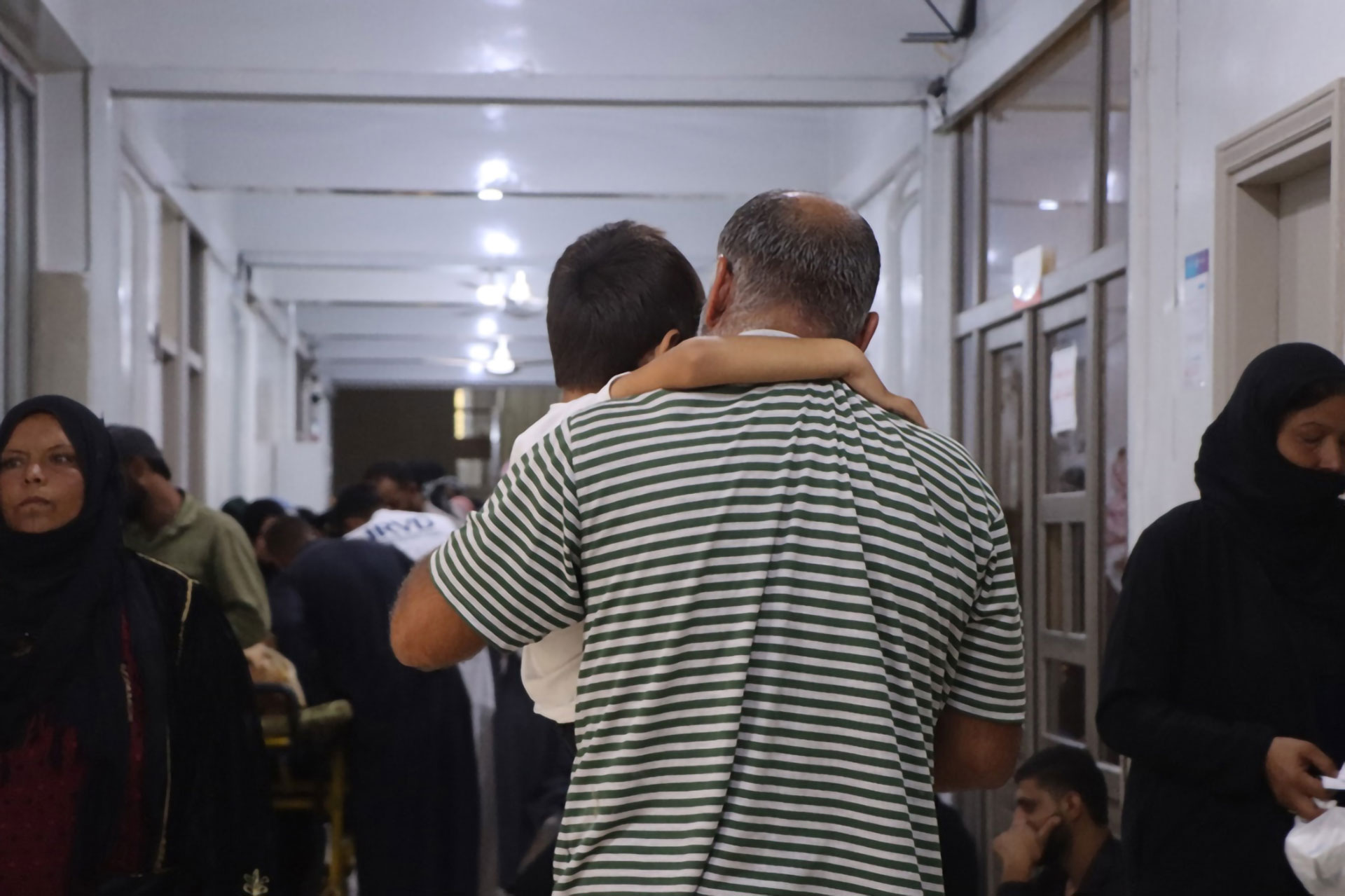 Ali carries his 8-year-old son Abdelkarim through the crowded corridor of Menbij National Hospital after the boy received urgent care for a fracture
WHO helps keep hospitals and primary healthcare centres running by providing medicines, medical equipment, and essential supplies. In areas where services have collapsed, WHO partners with national NGOs to ensure people continue to receive lifesaving care — including emergency services and treatment for communicable and noncommunicable diseases.
Building health security and preparedness
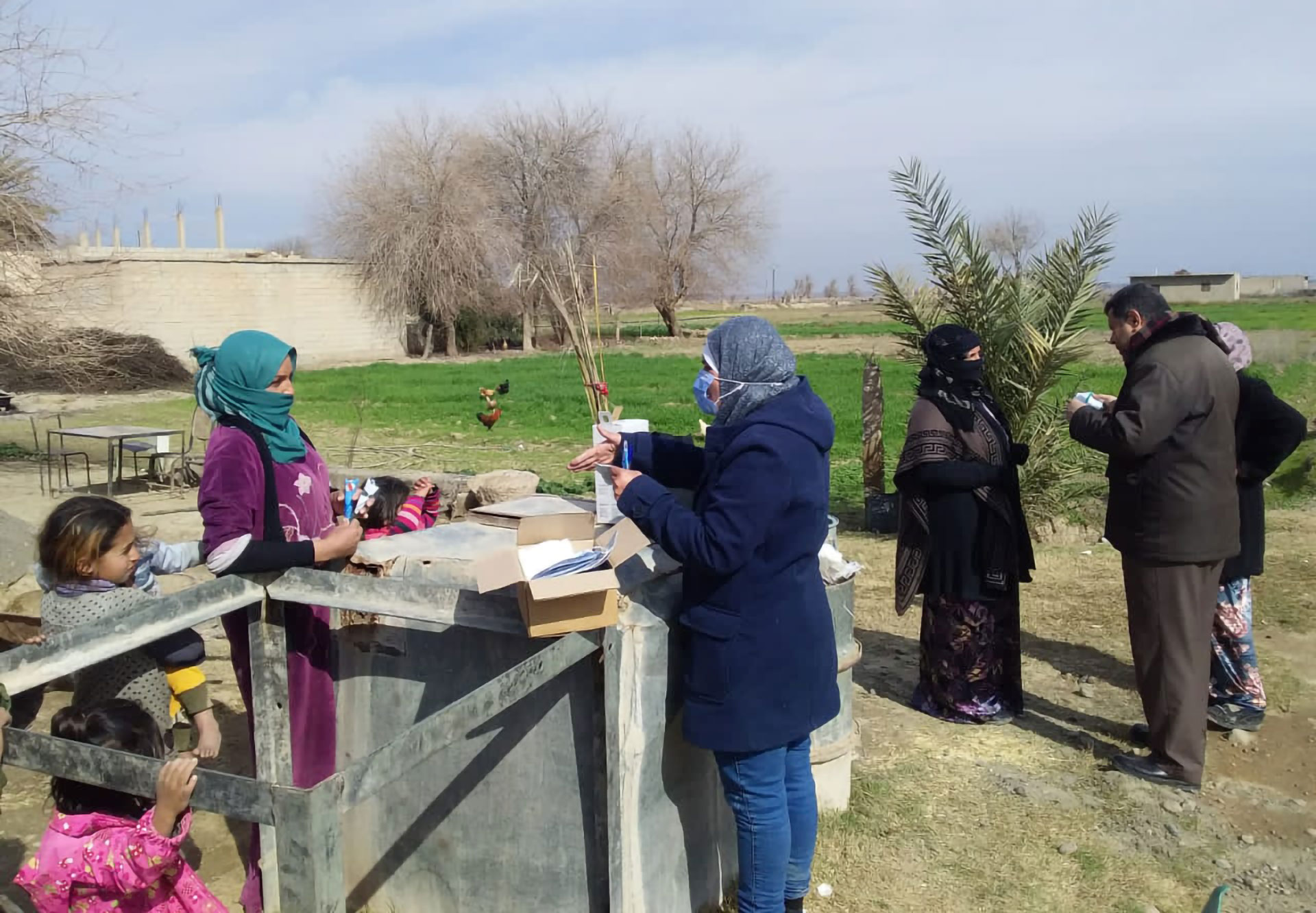 WHO-supported Early Warning, Alert, and Response Network (EWARN) surveillance team during a field visit in rural Aleppo
WHO strengthens surveillance, early warning systems, outbreak response, and emergency readiness in close coordination with the Ministry of Health, helping communities and health facilities better withstand future shocks.
Protecting health and preventing disease
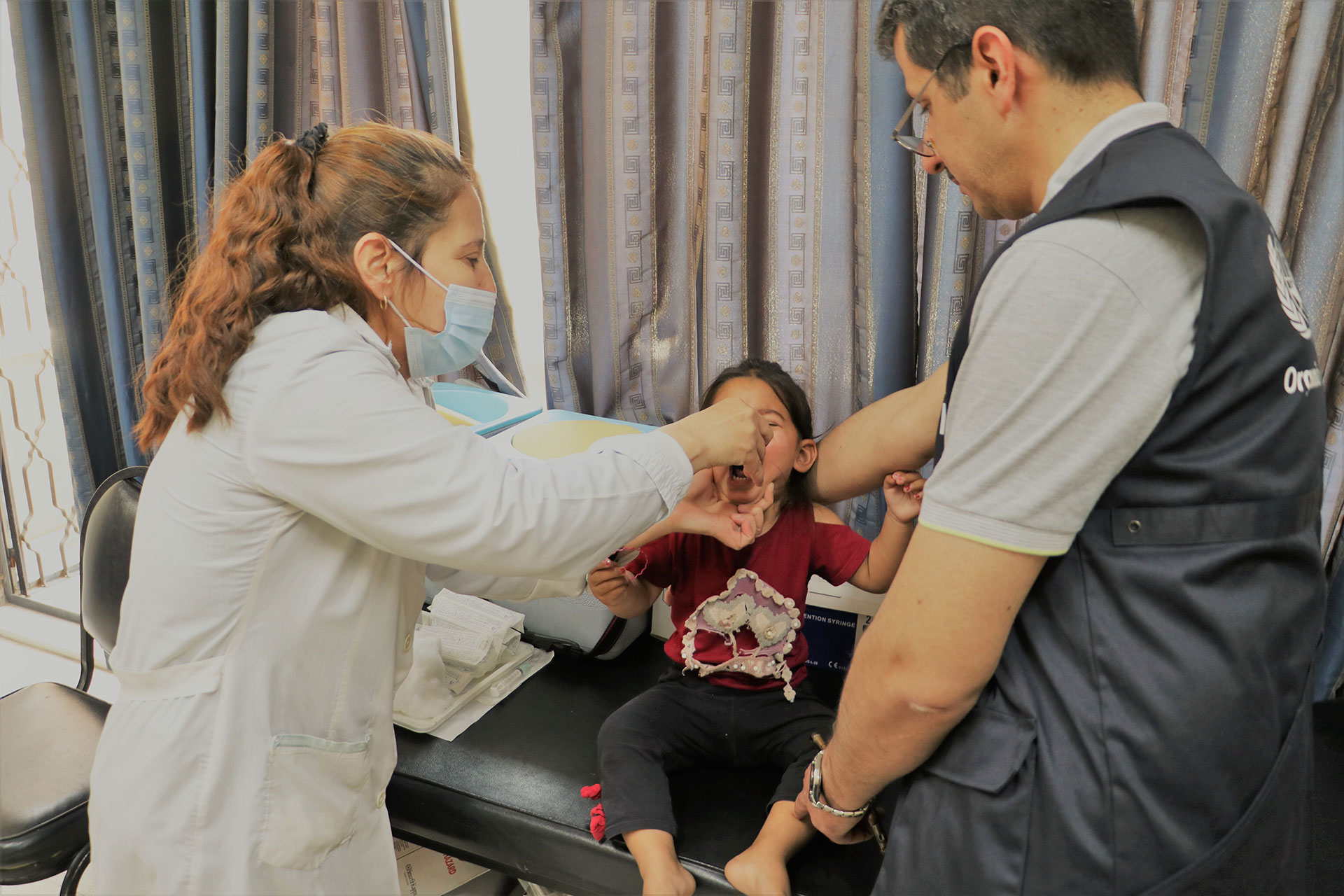 Child receiving polio vaccination at a health center in Daraa during the Big Catch-Up vaccination campaign conducted across Syria
WHO supports vaccination, health education, community outreach, and public health programmes that prevent illness and reduce avoidable health risks. This includes strengthening maternal and child health, vaccine-preventable disease control, and mental health support through national delivery systems.
Rebuilding and strengthening Syria’s health system
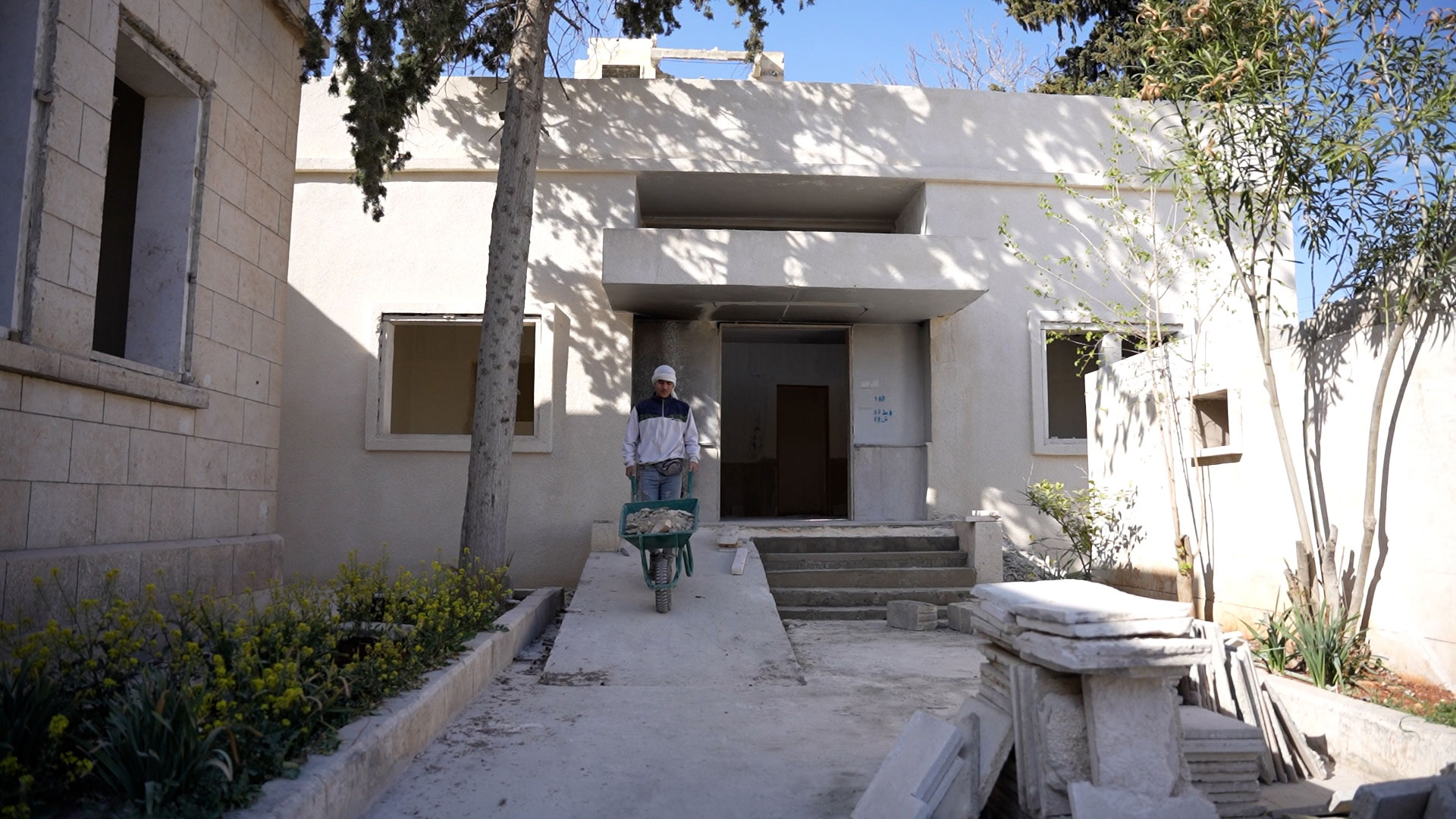 Marrat Al Numan primary health care centre before rehabilitation
WHO is supporting the Ministry of Health to reinforce the foundations of Syria’s health system by rehabilitating facilities, expanding and upskilling the health workforce, improving national supply chains, strengthening management and financing capacities, enhancing digital and information systems, and supporting the delivery of essential services nationwide.