

Sélectionnez votre langue
Reducing surgical risk through precision equipment in Idlib
16 February 2026, Idlib, Syrian Arab Republic – As Syria advances in its recovery, improving the safety and reliability of hospital services is helping facilities operate with greater confidence. In the Jisr-Ash-Shugur district of Idlib governorate, that recovery is taking shape inside operating theatres, where precision equipment is helping reduce preventable surgical risk.
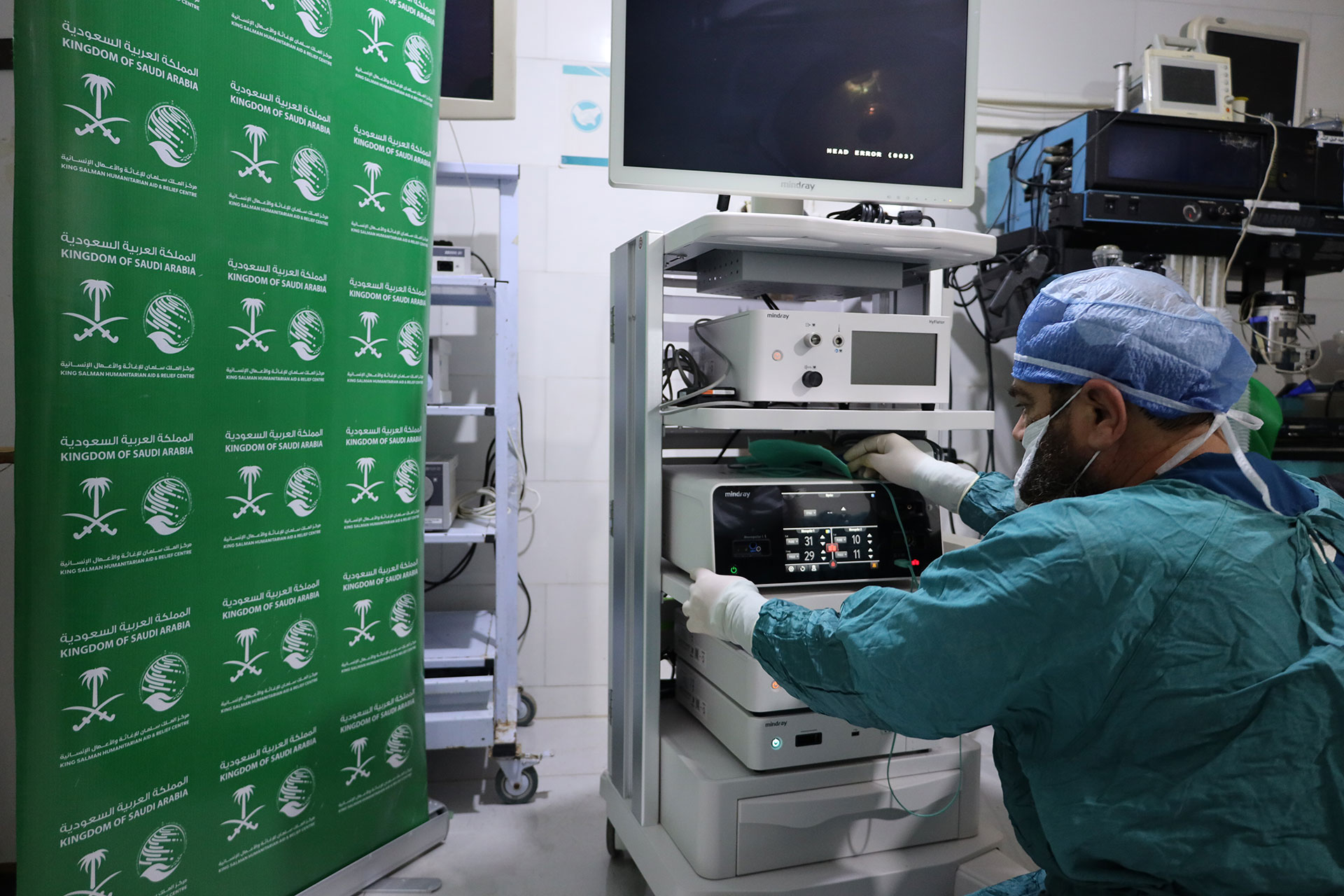 Mohammed Al-Hallaq, operating room technician at Arrahma Hospital in Jisr-Ash-Shugur district, Idlib, prepares laparoscopic equipment before surgery. Photo credit: WHO
At Arrahma Hospital, laparoscopic procedures such as gallbladder removal, ovarian cyst surgery and other abdominal interventions are performed regularly. For years, however, the hospital relied on an ageing endoscopy device that had reached the end of its lifespan.
“It would disconnect during operations,” explains Mohammed Al-Hallaq, an operating room technician at the hospital. “Sometimes we would lose up to 30 minutes trying to restart it. The surgeon, the anaesthetist, the assistants – everyone would become unsettled.”
Those interruptions had direct consequences for patient safety. “Every minute under anaesthesia matters,” he says. “The longer the anaesthesia, the greater the potential risk to the patient. When the device stopped working, the operation time increased, and that increased risk.”
During critical moments of surgery, the equipment could fail unexpectedly. “Sometimes the camera would disconnect. Sometimes the gas supply would stop. The bipolar cautery would malfunction,” Mohammed recalls. “It was not one issue – there were many.”
There were occasions when the team came close to stopping procedures entirely. “We reached points where we were about to suspend the operation,” he says. “Then at the last moment the device would restart, and we would continue. But that waiting period created tension for everyone in the room.”
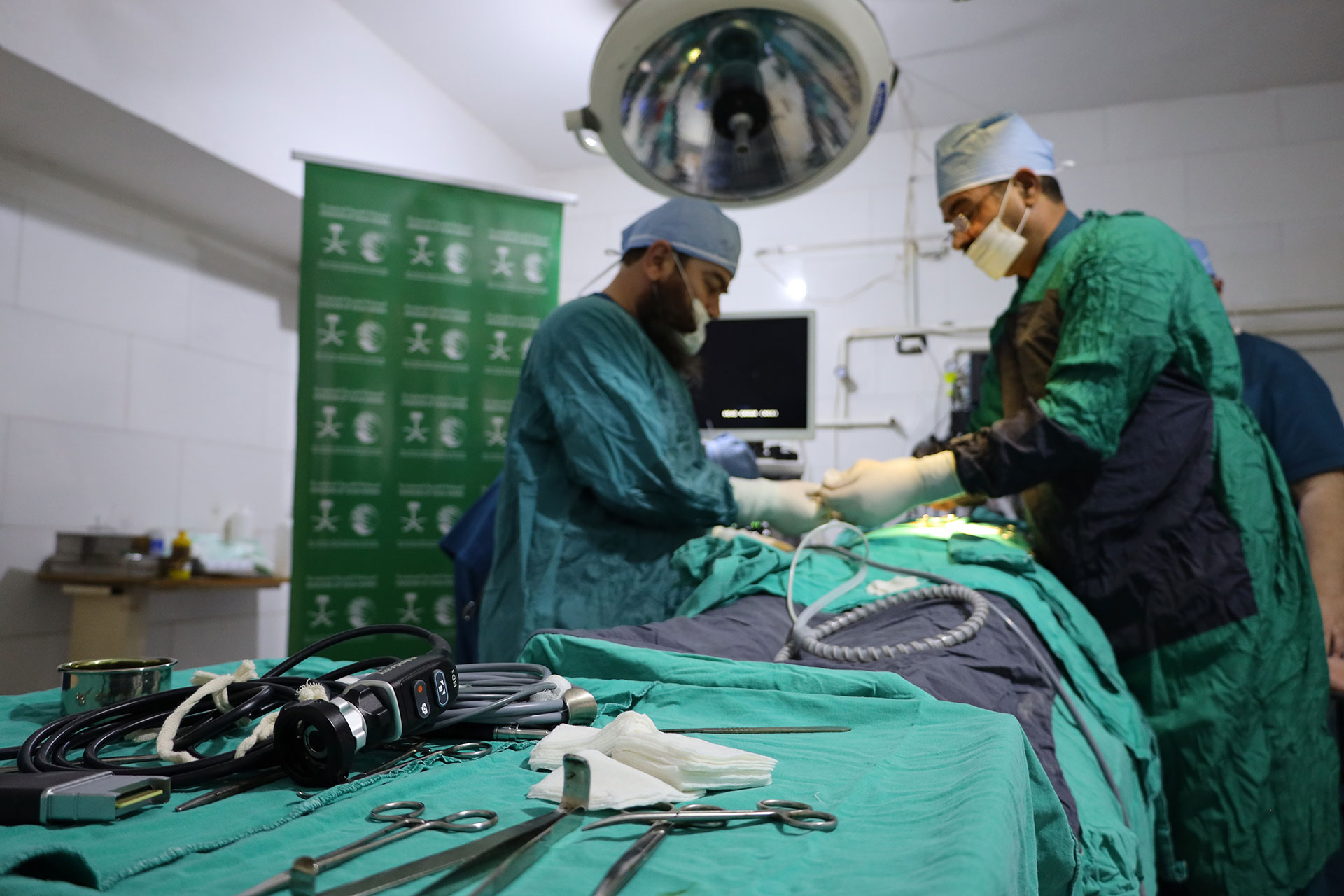 Surgeons at Arrahma Hospital in Jisr-Ash-Shugur district, Idlib, perform a laparoscopic procedure using newly installed endoscopy equipment supported by KSrelief. Photo credit: WHO
Supporting surgical recovery across Idlib
With support from KSrelief, WHO has delivered four standard laparoscopic surgery towers – complete with basic laparoscopic instruments and semi-rigid ureteroscopes – to hospitals in Idlib governorate. The equipment was distributed to Idlib Surgical Hospital, Sham Surgical Hospital, Harim General Hospital and Arrahma Hospital, strengthening surgical capacity across multiple districts.
At Arrahma Hospital, the impact has been immediate. “The new device is digital and much more precise,” Mohammed explains. “Its settings are more accurate, the technique is smoother and the operation time is shorter.”
Shorter procedures mean reduced anaesthesia exposure, fewer potential complications and improved recovery for patients. Reliable equipment also allows surgical teams to focus fully on the procedure rather than managing technical breakdowns.
“Now we are not worried that the camera will switch off or that the gas will stop during surgery,” he says. “For the patient, this means safer surgery. For the team, it means greater confidence.”
As recovery continues across Syria, strengthening operating rooms with modern equipment is not simply a technical upgrade. It is an investment in patient safety, surgical precision and the long-term resilience of the health system in Idlib.
Restoring precision in the operating room in Idlib
15 February 2026, Idlib, Syrian Arab Republic: As Syria advances in its recovery, restoring essential health services remains central to rebuilding a resilient health system. At a surgical hospital in Idlib, surgeons are once again performing minimally invasive procedures with confidence.
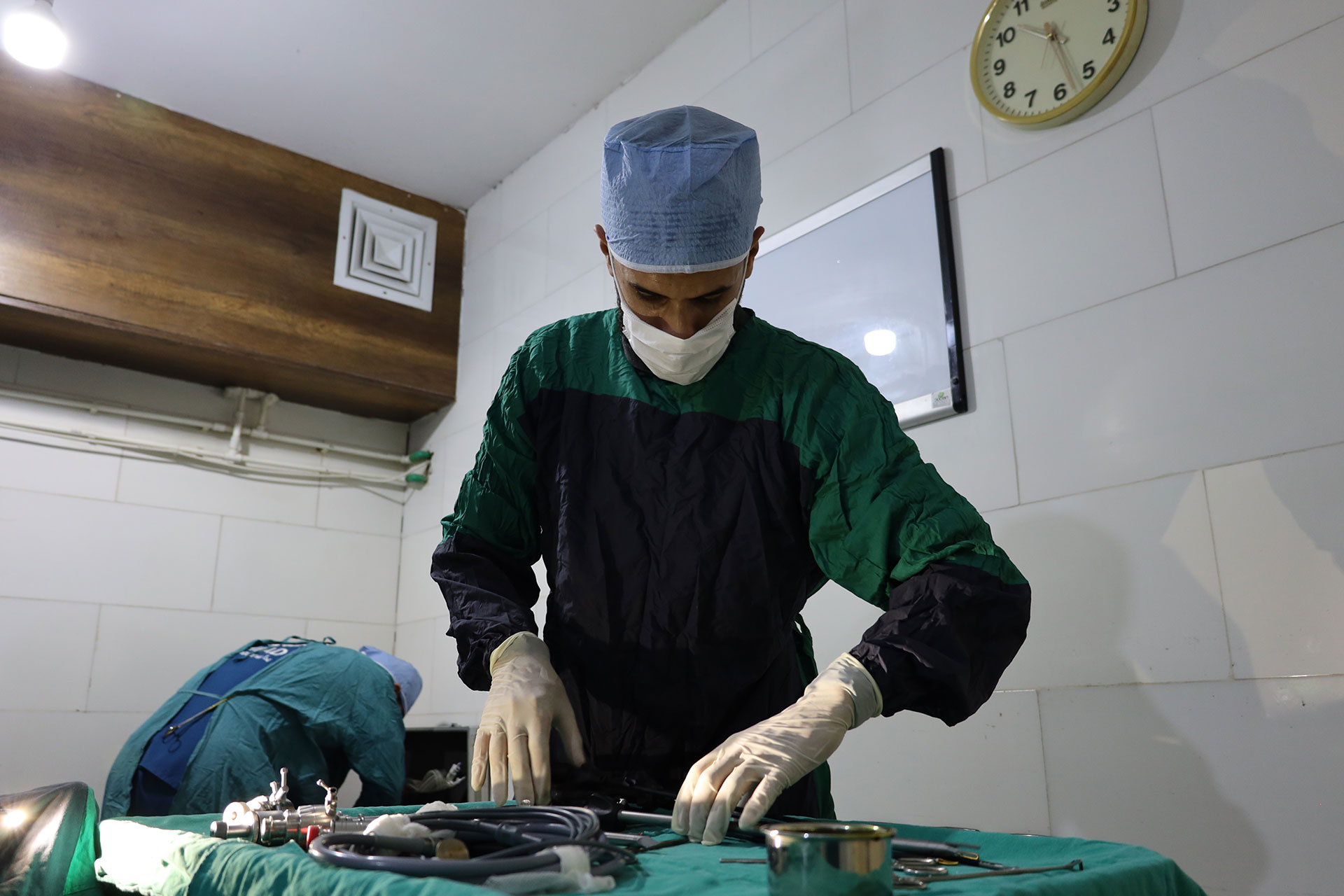 Dr. Suleiman Abdulhamid Al-Jassim, a fifth-year surgical resident in Idlib, prepares endoscopy instruments inside the operating theatre. Photo credit: WHO
For Dr. Suleiman Abdulhamid Al-Jassim, a fifth-year surgical resident working in Idlib, the arrival of a new endoscopy device has changed daily practice in tangible ways.
“For many years, we relied on an old endoscopy unit that had constant technical problems,” he says. “The instruments were worn out. The camera failed frequently. Because of these issues, there were times when we had to abandon laparoscopic surgery and proceed with open abdominal surgery instead.”
This was especially true for procedures such as gallbladder removal — operations that are typically performed laparoscopically. “When the device failed, we had no choice,” he explains. “We would convert to open surgery.”
Each month, the hospital performs between 15 and 20 laparoscopic procedures, including gallbladder removal, gynecological surgeries involving the ovary or uterus, and diagnostic laparoscopy. “With the new device, we can now perform these operations properly,” Dr. Al-Jassim says. “It represents a real qualitative shift for the hospital and in how we serve our patients.”
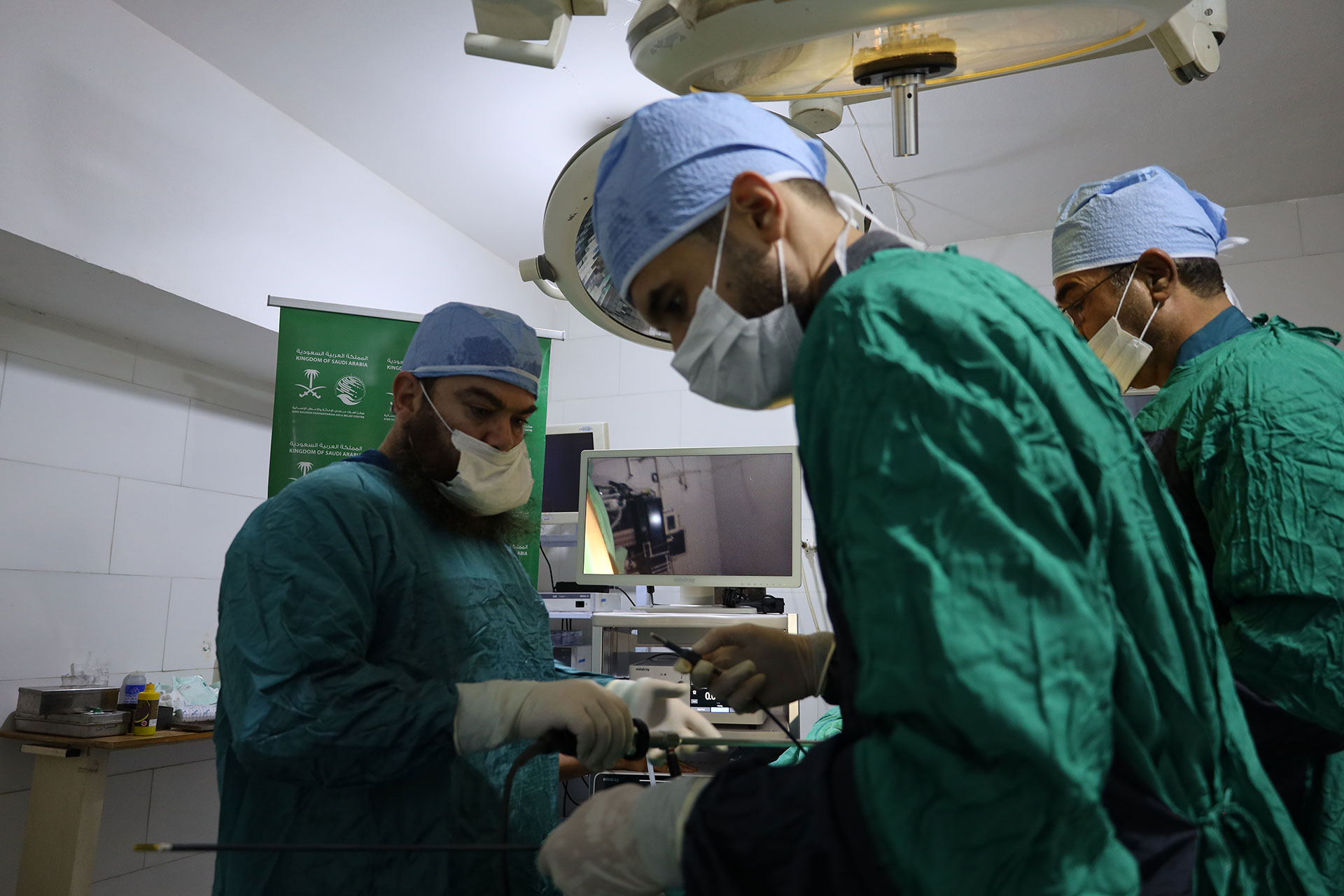 Surgeons in Idlib perform a laparoscopic procedure using newly installed endoscopy equipment, helping restore minimally invasive surgical care. Photo credit: WHO
Strengthening surgical capacity across Idlib
As part of broader efforts to support health system recovery, WHO, with support from KSrelief, has delivered new endoscopy equipment to three hospitals in Idlib governorate — Idlib Surgical Hospital, Al Hidaya Hospital and Harim General Hospital — helping reinforce essential surgical services as facilities rebuild and modernize.
After years of strain on health infrastructure, much of the surgical equipment in operating theatres across Idlib remains outdated or worn. “The new endoscopy unit has made a significant difference,” Dr. Al-Jassim says. “But some instruments are still missing. We hope the supporting organizations can help provide the remaining tools.”
He also points to broader needs inside operating rooms. “There is other old and worn-out equipment that affects our work,” he explains. “These limitations sometimes impact procedures and, in some cases, force us to make clinical decisions we would not otherwise choose.”
The impact is not only technical. “When patients see modern, functioning equipment, it changes how they feel before surgery,” he says. “Instead of preparing them for the possibility of open surgery because of equipment problems, they see effective tools. This improves their psychological state significantly.”
As recovery progresses, restoring surgical precision is about more than replacing devices. It is about strengthening safe surgical practice, rebuilding confidence in health services, and ensuring that people in Idlib can access quality care with dignity.
Syria strengthens governance and leadership in health professions education
11 February 2026, Damascus, Syrian Arab Republic – Damascus, 10 February 2026 – The Ministry of Health, in collaboration with the Ministry of Higher Education and Scientific Research and with technical support from the World Health Organization (WHO), has launched a three–day national workshop aimed at strengthening governance and leadership in health professions education in Syria.
 Participants and partners gather at the opening of the national workshop on strengthening governance and leadership in medical and health sciences education. Photo credit: WHO
Bringing together senior academic leaders, policymakers and health educators from across the country, the workshop focuses on improving how medical and health professions education is governed, planned and delivered–at a time when Syria’s health system continues to recover from years of strain, workforce shortages and the migration of skilled professionals.
 H.E. Dr. Musab Al-Ali, Minister of Health, delivers opening remarks at the national workshop. Photo credit: WHO
Opening the workshop, H.E. Dr. Musab Al–Ali, Minister of Health, underscored the direct link between the quality of medical education and the quality-of-care people receive. He stressed that rebuilding the health system depends not only on restoring services, but on investing in the people who deliver them–and the institutions responsible for their training.
“The healthcare sector has faced difficult circumstances in recent years, creating clear challenges for the educational institutions responsible for training medical and healthcare professionals,” said Dr. Al–Ali. “Today, we face a reality that demands sincere commitment and coordinated, collective action from all of us to strengthen leadership and governance within healthcare education structures, because the future of healthcare is inextricably linked to the quality of medical education.”
Dr. Al–Ali noted that the workshop is designed as a practical step forward, combining policy–oriented discussions with applied tools to support decision–making, quality standards and institutional leadership–tailored to Syria’s current realities.
 H.E. Dr. Marwan Al-Halabi, Minister of Higher Education and Scientific Research, addresses participants at the national workshop. Photo credit: WHO
That emphasis on systems and long–term reform was echoed by H.E. Dr. Marwan Al–Halabi, Minister of Higher Education and Scientific Research, who framed the workshop as a strategic national investment rather than a stand–alone training activity.
“Governance and leadership in health professions education are not procedural concepts; they are a philosophy of work and a system of values,” said Dr. Al–Halabi. “Repositioning medical education at the heart of the national health system is essential for reform, quality assurance and sustainable impact.”
He highlighted the importance of stronger coordination between universities, training institutions and the health sector to ensure that education outcomes respond to population health needs, support workforce retention and translate knowledge into safer, higher–quality care. Clear roles, integrated planning and accountable leadership, he added, are critical to transforming institutions from isolated entities into a coherent, functioning system.
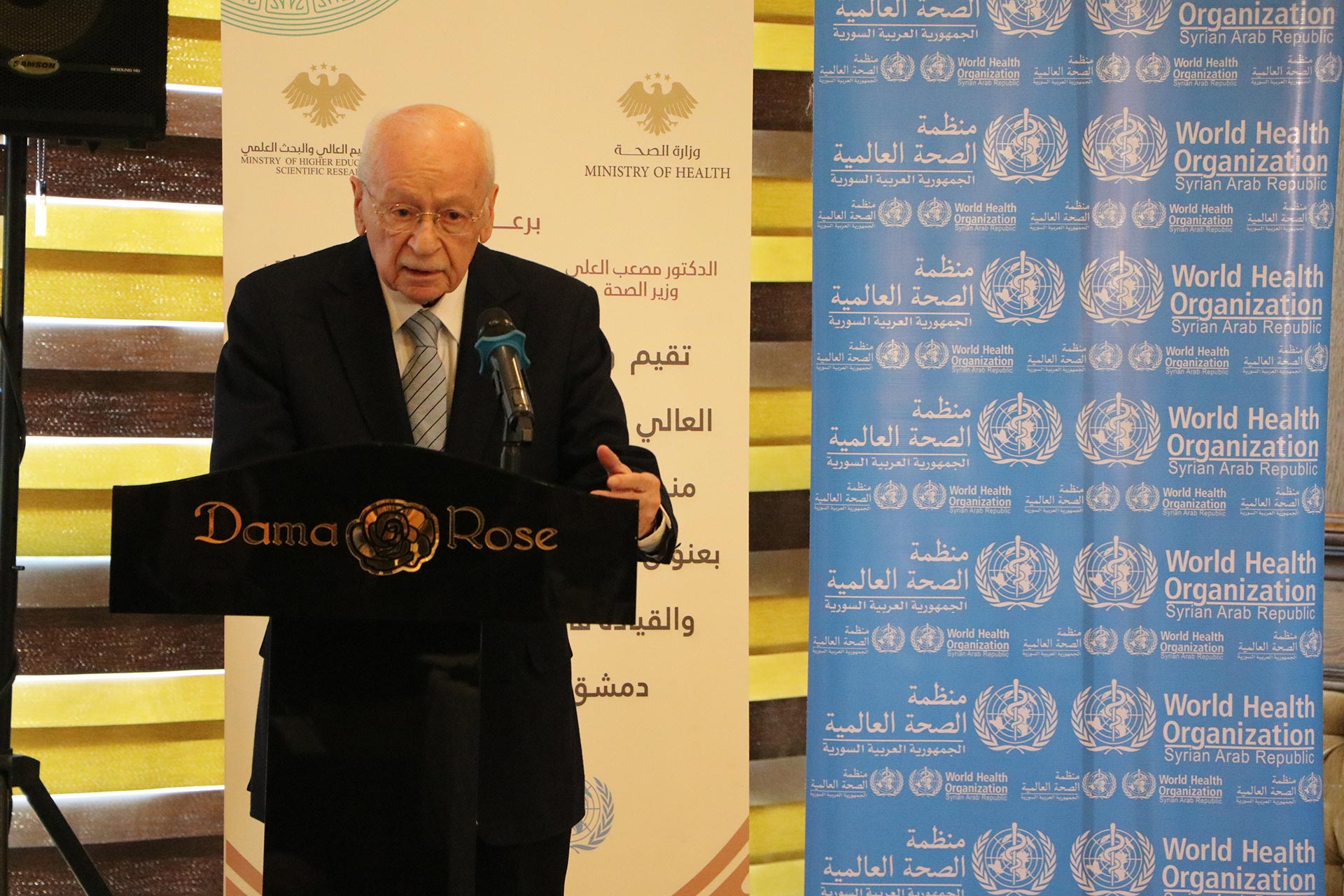 Professor Dr. Mohammed Iyad Al‑Shatti speaks during the national workshop. Photo credit: WHO
The workshop also builds on decades of academic experience within Syria. Professor Dr. Mohammed Iyad Al–Shatti reflected on earlier efforts to modernize medical education and the enduring relevance of governance principles. “As early as the 1980s, we were already discussing quality standards, transparency, fairness and effective financing in education,” he said. “What matters today is thinking holistically–how the Ministries of Health and Higher Education work together, and how leadership and governance shape the entire health system, not just individual institutions.”
Addressing participants online, Dr. Asmus Hammerich, Acting WHO Representative to Syria, reaffirmed WHO’s role as a technical partner supporting nationally led reform efforts. “Syria’s health system is at a pivotal moment of recovery and reform,” said Dr. Hammerich. “Strengthening health professions education is one of the most effective ways to rebuild confidence in health services, sustain quality standards and move towards universal health coverage. WHO is here to support the institutions leading this work–under the stewardship of the Ministry of Health and in close coordination with the Ministry of Higher Education–by helping translate shared priorities into practical, implementable steps.”
He highlighted the workshop’s action–oriented design, which combines systems thinking, strategic planning, and quality improvement with a focus on accreditation and leadership development. He also emphasized the importance of inclusive approaches that support women’s leadership, enable participation of people with disabilities, and ensure education pathways serve communities in underserved areas.
Running from 10 to 12 February 2026, the workshop includes interactive lectures, group simulations, and strategic planning exercises. Participants include deans and vice–deans of medical and health sciences, faculties and training institutes, representatives of national health boards, and senior officials from the Ministries of Health and Higher Education.
By the end of the three days, participants are expected to develop concrete institutional action plans and strengthen coordination between education and service delivery–contributing to a more resilient health workforce and more responsive health services for people across Syria.
Patients in Latakia gain faster, safer treatment with new hospital equipment
28 January 2026, Latakia, Syrian Arab Republic - Each morning in the eastern countryside of Latakia, Al-Haffeh Hospital comes alive as patients from nearby villages queue outside for care they can afford nowhere else. Serving more than 180 villages, the hospital treats hundreds of people each day — many travelling long distances for urgent care.
 Dr Essam Gomira, General Director of Al-Haffeh Hospital, explains how the new operating table is improving surgical care. Photo credit: WHO
With support from the King Salman Humanitarian Aid and Relief Centre (KSrelief), in partnership with the World Health Organization (WHO) and the Ministry of Health (MoH), Al-Haffeh Hospital recently received new medical equipment — including a state-of-the-art operating table, an advanced anaesthesia machine, and an X-ray device. The upgrade has strengthened the hospital’s capacity to provide safe surgeries and essential diagnostics.
“Before this support, our old machines were outdated and often broke down,” says Dr Essam Gomira, General Director of Al-Haffeh Hospital. “This equipment has helped bridge critical gaps and strengthened our capacity to serve those most in need.”
The new support from KSrelief is helping hospitals like Al-Haffeh overcome long-standing shortages, improving access to essential diagnostics and surgical care for communities in rural Latakia. To date, KSrelief has supported hospitals across Syria with more than 130 pieces of essential medical equipment – ranging from tools for surgery and diagnostics to devices used in intensive care and dialysis. This support is helping facilities overcome long-standing shortages and maintain critical health services in governorates facing high demand.
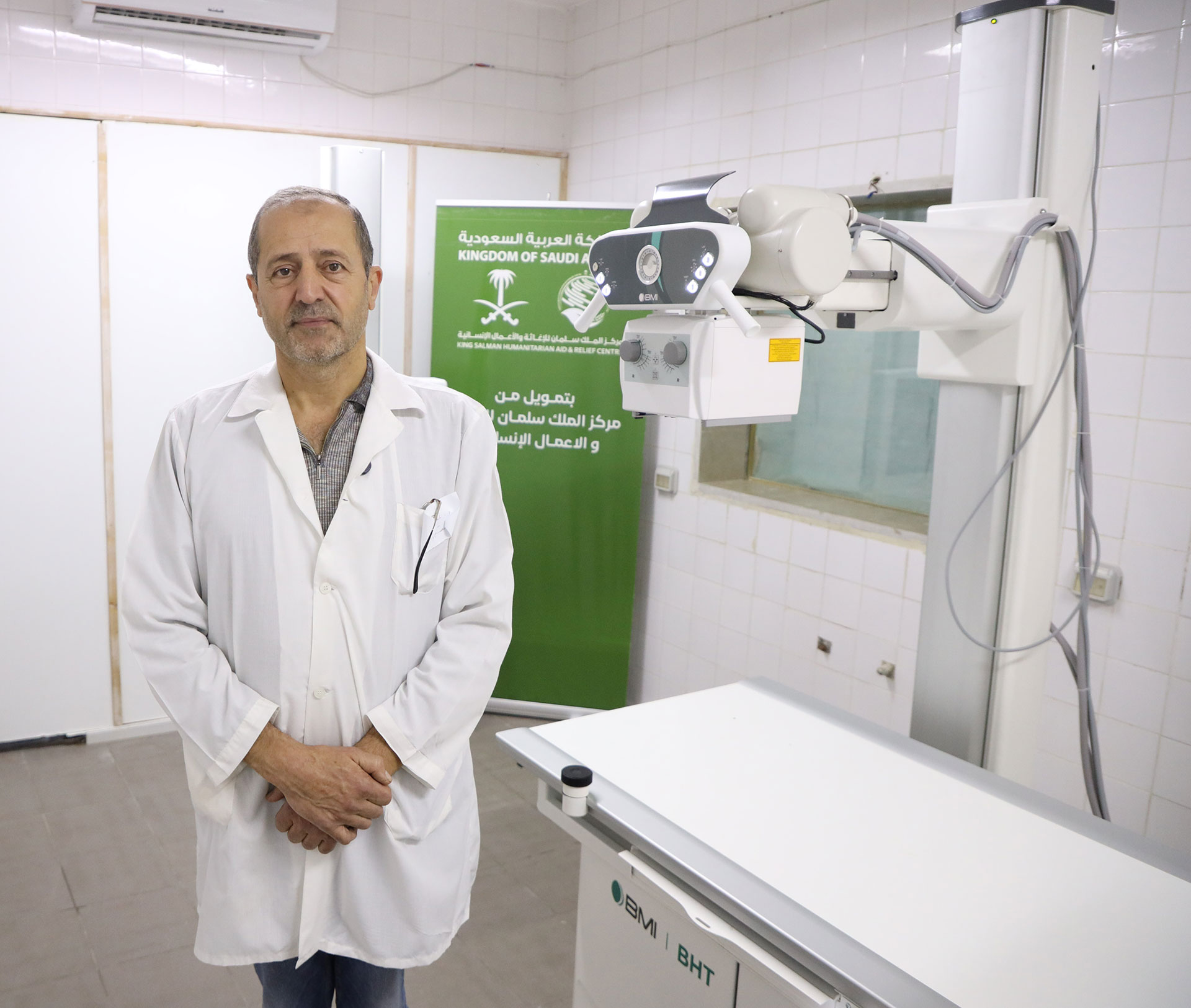 Dr Abdullah Haydar, Head of the Radiology Department at Al-Haffeh Hospital, stands beside the new X-ray machine provided through KSrelief support. Photo credit: WHO
For Dr Abdullah Haydar, head of the radiology department, the new X-ray machine has been transformative. “Previously, we had to send many patients to Latakia city for imaging. Now, we can diagnose and treat them immediately. It has made a huge difference for families who cannot travel for care.”
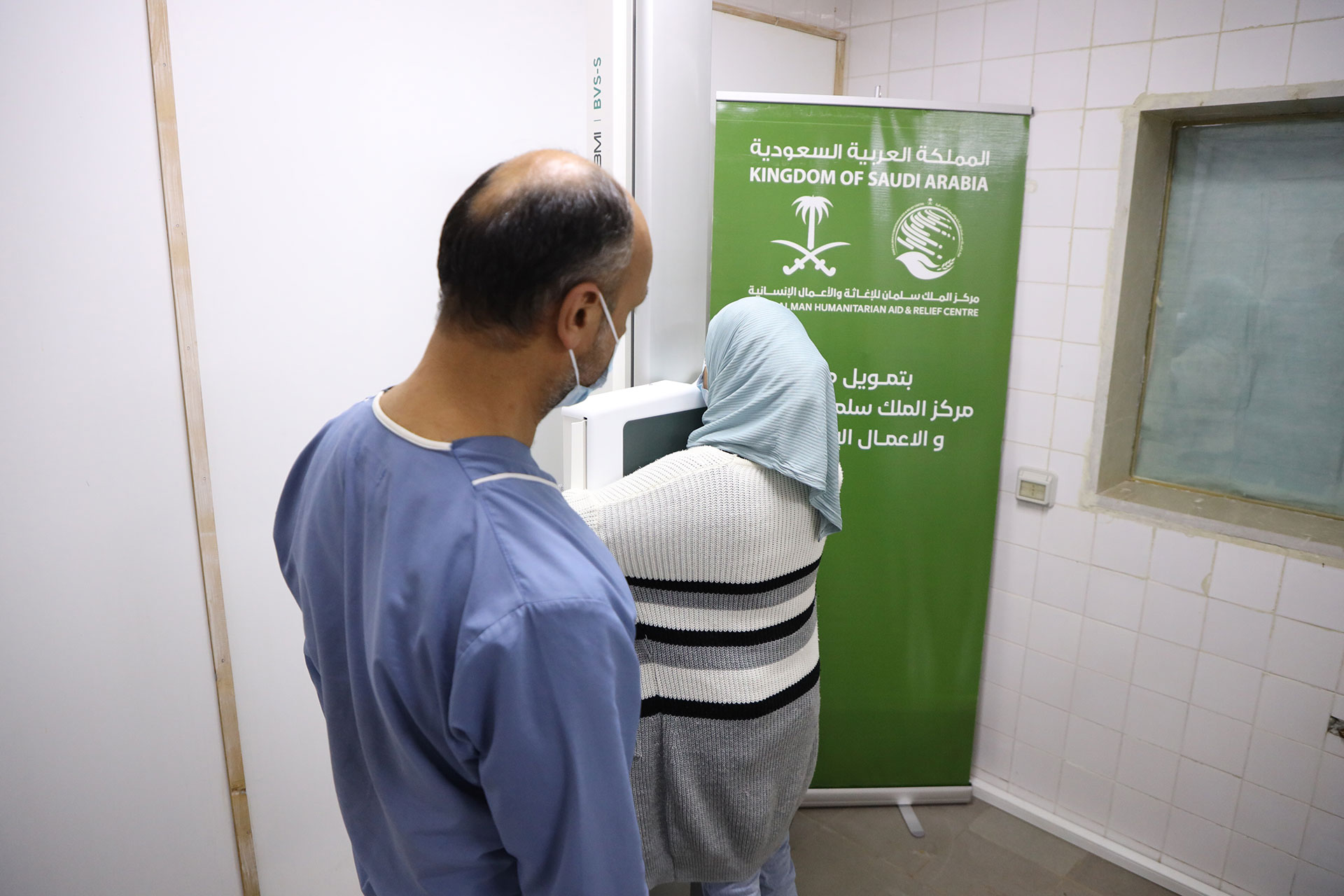 A patient undergoing an X-ray at Al-Haffeh Hospital using the new imaging machine provided through KSrelief support. Photo credit: WHO
Christina, a 21-year-old student, injured her wrist in a fall and came to the hospital for urgent treatment. “I was in so much pain, and I didn’t know where to go,” she recalls. “The doctors took X-rays and performed surgery immediately. The treatment was free and fast. Without this hospital and this new equipment, my injury could have been much worse.”
 Christina, a 21-year-old student, receives medical care at Al-Haffeh Hospital after being injured in a fall. Photo credit: WHO
At Al-Haffeh Hospital, these upgrades are felt every day. Surgeons have reliable equipment, radiology teams can complete imaging on site, and emergency cases are managed more safely. For many families in rural Latakia, this means receiving the care they need without travelling far from home.