

Sélectionnez votre langue
In Afrin, breathing easier again
18 February 2026, Aleppo, Syrian Arab Republic – On a cold January morning, Dr Dima Jaabar listened carefully to the uneven breathing of two young boys brought into the Rajo health centre in the rural countryside of Afrin district, north of Aleppo, within days of each other. Both were struggling to breathe. Both needed urgent care. Both are now recovering.
 Dr Dima Jaabar examines Mohammad Ghazi at the Rajo health centre, where he received treatment and follow-up care for acute chest inflammation and breathing difficulties. Photo credit: WHO
Mohammad Ghazi was carried in by his family after developing acute chest inflammation and difficulty breathing caused by smoke inside the home. “He was gasping and could not sleep at night,” his father recalled. “We were afraid it would get worse.”
At the health centre, Dr Jaabar and her team quickly assessed him, provided treatment and scheduled close follow-up. Within days, Mohammad’s breathing began to stabilize.
“During winter, many families rely on indoor heating methods that expose children to heavy smoke,” said Dr Jaabar. “By the time they arrive, they are exhausted from coughing and shortness of breath. Timely treatment makes all the difference.”
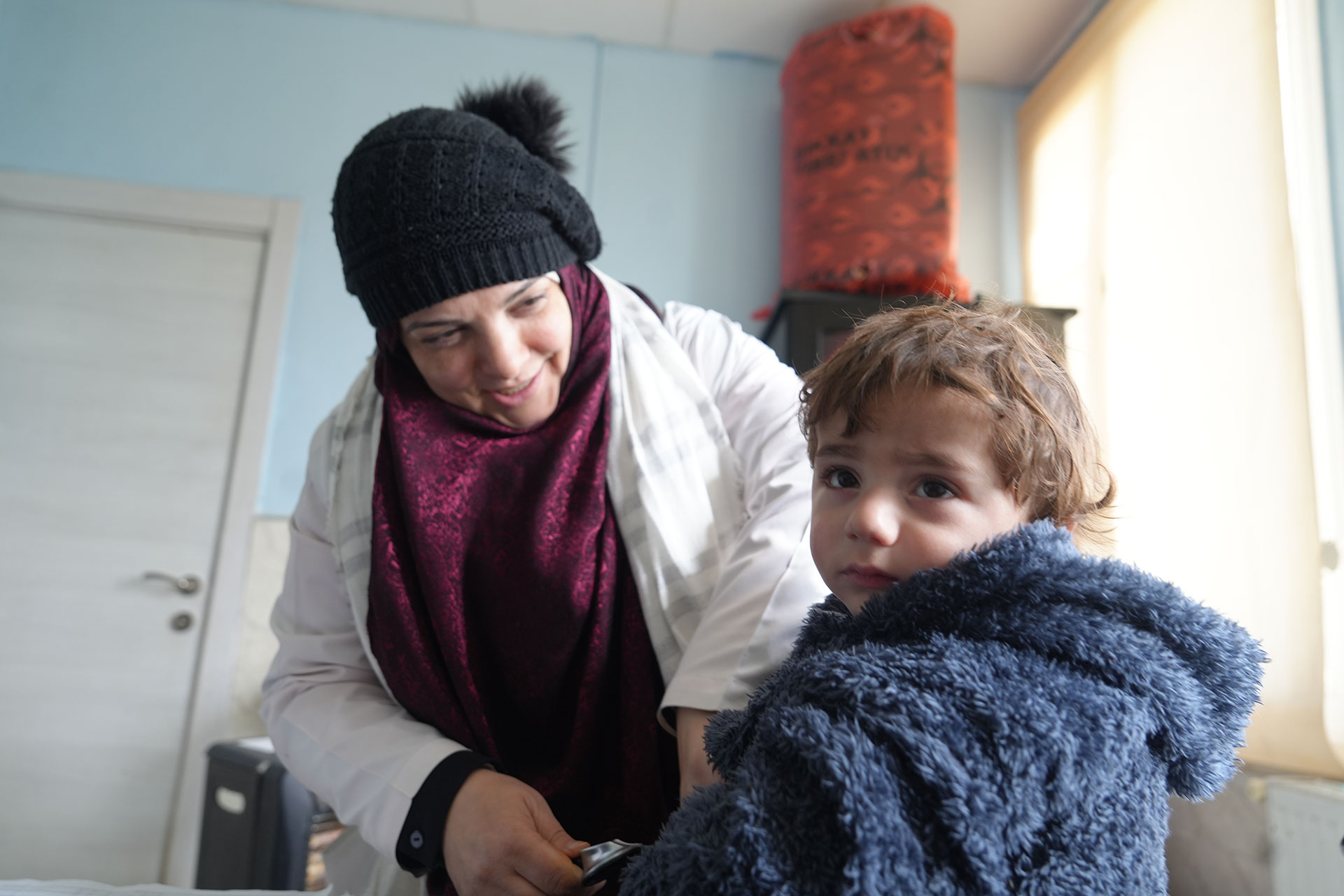 Dr Dima Jaabar examines young Rashid at the Rajo health, where he received treatment for fever and chest inflammation. Photo credit: WHO
Just days later, Rashid’s mother rushed him to the same centre. He had a high fever, persistent cough and chest inflammation. “He was burning with fever and crying from the pain,” she said. “I did not know what to do except bring him here.”
Rashid received treatment, medical consultation and practical guidance to support his recovery at home. His mother was counselled on symptom management, warning signs and how to reduce respiratory risks.
“I felt relieved when the doctor explained everything,” she said. “They did not just treat him; they helped me understand how to care for him.”
The Rajo health centre is one of 70 health facilities across Syria supported by the World Health Organization (WHO) with funding from the King Salman Humanitarian Aid and Relief Centre (KSrelief). Through this initiative, facilities receive essential primary health care medicines and medical supplies, operational support and staffing assistance to ensure services continue for communities affected by years of crisis.
Across Aleppo, Hama, Homs and Idlib governorates, the project strengthens integrated health services, improves access to primary and specialized care, and reduces preventable illness and complications. By securing medicines and consumables and supporting facility operations, WHO and KSrelief are helping centres like Rajo remain open and responsive to community needs.
“For us, the impact is immediate,” Dr Jaabar said. “With consistent supplies and operational support, we can treat children quickly and follow up properly. Families do not have to delay care.”
In Afrin, where many families continue to navigate economic hardship and fragile living conditions, accessible primary health care is not abstract policy – it is the difference between fear and reassurance.
For Mohammad and Rashid, it meant breathing easier again.
Reaching patients in the golden minutes in Idlib
18 February 2026, Idlib, Syrian Arab Republic - In the Ariha sector of Idlib governorate, ambulance crews operate in constant readiness. When a call comes in - whether for a road traffic accident, a fracture, a cardiac emergency or a critical transfer between hospitals - the response must be immediate.
 Saleh Khalouf prepares to transport a patient inside a newly delivered ambulance in Idlib, strengthening emergency response and patient safety across the governorate. Photo credit: WHO
“There is no routine day for us,” says Musaab Abdulwahab Al-Yaqoub, 33, who has worked in the Central Referral and Ambulance System since 2018. “During our shifts, we are on alert 24 hours a day. We respond to road accidents, falls, fractures and critical cases. At any moment, the phone can ring.”
For years, emergency teams worked with ageing ambulances that had long passed their intended lifespan. The vehicles had endured heavy use, repeated strain and constant mechanical issues. “Our ambulances were very old,” Musaab explains. “They had been exposed to many problems, and maintenance was a continuous challenge.”
Some of the models dated back to the 1990s. “Today we are operating 2025 models,” says Saleh Khalouf, 35, who has served in the system for four years. “The difference is clear.”
That difference goes beyond appearance. In emergency medicine, timing is critical. “We call them the ‘golden minutes,’” Musaab says. “The faster we reach the patient, the more stable their condition can be.” Older vehicles sometimes slowed response times or created uncertainty during long-distance calls to remote villages. Crews had to contend with uneven roads, potholes and damaged infrastructure - all of which affected transport conditions.
 Nurse Qais Ibrahim Zureiq monitors a patient’s vital signs inside a newly delivered ambulance, helping ensure safer and more stable emergency transport. Photo credit: WHO
“For patients with fractures or trauma, the road itself can cause pain,” explains Qais Ibrahim Zureiq, a nurse who has worked in the system for five years. “The older ambulances were not comfortable. Patients would complain during transport, especially on damaged roads.” Smoother transport reduces additional suffering during already critical moments.
Beyond equipment, staffing remains a pressing challenge. Across Syria, an estimated 50–70% of health care workers have left the country over the years of conflict, placing sustained pressure on those who remain. In many ambulances, responses are carried out by only a driver and one medical professional, rather than a full team of paramedics and a physician.
“We need more staff,” Qais explains. “Sometimes there are only two of us in the ambulance. Ideally, there should be four or five.”
Strengthening and retaining the existing health workforce - and encouraging Syrian health professionals to return - remains a priority for the Ministry of Health as part of ongoing recovery efforts.
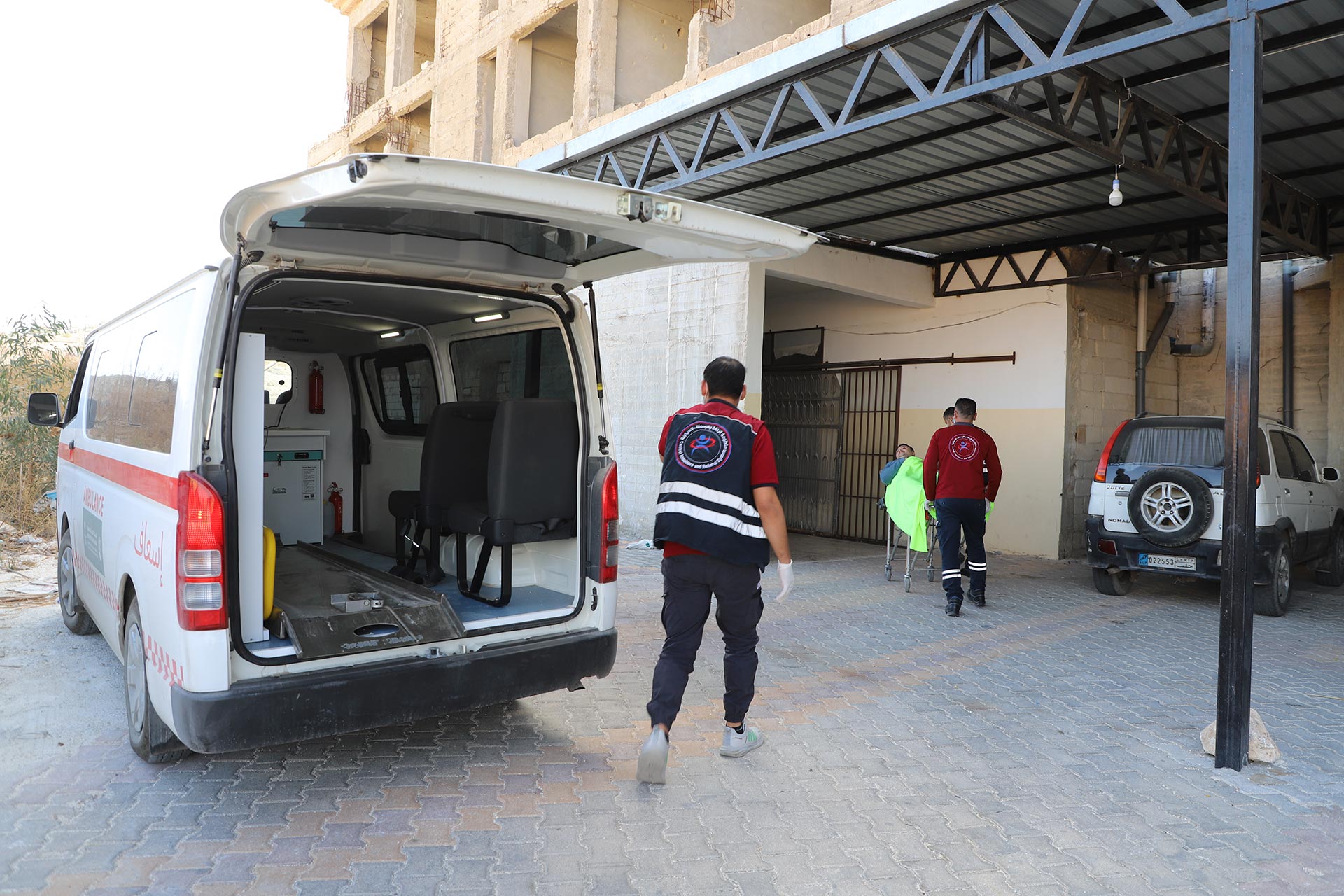 Musaab Abdulwahab Al-Yaqoub responds to an emergency call in Idlib, transferring a patient from a newly delivered ambulance to a health facility under the Central Referral and Ambulance System. Photo credit: WHO
With support from KSrelief, WHO has delivered 10 new ambulances to strengthen emergency response services across Syria, supporting frontline teams operating under sustained pressure. The newer vehicles are more reliable, require less maintenance and provide greater stability on the road, helping reduce delays and improve patient transport conditions.
Despite the demands, the crews remain driven by a strong humanitarian commitment. “When you help stabilize a critical patient and deliver them safely to hospital, you feel that you achieved something meaningful that day,” Qais says. “It gives you satisfaction.”
For Musaab, the motivation has remained constant. “We started this work to help people,” he says. “That is what keeps us continuing.”
For Saleh, the arrival of the new ambulances carries another meaning. “It means that people see us,” he says. “They understand our situation and they want to support us. That matters.”
In emergency response, every minute counts. In Idlib, those minutes are now being protected - one call at a time.
Reducing surgical risk through precision equipment in Idlib
16 February 2026, Idlib, Syrian Arab Republic – As Syria advances in its recovery, improving the safety and reliability of hospital services is helping facilities operate with greater confidence. In the Jisr-Ash-Shugur district of Idlib governorate, that recovery is taking shape inside operating theatres, where precision equipment is helping reduce preventable surgical risk.
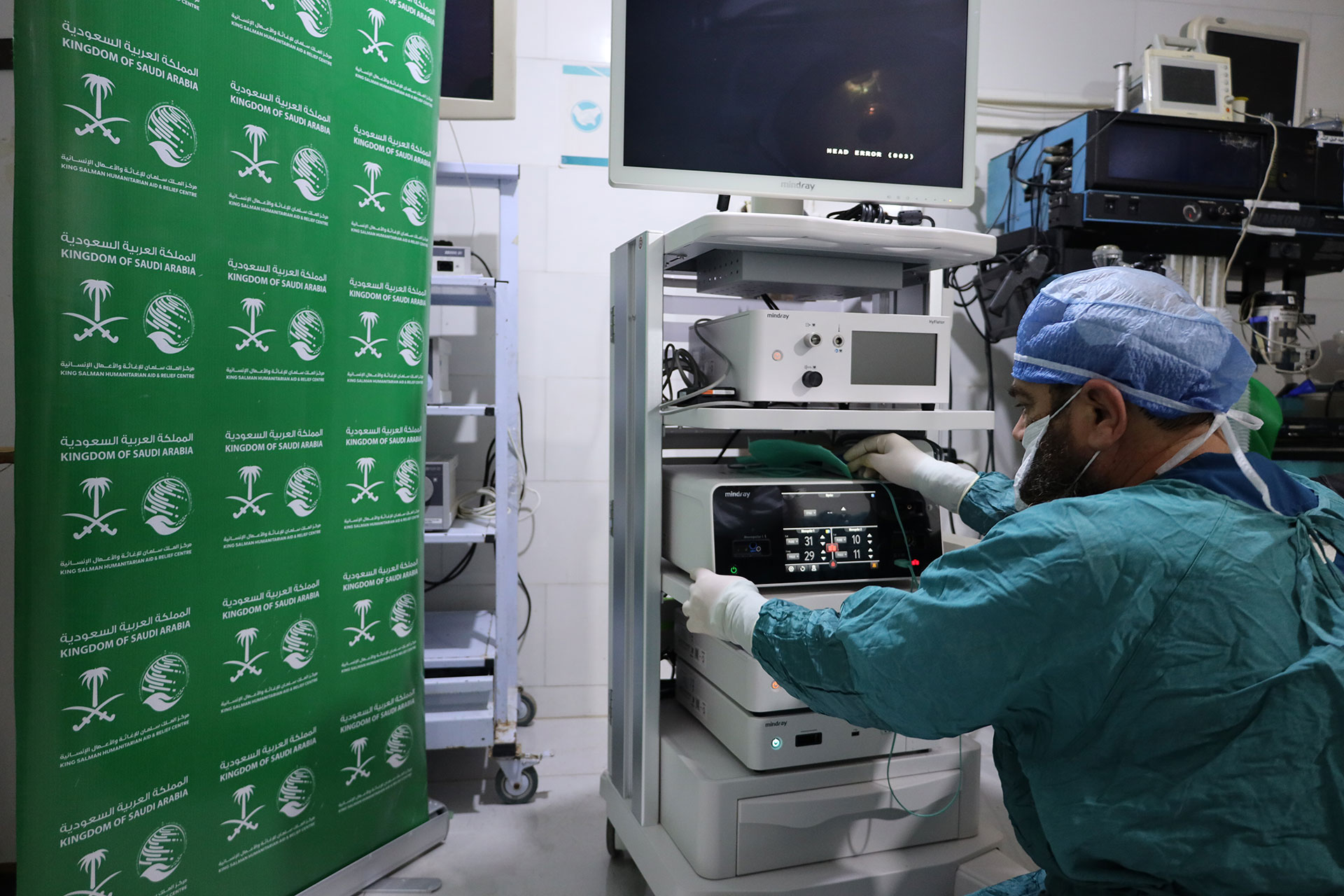 Mohammed Al-Hallaq, operating room technician at Arrahma Hospital in Jisr-Ash-Shugur district, Idlib, prepares laparoscopic equipment before surgery. Photo credit: WHO
At Arrahma Hospital, laparoscopic procedures such as gallbladder removal, ovarian cyst surgery and other abdominal interventions are performed regularly. For years, however, the hospital relied on an ageing endoscopy device that had reached the end of its lifespan.
“It would disconnect during operations,” explains Mohammed Al-Hallaq, an operating room technician at the hospital. “Sometimes we would lose up to 30 minutes trying to restart it. The surgeon, the anaesthetist, the assistants – everyone would become unsettled.”
Those interruptions had direct consequences for patient safety. “Every minute under anaesthesia matters,” he says. “The longer the anaesthesia, the greater the potential risk to the patient. When the device stopped working, the operation time increased, and that increased risk.”
During critical moments of surgery, the equipment could fail unexpectedly. “Sometimes the camera would disconnect. Sometimes the gas supply would stop. The bipolar cautery would malfunction,” Mohammed recalls. “It was not one issue – there were many.”
There were occasions when the team came close to stopping procedures entirely. “We reached points where we were about to suspend the operation,” he says. “Then at the last moment the device would restart, and we would continue. But that waiting period created tension for everyone in the room.”
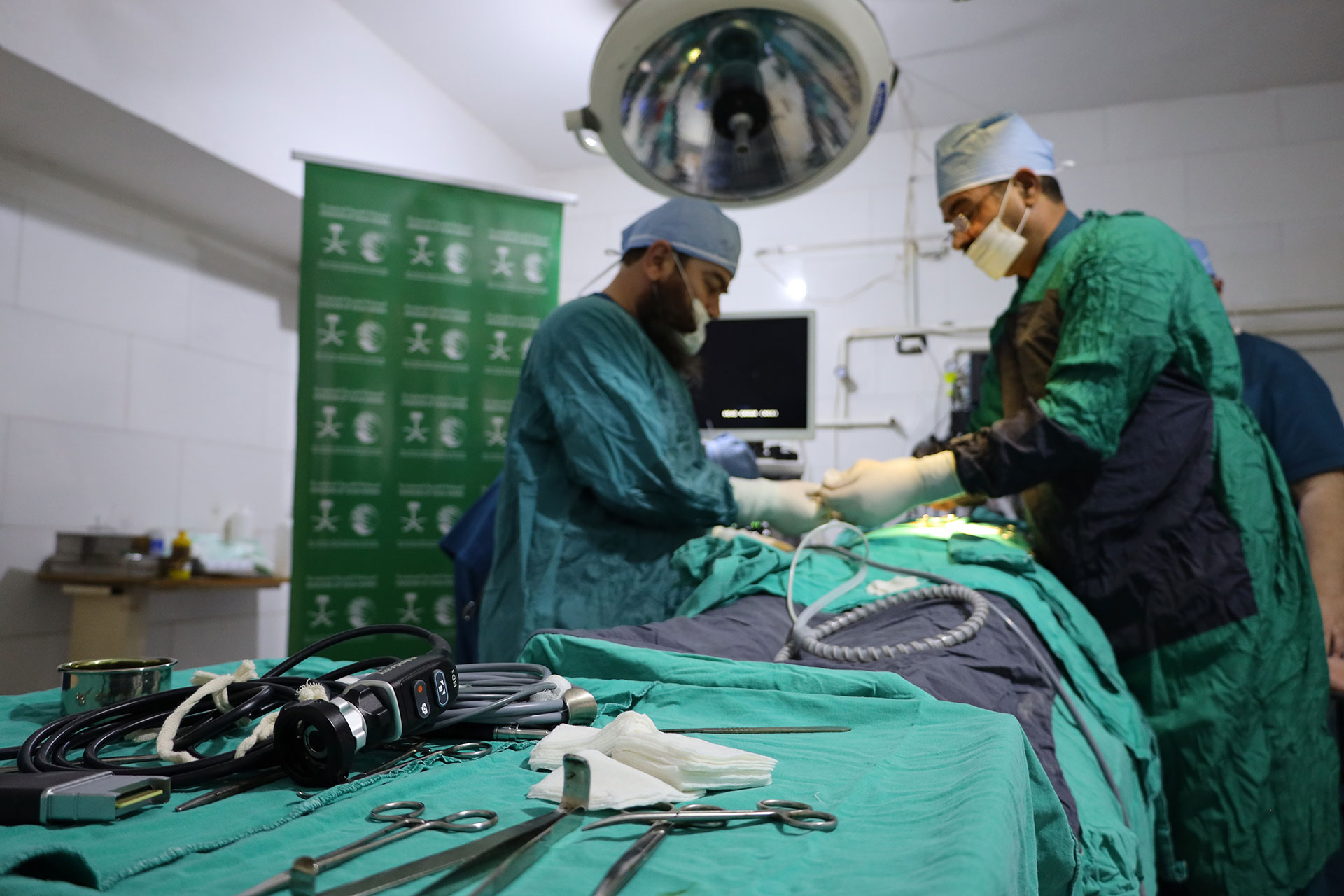 Surgeons at Arrahma Hospital in Jisr-Ash-Shugur district, Idlib, perform a laparoscopic procedure using newly installed endoscopy equipment supported by KSrelief. Photo credit: WHO
Supporting surgical recovery across Idlib
With support from KSrelief, WHO has delivered four standard laparoscopic surgery towers – complete with basic laparoscopic instruments and semi-rigid ureteroscopes – to hospitals in Idlib governorate. The equipment was distributed to Idlib Surgical Hospital, Sham Surgical Hospital, Harim General Hospital and Arrahma Hospital, strengthening surgical capacity across multiple districts.
At Arrahma Hospital, the impact has been immediate. “The new device is digital and much more precise,” Mohammed explains. “Its settings are more accurate, the technique is smoother and the operation time is shorter.”
Shorter procedures mean reduced anaesthesia exposure, fewer potential complications and improved recovery for patients. Reliable equipment also allows surgical teams to focus fully on the procedure rather than managing technical breakdowns.
“Now we are not worried that the camera will switch off or that the gas will stop during surgery,” he says. “For the patient, this means safer surgery. For the team, it means greater confidence.”
As recovery continues across Syria, strengthening operating rooms with modern equipment is not simply a technical upgrade. It is an investment in patient safety, surgical precision and the long-term resilience of the health system in Idlib.
Restoring precision in the operating room in Idlib
15 February 2026, Idlib, Syrian Arab Republic: As Syria advances in its recovery, restoring essential health services remains central to rebuilding a resilient health system. At a surgical hospital in Idlib, surgeons are once again performing minimally invasive procedures with confidence.
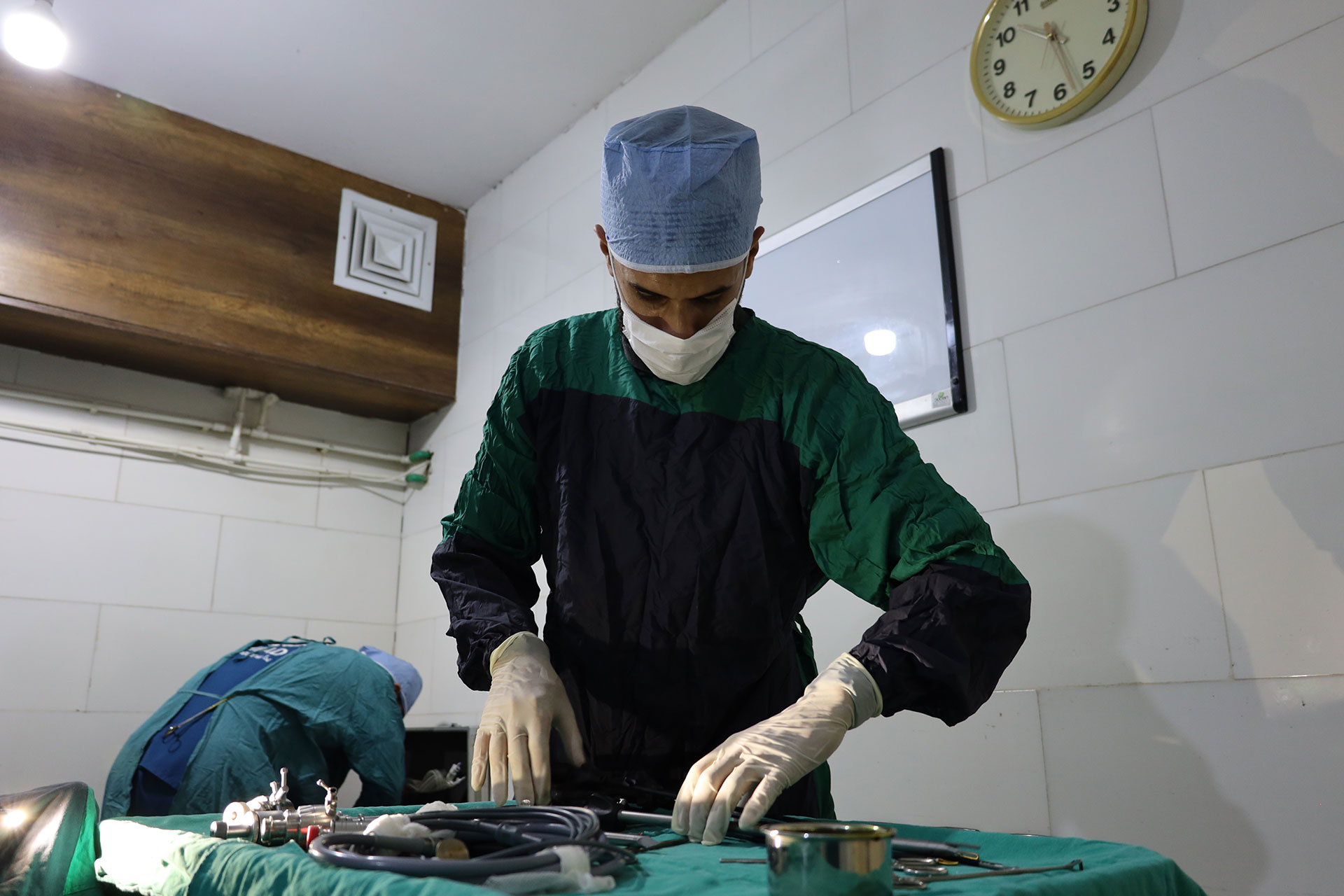 Dr. Suleiman Abdulhamid Al-Jassim, a fifth-year surgical resident in Idlib, prepares endoscopy instruments inside the operating theatre. Photo credit: WHO
For Dr. Suleiman Abdulhamid Al-Jassim, a fifth-year surgical resident working in Idlib, the arrival of a new endoscopy device has changed daily practice in tangible ways.
“For many years, we relied on an old endoscopy unit that had constant technical problems,” he says. “The instruments were worn out. The camera failed frequently. Because of these issues, there were times when we had to abandon laparoscopic surgery and proceed with open abdominal surgery instead.”
This was especially true for procedures such as gallbladder removal — operations that are typically performed laparoscopically. “When the device failed, we had no choice,” he explains. “We would convert to open surgery.”
Each month, the hospital performs between 15 and 20 laparoscopic procedures, including gallbladder removal, gynecological surgeries involving the ovary or uterus, and diagnostic laparoscopy. “With the new device, we can now perform these operations properly,” Dr. Al-Jassim says. “It represents a real qualitative shift for the hospital and in how we serve our patients.”
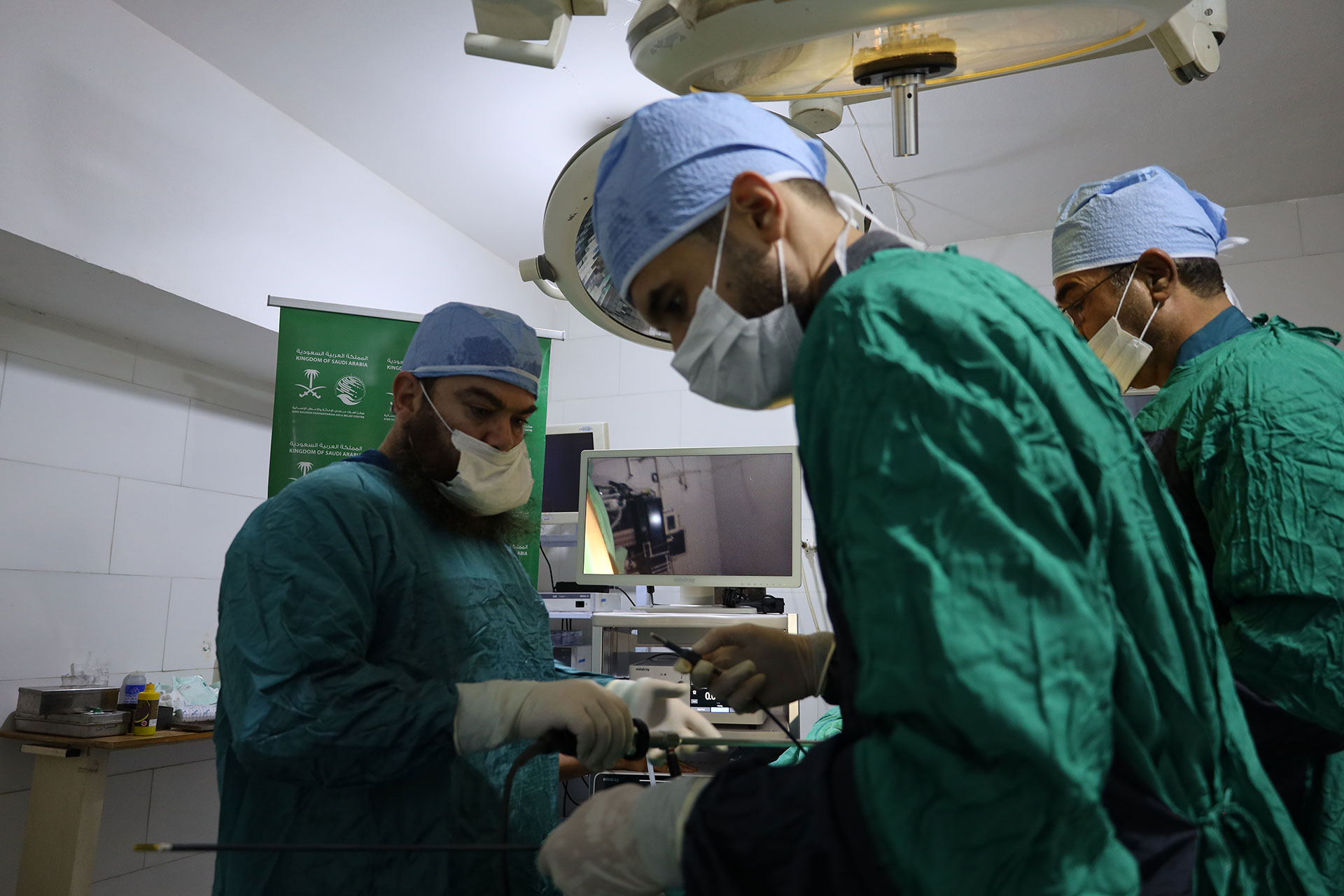 Surgeons in Idlib perform a laparoscopic procedure using newly installed endoscopy equipment, helping restore minimally invasive surgical care. Photo credit: WHO
Strengthening surgical capacity across Idlib
As part of broader efforts to support health system recovery, WHO, with support from KSrelief, has delivered new endoscopy equipment to three hospitals in Idlib governorate — Idlib Surgical Hospital, Al Hidaya Hospital and Harim General Hospital — helping reinforce essential surgical services as facilities rebuild and modernize.
After years of strain on health infrastructure, much of the surgical equipment in operating theatres across Idlib remains outdated or worn. “The new endoscopy unit has made a significant difference,” Dr. Al-Jassim says. “But some instruments are still missing. We hope the supporting organizations can help provide the remaining tools.”
He also points to broader needs inside operating rooms. “There is other old and worn-out equipment that affects our work,” he explains. “These limitations sometimes impact procedures and, in some cases, force us to make clinical decisions we would not otherwise choose.”
The impact is not only technical. “When patients see modern, functioning equipment, it changes how they feel before surgery,” he says. “Instead of preparing them for the possibility of open surgery because of equipment problems, they see effective tools. This improves their psychological state significantly.”
As recovery progresses, restoring surgical precision is about more than replacing devices. It is about strengthening safe surgical practice, rebuilding confidence in health services, and ensuring that people in Idlib can access quality care with dignity.