

Sélectionnez votre langue
How Maryam’s laboratory work keeps families in Al-Bab connected to care
17 November 2025, Aleppo, Syrian Arab Republic – When families arrive at Al-Bab Health Centre in eastern Aleppo, many stop first at the small laboratory tucked behind the consultation rooms. Inside, Maryam Ahmad Al-Khalaf works with calm precision – preparing samples, analyzing results, and reassuring patients who are anxious about what their tests might reveal.
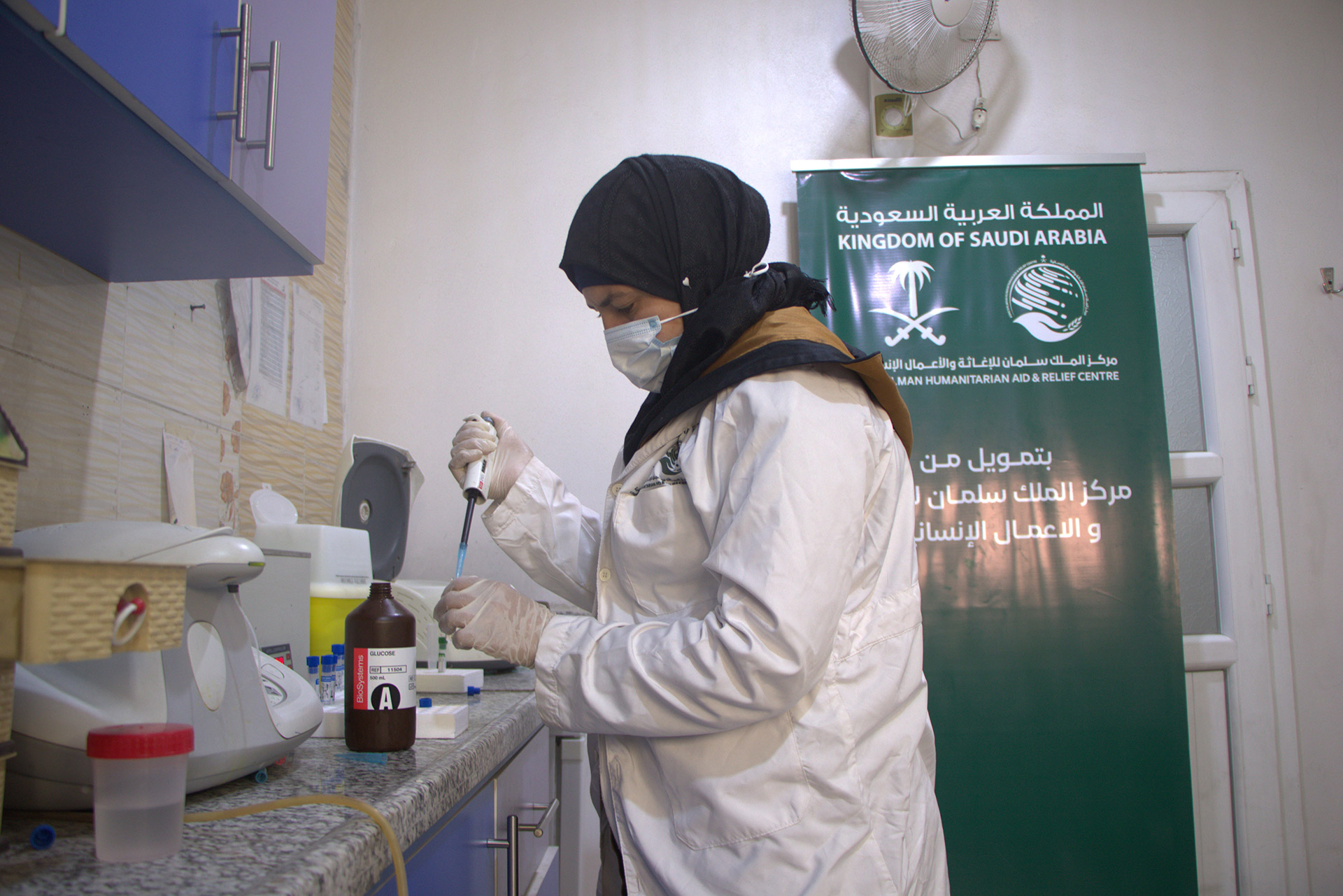 Maryam Ahmad Al-Khalaf prepares a blood sample inside the laboratory at Al-Bab Health Centre in eastern Aleppo. Photo credit: WHO
Maryam was displaced from Deir Hafer several years ago and rebuilt her life in Al-Bab, where she now lives with her husband and three children. “This community became home for us,” she says. “Working here is my way of giving something back.”
As the centre’s laboratory technician, Maryam performs the full range of tests requested by doctors and midwives – from basic blood counts and blood glucose tests to infection markers that help identify conditions requiring urgent attention. These results guide nearly every clinical decision in the centre, making the laboratory a quiet but essential part of primary health care.
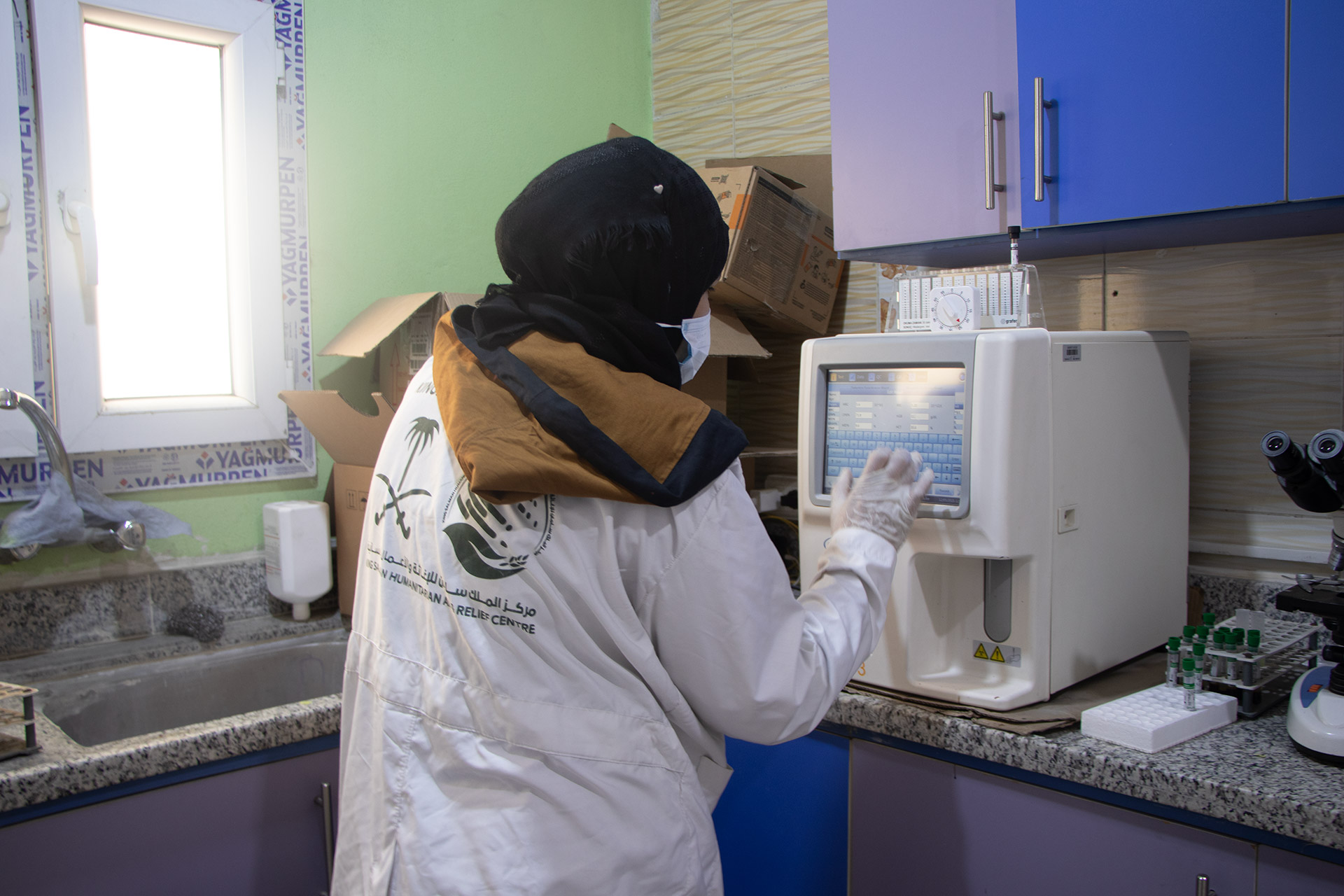 Maryam reviews laboratory results at Al-Bab Health Centre. Photo credit: WHO
Clinicians speak openly about how much they rely on her work. With limited resources and high patient loads, accurate diagnostics are the foundation of safe care. “Her results help us make the right decisions for our patients,” says one of the centre’s doctors. “In many cases, the lab findings determine whether someone can be treated here, needs referral, or requires close follow-up to prevent complications.”
The services at Al-Bab Health Centre are delivered in coordination with the Ministry of Health and implemented on the ground through Alameen Organization whose teams ensure that essential health care remains available to communities with limited options.
Since late 2024, continued support from the King Salman Humanitarian Aid and Relief Centre (KSrelief) has helped WHO keep 50 health facilities operational across northwest Syria, including Al-Bab. This contribution has ensured uninterrupted access to primary, secondary, and specialized services – from essential medicines and supplies to dialysis care, which remains a growing need in the region.
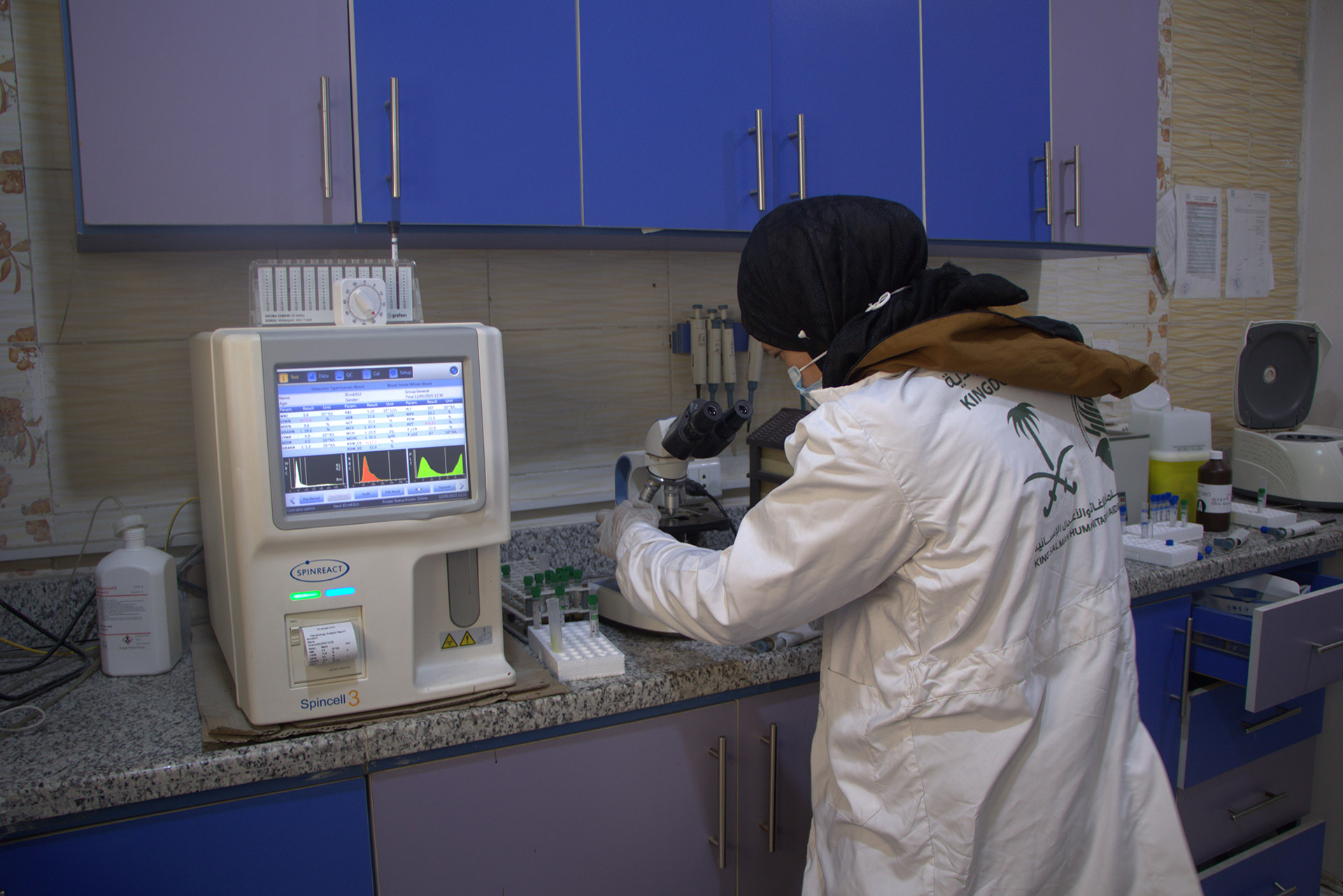 Maryam conducts microscopy work inside the laboratory at Al-Bab Health Centre. Photo credit: WHO
For Maryam, this stability is what allows her to serve people with dignity. “When the centre has what it needs, we can focus fully on patients,” she explains. “A single test result can change someone’s treatment plan. Reliable services mean we can detect issues early, before they become dangerous.”
And as she reflects on the support that keeps her laboratory functioning, she adds: “People here depend on these services. The support we receive helps us continue our work without interruption – and that means families get answers and care when they need it most.”
In Al-Bab, where health services play a vital role in daily life, Maryam’s work ensures families receive timely, quality care close to home – so no one must forgo essential diagnostic testing.
Families returning home join Syria’s Big Catch-Up to protect every child
13 November 2025 – Damascus, Syrian Arab Republic - At Barzeh Al-Balad Health Centre in Damascus, 35-year-old Yousra smiles as she holds her daughter’s newly issued vaccination card. “It feels good to be back home and to know my children are protected,” she says.
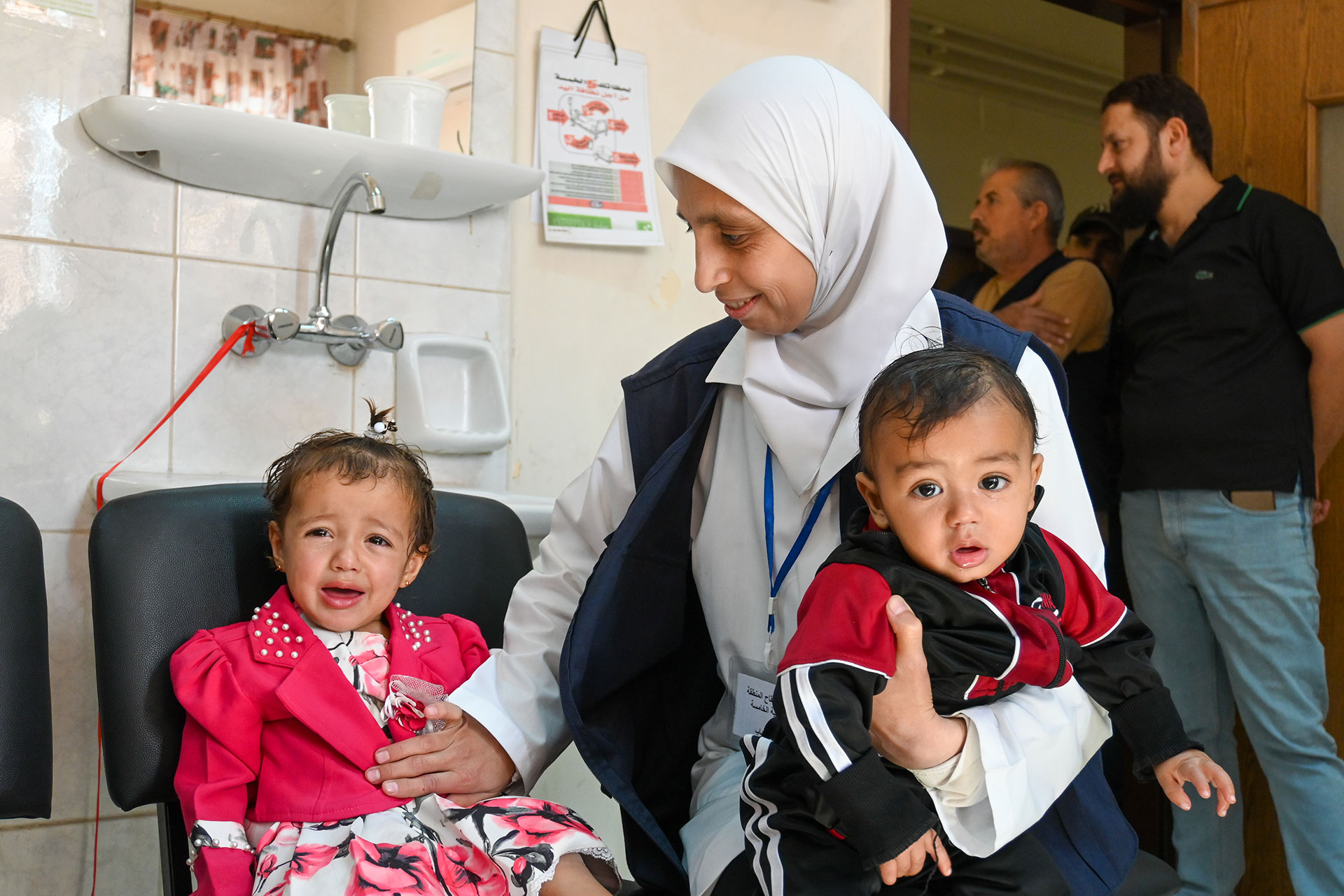 Miriam Chehab, a vaccination officer, comforts Yousra’s children after they received their routine vaccines at Barzeh Al-Balad Health Centre in Damascus. Photo credit: WHO
Yousra returned to Syria a month ago after nearly a decade in Lebanon. During her years of displacement, she struggled to keep up with her children’s vaccination schedule. Frequent moves and limited access to services meant her two-year-old daughter, Lyn Saleh Al-Akklah, missed several routine doses.
“When we came back, I didn’t know where to start,” she recalls. “Then one day, a community health worker approached me in the market and told me about the national catch-up campaign. I brought my children the next morning.”
At the centre, nurses reviewed her vaccination card from Lebanon and updated it with the vaccines Lyn had missed. “The team was kind and patient,” Yousra says. “They explained each vaccine and scheduled the next visit. I felt reassured.”
Now pregnant with her third child, she says resuming vaccinations is part of starting over. “After so many years abroad, I finally feel settled. I want my children to grow up healthy here in Syria.”
Continuing care for families
Across Damascus, parents like Aisha Mohammed are also ensuring their children are protected.
At Masaken Barzeh Health Centre, seven-year-old Lyn Mohammad Semaan Al-Zoubi continues to receive her vaccines on schedule. The centre is close to their home, and her mother, Aisha, regularly brings her follow-up appointments.
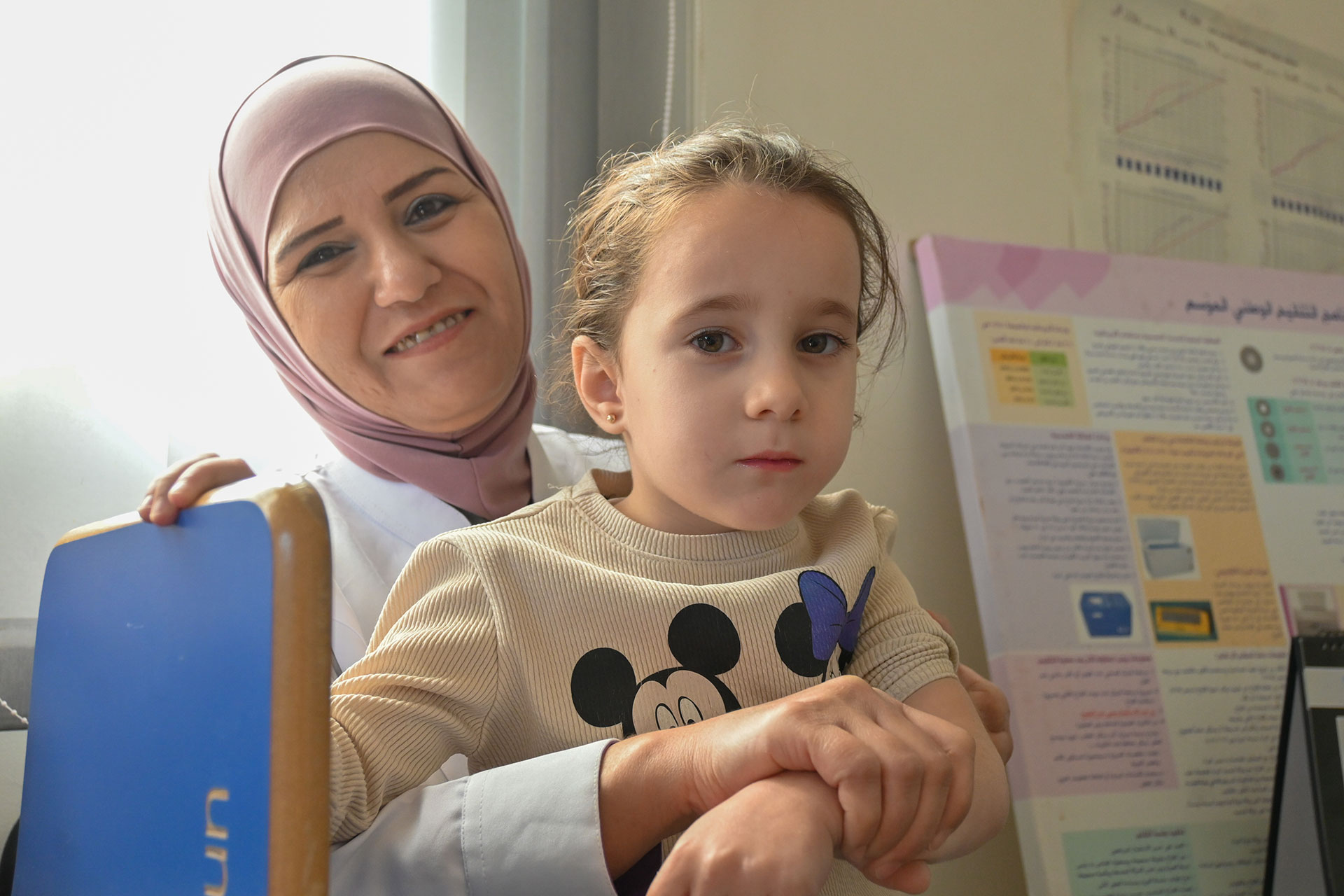 A vaccination officer in Damascus, holds seven-year-old Lyn Saleh Al-Akklah after checking her vaccination status at Barzeh Al-Balad Health Centre. Photo credit: WHO
The surrounding neighbourhood was heavily damaged during the conflict, but the rehabilitated health centre has remained an anchor for families seeking consistent care. Supported by the Ministry of Health, the centre has been part of wider national efforts to restore essential health services and strengthen routine immunization. “The nurses know my daughter and always take time to explain,” Aisha says. “It feels safe and familiar — I know she is protected.”
Reaching every child
Supervising these efforts is Miriam Chehab, a vaccination officer managing five health centres across the district. She has worked in the Expanded Programme on Immunization since 2012.
“I’ve seen families returning after displacement and others who never left but kept coming regularly,” she says. “This year we are seeing more awareness and trust.”
To reach hesitant parents, vaccination teams rely on dialogue and outreach. “We work with volunteers and community health workers in markets, schools and places of worship,” she explains. “Mobile teams also help reach families who cannot travel to health centres.”
Reaching these areas is not always easy. In As-Sweida, for instance, teams had to navigate mountainous terrain and remote villages amidst a volatile security situation to reach children who had missed their vaccines. Despite the challenges, they managed to reach over 15,700 children across the governorate — many of them in hard-to-access communities where health services remain limited.
 A health worker administers an oral polio vaccine to a young girl during a door-to-door outreach activity in Damascus. Photo credit: WHO
Miriam hopes the progress seen during the Big Catch-Up will strengthen routine immunization nationwide. “As Syria rebuilds, our goal is not just to recover what was lost, but to make the system stronger – so every child can be reached on time.”
Families like Yousra’s and Aisha’s are among hundreds of thousands across Syria who have benefited from the nationwide Big Catch-Up campaign, led by the Ministry of Health with support from WHO, UNICEF and Gavi, the Vaccine Alliance.
The activity covered 13 governorates, with an ongoing measles rubella vaccination campaign in northern Aleppo and Idlib from 2 to 13 November 2025. To date, health workers have screened the vaccination status of over 1.7 million children under five and vaccinated over 270,000 of them. Around 15,500 children had never received any vaccine — all have now been reached. In parallel, more than 1.6 million children received the measles, mumps and rubella vaccine and vitamin A supplements.
Health services in southern Syria stretch to meet growing needs amid displacement
 Medical supplies supported by WHO are offloaded at the As-Sweida Health Directorate to help replenish hospitals and primary health-care centres across the governorate. Photo credit: WHO11 November 2025, As-Sweida and Dara’a, Syrian Arab Republic - When fighting reached the edge of his village in southern Syria, Abu Laith, a father of five, knew it was time to leave. “We heard shelling near the school and saw people fleeing,” he recalls. “We packed the children, a few blankets, and drove off without knowing where we would sleep.”
Today, his family stays in a crowded shelter in Namer al-Hawa, a village in Dar’a Governorate, where dozens of displaced families have arrived in recent months. “My wife is six months pregnant and needs regular check-ups, but there’s no doctor in the centre,” he says. “The children keep coughing, and my youngest needs milk we can’t find. Every day, we wait and hope someone will visit with medicines.”
 Dr Wail Ismail, Public Health Officer at WHO Syria, visits the intensive care unit of As-Sweida National Hospital to assess equipment and emergency preparedness. Photo credit: WHOSince July, hostilities in As-Sweida have triggered widespread displacement across both Dara'a and As-Sweida, forcing nearly 187,000 people to flee their homes and leaving around 820,000 exposed to heightened health risks. Shelters and host communities are under strain as families crowd into shared spaces with limited water, sanitation and access to care. Health workers report rising cases of respiratory infections, diarrhea, lice and stress-related illnesses, all made worse by shortages of medicines and staff.
“Conditions in displacement sites are worrying,” says Louay Al-Hariri, a nurse with Lamset Shifa’s mobile medical team who previously served in Dar’a. “We see children with pneumonia, diarrhea and skin infections, and pregnant women who haven’t seen a doctor in months. Our mobile team tries to reach them, provide medicines, and raise awareness about hygiene and mental health. People need to know they’re not forgotten.”
 WHO supplies oxygen cylinders and refills to ensure uninterrupted services in intensive care units and operating theatres at As-Sweida National Hospital. Photo credit: WHOLocal hospitals are also struggling to keep pace. Three of As-Sweida’s four hospitals remain fully functional, and many primary health-care centres operate partially. Equipment failures and shortages of oxygen, anesthesia and fuel are frequent. Ambulance services are overstretched, with nearly half the fleet in need of repair.
 Inside Namer Al-Hawa health centre, families wait for check-ups and routine vaccinations as health workers respond to growing needs amid new displacement in southern Syria. Photo credit: WHOTo help stabilize services, WHO and health authorities have stepped up deliveries of essential supplies and medicines. “We’ve provided 14.4 tons of life-saving health items since July,” says Ghazwan Abou Alshamat, WHO Logistics Assistant. “The main challenge is ensuring safe access and timely delivery despite security restrictions. For us, this work is about more than logistics. It’s about hope. Every box we deliver means a family gets the medicine they need.”
Recent deliveries included trauma and emergency kits, chronic disease medicines and oxygen cylinders for hospitals across As-Sweida. WHO also arranged oxygen-refills to keep intensive-care units and operation theatres running, supported vaccination and surveillance teams covering high-risk and hard-to-reach sites, and pre-positioned cholera kits and water-disinfection tablets in case of outbreaks.
Meanwhile, mobile medical teams continue to visit displacement sites, offering consultations, maternal-health services, and psychosocial support. “The most important thing is to stay close to people,” Louay adds. “They need to see us coming back. That gives them confidence and a sense of safety.”
As needs grow and winter approaches, health workers say keeping hospitals functional and mobile teams active will be vital. “Every kilometer we travel and every delivery we make is a small victory,” says Ghazwan. “It means the health system is still standing, and so are the people it serves.”
Remarks by Christina Bethke, WHO Acting Representative to Syria at the UN Press Briefing in Geneva on Syria’s health transition gap
 Tuesday, 4 November 2025 - I’m speaking to you from Damascus at a moment of fragile hope and rising risk. As Syria moves from emergency to recovery, a transition gap has opened where humanitarian funding declines before national systems can take over.
That gap is measured in missed care, not percentages.
Since mid-year, 417 health facilities have been hit by funding cuts, with 366 suspending or reducing services. 7.4 million people have already seen access to medicines and treatment shrink. In just two months this meant:
210,000 referrals that could not take place
122,000 trauma consultations that did not happen
13,700 births without a skilled attendant
89,000 mental health consultations that people could not reach.
Only 58% of hospitals and 23% of primary health-care centres are fully functional. Chronic shortages of medicines, power and equipment keep services fragile.
Despite the high level of government ownership and a prioritized 2-year national strategic plan for health, needs are rising. Drought, unsafe water and poor sanitation are fueling outbreaks of cholera, leishmaniasis, lice and scabies, while power shortages compromise cold-chains, water pumping and hospital operations. Nearly 3 million returnees are coming back to areas where medicines, staff and infrastructure are limited – adding pressure to already thin services.
There are immediate flashpoints. In the northeast, Hassakeh National Hospital – the only comprehensive public hospital for more than 300,000 people – faces the end of donor support in December. Risks to the ambulance and referral system, and to round-the-clock primary care in several camps, are also imminent.
We also received reports from partners this week that support to al-Kasrah General Hospital in Deir-ez-Zor has been suspended, forcing most departments to halt operations, with only dialysis and physiotherapy continuing – affecting over 700,000 people living in and around.
The funding picture is stark. The Health Sector requirement is about US$565.5 million, with roughly 20% received. WHO’s appeal for 2025 is US$141.5 million, with a US$77 million gap as of October. Without predictable, multi-year support, the health system could unravel just as recovery is within reach.
Our message is simple – bridge the transition gap, sustain essential services now so recovery financing can take hold, and prioritize services in areas of return so families who go home find a functioning clinic, not a locked door. Keeping health services alive today is the bridge to Syria’s recovery and stability tomorrow.