

Sélectionnez votre langue
Health emergencies
Protecting vulnerable people
Who we are
What we do
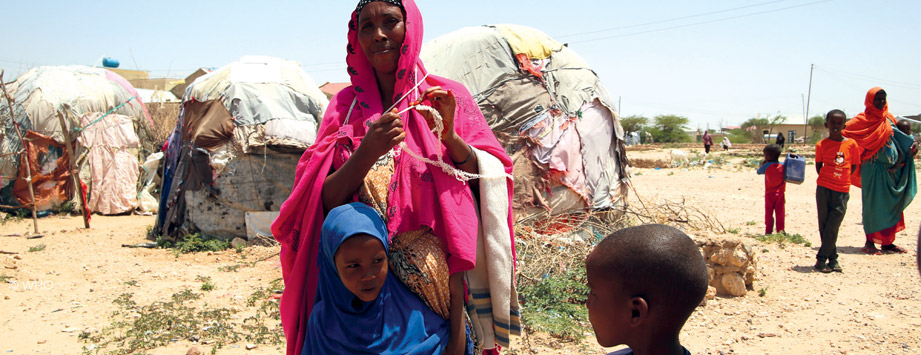
In collaboration with the Ministry of Health and Health Cluster partners, we work to ensure adequate emergency preparedness and response measures are in place primarily through the following actions:
Support the health system
We help strengthen the health system so it can adequately deal with public health emergencies.
To that end, we conduct vulnerability and public health risk analysis, develop national emergency preparedness, response and contingency plans, pre-position supplies, train the health workforce and lead the Health Cluster in Somalia to harmonize efforts in responding to health emergencies.
Prevent disease outbreaks and their public health effects
We conduct disease surveillance, monitor health threats, verify outbreak alerts and conduct field investigations to detect and contain outbreaks. We also implement mass immunization campaigns for cholera and other vaccines-preventable epidemic diseases. We respond to infectious disease outbreaks through field investigations, implementation of evidence-informed interventions and timely sharing of information to end any outbreak and minimize deaths.
Build core capacities for International Health Regulations (IHR) (2005)
We build core capacities required for IHR (2005) and support implementation of the national action plan for health security to fill gaps in IHR core capacities.
Our impact
What we have achieved
What is next
Universal health coverage
Leaving no one behind: ensuring everyone everywhere can access good health care
Who we are
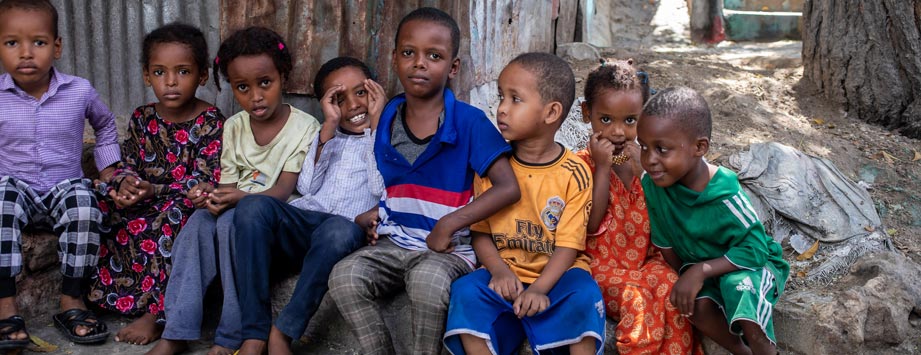
The WHO country office works closely with its partners and health authorities to accelerate progress towards universal health coverage (UHC) through strengthening the primary health care system. UHC, which promises to transform health services delivery in Somalia, rests on three pillars.
Equity:
to ensure everyone can access health services, not just those who can afford them
Quality:
to ensure that the health services offered are of an acceptable quality
Financial protection:
to ensure that no one accessing health services is put at financial risk because of the cost of services
What we do
In collaboration with health authorities, we guide efforts to advance UHC by strengthening primary health care in the country, primarily through the following actions:
Improve access to a high-quality essential package of health services
We have included prevention and community components in the essential package of health services, in addition to integrated selected noncommunicable disease and mental health services. We work to ensure that the package is available in hard-to- reach areas and to vulnerable populations, including internally displaced people. The revised essential package has taken into account the context and needs of the Somali people.
Strengthen the role and capacity of the Ministry of Health
We support the ministry to improve its institutional capacity for coordination, policy-making, regulation, planning, management and contracting, and use of data to guide decision-making.
Support strengthening of health care
We support the strengthening of primary health care at the district level, ensuring coherence in delivery of services among partners and addressing gaps in service delivery.
Harness the private sector for UHC
We are supporting health authorities to assess the current role of the private sector and to develop a strategy on how to engage the private sector as a partner in service delivery. These efforts will result in the establishment of regulatory frameworks and contracting mechanisms for involving the private sector in health services delivery under the Essential Package of Health Services.
Develop the health workforce for primary health care
We are mapping the current availability of and future needs for primary health care services to provide the evidence base for health workforce planning and investment decisions for the roll-out of the Essential Package of Health Services.
Improve collection, analysis and use of health and related financial information
We analyse data for monitoring the health- related Sustainable Development Goals at national and subnational levels.
Establish a national health account
We are working to establish a national health account to track health expenditure data, which will support monitoring and guide policies and decisions.
Our impact
Working with the Somali Ministry of Health and partners
- The road map for universal health coverage (UHC) launched, with an additional 2.6 million people expected to benefit from improved access to service delivery
- Essential Health Services Package revised
- Reproductive, maternal, neonatal, child and adolescent health strategy finalized
- Integrated management of neonatal and childhood illnesses rolled out
What we have achieved
In collaboration with our partners and the Ministry of Health, we have assisted in the following:
- The development of the Somali road map towards UHC (2019–2023).
- The revision of the Essential Package of Health Services as a set of critical health and nutritional interventions including cost of these interventions to be delivered at every level, including specific attention for the most vulnerable.
- The adaptation of Sustainable Development Goal 3 (SDG-3) to the local context of the country.
What is next
During 2021-2023, the WHO country office will continue to work with the Ministry of Health and other partners on the following activities:
- Roll out and implement the Essential Package of Health Services to expand coverage and quality of essential health care with sustainable financing, including specific attention to the most vulnerable groups, and ensuring no-one is left behind.
- Monitor the progress of the roll out of the Essential Package of Health Services and service coverage.
- Establish the national health account to monitor and track health expenditure.
- Map the current and projected need for the health workforce in order to deliver the Essential Package of Health Services at different levels.
- Develop a regulatory framework for engagement of the private sector in delivery of the Essential Package of Health Services.
- Establish a comprehensive system for management of health information for better monitoring and tracking of health-related indicators of SDG-3 at every level.
- Conduct a health facility assessment using WHO’s service availability and readiness assessment (SARA) tool to evaluate and monitor service availability and to support the planning and management of the health system to roll out the Essential Package of Health Services
- Monitor progress towards UHC, including intervention coverage and financial risk protection, with an equity dimension using the set of indicators used for tracking UHC coverage.
- Generate and use evidence for health systems strengthening and health policy research.
Priority areas
WHO supports national health authorities in Somalia as they develop health policies, strategies, and plans to meet national development targets within the context of the 2030 Agenda for Sustainable Development and the 17 Sustainable Development Goals (SDGs). The following are priority areas: