

Sélectionnez votre langue
Making mental health care for all a reality in Somalia: United Nations and the Government join forces to scale up quality mental health services at all levels of care
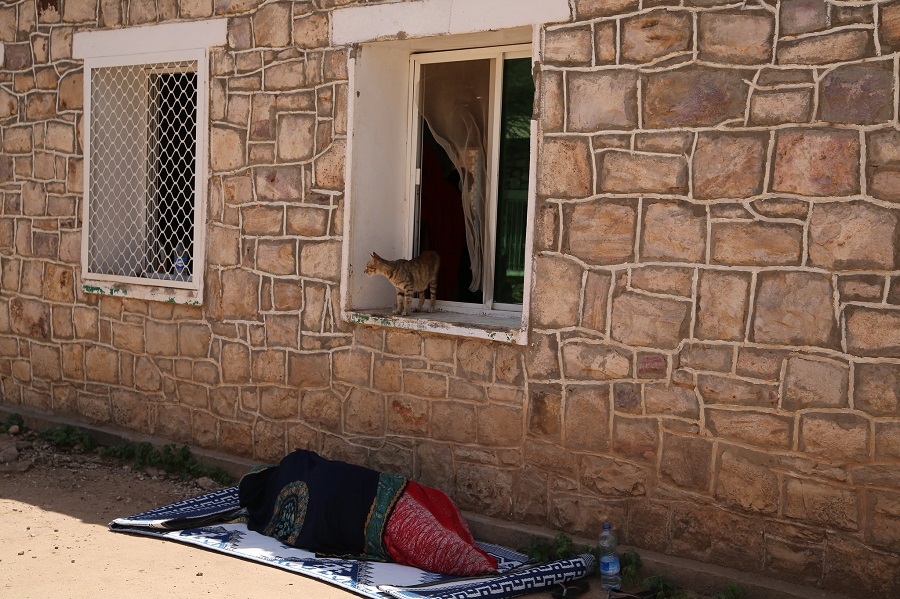
Mogadishu, 10 October 2021 – For this year’s World Mental Health Day, the WHO global theme is ‘Mental health care for all: Let’s make it a reality’. Over the past year, there is no doubt that the COVID-19 pandemic has had a major impact on the mental health of millions across the world, especially health and other frontline workers, people living alone, and persons with pre-existing mental health conditions. Moreover, at a time when mental, neurological and psychosocial support services were perhaps most needed, there were significant disruptions to essential health care, including mental health services at all levels, owing to the COVID-19 pandemic.
However, there remains cause for optimism – with COVID-19 vaccine coverage improving, more people are accessing health services, including for mental health. Moreover, during the World Health Assembly 2021, governments from around the world recognized the need to scale up quality mental health services at all levels – a task towards which WHO continues to strive alongside governments worldwide, including in Somalia.
Somalia has particularly been impacted by mental health challenges owing to decades of protracted conflict, which has severely disrupted social cohesion, broken down social norms and led to nearly one in every three Somalis suffering from some form of mental health condition. In response, the Federal Government of Somalia and United Nations (UN) in Somalia joined forces to reiterate support for this year’s World Mental Health Day theme, as well as to convey one additional key message specific to Somalia: take bold steps and offer quality mental health care and services in the country.
“We all have a role to play in supporting one another as a society and to make mental health a reality in Somalia,” said HE. Dr Fawziya Abikar Nur, the Minister of Health and Human Services of Somalia. “We can support people, and listen to them, and their friends and relatives, who have been the worst victims of violence and conflict for years. We can also work with them so that they discuss their mental health problems with health care workers in confidence and also advocate and mobilize for quality mental health care services to be available at all levels, including at the primary level.”
The Honorable Minister added that communities needed to drop the stigma around mental health, seek the right support, and speak about their issues more openly to manage stress and improve people’s well-being.
To address these challenges, the Federal Government has worked with WHO to develop a mental health strategy for 2019-2022 and is currently finalizing a mental health policy. Also, with support from the UN Peacebuilding Fund from 2020-2021, and in a partnership between the International Organization for Migration (IOM), the United Nations Children’s Fund (UNICEF), Somali National University and WHO, the Federal Government has been leading the implementation of a mental health project in the context of ‘health for peace’ with focus in Baidoa, Kismayo, Dollow, Galkaayo and Mogadishu. This project has supported health care workers to understand, address and provide more care for people in need of mental health support, as well as raise awareness about mental health issues. The project is also generating evidence on the interlinkage between mental health and peace, a topic that has not been well researched or studied anywhere in the world.
“Now more than ever, Somalis need mental health support. As a resilient society, Somalis have endured the effects of protracted conflict, and one health emergency after another,” said Dr Mamunur Rahman Malik, WHO Representative to Somalia. “Together with the Federal Government and partners, we are making sure that the WHO Mental Health Gap Action Programme is integrated at all levels of care, especially at the community and primary level care.”
“The conflict in Somalia is impacting millions of children. Continued exposure to violence, fear and uncertainty can have a shattering impact on their behaviour, learning, emotional and social development for years,” said UNICEF Somalia Representative, Mohamed Ayoya. “It is our collective job and responsibility to help these children recover and regain some sense of normalcy. Together with the Ministry of Health, WHO and partners, UNICEF is providing children – who have witnessed extreme violence and loss – mental health and psychosocial support.”
“No health system can be fair unless it provides mental health services to those who need them the most, so UNDP Somalia supports counselling and mediation for vulnerable groups, including women who face violence and families dealing with conflict,” said Jocelyn Mason, UN Resident Coordinator a.i. and UNDP Somalia Resident Representative.
During this year’s World Mental Health Day, the WHO country office for Somalia stands firmly behind the global theme of ‘Mental health care for all: Let’s make it a reality’ and will continue to work closely with the government and all partners to scale up quality mental health services at all levels across Somalia.
For more information, please contact:
Khadar Hussein Mohamud
Head of Coordination and Communication
Federal Ministry of Health
+252 615 602 637
Fouzia Bano
WHO Chief of Staff ai, Communications Officer
+252 619 235 880
French President and WHO Director-General commend Somali doctors who participated in WHO Academy certified training course on dealing with mass casualties
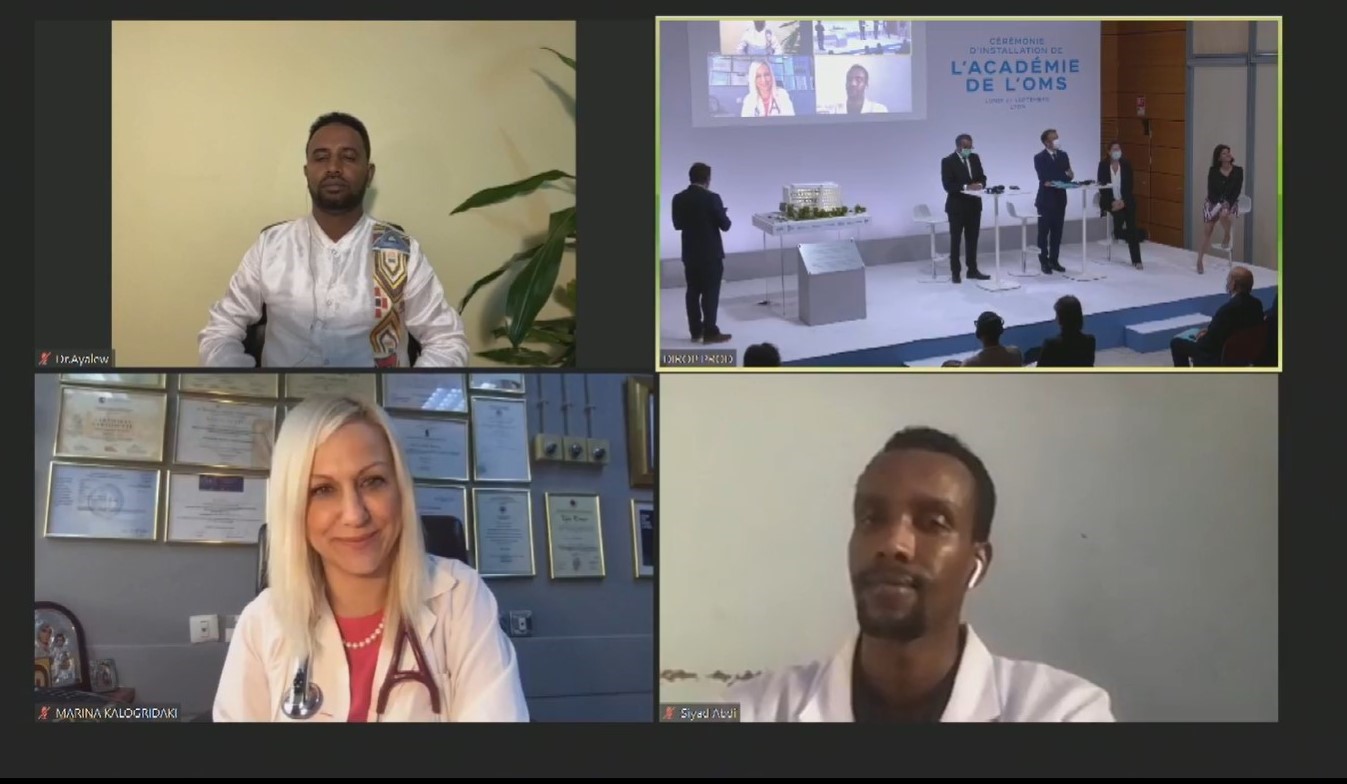 Photo: Dr Siyad Mohamed Abdi (bottom right) addresses Dr Tedros, President Macron and WHO Academy Executive Director, Dr Agnès Buzyn (top right) during the groundbreaking ceremony in France, while health professionals from other countries listen to the discussion, 27 September 2021
MOGADISHU, 29 September 2021 – The World Health Organization (WHO) Academy held a groundbreaking ceremony, in the presence of the President of France, HE Mr Emmanuel Macron, the WHO Director-General, Dr Tedros Adhanom Ghebreyesus and Executive Director of the WHO Academy Dr Agnès Buzyn to inaugurate the construction of its futuristic campus in Lyon, France, on 27 September. At the event, President Macron addressed Dr Siyad Mohamed Abdi, a Somali surgeon and trainee of the WHO Academy certified training course on mass casualty management held in Mogadishu, to hear about his learning experience.
The WHO Academy developed and organized an operational, context-specific and team-based training course for Somali health workers in January and February 2021 that prepares them to respond effectively and efficiently to mass casualty incidents. This was the first certified course of WHO Academy organized in Africa on mass casualties management to be organized by WHO Somalia country office, with funding from the World Bank’s Pandemic Emergency Financing Facility. As part of the course, 10 international master trainers from the WHO Academy trained 74 doctors and nurses in mass casualty management in Mogadishu and Hargeisa.
Dr Abdi, who works at a number of hospitals in Galmudug State in Somalia, explained the training enabled health professionals to design and upgrade their own hospital mass casualty plans, to be more effective and efficient, work as teams, and exchange best practices and experiences with one another.
“Somalis witness road traffic accidents, bomb explosions, and natural disasters so often. Additionally, conflict causes around half of all civilian trauma cases,” added Dr Mamunur Rahman Malik, WHO Representative and Head of Mission to Somalia. “We are thankful to the World Bank, the WHO Academy, the WHO headquarters and our Regional Office, as well as to several other partners who gave Somali doctors and nurses the well-planned and evidence-based learning opportunity to rethink their response, both individually and collectively, to casualties. This course offered them skills and practical simulations that will help them plan for, respond to, and cope with mass casualties, which will inevitably save more lives.”
“The quality of the health workforce is the key to resilience during a health crisis,” said President Macron. “Investing in health systems is the best way to prepare for future pandemics. Success requires unprecedented coordination of all actors. WHO is, of course, a key player and its Academy will be an essential platform for disseminating learning.”
“The ambitions of the WHO Academy are not modest: to transform lifelong learning in health globally,” said Dr Tedros. “The COVID-19 pandemic is a powerful demonstration of the value of health workers, and why they need the most up-to-date information, competencies and tools to keep their communities healthy and safe. He added, “The WHO Academy is an investment in health, education, knowledge and technology, but ultimately it’s an investment in people, and in a healthier, safer, fairer future.”
Representatives from the Government of the Republic of France, Federal Republic of Somalia, UN, international organizations, academia and the health, academic and economic sectors participated in the event. It was broadcasted live on the WHO website and on social media (Twitter, YouTube, Facebook).
NOTE TO EDITORS
The World Bank, through its Pandemic Emergency Financing facility, provided support to the Mass Casualty Management training in Somalia.
The WHO Academy is a state-of-the-art training institution that aims to bring the lifelong learning revolution to the health sector and reach 10 million learners around the world by 2023. For additional information, please see the WHO Academy website and press release for the ceremony.
For further details, please contact:
Mr Kyle DeFreitas
WHO Somalia
External Relations Lead/OIC Nairobi Liasion Office
+254-782-501-324
Ms Fouzia Bano
WHO Somalia
Chief of Staff ai, Communications Officer
+252619235 880
Newly established WHO Academy credits response of Somali health workers to mass casualty events
29 September 2021 – Three decades after a civil war and several natural and manmade disasters, the resilience of Somali communities and health workers have been put to test many times. Each time the sound of an explosion reverberates across a city or town, under-resourced health facilities scattered sparsely across the country can expect to receive an influx of mass casualties.
At their end, health workers managing these health facilities are usually under-prepared, with limited access to modern tools, equipment and skills, that limit their response and reaction to mass casualties and resulting trauma, which is ubiquitous. A primary assessment conducted by WHO across 142 hospitals in Somalia found that trauma poses a heavy burden on the health system and communities, and that conflict contributes to around half of all civilian cases of trauma.
Introducing modern tools, techniques and thinkings through mass casualty management courses
In 2020, in recognition of the situation and to support hospital teams in mounting a more efficient and effective response to mass casualties, the Federal Ministry of Health and Human Services of Somalia partnered with WHO Somalia, WHO headquarters and the WHO Regional Office for the Eastern Mediterranean, with financial support from the Pandemic Emergency Financing Facility (PEF) of the World Bank.
After a few weeks of planning, the WHO Academy conducted 2 of their very first 5-day mass casualty management courses throughout January and February 2021, where 10 expert trainers from different parts of the world trained 74 Somali doctors and nurses in Mogadishu and Hargeisa. This was the first WHO Academy certified course held in Africa on mass casualty management.
“Although nearly all of the trainees were aware of the concept of a mass casualty plan, few had any experience of one and many had no real idea of what a plan entailed. By the end of the course, the trainees were more familiar with the concept of working in a team and the design and implementation of a mass casualty plan. Most importantly, after 5 days of training, it was possible to see an evolving understanding of underlying concepts and an ease with communicating with colleagues in the language of mass casualty,” said Dr Neil Shorney, Consultant Anaesthetist, WHO Trauma Operational and Advisory Team Expert Adviser, WHO Academy Mass Casualty Management Programme.
Feeling more prepared to deal with mass casualties
As a member of the Somali Medical Association and the Somali Paediatric Association, and currently serving as a paediatric doctor at the SOS Children’s Village in Somalia for the last 8 years, Dr Abdirahman Osman Mohamud knows how important it is for children to receive timely attention. After all, according to the primary assessment that WHO carried out, about a third of all casualties are children aged under 15 years.
At the mass casualty training he attended in Mogadishu, Dr Mohamud learnt how to activate mass casualty management phases, prepare a plan for mass casualties, and work with different zones appropriately, should the health facility ever receive children involved in an incident.
Dr Zainab Abdirahman Ali from South Galkacyo Hospital reiterates the same messages. Before the training, none of the participants had plans to deal with mass casualty incidents, but the training helped health workers and, as a result, medical and non-medical staff, to use triage points to prioritize people’s needs. A practical session, whereby participants had to draw a plan of the hospital and divide it into triage points, also helped them discuss ideas. Dr Zainab feels the training motivated her and other fellow doctors and nurses to save more lives.
In Hargeisa, when he was young, Dr Saddam Hussein Abdi couldn’t understand how so many people he knew fell sick and died within no time. It was and still is a norm. Years later, as a participant in the mass casualty management training being run by the WHO Academy, Dr Hussein explains to facilitators how education is a key ingredient in a health system and will help the new generations of health care workers, like him, to help their communities.
“For now, thanks to WHO and the World Bank, we have had a chance to learn about important topics like dealing with mass casualties and hospital management that will make us more efficient at what we do. I have been one of the lucky ones. But all doctors need opportunities like these and more.”
WHO Academy groundbreaking ceremony
On Monday, 27 September 2021, WHO Director-General, Dr Tedros Adhanom Ghebreyesus, joined H.E. President Emmanuel Macron of the Republic of France, at a groundbreaking ceremony for the WHO Academy in Lyon, France, to inaugurate the construction of its futuristic campus. At the event, President Macron asked a Somali surgeon and WHO Academy certified mass casualty management trainee, Dr Siyad Mohamed Abdi, about his learning experience.
Dr Abdi, who works at a number of hospitals in Galmudug State in Somalia, explained that the training had enabled health professionals to respond better to mass casualties and emergencies, by prioritizing the needs of casualties and allocating resources for such events. He shared an example of how the hospital team was better prepared to deal with the casualties from an explosion after they had acquired skills from the training.
Photo: Dr Siyad Mohamed Abdi (bottom right) addresses Dr Tedros, President Macron and WHO Academy Executive Director, Dr Agnès Buzyn (top right) during the groundbreaking ceremony, 27 September 2021, while health professionals from other countries listen to the discussion.
Related links
WHO Academy Groundbreaking Ceremony Expanding Access to Critical Learning
For further details, please contact:
Mr Kyle DeFreitas
WHO Somalia
External Relations Lead/OIC Nairobi Liaison Office
Ms Fouzia Bano
WHO Somalia
Chief of Staff ai, Communications Officer
Creating a safe environment for mothers and newborns in Somalia
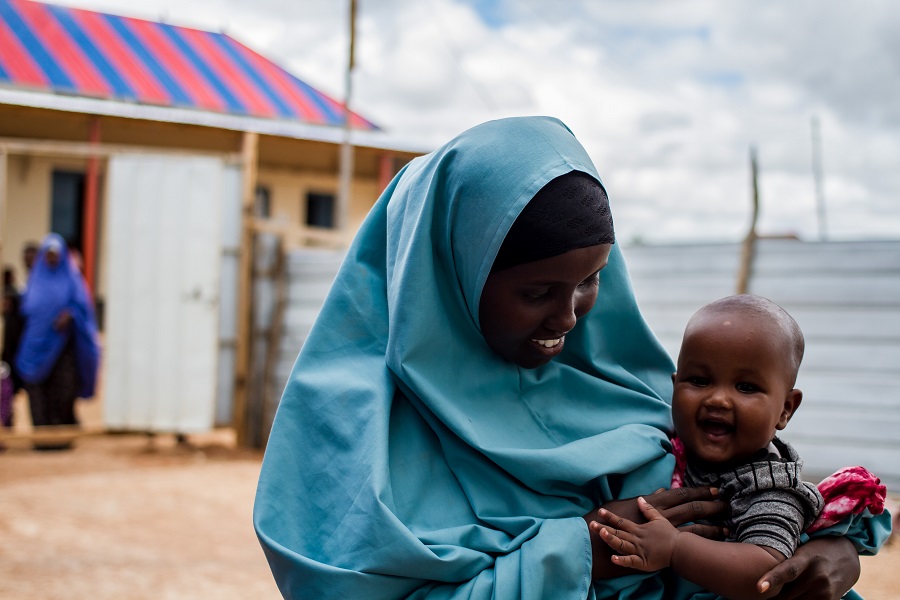
16 September 2021 – As the Head of Nurses and Midwives and Capacity Building at the Banadir Hospital, Sahra Mire Mohamed assists midwives to offer mothers and newborns safe and quality care. She ensures that midwives she trains perform safe deliveries, supervises regular mother and child health services offered to mothers and newborns, and helps them when needed, especially if a mother or child is facing any kind of health risk or medical emergency.
On average, Sahra and her teams work with 600 pregnant women a week, many of whom come from far and wide to visit the hospital because treatment for pregnant women in this hospital is free. Mostly, women visit for delivery, although many “expectant mothers” arrive too late to the hospitals and it becomes difficult for the midwives to manage these pregnant women for safe delivery. Sometimes, the family members do not sign a consent form for a caesarian section in the event when normal deliveries are not indicated, owing to the condition of the mother, she explains.
For now, Sahra is pleased to note that this year’s World Patient Safety Day is shining a spotlight on safe maternal and newborn care, and urging policy-makers, health professionals, the general public, health partners and other stakeholders to ‘act now for safe and respectful childbirth’.
With very high maternal mortality and neonatal mortality rates, stakeholders in Somalia need to focus on using innovative strategies to create a safe environment for mothers and newborns, she says.
Challenges that Somali women and newborns face
In Somalia, health facilities do not practise proper infection prevention and control measures leading to patients, health care workers, and even newborns, prone to health care-associated infections. The awareness levels of health care workers on infection prevention and control in many health facilities is also very poor.
According to Sahra, who has a earned Master’s degrees in both public health and one in disaster resilience leadership and humanitarian assistance, Somali women receive unsafe care when they opt to visit unskilled traditional birth attendants for delivery. In general, women lack awareness about the need to visit health facilities regularly during their pregnancies, which results in them and their newborns missing out on life-saving vaccinations and screenings that can spot and prevent challenges.
Many pregnant women that Sahra sees suffer from pre-eclampsia, excessive bleeding during and after childbirth, high blood pressure, obstructed labour and other complications that arise due to unsafe care during delivery, poor antenatal and postnatal care and also partly due to practice of female genital mutilation.
Need for health education
To reduce maternal and neonatal deaths and diseases, women should speak to health care workers and their families about how to access health care and reduce risks during pregnancy and childbirth. They need to be aware of the regular check-ups, screening for diseases, and immunization needed during pregnancy to avoid infection during births, and to recognize any red flags in good time to seek timely, life-saving interventions. Families and communities can learn about ways in which they can ensure pregnant women continue to access health services at facilities before childbirth, during delivery and as their children grow.
“We need to educate Somali health workers, as well as Somali women, on what makes a safe and respectful birth for newborns which also do not deny the right of every pregnant woman for safe deliveries across any health facility in this country. We can do it by working together with our partners. Our joint and collective commitment and actions in ensuring safe and respectful childbirth can save many lives — of both mothers and newborns — from preventable causes.” said Dr Mamunur Rahman Malik, the World Health Organization (WHO) Representative to Somalia.
He explained that communities should be aware of the timely and skilled care and emotional support mothers need for their deliveries and to give newborns a great start in life. "Mothers who receive the right antenatal care would be more likely to develop birth and emergency plans and avoid complications," added Dr Malik.
Sahra echoes these words, with a message to her fellow health care workers, adding, “When patients arrive at health facilities, we should give them care immediately and offer them a comfortable environment. It is up to us to give them relief, look at their safety, and adhere to patient safety guidelines when we attend to patients.”
Change is trickling in, but more needs to be done
On a brighter note, change is trickling in. The Ministry of Health and Human Services and health partners, including WHO and other UN agencies like the United Nations Children’s Fund (UNICEF) and United Nations Population Fund (UNFPA), are using various strategies to reduce maternal mortality, such as introducing new interventions like the kangaroo care, providing hospitals with personal protective equipment to reduce the spread of COVID-19, and training health care workers in maternal and neonatal care.
Additionally, health care workers based in health facilities are becoming more aware of and skilled at offering safe quality care and appropriate treatment when required. They are becoming more respectful and paying attention to patients’ needs, thus increasing the trust of families, including men, in the use of health services and facilities. However, more can be done.
Keeping mothers and children safe from COVID-19
In Hargeisa, Somaliland, Ismahan Abdullahi manages the Hawadlleh Mother and Child Health clinic. On average, she attends to around 100 patients a week, offering antenatal care, postnatal care and childbirth. She also offers advice on family planning to women.
When COVID-19 was confirmed, Ismahan and her colleagues noticed a reduction in the number of visits pregnant women were making to health facilities, most likely out of a fear of being infected with the disease. In response, Ismahan and her team have been working hard to maintain a safe environment at the clinic, as they know how important it is to keep mothers and children safe while they seek medical attention. Ismahan wears masks, washes her hands regularly, uses sanitizers, maintains physical distance when she can, and encourages patients and her team to do the same.
“Even though we are trying, we need support in getting personal protective equipment for health care workers,” says Ismahan. She explains that health facilities like the one she runs need support in many areas: in training of midwives, nurses, laboratory personnel and pharmacists; and in the provision of supplies such as laboratory solutions, family planning commodities, health kits for deliveries. Training in infection prevention and control would also save many lives, Ismahan adds.
Back in Mogadishu, Sahra raises the same point – that midwives and health professionals need intense training in different areas, and Somali women need support from their communities to raise healthy families.
Giving newborns a good start in life
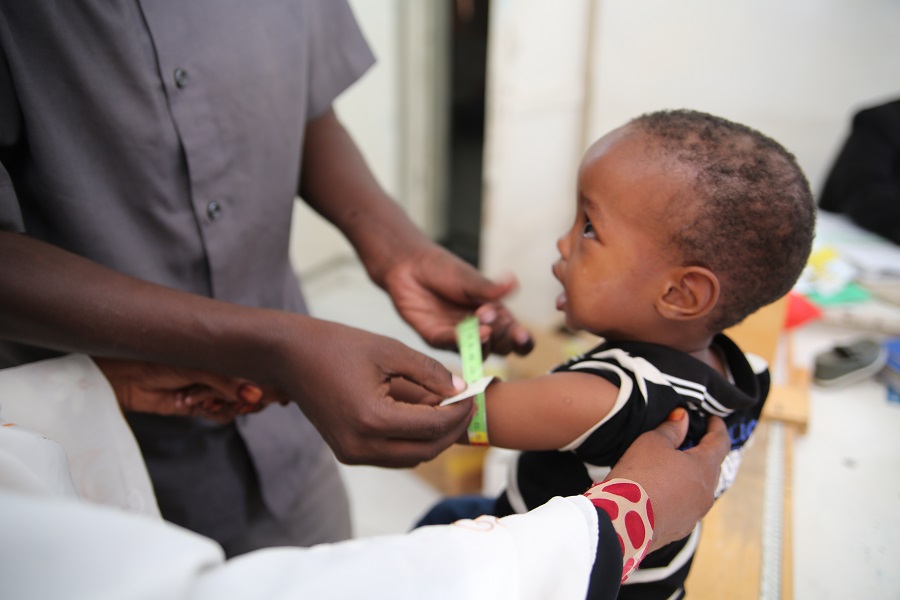
To give newborns a safe start in life, WHO recommends that midwives and nurses should support with immediate and thorough drying of babies after childbirth; delayed clamping of the umbilical cord and bathing; proper handling of non-breathing babies; and must encourage early initiation of breastfeeding.
“Good care during pregnancy is essential for the health of both the mother and developing unborn baby. Pregnancy is a crucial time to promote health behaviours, to ensure that the baby is getting all the nutrients needed for proper growth and development,” said Dr Al-umra Umar, Head of WHO Somalia’s Reproductive, Maternal, Newborn and Child Health Programme.
This year, on the World Patient Safety Day, WHO, UNICEF and UNFPA are committing to support the Federal Ministry of Health and Human Services to introduce new interventions and measures across the health facilities in Somalia to ensure safer maternal and newborn care every year.