

Sélectionnez votre langue
USAID and WHO team up to mitigate the impact of COVID-19 on Somalia
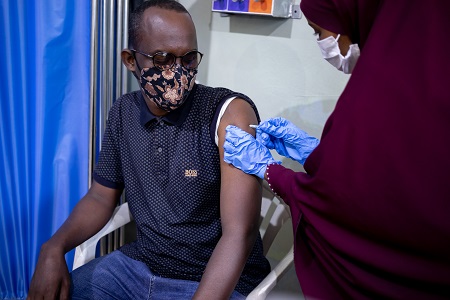 The WHO-USAID project will improve COVID-19 vaccination rates across Somalia25 August 2022, Mogadishu – The World Health Organization (WHO) country office for Somalia and the United States Agency for International Development (USAID) have launched a new project which aims to fill current needs to prevent community spread of COVID-19 across Somalia. The project will address existing gaps in coordination, surveillance, vaccination and the operational response to COVID-19 and help the country’s health system recover from the pandemic towards a more inclusive and equitable system.
As of 24 August 2022, Somalia had 27 137 laboratory confirmed cases of COVID-19, and 1351 related deaths. The country’s disease surveillance system remains fragmented and weak. Currently, only 62% of health facilities in Somalia are reporting through the early warning and alert and response network. The country was able to vaccinate only 15% of its population against COVID-19 fully, leaving a large number of high-risk populations unvaccinated. Somalia’s fragile health system has been struggling to sustain the progress made in containing and mitigating the transmission of COVID-19 among vulnerable populations, especially among around 47% of people who live in hard-to-reach areas, where disease reporting is weak and incomplete. This results in underreporting and the actual magnitude and size of the COVID-19 epidemic in the country may not represent the true burden of the disease.
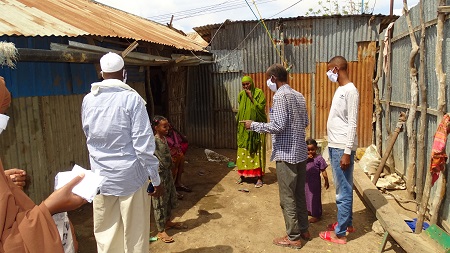 Health care workers visit households to share messages on how to prevent COVID-19 and manage cases“With the guiding principle that no one is safe until everyone is safe, in collaboration with USAID and the Somali Government, WHO will ramp up measures to contain and suppress the spread of COVID-19. This would prevent resurgence of the virus. It would also minimize adverse effects of the pandemic on other life-saving essential health services, such as routine immunization for children, which has already slid back substantively in the last 2 years. USAID’s continued commitment and partnership will support Somalis to access the most basic, essential health services that they need, while preparing Somalia for current and future health emergencies,” said Dr Mamunur Rahman Malik, WHO Representative to Somalia.
“The United States, WHO, and Somalia’s federal and state governments are collaborating on this lifesaving intervention. Our effort aligns with our commitment to the global response to the COVID-19 pandemic. As of 8 August, the United States, through coordinated efforts with Gavi and recipient countries, has delivered 588 million vaccine doses to 115 countries, including 43 countries in Sub-Saharan Africa. Those numbers increase each month. This project will improve the response of Somalia’s health care system to the pandemic and other pressing health crises. It will also increase vaccination rates,” said Larry André, U.S. Ambassador to Somalia.
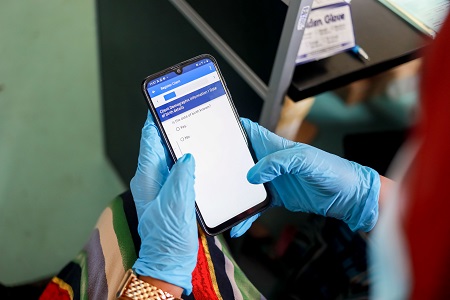 The project will support the sharing of COVID-19 data among partners, which will guide decision-makingThe COVID-19 vaccine uptake in Somalia currently stands at 15%. Unless this low vaccination coverage rate is scaled up, it may result in successive waves of the epidemic, and a high probability of deaths among vulnerable and at-risk populations. This is particularly as the country has porous, largely unmonitored borders with neighbouring countries where COVID-19 is still in circulation, and mass displacement due to the ongoing drought.
By way of this project, WHO will work to limit communities’ exposure to COVID-19 and reduce mortality and morbidity among vulnerable populations. This will be accomplished by supporting the federal government and federal members states of Somalia to: 1) strengthen intersectoral and intergovernmental planning and coordination for sustained emergency operational response; 2) maintain active surveillance for early case detection, laboratory-confirmation and contact tracing; and 3) improve information and data sharing, including innovation and research. An effective and robust response to COVID-19 outbreaks will be crucial to save lives, reduce the disease burden, and protect the health of the general population.
For additional information, please contact:
Eloi Yao
Senior Development Outreach and Communications Specialist
USAID Somalia
Keisha Herbert
Deputy Program Office Director
USAID Somalia
Kyle DeFreitas
External Relations Officer
WHO Somalia
Fouzia Bano
Communications Officer
WHO Somalia
Balancing priorities in the midst of a drought: vaccination campaigns break measles transmission among children in Somalia and save lives
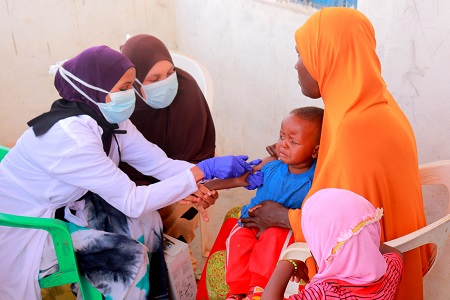 The measles immunization campaign vaccinated close to half a million children aged from 6 to 59 months to boost their immunity. Credit: WHO/Mukhtar Sudani10 August 2022 – In the Washington camp for internally displaced persons (IDPs) in Garowe, Deka Abdi Dacar learnt about measles, known as jadeeco in Somali after her experience. She lost 2 of her 4 children, aged 2 and 4, as they had measles with other complications. Both her young sons had fever, coughs and a rash for a few days before Deka and her family took them to the hospital. She solemnly adds that although she really regrets not knowing about measles vaccines before, she is still grateful she managed to vaccinate 2 of her children.
Prevalence of measles
Measles has been endemic in Somalia for years. One of the largest outbreaks was reported in 2017, when 23 039 suspected cases were reported across 118 of the country’s operational districts and the Banadir administrative region.
Since then, the prevalence of measles has varied each year. In 2020, Somalia recorded 9562 suspected measles cases, and a year later, in 2021, the country reported 7494 suspected measles cases. From January to July 2022, the country has had 11 972 suspected measles cases, which is a large spike as compared to previous years.
Drought increasing chances of measles spreading
Over the years, Somali children like Deka’s have had to bear the brunt of fragile health systems, an underpaid health workforce that has limited skills, low levels of health education among the population, and protracted conflict and insecurity.
Recurring emergencies in Somalia add on to health challenges that communities face, and resulting mass displacement fuels the spread of diseases. As a result of the drought that hit Somalia in 2021, an estimated 1.5 million children aged under 5 years face acute malnutrition, with over 380 000 likely to experience severe malnourishment. Children who are severely malnourished are at a high risk of falling ill – they are 9 times more likely to die of diseases such as measles, or acute watery diarrhoea/cholera.
The drought, which is showing signs of turning into imminent famine, has affected 7 countries in the Greater Horn of Africa - Djibouti, Ethiopia, Kenya, Somalia, South Sudan, Sudan and Uganda. Six of these countries, including Somalia, are witnessing measles outbreaks.
“As long as Somalia and neighbouring countries have pockets of under-immunized children and low routine immunization rates, preventable diseases like measles will keep reversing gains made so far and affecting children,” said Dr Mamunur Rahman Malik, WHO Representative to Somalia. “WHO-UNICEF estimates state that only around 46% of children in Somalia have received their first dose of measles in the last decade. We all need to redouble our efforts to reach the other half of the population of children, especially as COVID-19 has already contributed to childhood immunization sliding backwards in Somalia.”
Measles vaccination campaign reaches over 459 000 children
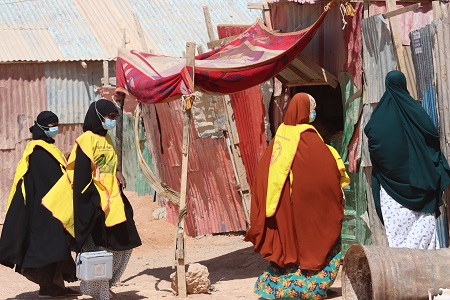 Health care workers, many of whom are women, focus on vulnerable communities and children while delivering health services. Credit: WHO/Mukhtar SudaniTo prevent measles from spreading, the World Health Organization (WHO) and United Nations Children’s Fund (UNICEF) provided crucial support to the Puntland and Galmudug Ministries of Health to conduct a measles vaccination campaign from 20 to 29 July 2022. The campaign covered children in 15 districts in Puntland and 2 districts in Galmudug.
As part of the intervention, 466 outreach teams vaccinated 459 478 children aged from 6 to 59 months out of a targeted 487 909 (94% of the target), according to preliminary data collected and analyzed. Two thirds of the outreach vaccination teams were deployed in urban areas, while a third focused on camps and households in rural areas. Additionally, 83 supervisors and monitors were deployed to maintain the quality of services provided and ensure that vaccinators were following COVID-19 protocols while interacting with communities. During the campaign, social mobilizers shared messages about the dates of the campaign, location of vaccination sites and benefits of vaccination with communities.
The campaign had a special focus on children from vulnerable populations, including those living in internally displaced camps.
Support from partners and health workers going a long way
Dr Mamunur Malik, the Head of the Mission of WHO Somalia, also expressed his profound gratitude to donors such as Gavi - the Vaccine Alliance, the European Union (EU) Delegation to Somalia, European Civil Protection and Humanitarian Aid Operations of Somalia, as well as the donors contributing to Contingency Funds for Emergencies of WHO for supporting, safeguarding and protecting vulnerable Somali children, living in some of the worst, life-threatening conditions caused by the current drought, occurring in a challenging environment.
With support from partners, Somalia introduced the second dose of measles-containing vaccine (MCV2) in children’s routine immunization schedule in November 2021, around the same time the Government declared the drought a national emergency in the country.
In general, communities are also supportive of health service delivery in the country. Asha Ali, a vaccinator who was involved in the measles campaign explains, “Somali parents are usually supportive of vaccination campaigns. However, I did meet 3 families who refused to get their children vaccinated initially. After we explained the benefits of vaccination, along with social mobilizers and supervisors, they agreed to vaccinate their children. It makes me happy to see situations like this, where we can make a difference to keep children healthy.”
Additional information on the drought and measles in Somalia can be found below:
WHO launches appeal to respond to urgent health needs in the greater Horn of Africa
WHO EMRO | Protecting children from measles in drought-affected Somalia | News | Somalia site
Germany donates US$ 4.6 million to WHO to close the equity gaps in COVID-19 and childhood immunizations
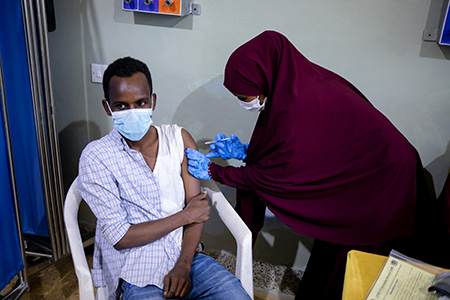 Alongside the government and partners, WHO supports COVID-19 vaccinations for eligible people. Photo credit: WHO SomaliaMogadishu, 4 August 2022 – The Government of Germany donated US$ 4.6 million to the WHO country office for Somalia in support of continued efforts to reach more people with COVID-19 and childhood vaccinations. Alongside the Federal Ministry of Health and Human Services, this contribution will be used to ensure the most vulnerable children and adults, including those living in remote areas, receive life-saving vaccinations.
“COVID-19 has proven that health infrastructure is vital not only with regards to new diseases and viruses but also to existing ones,” said Sascha Kienzle, Deputy Ambassador of Germany to Somalia. “Germany therefore stands with those most disadvantaged and seeks to include them in health interventions to ensure a lasting impact on everyone.”
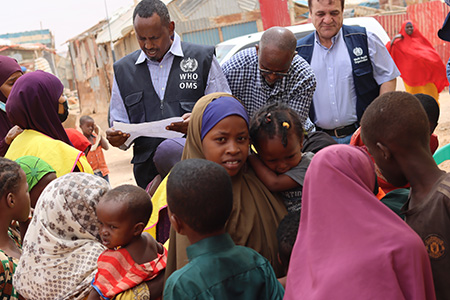 Health care workers search for children who have never received vaccines before to boost their immunity against preventable diseases. Photo credit: WHO Somalia/Mukhtar Sudani“We have recently sounded the alarm as our new data has shown that childhood vaccination coverage has continued to decline and thousands of children in Somalia have missed out on life-saving vaccines. COVID-19 has caused the largest and sustained backslide in childhood immunization in Somalia,” said Dr Mamunur Rahman Malik, WHO Representative to Somalia and Head of Mission.
“We cannot emphasize how important these funds are to reach out to children who have missed out on life-saving vaccines, identify the zero-dose children and vaccinate them to close the equity gap, and at the same time protect the high-risk adult populations of the country against COVID-19. In this spirit, we are grateful for the support from the Government of Germany. With support from partners, WHO is collaborating with the Ministry of Health to use a blend of strategies, including fixed vaccination sites, accelerated outreach services and mobile teams, to vaccinate more children and adults in an integrated manner, thereby improving the uptake of COVID-19 vaccines as well as bringing the country on-track for childhood immunization goals.”
By using these creative strategies, the uptake of COVID-19 vaccines significantly improved in November, December 2021 and February 2022.
Around 13% of the Somali population has been fully vaccinated against COVID-19 so far. Somalia plans to vaccinate 40% of its population by the end of 2022, with more than 3.5 million people expected to be fully vaccinated by the end of September 2022 with these funds made available from Germany. By combining the acceleration of both COVID-19 and childhood immunization programmes in the past, WHO and its partners were able to identify and vaccinate more than 75 000 zero-dose children, who had never received vaccines, thereby closing the immunization gaps in children living in hard-to-reach areas and marginalized communities.
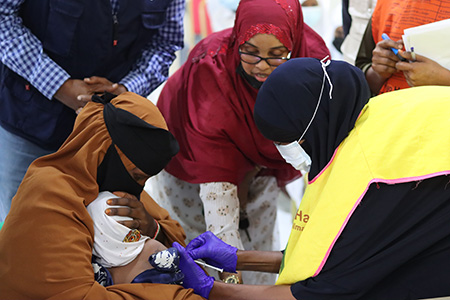 Skilled health workers vaccinate children against preventable childhood diseases, with support from partners. Photo credits: WHO Somalia/Mukhtar SudaniGermany’s support will also boost childhood vaccination, as Somalia is witnessing outbreaks of measles due to a decline in the rates of immunization, which is happening against a backdrop of rapidly rising rates of severe acute malnutrition owing to severe drought in the country. A malnourished child already has weakened immunity and missed vaccinations can mean common childhood illnesses quickly become lethal. The convergence of drought, risk of famine and a growing immunization gap threatens the lives of children.
In addition to this support, the Government of Germany has donated over US$ 11 million to Somalia for the COVID-19 response, along with COVID-19 vaccines through the COVAX Facility and 1.3 million medical face masks in August 2021.
For additional information, please contact:
Judith Gosmann, Policy Officer Somalia Unit,
Kyle DeFreitas, WHO Somalia External Relations Lead,
Fouzia Bano, WHO Chief of Staff ai, Communications Officer,
Note to Editors:
Please see the links below for additional information on recent support received from the Government of Germany:
Government of Somalia, UNICEF and WHO mark World Breastfeeding Week with a call to step up breastfeeding-friendly environments for mothers and babies
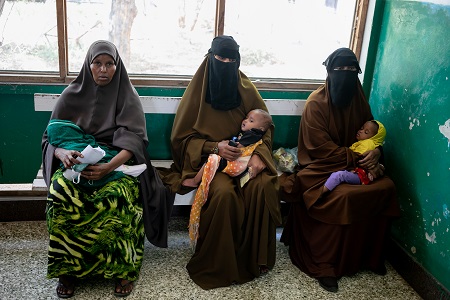 Only 34% of babies under 6 months are exclusively breastfed, according to the Somali GovernmentMogadishu, 1 August 2022 – While marking World Breastfeeding Week this year, the Ministry of Health and Human Services, Federal Republic of Somalia, the United Nations Children’s Fund (UNICEF) and the World Health Organization (WHO) called for a concerted effort from all actors to ensure breastfeeding-friendly environments for mothers and babies in all health facilities and workplaces in the country. Underpinned by evidence-based national policies, this would help improve exclusive breastfeeding rates among Somali women, and adequate nutrition and health among Somali children in both the short and long term.
“We are calling on parents, families, community leaders, policy-makers and development partners to actively step up capacity and transform systems at all levels to support breastfeeding adequately,” said HE Dr Fawziya Abikar Nur, Somalia’s Federal Minister of Health and Human Services. “All the support systems, from family, community and health facilities, should be educated and capacitated to support mothers to optimally breastfeed their babies. This includes breastfeeding right from birth through early initiation of breastfeeding within the first hour of birth, exclusive breastfeeding during the first 6 months of the child’s life and continued breastfeeding up to 2 years and beyond.”
This is part of a global call to action to ‘Step up for breastfeeding: Educate and support.’ It comes at a time when Somalia is witnessing an increase in child malnutrition, including a reduction in infant and young child feeding practices, due to steep declines in household incomes, among other challenges. Shocks such as drought, flooding, conflict, displacement, and disease outbreaks like measles and COVID-19 have deepened inequalities and resulted in nutrition insecurity.
WHO and UNICEF recommend early initiation of breastfeeding within the first hour of birth, feeding the child only breast milk for the first 6 months (exclusive breastfeeding), and continuing to breastfeed for up to 24 months or beyond, with the introduction of timely, nutritionally adequate and safe complementary, solid foods at 6 months. It is important for mothers to offer colostrum, the first form of breastmilk released after giving birth, to newborns as it is high in nutrients, antibodies and antioxidants.
“Breastfeeding provides children the best start in life as it is designed for a child’s nutritional and immunological needs,” said Wafaa Saeed, UNICEF Representative in Somalia. “Breastmilk helps to prevent infections, promotes bonding between mother and child, regardless of setting, and provides food and nutrition security to infants from the very beginning of life, contributing to the food security of the whole family.”
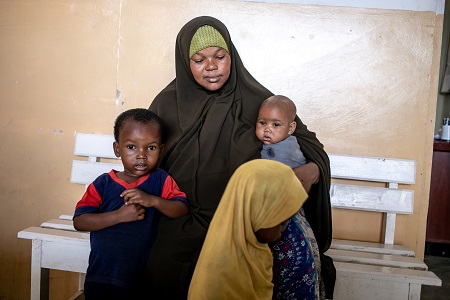 Somali mothers, generally caregivers of their families, need a supportive environment to be able to breastfeed their babies properly. Credit: WHO Somalia/ Ismael Taxta During World Breastfeeding Week, breastfeeding awareness campaigns will be launched throughout the country, and skilled breastfeeding counselling will be provided in various settings, including health facilities and clinics and through home visits by community health workers. The campaign will also stress that breastfeeding is still safe during the COVID-19 pandemic and the current drought emergency. Breastfeeding remains the essential, safest and cheapest food for the child, and it is a baby’s first vaccine, providing antibodies that give babies a critical boost.
“In a fragile country like Somalia, affected by conflict and recurring emergencies such as drought, COVID-19, and other diseases, breastfeeding is an effective way to ensure child health and survival. Breastfeeding offers babies all the energy and nutrients that they need for their first months of life, and complements other foods after the first 6 months. We need to jointly create an environment to encourage Somali mothers to breastfeed their newborns and babies,” said Dr Mamunur Rahman Malik, WHO Representative to Somalia and Head of Mission.
As part of the Federal Ministry of Health’s national nutrition strategy 2020–2025, countrywide efforts will be scaled up with the primary goal to increase the number of babies aged 0–6 months old who are exclusively breastfed to above 50% by 2025. According to the latest government data, only 34% of babies under 6 months are exclusively breastfed.
“Breastfeeding must be considered a public health issue that requires capacity and education at all levels. Together, we can ensure that every mother has access to information, and skilled breastfeeding counselling, empowering her to give her baby the best possible start in life,” added the Health Minister.
###
Note to editors:
In 2018, a World Health Assembly resolution endorsed World Breastfeeding Week as an important breastfeeding promotion strategy.
The importance of breastfeeding is mentioned in the Holy Quran, in the 233rd verse of Sura Al-Baqarah, in which it is stated that: "mothers [should] breastfeed their children for a total of 2 years.”
For additional information, kindly contact:
Khadar Hussein Mohamud
FMoH Head Coordination and Communication
+252615602637
Fouzia Bano
WHO Communications Officer
+252 619 235 880
Lisa Hill
UNICEF Communication Manager
+252 613 642 623