

Sélectionnez votre langue
Following the death of a health worker, WHO reiterates its calls for the protection of all health staff and facilities
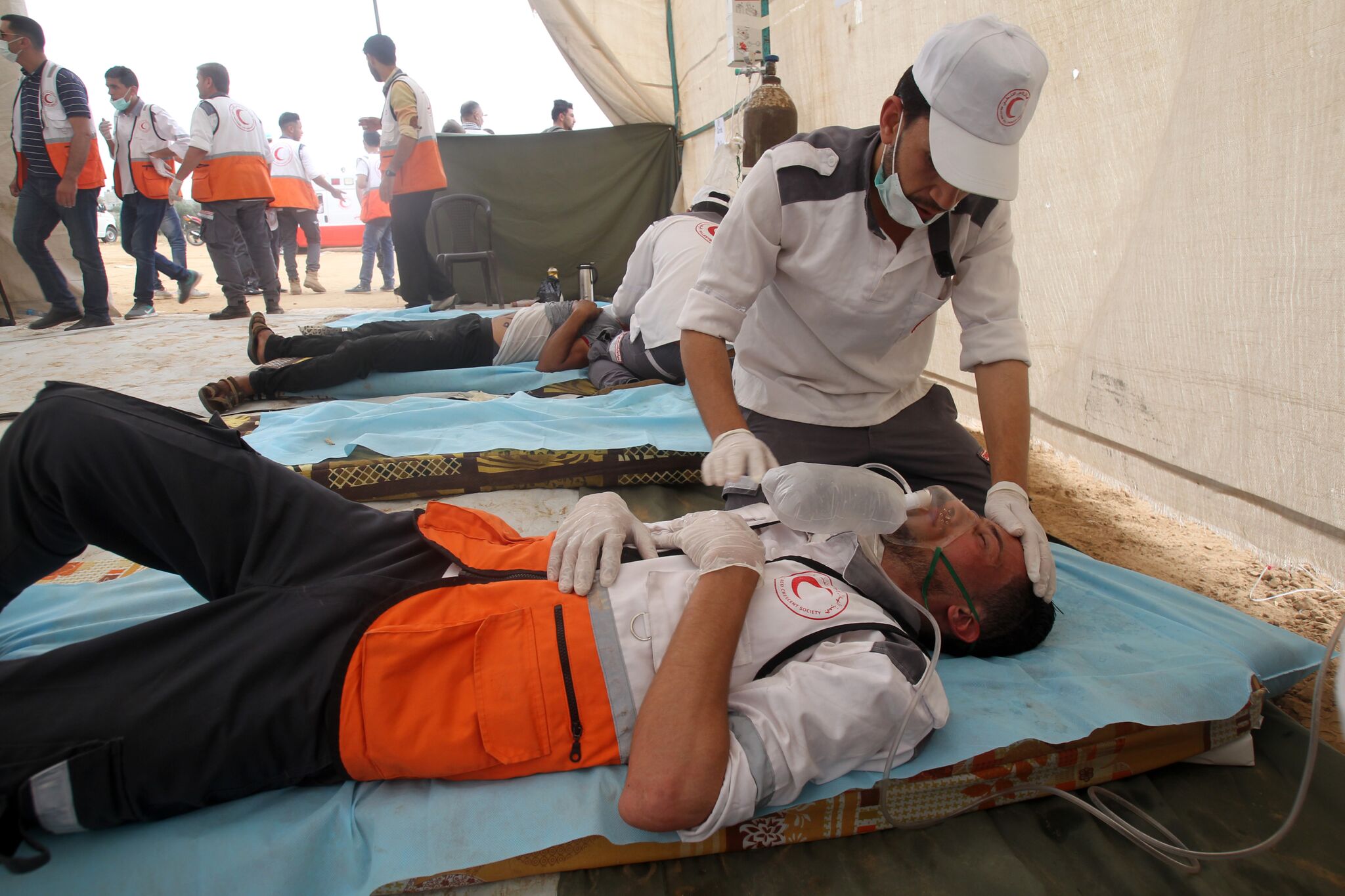 One of the 211 health workers injured in demonstrations since 30 March being treated at a trauma stabilisation point in Gaza14 May 2018 – WHO is shocked and saddened to learn of the death of a health worker during demonstrations in Gaza, in addition to the dozens of civilians killed and wounded. WHO reiterates its calls for the protection of all health workers and health facilities.
Since the start of the demonstrations in Gaza on 30 March, WHO has documented an increasing number of attacks on health facilities and health personnel. As of 13 May, 211 health workers in Gaza were affected by health attacks while attending the large numbers of injured during mass demonstrations at the border fence. 9 sustained bullet wounds, 13 were injured by tear gas canisters and 189 suffered tear gas inhalation. 25 ambulances were also damaged.
Attacks on health facilities have severe consequences for health. They not only impact the health of staff and patients affected, but affect the capacity of a health system already debilitated by more than 10 years of blockade. In the immediate aftermath of a health attack, patients are deprived of potentially life-saving care at the frontline. In the longer term, the cumulative effect of attacks can lead to reduced availability of health care for the population, as well as affecting the longer-term health, including the mental health, of staff.
In May 2016, the UN Security Council adopted Resolution 2286, strongly condemning attacks against medical facilities and medical personnel. Medical facilities and personnel are protected under international law. The right to health incorporates protection from disproportionate uses of violence and the right to treatment in conflict situations extends without distinction to combatants and non-combatants.
Dr Gerald Rockenschaub, Head of the WHO office in the occupied Palestinian territory, stated: “Health workers and health facilities should be protected at all times. There are clear obligations to safeguard health care under international law and these have to be respected.”
Related link
Austrian Cooperation through the Austrian Development Agency and WHO sign cooperation agreement to boost emergency services in Gaza
 Jerusalem, 14 May, 2018 – With a priority focus on improving the primary and emergency health services in Gaza, the Austrian Cooperation, through the Austrian Development Agency (ADA) and WHO today signed a cooperation agreement for EUR 300,000, intended to help meet the health care needs in Gaza.
During the signing ceremony at the WHO premises in Jerusalem, Dr. Andrea Nasi, Austrian Representative in Ramallah, highlighted the work of the local WHO office in Palestine in their continuous effort to alleviate the plight of the Palestinian people and prevent the worst.
“We consider your work vital and thank you for it. Therefore, our contribution is intended to help you save lives, thus mitigating suffering and bitterness. As such, it is a most concrete and tangible expression of Austria’s consistent commitment to a negotiated two-state solution.”
This contribution comes very timely, as we hear the news about too many killed and severely injured in Gaza today. These funds will indeed help save lives,” said Dr. Gerald Rockenschaub, head of the WHO office in oPt.
For more information, please contact:
Health Cluster Workshop on Emergency Health Information Tools, May 2018
 10 May 2018 - oPt, Humanitarian actors and members of oPt Health Cluster attended a workshop led by the Health Cluster, in the West Bank and Gaza. Over 40 partners were trained on information tools developed by WHO as the lead cluster agency, in order to drive the emergency operational response on the ground.
Focusing on the current emergency situation in Gaza and the ongoing challenges facing the mobile health clinics in the West Bank, the workshop facilitated dialogue around information management as a fundamental tool to increase coordination and enhance the response.
Tools and resources available online include the Health Resources Availability Monitoring System (HeRAMS), Emergency Medical Teams (EMT) calendar, infographics, Situational Reports and the Health Cluster website, www.healthclusteropt.org.
“In the coming weeks, the Cluster will continue to develop online platforms for real time coordination and decision making”, Sara Halimah, Health Cluster Coordinator.
Health Cluster partners meeting on emergency health coordination and preparedness, May 2018
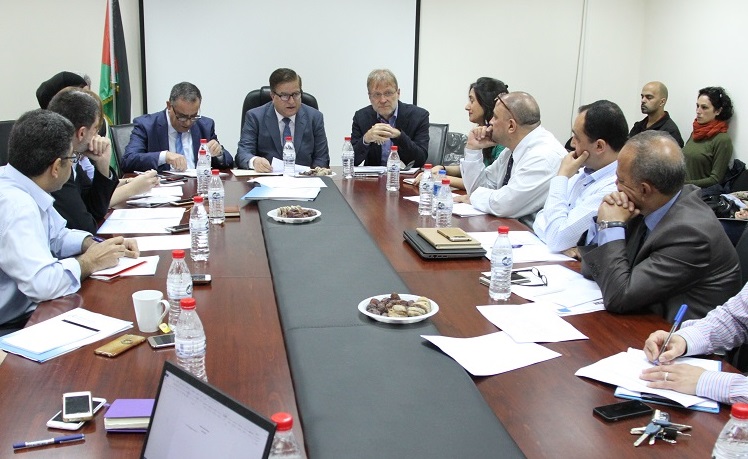 Minister of Health for Palestine, H.E. Dr. Jawad Awad and Head of the WHO oPt Office, Dr. Gerald Rockenschaub update counterparts on the humanitarian situation in Gaza and West BankOn the 7 May 2018, Ramallah, the Health Cluster partners met to plan the upscale of emergency preparedness and response activities across the oPt. The meeting was led by WHO as the lead agency and the MoH co-chair of the cluster, with the special attendance of the Minister of Health for Palestine, Dr Jawad Awad.
With the recent escalation in the Gaza Strip and medical supplies growing scarce, there is a renewed call from MoH and the humanitarian partners on the ground to ensure enhanced capacity and immediate response to cope with the increased burden of medical emergencies on the health system.
Since the demonstrations, which began on the 30 March, the type of injuries witnessed in Gaza result in the need for multiple complex surgeries, however emergency medical teams and medical supplies, including medicines and disposables are lacking. Meanwhile, trauma care must be viewed within the broader health needs as the situation continues to chronically deteriorate. Therefore responding to emergency trauma and non-trauma care to address all urgent needs is of the essence.
The coming weeks are predictably going to present the humanitarian community with growing challenges, both in Gaza and the West Bank.