

Sélectionnez votre langue
WHO delivers medical supplies to scale up pre-hospital trauma care in Gaza
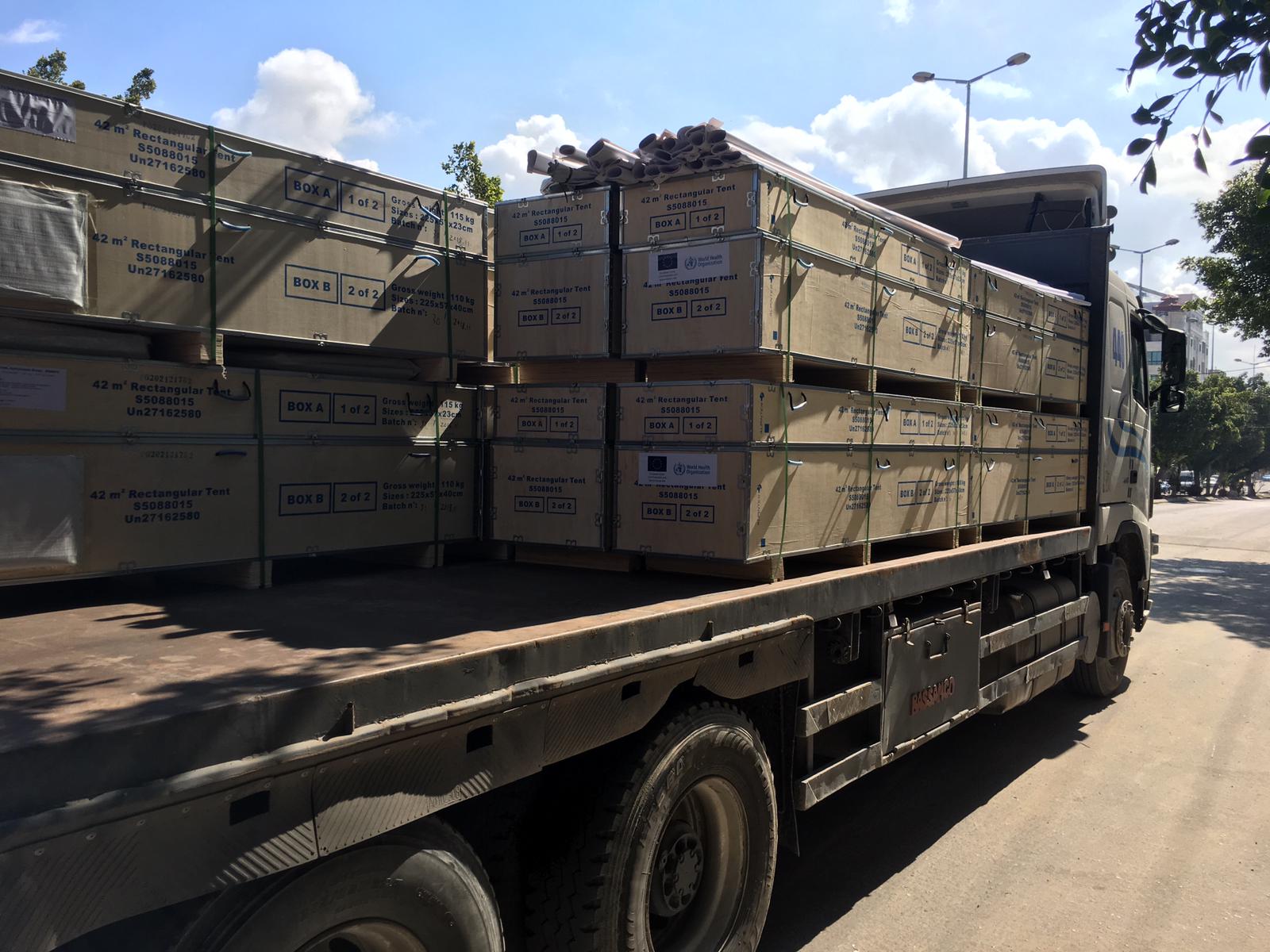 WHO delivers medical supplies to scale up trauma care in Gaza24 March 2019 – The World Health Organization (WHO) delivered essential medicines, medical consumables and equipment to respond to the growing trauma and emergency care needs in the Gaza Strip. The shipment was possible through a generous contribution from the European Union.
Supplies delivered by WHO will be used to enhance the ability of the 10 trauma stabilization points (TSPs), run by the Ministry of Health and the Palestine Red Crescent Society, to provide life- and limb-saving care to those injured during demonstrations and protests. Interventions provided at the TSPs are of vital importance as trauma casualty rates remain high and the resources available in Gaza are scarce. In response, WHO works to strengthen all levels of trauma management and to ensure that at the pre-hospital level, the TSP teams have vital medicines and equipment for triage and initial treatment of the injured.
The shipment is sufficient to cover needs of about 120 000 mildly injured or 20 000 severely injured patients. In addition to medicines and medical supplies, WHO delivered 4 tents for each TSP to make sure the teams have adequate space to treat patients with different levels of trauma severity. Five TSPs were equipped with generators to run basic services, such as oxygen provision for patients. WHO will also provide the TSP teams with inflatable tents that can be set up within minutes in case of emergency and provide the flexibility to be moved quickly to alternative locations to treat people in need.
“Resource gaps in trauma care may lead to preventable long-term disability or even worse health outcomes. WHO and humanitarian health partners are working together to ensure that TSPs have the capacity to stabilize patients, to decrease the risk of preventable trauma complications or the loss of limbs, and to ensure better health outcomes,” says Dr Gerald Rockenschaub, head of WHO’s office for the occupied Palestinian territory. “We are grateful to the European Union for their continuous support that helps us to support essential trauma services in the Gaza Strip.”
Currently, the majority of all trauma patients are passing through the trauma stabilization points, where almost half of them are being treated and discharged while others receive the necessary care to stabilize them for the referral to the hospital for further interventions.
In addition to the massive existing trauma needs, the upcoming one-year anniversary of the Great March of Return may result in more casualties. WHO and health cluster partners developed a contingency plan to address the health needs within the 96-hours of a potential escalation of the situation in Gaza and to prevent death and disability. To further boost all levels of trauma care, WHO recently appealed for US$ 5.3 million.
WHO appeals for US$ 5.3 million to respond to trauma and emergency care needs in Gaza
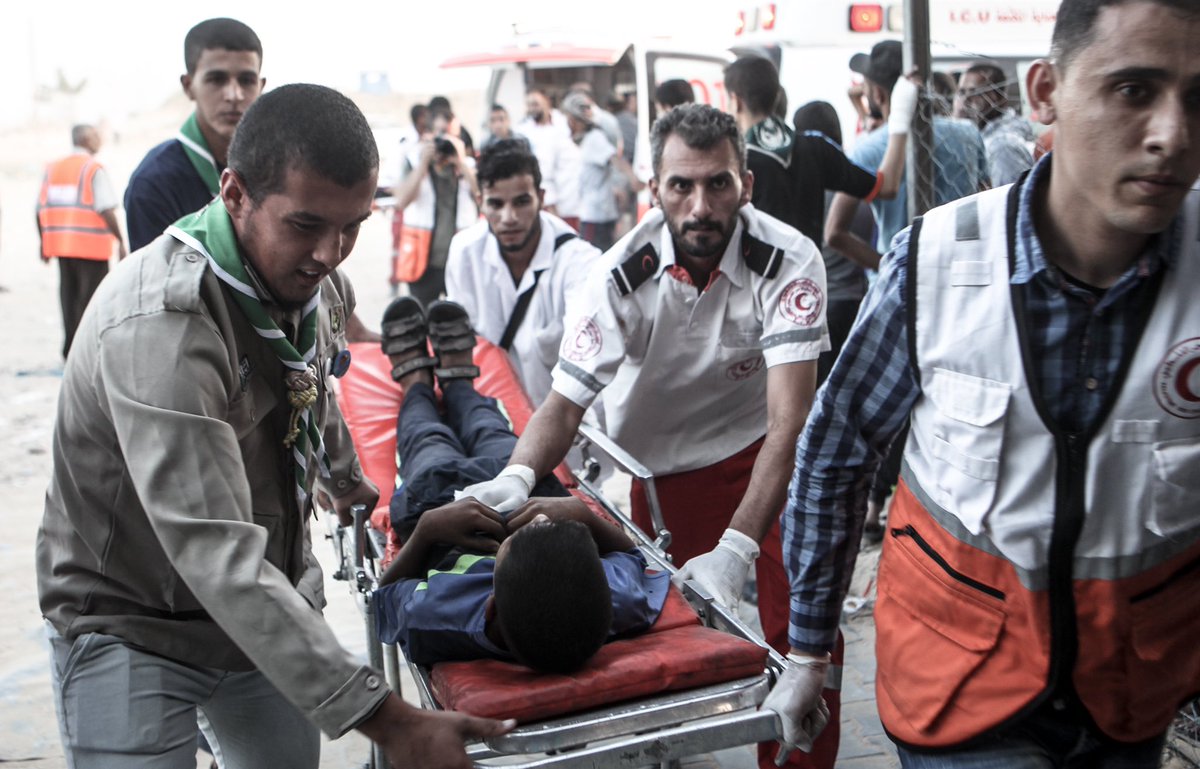 An injured patient arrives at the trauma stabilization point in Gaza. Credit:WHO18 March 2019, Gaza, oPt - The World Health Organization (WHO) is appealing for US$ 5.3 million to provide life- and limb-saving interventions to massive numbers of injured patients overwhelming an already fragile health system in Gaza. The upcoming one-year anniversary of the Great March of Return on 30 March could result in further casualties and an increase in people requiring trauma care and rehabilitation services.
Funding is urgently required to ensure the minimum resources are available to immediate health needs, as well as enhance the quality of trauma and emergency care in the Gaza Strip and reduce mortality and morbidity among an at-risk population of 2 million people.
“The sheer magnitude of trauma needs in Gaza is immense. Every week injured patients continue to arrive at hospitals requiring complex long-term treatment. The requested financial support will help not just to address critical service gaps but ensure that we can work with our partners to scale up treatment capacities to provide immediate lifesaving care for emergency cases and to strengthen rehabilitation,” says Dr Gerald Rockenschaub, head of WHO’s office for the occupied Palestinian territory.
Since the start of the demonstrations in March 2018, over 29,000 people have been injured, with more than 6,500 suffering from gunshot wounds requiring long-term specialised surgical treatment and rehabilitation, for which the Gaza Strip faces persistent capacity gaps.
The massive burden of trauma casualties also affects the provision of other essential services, directly impacting capacities to provide neonatal and maternal care services and to manage chronic disease patients. Elective surgeries have to be postponed and suspended, hospital beds are reallocated and reserved for surgical patients, health staff and ambulances have to prioritize the immediate emergency needs.
In 2018, WHO supported the Ministry of Health and the Palestine Red Crescent Society to upgrade the trauma stabilisation points (TSPs) in proximity to the fence with Israel, so that the wounded can receive life-saving treatment close to the point of injury. The scope of interventions provided on-site at the TSPs has continuously expanded to cover triage, life- and limb-saving first aid and initial treatment and this has substantially reduced the burden on hospitals, with some 50% of the injured being treated and discharged at the TSPs.
The US$ 5.3 million will be used to build on the previous success of the WHO supported interventions and ensure better health outcomes for Palestinians through strengthened continuum of care along the pathway of trauma patients.
Donor brief: Strengthening Gaza's trauma care system
Palestinian health workers trained in providing mental health services on primary health care level
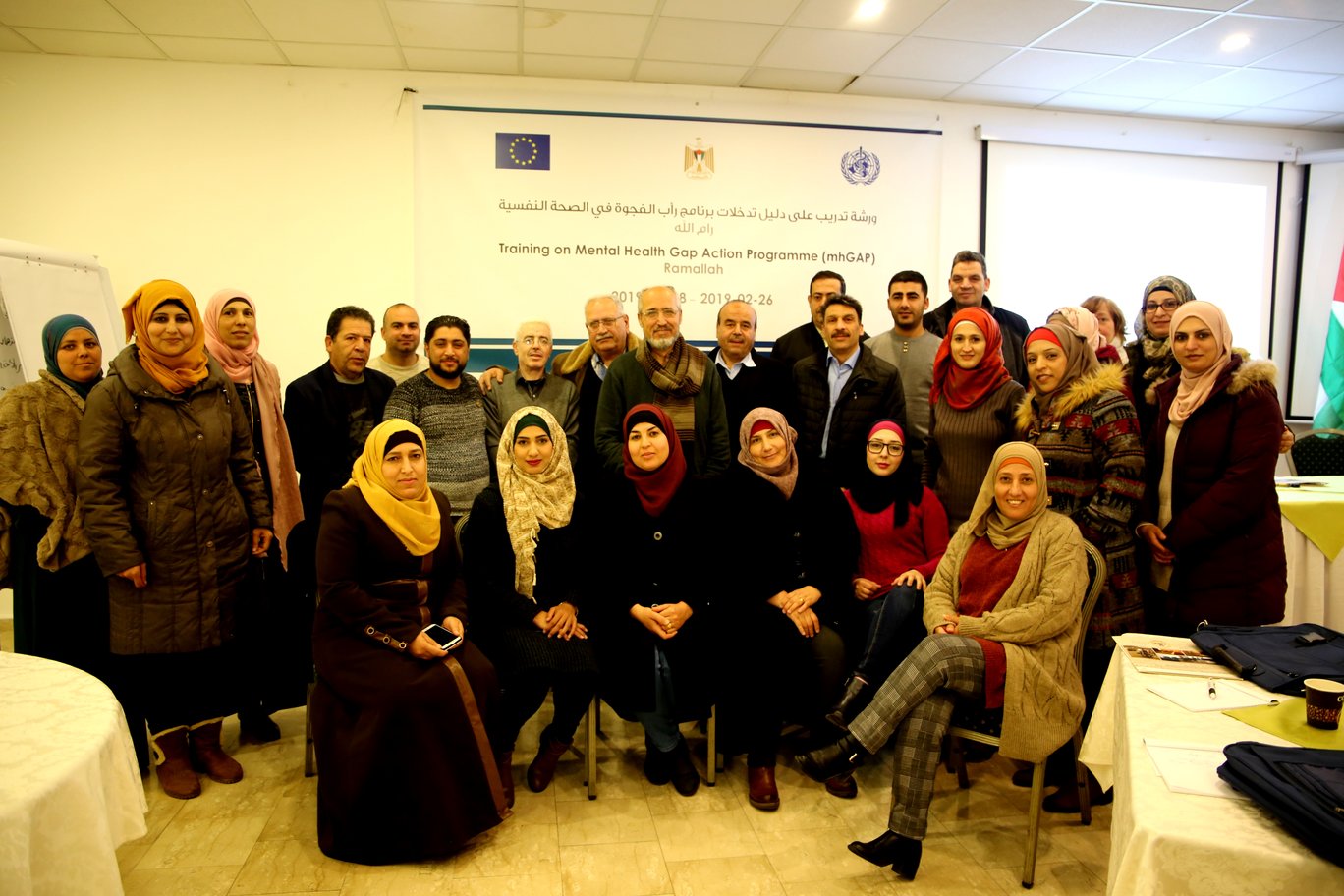 29 health staff in Ramallah received WHO training on Mental Health Gap Action Programme. Photo:WHO February, oPt - The World Health Organization supports the Palestinian Ministry of Health (MoH) in integrating mental health services into primary health care to ensure that people in the West Bank and Gaza get better access to the mental healthcare they need.
In February 2019, 29 health staff working in the MoH primary healthcare clinics in Ramallah received WHO training on Mental Health Gap Action Programme (mhGAP) that will help them to identify and manage priority mental, neurological, and substance use conditions. The training was conducted using the mhGAP Intervention Guide (2.0), a tool designed to build the capacity of non-specialist on detecting, treating and referring mental health cases with common mental health problems.
According to the WHO survey conducted in 2013, one-third of people using MoH primary health care services in the West Bank and Gaza have common mental health problems. Provision of mental health services at primary health care is part of WHO recommendation in developing comprehensive mental health services at the three levels of health care (primary, secondary and tertiary) to enhance detection, treatment and referral for common mental health problems.
The mhGAP enables health workers to provide essential mental health care to people with depression, psychosis, bipolar disorders, epilepsy, developmental and behavioural disorders in children and adolescents, dementia, alcohol use disorders, drug use disorders, self-harm/suicide and other significant emotional or medically unexplained complaints.
With continuous support from the European Union, WHO’s mental health project ‘Building Palestinian resilience: improving psychosocial and mental health responses to emergency situations’, aims to significantly enhance the capacity of mental health services in both Ministry of Health and UNRWA health facilities. The project promotes comprehensive national mental health services, supports integrating mental health services into primary health care, enhancing the emergency response and scaling up community mental health services.
WHO Regional Director for the Eastern Mediterranean calls for respecting the right to health of all Palestinians and protection for health care
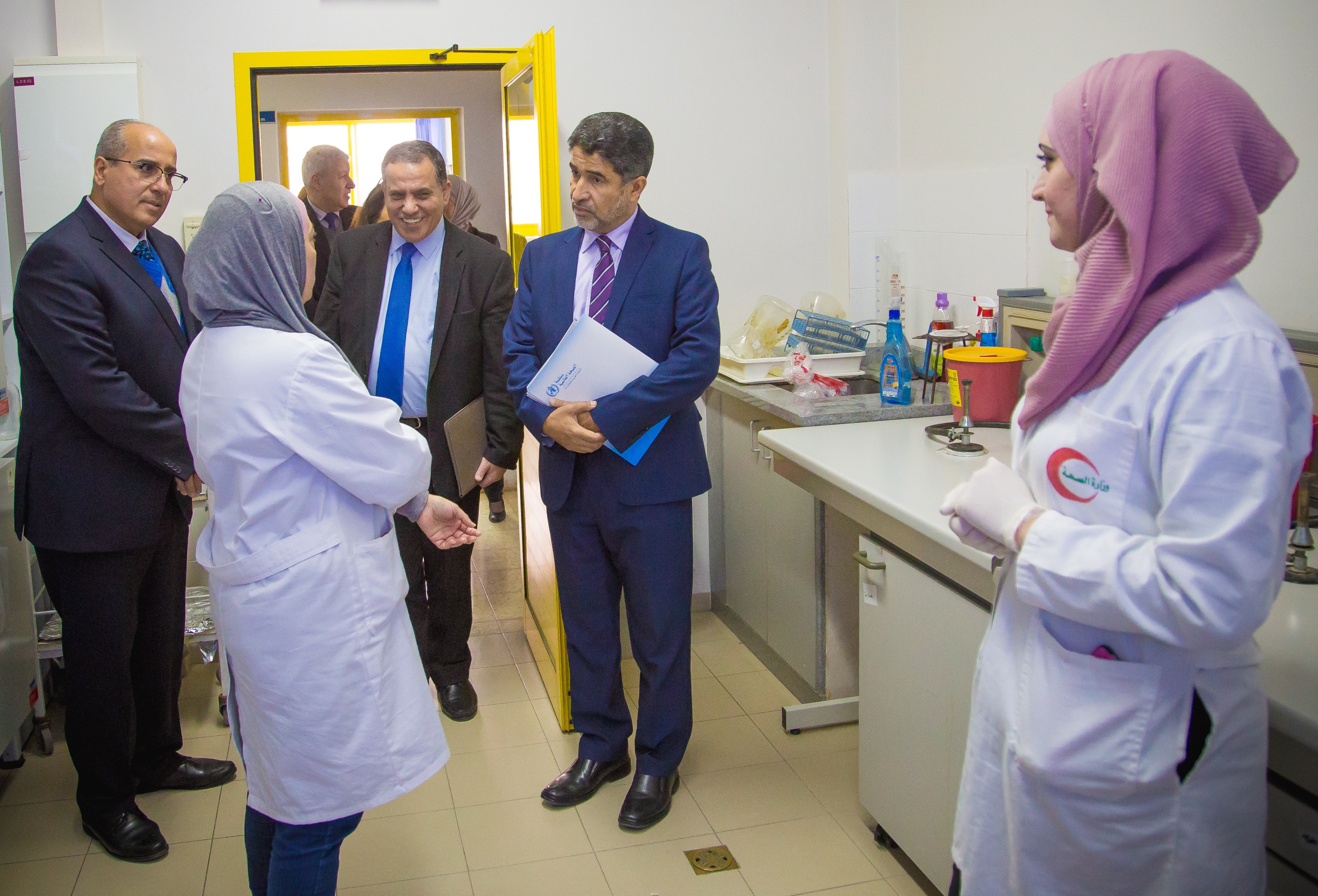 WHO Regional Director Dr Al-Mandhari visiting Palestinian Public Health Laboratory in Ramallah. Photo: WHO 27 February 2019, oPt - Concluding a three-day visit to the occupied Palestinian territory (oPt), Dr Ahmed Al-Mandhari, WHO Regional Director for the Eastern Mediterranean, called for ensuring regular and reliable access to health for all Palestinians and respect for the sanctity of health care.
During his visit, the Regional Director met with Prime Minister Dr Rami Hamdallah for a discussion on the importance of achieving universal health coverage, and reiterated WHO’s support to ongoing efforts to improve the health and well-being of all Palestinians.
In his meeting with Minister of Health Dr Jawad Awad, the Regional Director commended the progress made to improve health services that best meet people’s needs, noting that WHO will continue to work closely with the Ministry of Health to strengthen the Palestinian health system and respond to humanitarian health needs.
The Regional Director underlined that the recently enforced restrictions on vaccine imports to the oPt might, if not resolved, jeopardize sustainability of the highly successful immunization programme and pose a serious health security threat, not only to the West Bank and Gaza, but also to neighbouring countries.
At the Palestinian National Institute of Public Health, a WHO-led project, Dr Al-Mandhari praised the close collaboration between WHO, Palestinian health authorities and partners to produce evidence for informed health policy decisions and improved health outcomes.
In Gaza, Dr Al-Mandhari voiced concerns over the growing access restrictions for patients. In 2018, only 61% of the Palestinians who required health services outside the Gaza Strip obtained an Israeli permit to travel, posing a substantial impediment to accessing health care, particularly for vulnerable patients.
Visiting Gaza’s largest hospital, Shifa, the Regional Director witnessed firsthand the fragility of an overburdened health system. The influx of trauma patients is putting extra strain on hospitals that have to discharge patients prematurely to make room for newly injured. Chronic shortages of medicines and medical supplies is a significant challenge, with almost half of essential medicines and over a quarter of essential medical disposables at less than a month’s supply over the last year.
With attacks on health care in the Gaza Strip continuing with disturbing regularity, Dr Al-Mandhari also reiterated a call to all parties to respect the sanctity of health staff and medical facilities. In 2018, oPt saw the highest number of reported attacks on health care globally, and the highest number of injuries to health workers: 363 attacks on health care were reported, leading to the tragic deaths of three health workers and leaving 565 more injured.
“Health is a fundamental human right, and attacks on health care are a violation of that right,” Dr Al-Mandhari said. “I call on all parties to abide by their legal obligations under international humanitarian law and respect the sanctity and safety of health facilities and health workers. Health care is not a target.”