

Sélectionnez votre langue
World Health Day 2022 – Strengthening Health Systems and Empowering Communities
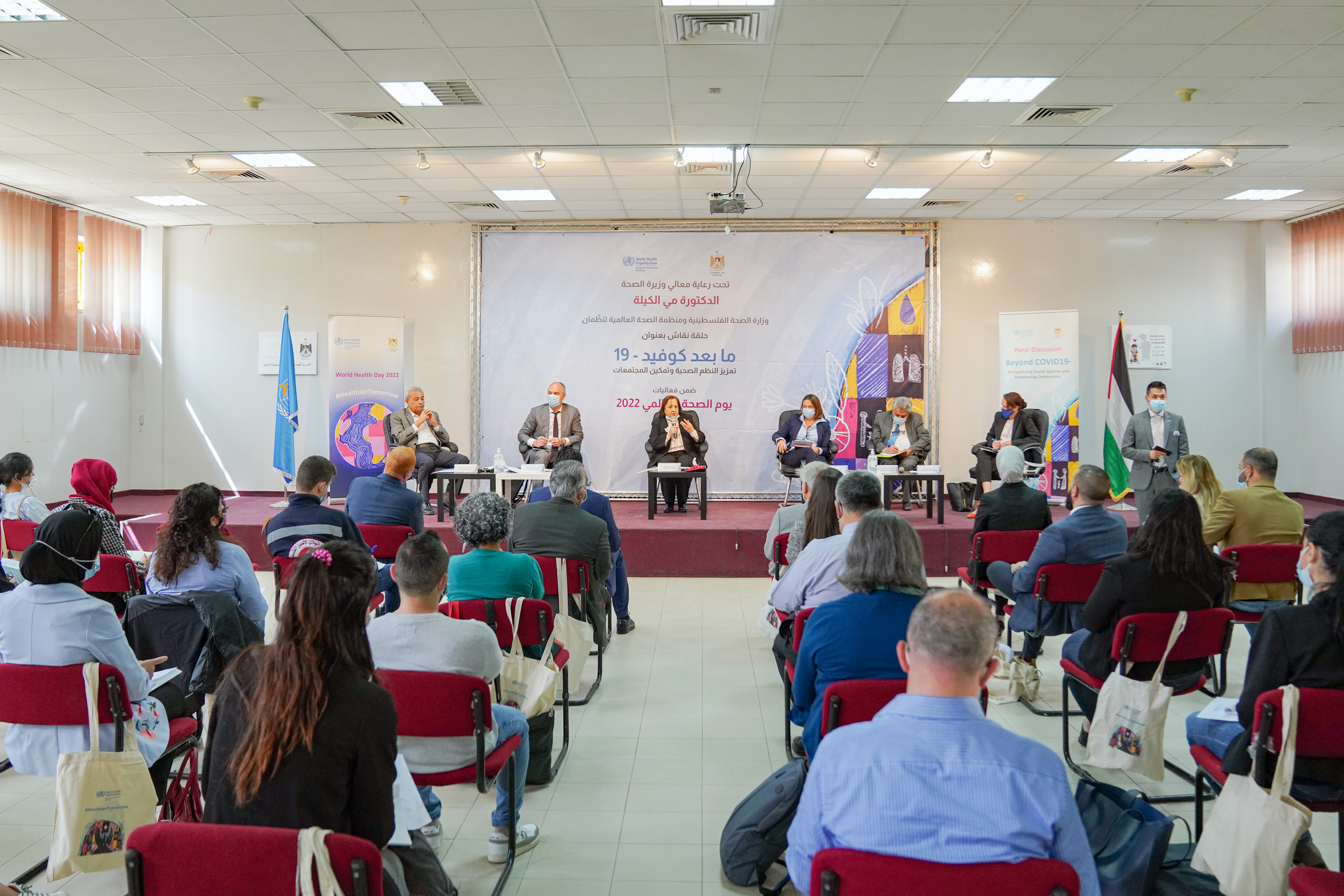
7 April 2022, Ramallah - On this World Health Day, we call for a world that supports the health of humans and the environment alike. It is impossible to have a healthy society in a polluted environment, or to have a clean environment in an unhealthy society.
Protection of the environment is critical to the realization of Health For All.
Determinants of human and environmental health require the efforts and support of all sectors, towards achieving Health In All Policies. The COVID-19 pandemic confirmed the impact on and response needed by many other sectors than just Health, it also painfully exacerbated inequities and highlighted the different vulnerabilities to public health risks all over the world including in Palestine. Building stronger and fairer health systems and empowering communities to have control over their health and the health of their environment is essential to creating a world where clean air and water, and safe and nutritious food, is available to all.
“In Palestine, COVID-19 created additional obstacles to realizing comprehensive, quality and affordable health care for all. Our frontline health workers showed resilience and steadfastness, but also faced risks and difficulties in their work. Since the outbreak of COVID-19 in Palestine, more than 9000 health care workers have been affected by the virus. We sincerely thank our brave colleagues for their continued efforts and the care they provide to our communities,” said Dr Mai al-Kaila, Palestinian Minister of Health.
Strengthening health care services and health systems preparedness is needed for the effective detection of and response to future public health emergencies. The climate crisis poses a major threat to human health that demands urgent action across all sectors of society.
“COVID-19 has underlined the need for cross-sectoral engagement to improving population health and addressing the determinants of health inequities. The right to health for all depends on maintaining and improving essential health care, for which expanded domestic and international commitment and investment is vital. Immediate support is needed to address the critical situation jeopardizing sustained provision of referral services to Palestinian patients,” said Dr Richard Peeperkorn, Representative for WHO in the occupied Palestinian territory.
The protracted protection crisis in the occupied Palestinian territory contributes to climate vulnerabilities and fragmentation of health care provision and restricted access to services for patients and their companions.
“Palestinian patients face substantial barriers to accessing essential health care. In March, 35% of permit applications from the Gaza Strip were not approved in time by the Israeli Occupation Authorities’ for patients to reach their hospital appointments. Delaying medical care costs lives and affects the health and wellbeing of Palestinian patients and their families,” said Dr Mai al-Kaila
Zaina, 10, unable to access cancer treatment since February
 15 February 2022 - Zaina is a 10-year-old girl from the Gaza Strip, who was diagnosed with Hodgkin’s lymphoma in June 2020.
After her initial diagnosis, Zaina received chemotherapy at Rantisi Hospital in the Gaza Strip. It was a difficult time for Zaina and her family.
“Zaina suffered with pain and with side effects from the chemotherapy,” her father commented. “When she lost her hair, she kept asking me to buy her wigs. We bought several, but she didn’t like them, she kept saying that her hair is better. Every time I took her out with me, she would ask for a new one – she has at least twenty! It was very tough for us as a family and for my wife especially. She used to ask what we had done to deserve this. Luckily our families were really supportive.” Zaina is the oldest of five children and her family lives in Gaza City, where her mother works as to keep the family home and her father works in a mobile phone store.
Zaina completed the course of chemotherapy in November 2020, after showing early improvements. However, during her follow up in December, doctors found that the tumour was still there. She needed a special type of scan called a PET scan, to assess the activity of the tumour, and decide the next steps for treatment – including potential radiotherapy. Neither the scan nor radiotherapy is available in the Gaza Strip, so Zaina was referred to Augusta Victoria Hospital (AVH) in East Jerusalem for an appointment in February 2021.
From February to October 2021, Zaina’s family submitted four applications for appointments for her to receive investigations and treatment at AVH. None was approved in time for her appointments.
|
Appointments |
Referral hospital |
Israeli permit response |
|
7 February 2021 |
Augusta Victoria Hospital |
Delayed: under study |
|
28 February 2021 |
Augusta Victoria Hospital |
Delayed: under study |
|
19 April 2021 |
Augusta Victoria Hospital |
Application not submitted |
|
3 October 2021 |
Augusta Victoria Hospital |
Delayed: under study |
|
31 October 2021 |
Augusta Victoria Hospital |
Delayed: under study |
WHO hands over refrigerated vehicles to strengthen vaccine cold chain
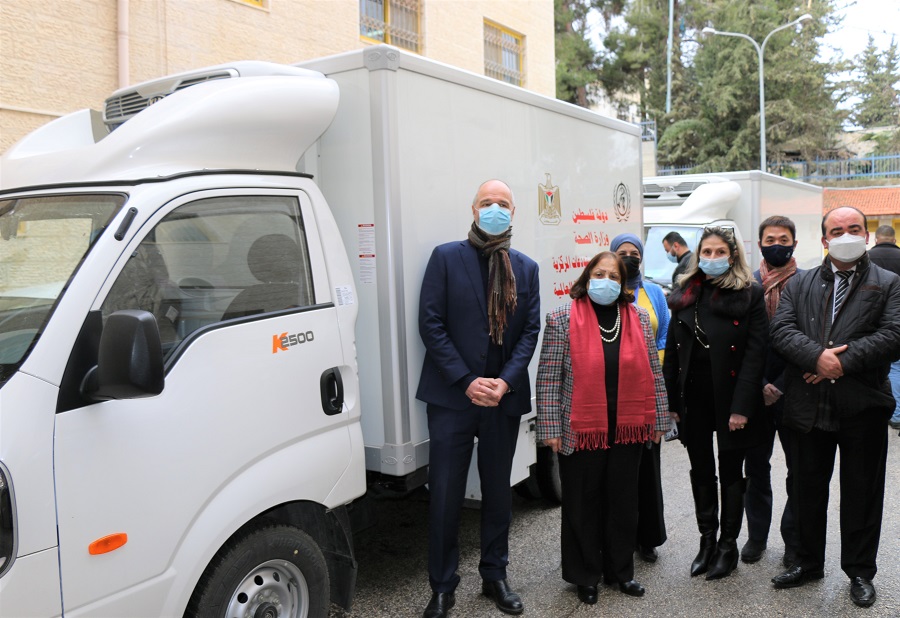
East Jerusalem, 1 February 2022 - WHO in oPt handed over two refrigerated vehicles worth US$ 93 000 to the Palestinian Ministry of Health as part of its ongoing support to the health system and the national response to COVID-19.
The vehicles, funded by the Federal Republic of Germany, will bolster efforts to strengthen the vaccine cold chain to ensure that COVID-19 and other vaccines can be transported safely and efficiently from the warehouse to health facilities across the Gaza Strip and West Bank.
“I thank the Federal Republic of Germany and the World Health Organization for supporting the Palestinian health system. This support will help the Ministry of Health in combating COVID-19 and in continuing the vaccination campaign with increased efficiency across Palestine”, Dr Mai Al-Keilahh, Palestinian Minister of Health.
Since March 2020, WHO in oPt has provided essential COVID-19 response equipment and supplies worth over US$ 18.5 million to the Ministry across oPt. The COVID-19 response is helping to improve the resilience and preparedness of the overall health system too.
“Together with a continuing focus on other areas of the COVID-19 response such as testing, surveillance, case management, risk communication, and vaccination, in collaboration with the Ministry, we are also investing in the vaccine cold chain. This is to not only boost COVID-19 vaccination efforts but also to improve the long-term sustainability of the larger immunization system of oPt”, said Dr Richard Peeperkorn, WHO Representative in oPt.
Earlier this week, WHO in oPt also provided two glovebox machines worth approximately US$ 300 000, funded by the Norwegian Institute of Public Health, to the Ministry to protect health workers from contamination and exposure while handling hazardous and potentially contagious biochemical materials.
For more information:
Kazem Abu Khalaf
+972 542168723
About WHO
The World Health Organization provides global leadership in public health within the United Nations system. Founded in 1948, WHO works with 194 Member States across six regions, to promote health, keep the world safe and serve the vulnerable. Our goal for 2019-2023 is to ensure that a billion more people have universal health coverage, to protect a billion more people from health emergencies, and provide a further billion people with better health and well-being.
Saleem, a 16-year-old child with leukaemia, dies after barriers to hospital admission
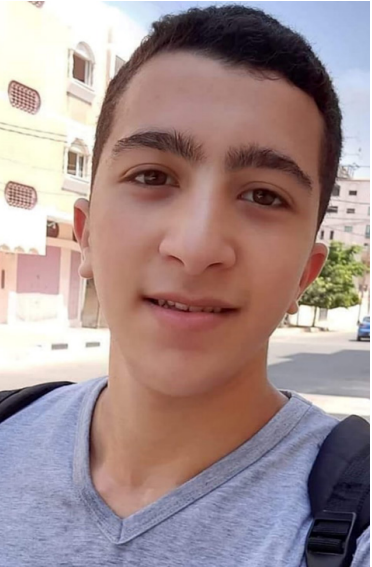
Saleem An-Nawati was 16 years old from Gaza and had acute leukaemia diagnosed in late 2021. He was initially referred for an appointment at An-Najah University Hospital in Nablus in the West Bank on 28 November 2021, but he received no definitive response to his permit application in time for his appointment. Saleem was delayed a permit to reach treatment on two further occasions, for appointments at An-Najah Hospital on 6 and 19 December.
Finally, on 26 December 2021, Saleem travelled to Nablus accompanied by his uncle, after receiving a permit. However, on 21 December 2021 An-Najah University Hospital had announced that it would be unable to receive patients referred by the Palestinian Ministry of Health because of outstanding debts affecting the procurement of essential medicines and supplies. After reaching the hospital, Saleem was not admitted and instead went with his uncle to the department for referrals in Ramallah. The Services Purchasing Unit of the Ministry of Health tried to secure a referral to several Palestinian hospitals but none were able to accept Saleem, who had been referred for specialist investigations for acute leukaemia. On 3 January, the referrals department contacted Ichilov Hospital in Tel Aviv, where an appointment was secure for 9 January.
After his travel to the West Bank, Saleem’s family appealed through different routes for his admission to hospital. condition deteriorated. After an appointment had been secured at Ichilov Hospital for 9 January, the family was advised that Saleem should return to Gaza in order to apply for a permit to reach the hospital as direct referral from the West Bank would not be possible.
During his time in the West Bank, Saleem’s health deteriorated substantially. On 9 January, he again attended the Services Purchasing Unit with his uncle trying to resolve the issue of his direct referral to Ichilov Hospital. Saleem was visibly unwell and was rushed to the Palestinian Medical Complex by ambulance as an emergency case, where he died shortly afterwards.