

Sélectionnez votre langue
Palestinian Voices 2022 - 2023
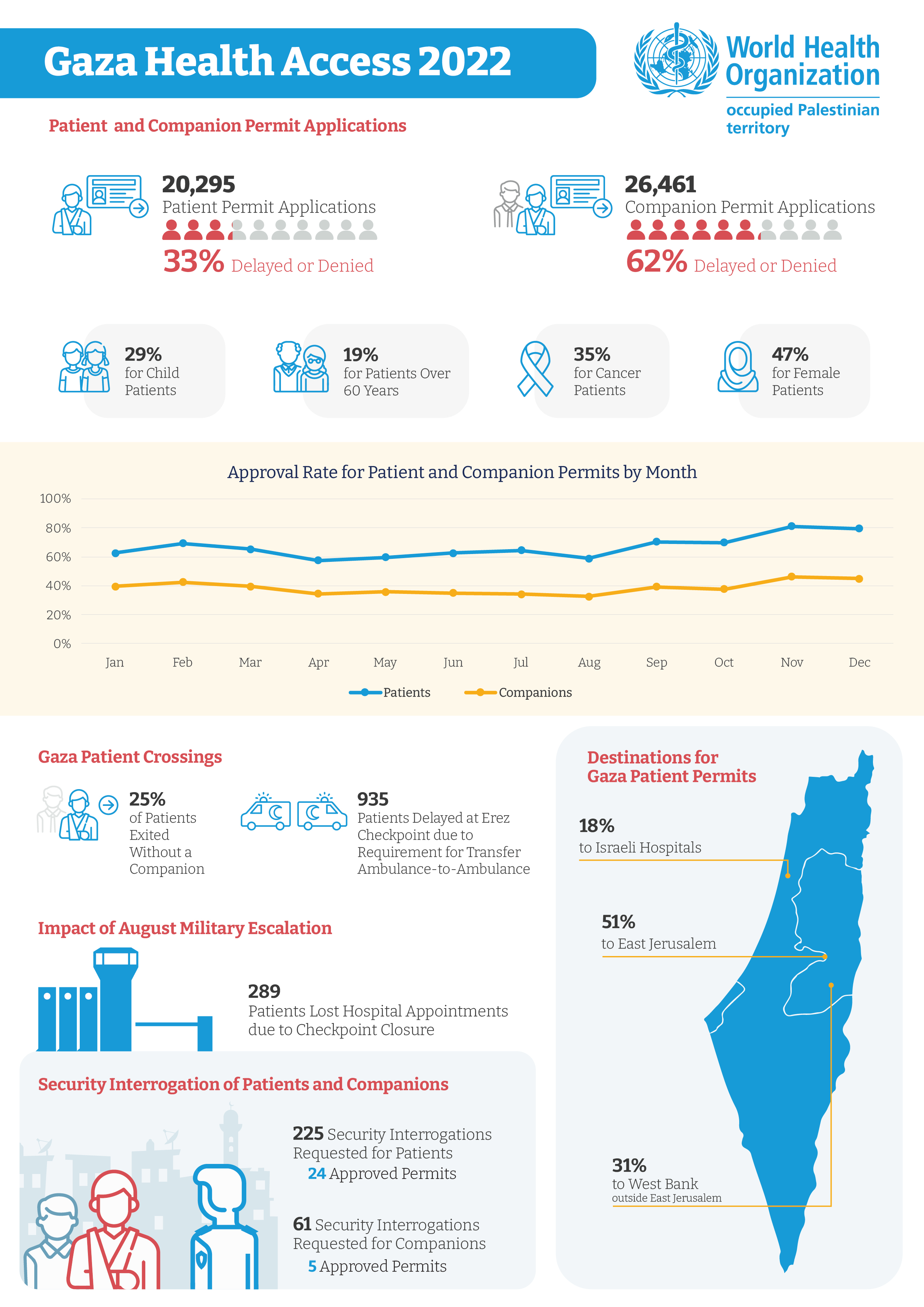
Gaza Health Access
Throughout the year, WHO continued to document the impact of barriers to health access on the Palestinian people in Gaza. Below are three of the cases documented from 2022 to 2023:
Khalid
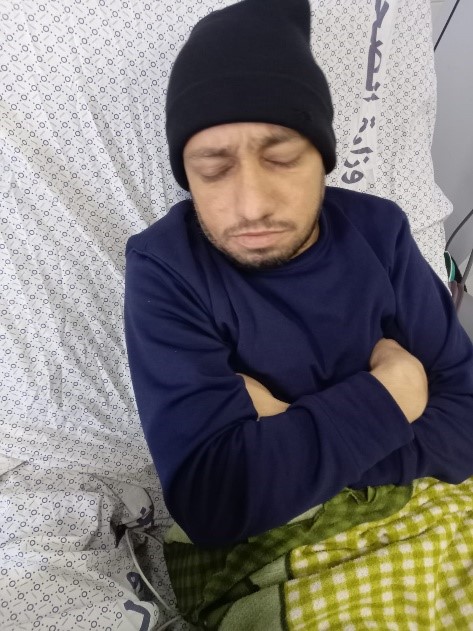
He is a patient and has the same right as any person who wants to get treatment.
Riham, wife of Khalid
Amal
I don’t know why I am prevented. I have been waiting so long! I need to have this test so the doctor can make a clear diagnosis and give me proper treatment. I suffer and worry every day.
Fatma
When I lost my daughter, I felt that there is no life anymore. I am sure my daughter is not the only one killed by this blockade... Why should my little girl have been denied medical treatment?
Fatma’s father
West Bank Health Access
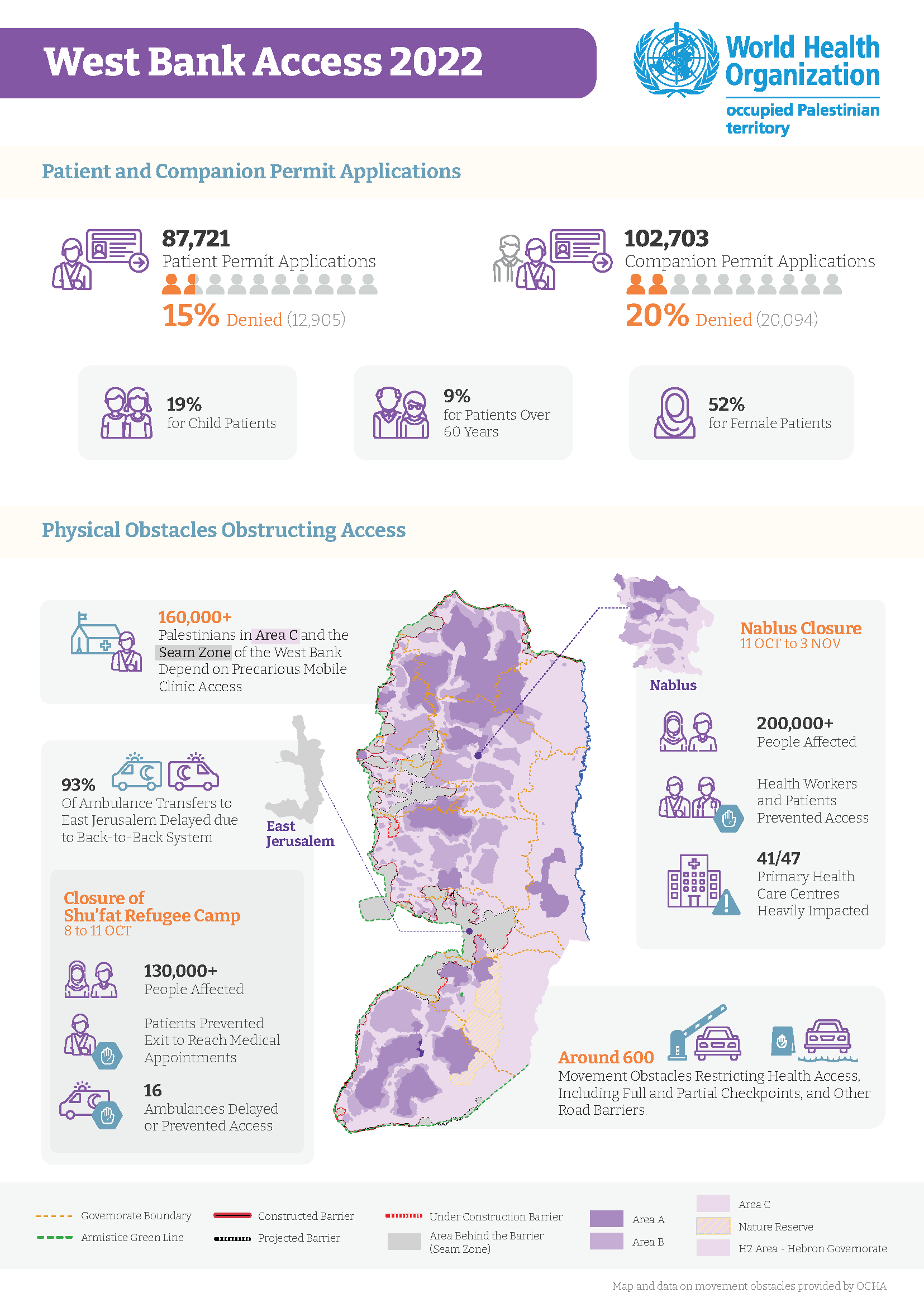
Throughout the year, WHO continued to document the impact of barriers to health access on the Palestinian people in the West Bank. Below are three of the cases documented from 2022 to 2023:
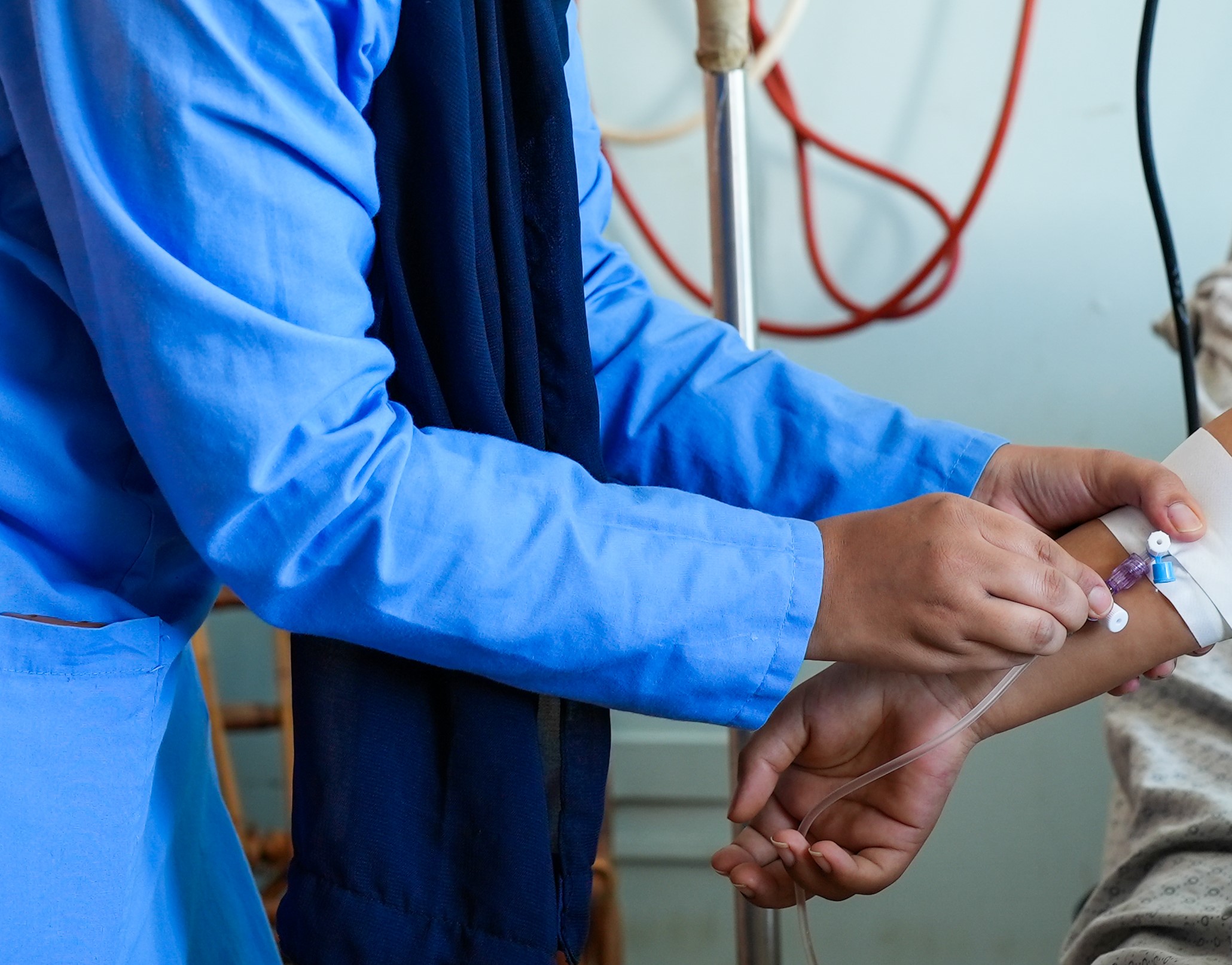
Musaab
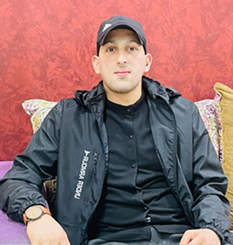
This is so inhumane. How can this happen in any place in the world? Why are they blocking me from accompanying my son? I just want to hold his hand when he goes for surgery.
Musaab’s father
Moaayd

These communities face a lot of violations… We should be providing health services at least three times a week, but we cover communities in three districts of the Jordan Valley and there is only so much we can do.
Muhannad
For two days I couldn’t reach work. I would leave my house on foot wearing my paramedic uniform and go to the checkpoint, but the soldiers wouldn’t let me pass.
Health Attacks
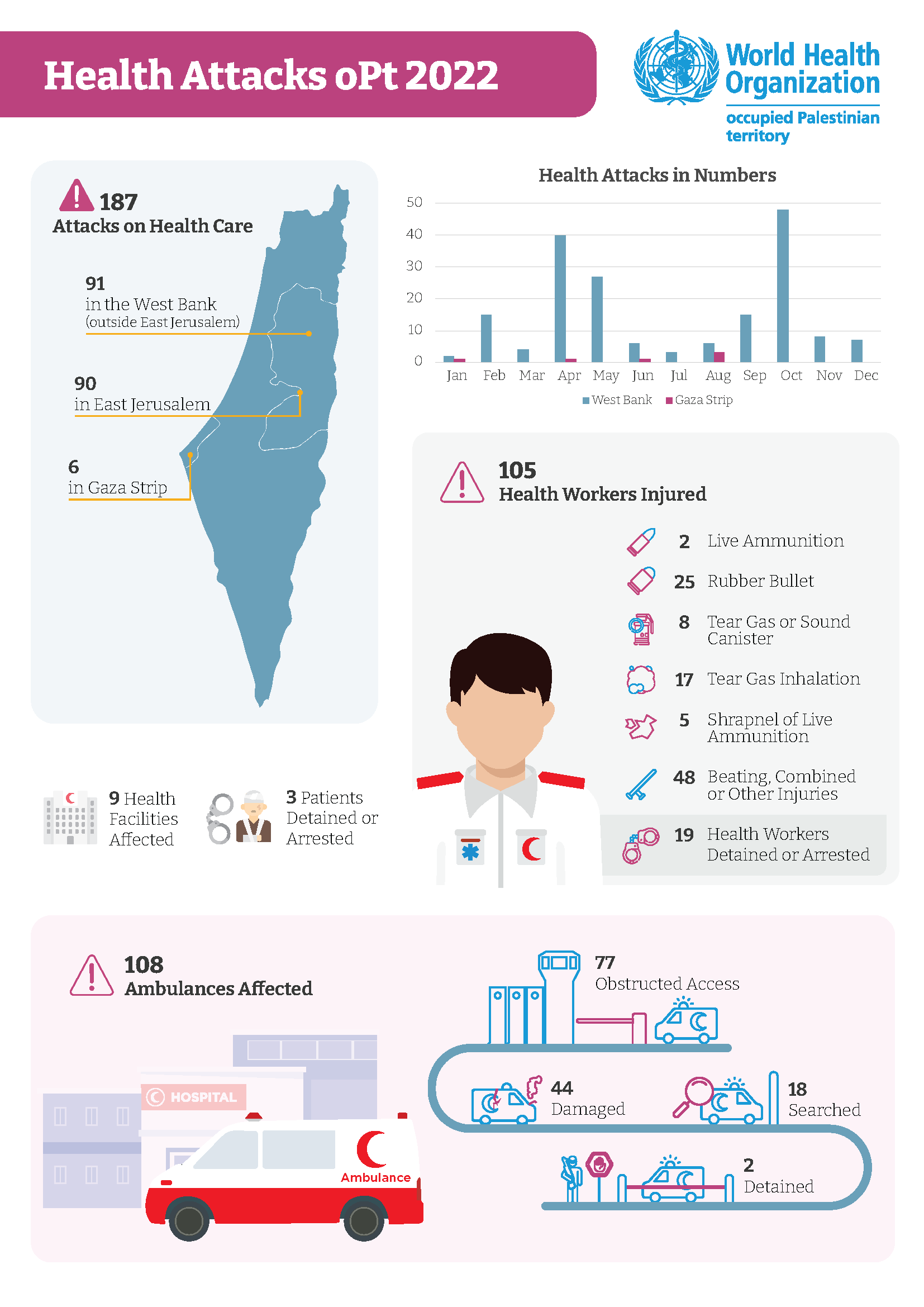
Throughout the year, WHO continued to document attacks on health care. Below are four of the cases documented from 2022 to 2023:
Ali
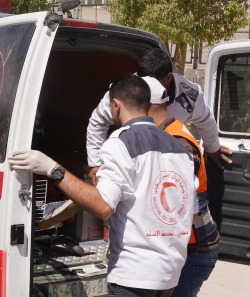
When I responded that I wanted to see what he was doing, the soldier got out of the vehicle and started pushing me and kicking me, hitting me with the back of his gun and causing me to fall to the ground.
Hamzeh
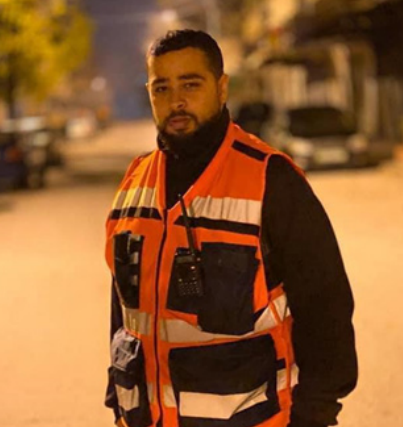
Around five metres before reaching the guy, I was shot in the right side of my upper body. I went back around two meters and fell to the ground. I told the other paramedics that I had been shot. I felt that my body was being torn apart from the inside.
Abed
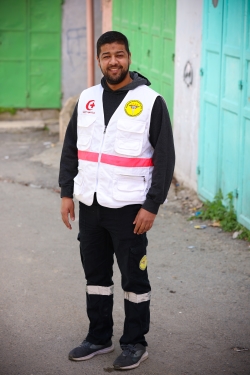
When they started shooting towards me, I felt helpless. I had the capacity to help – at least to stop his bleeding until we got him to hospital. I knew there were other injuries as well, but I couldn’t reach them.
Shadi
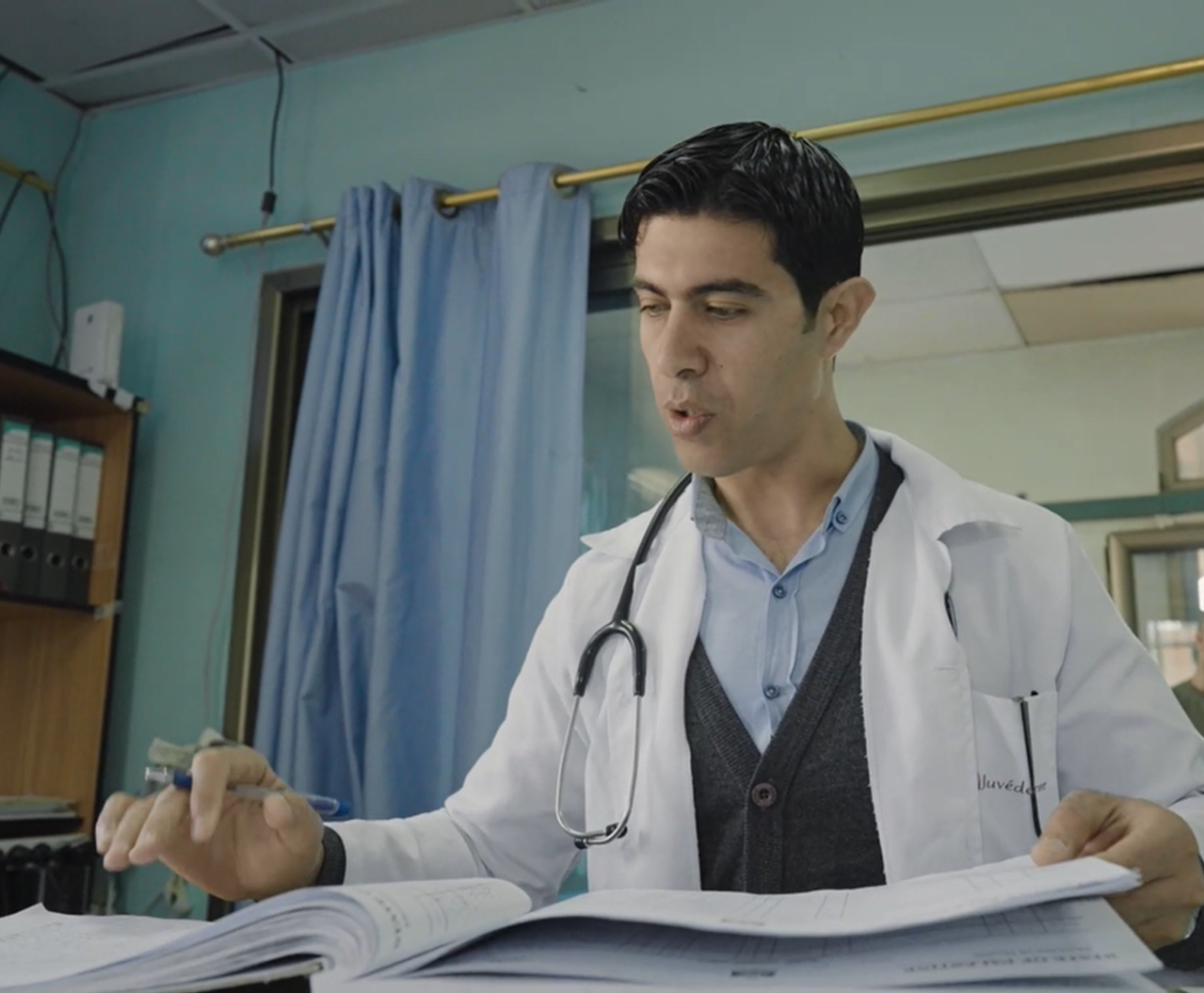
I call on international organizations to give us protection. Doctors, nurses, laboratory technicians and ambulances. We live under occupation, and we are exposed to the violence of occupation every day.
WHO trains paramedics from the West Bank and East Jerusalem in basic pre-hospital trauma care
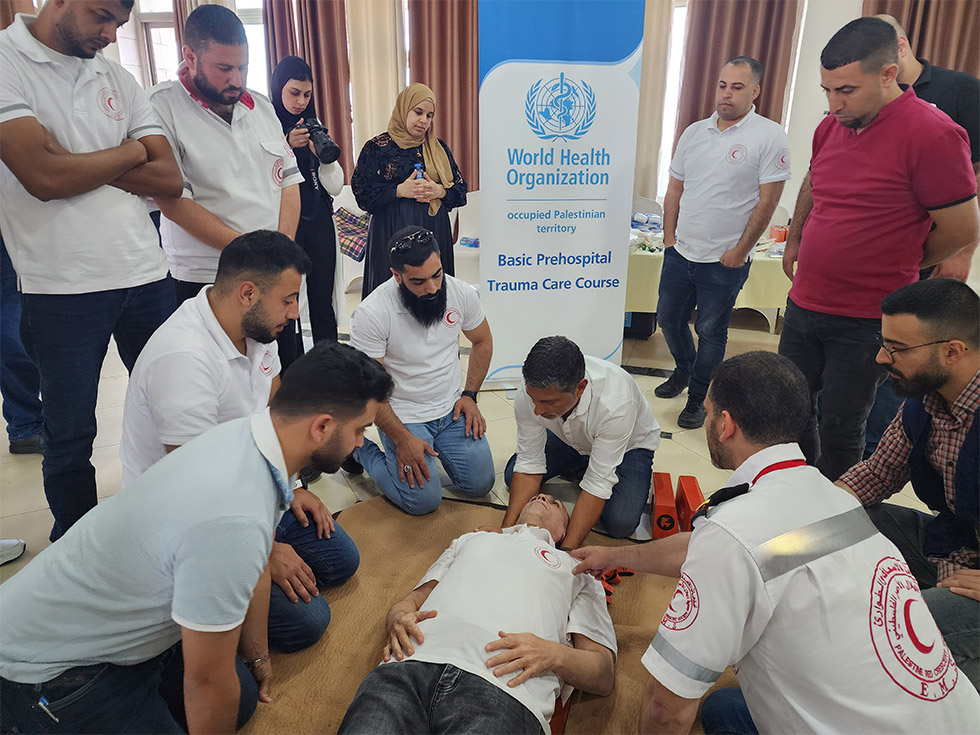
17 May 2023 - WHO trained 25 Palestine Medical Relief Society paramedics from the West Bank and East Jerusalem in pre-hospital trauma care during a four-day workshop, which aimed to refresh their skills and teach new techniques for stabilizing patients in emergencies and mass-casualty incidents. Participants
The course delivered during the training has been developed by WHO's Emergency Operations Unit and piloted for the first time in the Eastern Mediterranean region. It is designed to provide participants with critical life-saving skills that meet international standards and ensure that health workers speak a shared technical language during emergencies. During the training, participants particularly benefited from learning about handling patients with major injuries from gunshots and blasts.
"This training is part of a larger roadmap WHO has developed in collaboration with the Ministry of Health to improve the emergency preparedness and response capacity in the West Bank and East Jerusalem. Since 2022, efforts have been ongoing to identify and address gaps in the trauma care pathway at the pre-hospital, hospital, and post-hospital levels, aiming to reduce morbidity and mortality during emergencies," said Dr. Athanasios Gargavanis, WHO Emergency Care Technical Officer.
Since December 2021, WHO has trained 195 health workers in the West Bank and East Jerusalem in mass-casualty management protocols and supported seven main hospitals in the West Bank to update their emergency plans.
The basic pre-hospital trauma care training was delivered through WHO's Contingency Fund for Emergencies (CFE), which provides resources for rapid emergency responses, often within 24 hours.
"CFE has been vital in supporting WHO scale-up efforts to improve the trauma care pathway, which is extremely important in the current context given the increased violence in the West Bank," said Dr. Gargavanis.
WHO is developing plans to expand the basic pre-hospital trauma care training across the West Bank, after analysis of feedback received from participants of the recent training.
Khalid “He is a patient and has the same right as any person who wants to get treatment.”Khaled Riham, wife of Khalid
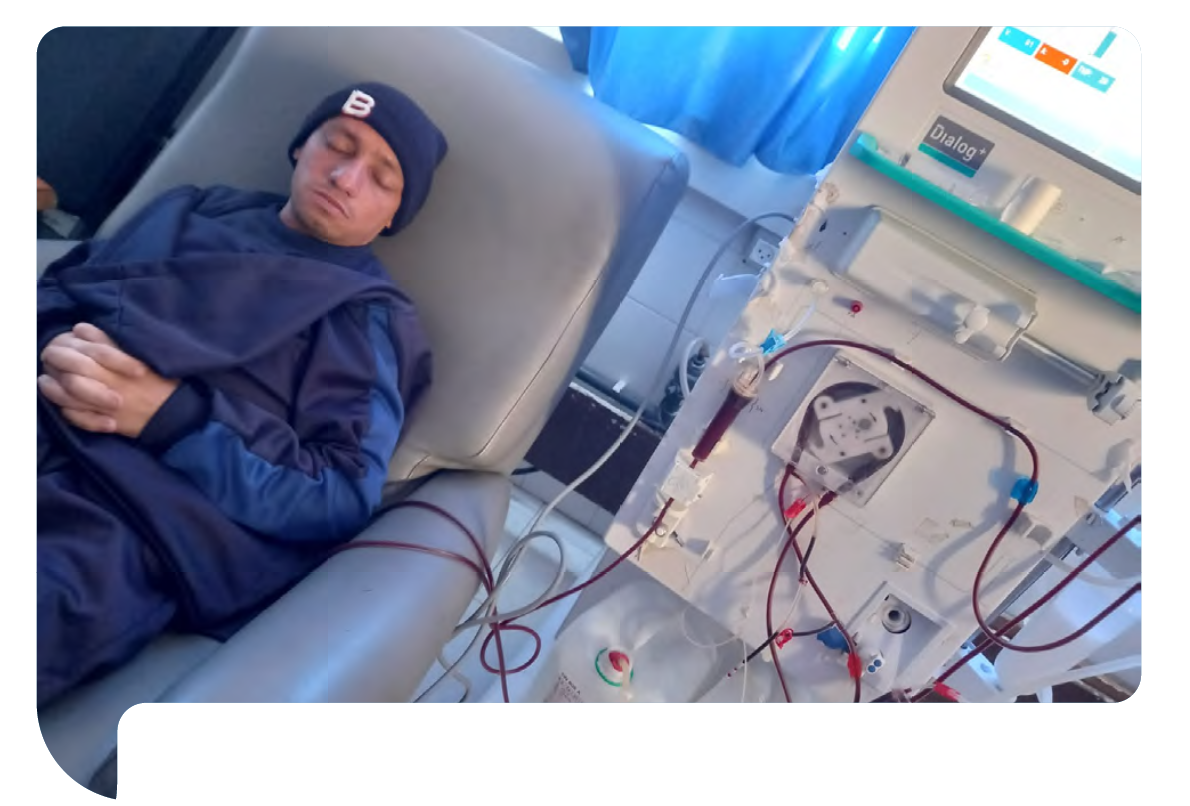
Khalid, 36 years old from Gaza city, has end stage kidney failure. For 16 years, he has been dependent on weekly haemodialysis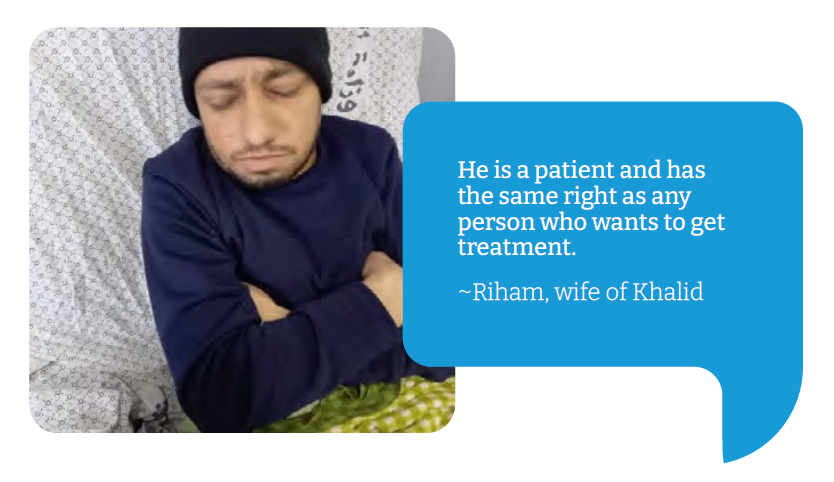 (a procedure to remove waste and water from the blood, to perform the function of healthy kidneys).
In late 2022, Khalid required referral out of Gaza for vascular surgery so that he would be able to keep having lifesaving haemodialysis. Despite repeated surgeries in Gaza, doctors were unable to establish the vascular access needed for the procedure. At Makassed Hospital in east Jerusalem, Khalid was to receive an artificial blood vessel graft.
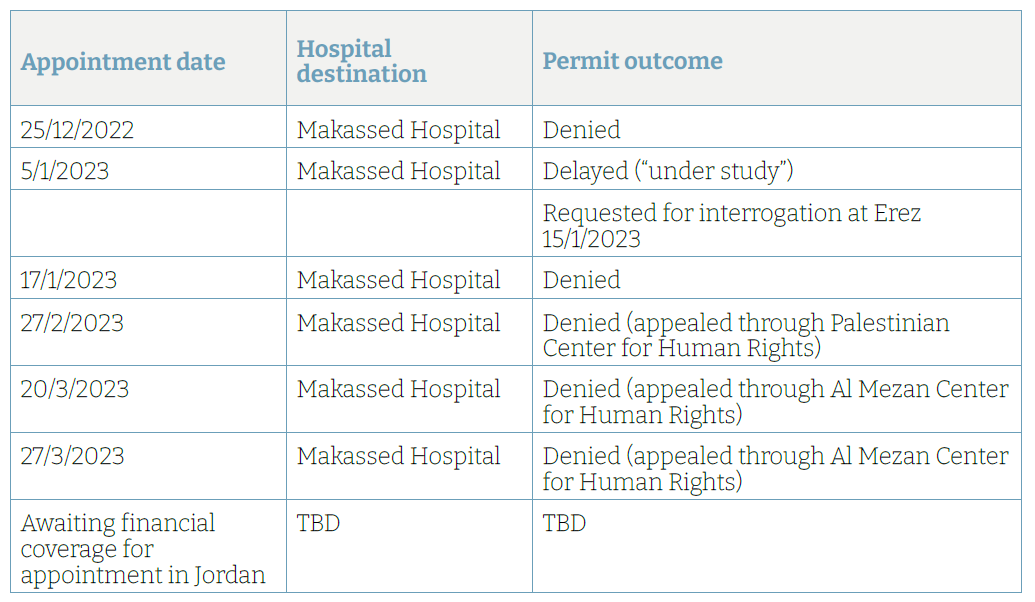
In total, Khalid made six permit applications to Israeli authorities. He was never approved a permit to reach Makassed Hospital but was instructed to change the destination and arrange a hospital appointment in Jordan after several appeals through human rights organizations and advocacy by the UN and partners. As of April 2023, Khalid was awaiting financial coverage from the Palestinian Ministry of Health for an appointment at a hospital in Jordan.
Table 1: Khalid’s hospital appointments, intended hospital destination, and permit outcomes
Amal “I don’t know why I am prevented. I have been waiting so long! I need to have this test so the doctor can make a clear diagnosis and give me proper treatment. I suffer and worry every day.”
Amal, 38 years old from Gaza city, was found to have a brain aneurysm (a potentially life-threatening ballooning of a blood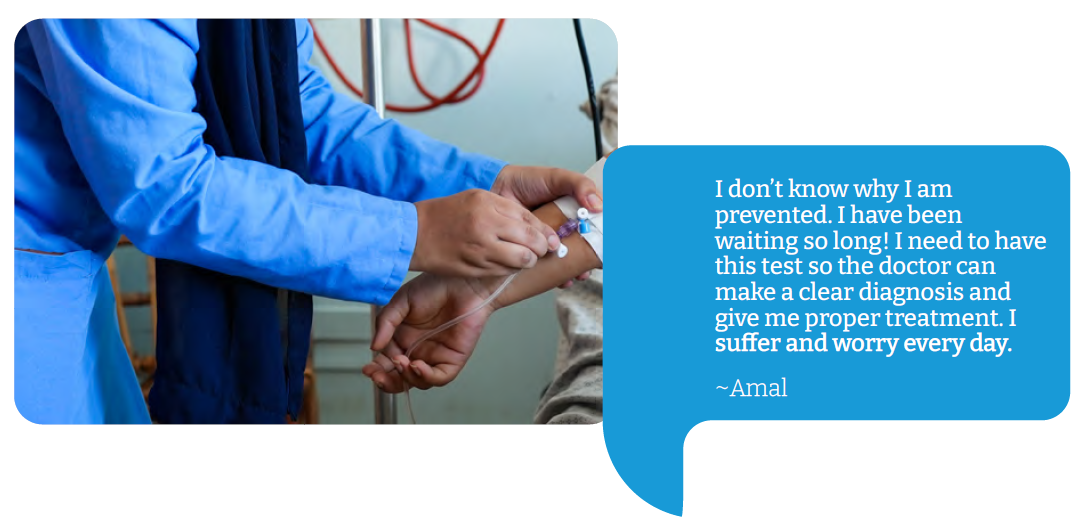 vessel) in March 2022.
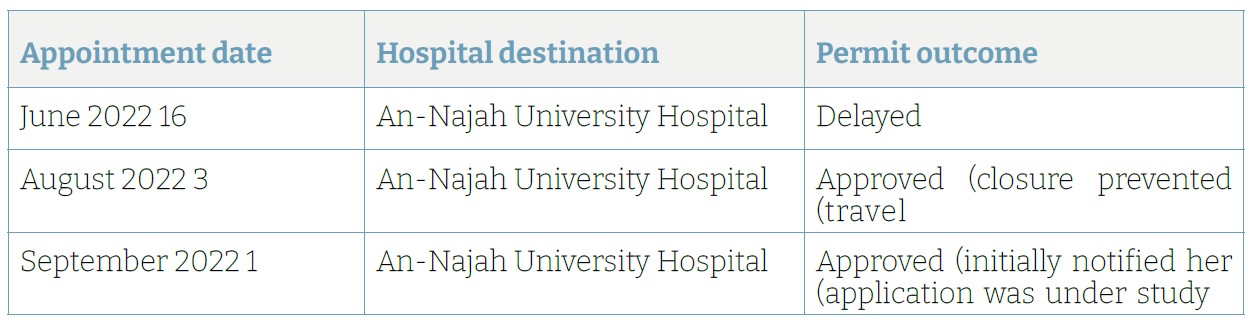
On 5 June 2022, Amal was referred to An-Najah University Hospital in Nablus, in the West Bank, for brain catheterization and scan (angiography), a procedure not available in the Gaza Strip. She made one permit application for an appointment on 16 June that was delayed. Amal was approved a permit to travel on 3 August but following closure of Erez (Beit Hanoun) checkpoint by Israeli authorities on 2 August she was unable to exit the Gaza Strip to receive care.
Talking about the outcome of her first application, Amal said, “I don’t know why I am prevented, I have been waiting so long! I need to have this test so the doctor can make a clear diagnosis and give me proper treatment. I suffer and worry every day.
”Amal received a further hospital appointment at An-Najah University Hospital for 1 September. She was eagerly awaiting a text message from the Palestinian Health Liaison Office, hoping for a positive response, when WHO spoke with her the day before her appointment. She received the text at 5pm that day and called to ask, “I’ve just received a text message from the Liaison Office. It says under study. What does it mean?” After her initial disappointment, she received another message later that evening saying that she had been approved and could travel the next day.
Amal finally travelled and received the scan she needed. Doctors advised the best course of action would be to manage her condition with medicines, which she now takes daily. “I finally had the tests and I feel so grateful that I won’t need brain surgery after all. The doctors at An-Najah reassured me and prescribed me some medicines. They recommended that I will need follow up to keep an eye on things,” Amal said.
Table 1: Amal’s hospital appointments, intended destination, and permit outcomes