

Sélectionnez votre langue
WHO delivers training to improve intrapartum care in the occupied Palestinian territory
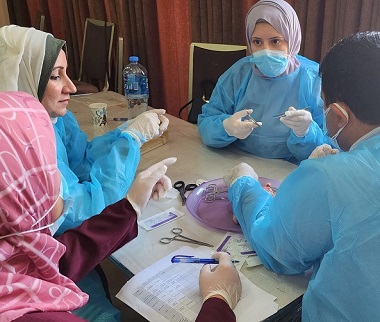
14 August 2023 – WHO organized a 3-day training workshop for health workers in the West Bank and Gaza Strip to improve their capacity in providing high-quality, evidence-based intrapartum care.
The training was attended by 24 obstetricians and midwives in the West Bank and 35 in the Gaza Strip, respectively. The training was based on new and existing WHO recommendations that emphasize the importance of women-centred care to optimize the experience of labour and childbirth for women and their babies through a holistic, human rights-based approach.
WHO’s intrapartum care model is based on several components to ensure a positive childbirth experience. It includes respectful maternity care, emotional support during childbirth, effective communication, pain management, continuity of care, regular monitoring during childbirth, skilled and competent and birth attendants, and a well-functioning health system.
The training focused on a few core components of the model, such as the "Labour Care Guide" that aims to improve medical staff practices in labour and deliver, quality diagnosis and management of perineal injuries and how to avoid ineffective or potentially harmful practices. Health workers were also encouraged to consider how women’s individual health can affect delivery.
Throughout the sessions, the trainers provided vital context around maternal and newborn health in the occupied Palestinian territory (oPt). They also recognised the significant steps that have already been taken to reduce maternal and neonatal morbidity and mortality in oPt and highlighted the pivotal role of antenatal and intrapartum care in its prevention.
“Ensuring the mother’s health after childbirth is a key priority. Today’s training provided health workers with knowledge and tools to accurately diagnose and timely treat internal injuries and lacerations to prevent future complications. We also trained them in surgical suturing so they can stop internal bleeding that can occur during birth”, said Dr Hadeel Al-Masry, one of the trainers.
Feedback from participants following the training was very positive. Dr Ahmad, from Yatta Government Hospital in the West Bank, found the training useful for his daily work in the maternity ward. “Every day we deal with patients suffering from internal injuries due to childbirth. This training will help us effectively diagnose the extent of perineal injuries and treat them”.
Dr Alaa, an obstetrician and gynaecologist at Nasser Medical Complex in Gaza Strip, said that in addition to the theoretical and practical skills they acquired during the training, participants also learned the importance of communicating with patients. “Open communication with women during labour and delivery can improve diagnosis of internal injuries and prevent irreversible complications and health problems.”
Following the training, health workers were keen to influence and support more dignified, responsive and respectful maternity care in their hospitals, as well as pass on the knowledge to their colleagues. Post-training supervision visits will now be conducted to assess the knowledge and skills of health care providers.
Related link
Palestine Social Medicine Course Launched
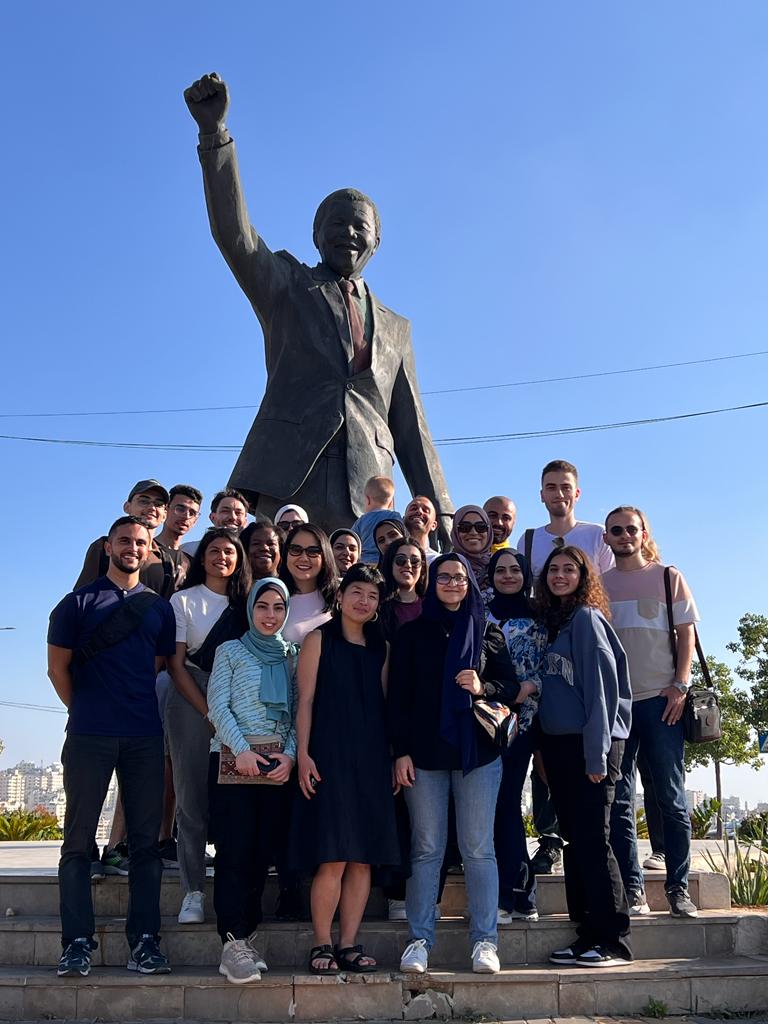
11 July 2023 - The Institute of Community and Public Health (ICPH) at Birzeit University, the François-Xavier Bagnoud (FXB) Center for Health and Human Rights, and the World Health Organization in the occupied Palestinian territory have launched the Palestine Social Medicine course. This intensive course is part of the activities of the Palestine Program for Health and Human Rights, a partnership between ICPH at Birzeit University and the FXB Center for Health and Human Rights at Harvard University, United States. The course is supported through Swiss Agency for Development and Cooperation funding to WHO occupied Palestinian territory Right to Health programme.
Course participants comprise a group of 30 medical and health sciences students from Palestinian universities across the West Bank and Gaza Strip, as well as universities in the United States.
The course aims to educate students about the social, structural, and political determinants of health globally and in Palestine, providing practical and real-life examples of the obstacles that hinder reaching optimal levels of health and healthcare delivery and exploring strategies to mitigate these obstacles. The course combines theoretical lectures with interactive group activities and field visits, offering a comprehensive and dynamic learning experience. The three-week course equips students with the theoretical foundations and tools to understand and analyze the social and structural determinants of health; the applicability of those foundations and tools in the Palestinian historical and geographic context; and the skills to use these tools towards structural change and improved health.
Strengthening protection of health care in the occupied Palestinian territory
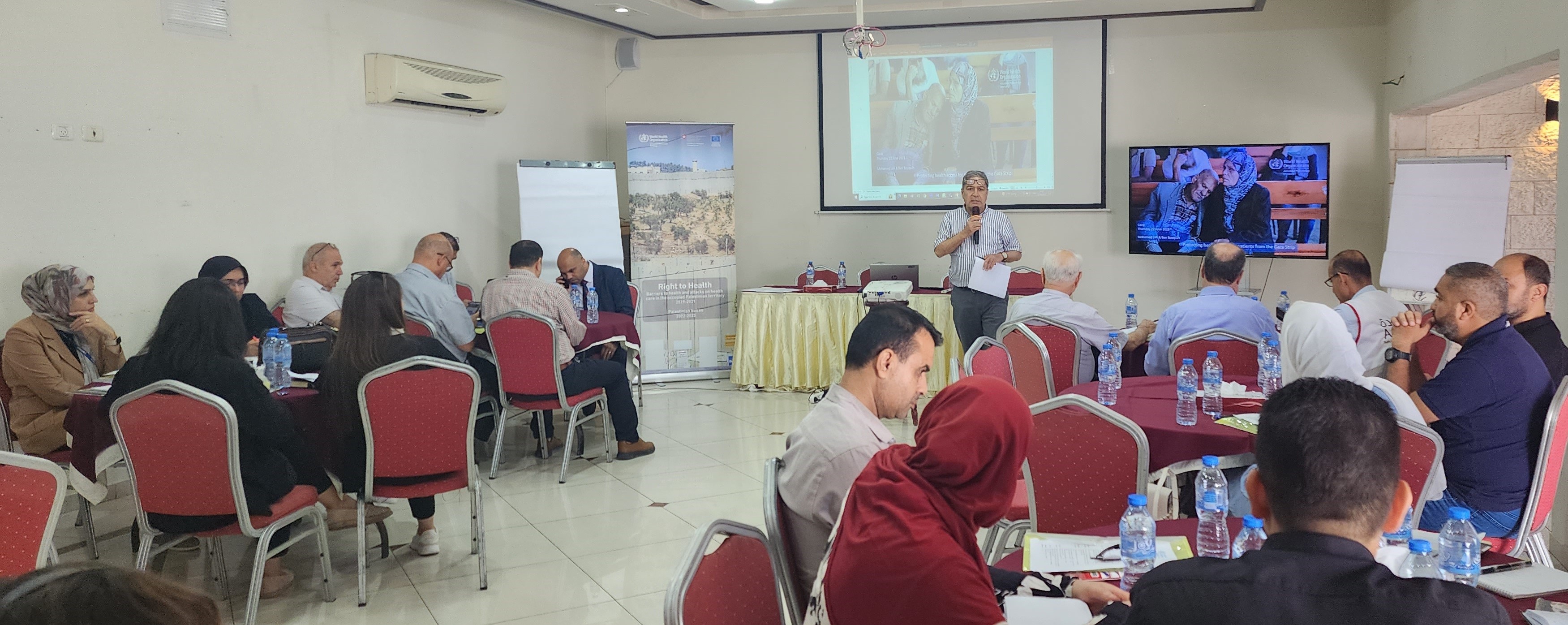
23 June 2023 – WHO conducted two workshops in Ramallah, West Bank, and Gaza City on strengthening protection of health care against attacks and barriers to access in the context of occupation.
WHO has documented increased attacks on health care in the West Bank, with the surge in incursions and violence in 2023. From January to the end of May 2023, there have been at least 124 health attacks, resulting in 39 health worker injuries and the arrest and/or detention of 9 health workers, 1 patient and 1 companion. At least 117 ambulances were affected in attacks, including 104 obstructed access, 15 damaged, 3 used as a shield, 4 searched and 4 directly targeted without causing damage to vehicle body. Meanwhile, 12 attacks involved damage to health facilities. In Ramallah, 35 participants attended the workshop, which focused on improving and aligning monitoring and documentation of health attacks, and identifying measures to better protect patients, health workers, ambulances, and facilities against acts of violence and interference with care provision.
In the Gaza Strip, ongoing blockade and closure has resulted in systematic obstruction to accessing health care. Patients, companions, and health workers are required to obtain Israeli-issued permits to reach health facilities in the West Bank, including east Jerusalem, as well as in Israel and Jordan. In May 2023, 22% of patients were not approved permits in time to reach needed health care, while 53% of companions were not approved in time to accompany patients including children, persons with disabilities, the elderly, and those incapacitated by their illness. A total of 31 participants joined the workshop in Gaza, which sought to enhance protection for individuals encountering arbitrary delay and denial of health access, and to bolster collective advocacy.
WHO event in Gaza to mobilize action on barriers to the Right to Health in the occupied Palestinian territory
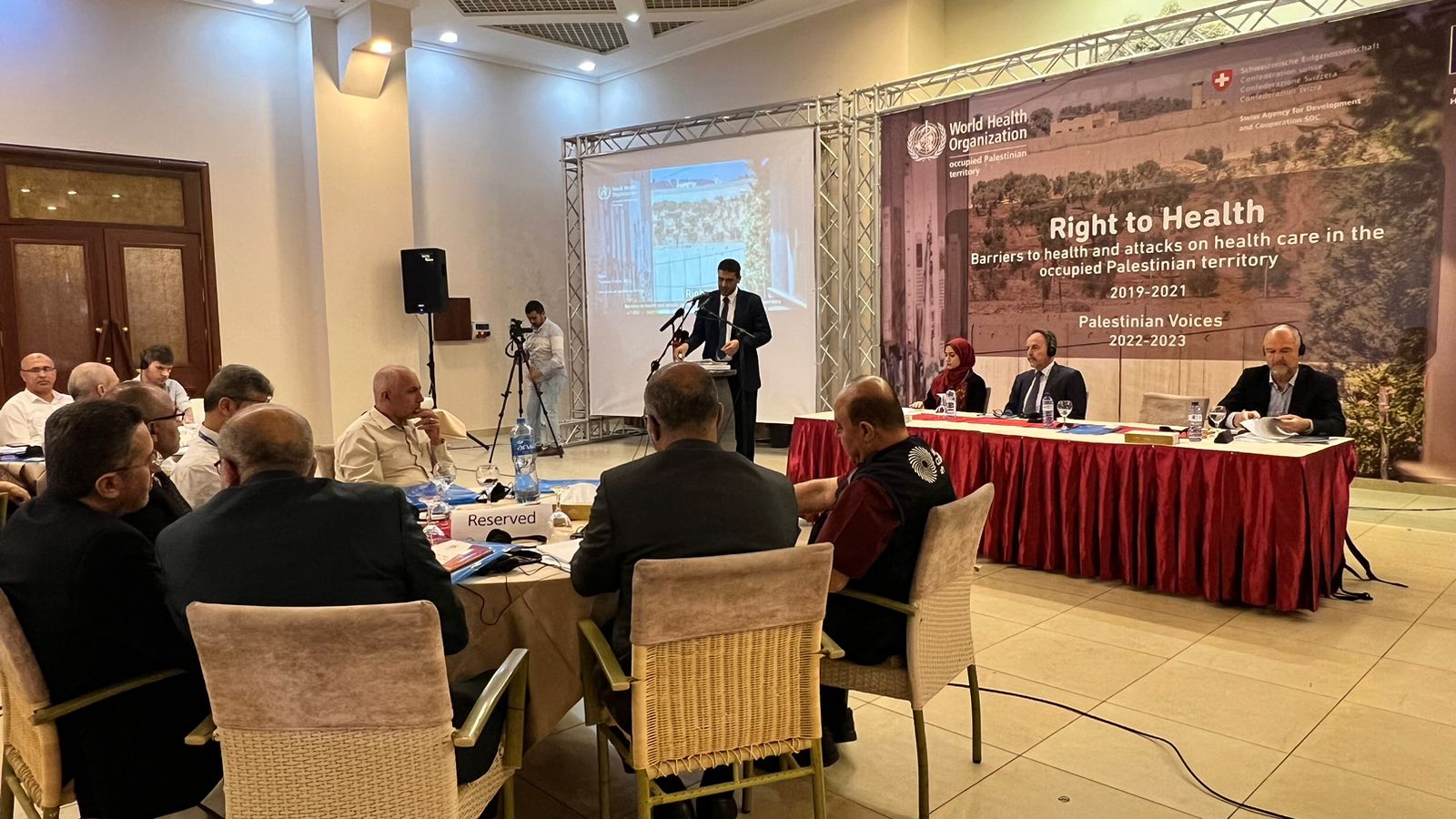
6 June 2023, WHO held an event in Gaza to engage partners on mobilizing action to address the key findings and recommendations of two reports on the Right to Health: Barriers to Health Access and Attacks on Health Care 2019 to 2021 and Palestinian Voices 2022 to 2023.
Opening remarks were delivered by Dr Yousef Abu Rish, Deputy Minister of Health, Mr Thomas Jenatsch, Deputy Head of Cooperation for the Swiss Agency for Development and Cooperation, and Dr Richard Peeperkorn, WHO Representative for the occupied Palestinian territory.
The reports outline how fragmentation of the Palestinian people, implementation of a permit regime, physical obstacles to movement, and protection gaps cause health inequities and create substantial barriers to health care provision and health access in the occupied West Bank, including east Jerusalem, and Gaza Strip.
According to the reports, over a third (35%) of patient permit applications and over a half (54%) of companion permit applications were not approved in time for patients to reach their hospital appointments during the period from 2019 to 2021. In the same period, nearly a third (30%) of children were approved permits without either parent approved to accompany them. Overall, referral patients needing exit from the Gaza Strip are among the most vulnerable in society, where WHO documented that nearly one in ten (9% of) patients had died at six months from the date of their first hospital appointment.
The event participants heard from Maysa, mother of five-year-old Ameer, who discussed the experience of successive delays trying to get Ameer access to eye care outside the Gaza Strip. “When Ameer was prevented access to the ophthalmic hospital in Jerusalem, we couldn’t afford to travel to Egypt. It was a very stressful time, we felt lost. I was thankful for the support that we received as a family, and that we were eventually able to reach Jerusalem,” she said.
Mr Isam Younis, Director of Al Mezan Center for Human Rights, discussed the appeals and human rights documentation and advocacy his organization carries out to support Palestinian patients. He stated, “Stringent restrictions on the movement of people and goods from and to the Gaza Strip by Israeli authorities constitutes a policy of collective punishment, prohibited under international law. The arbitrary delay or denial of access for patients represents a direct violation of their right to health.”
Discussions focused on additional findings of the reports: barriers to the sustainable availability of health care and the continued high number of attacks on health care affecting patients, companions, health staff, ambulances, and health facilities in the occupied Palestinian territory.
Dr Peeperkorn concluded, “Health is a fundamental right for every human being. WHO remains committed to sustained documentation and monitoring of barriers to the right to health, as well as to enhancing and mobilizing our collective advocacy towards addressing the structural and root causes of those barriers and promoting respect, protection, and fulfilment of the right to health for Palestinians.”
WHO webpage with the reports and resources for the Right to Health: /opt/information-resources/right-to-health.html