

Sélectionnez votre langue
Hospitals in the Gaza Strip at a breaking point, warns WHO
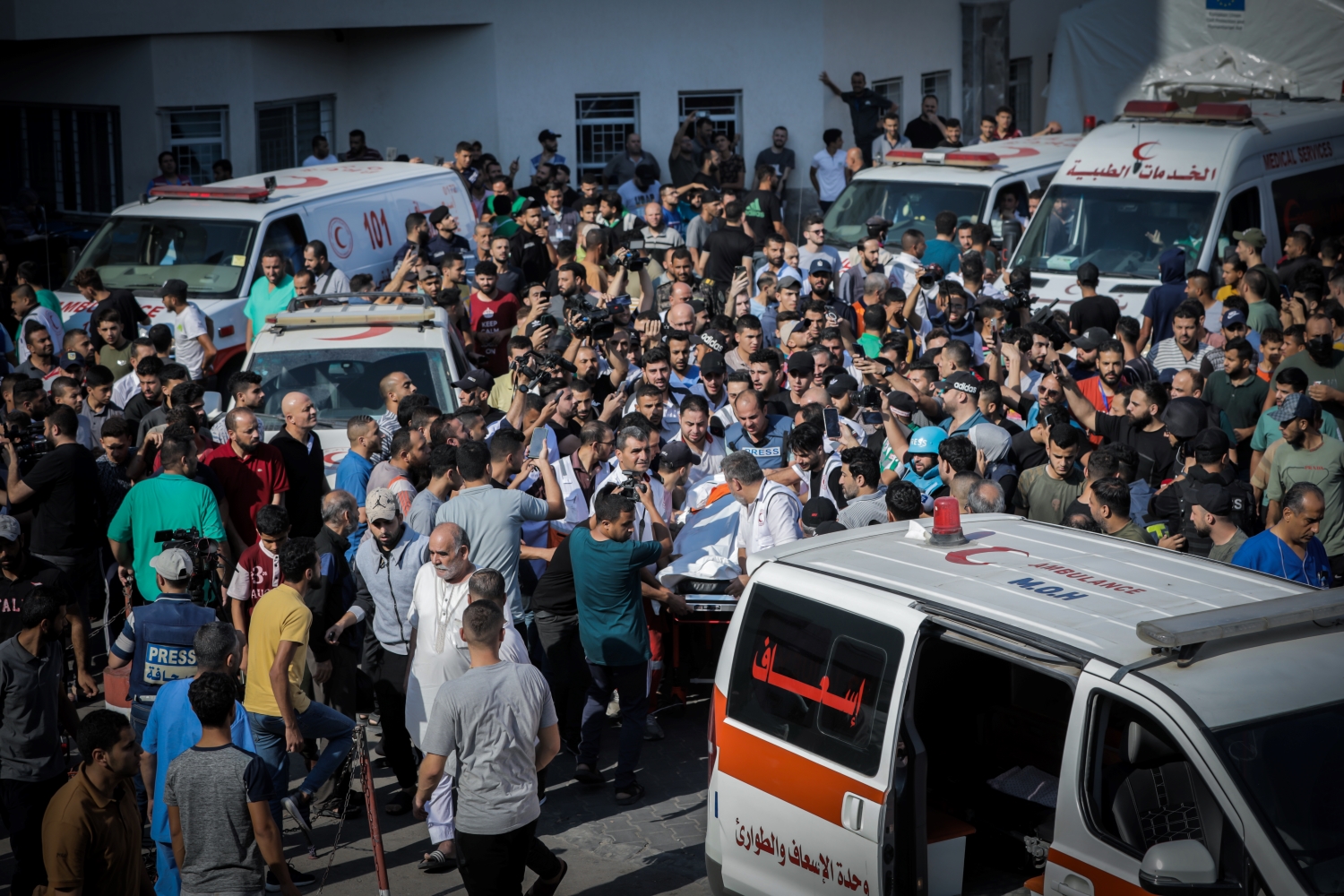
Jerusalem, 12 October 2023 - WHO warns that the health system in the Gaza Strip is at a breaking point. Time is running out to prevent a humanitarian catastrophe if fuel and life-saving health and humanitarian supplies cannot be urgently delivered to the Gaza Strip amidst the complete blockade.
Hospitals have only a few hours of electricity each day as they are forced to ration depleting fuel reserves and rely on generators to sustain the most critical functions. Even these functions will have to cease in a few days, when fuel stocks are due to run out. The impact would be devastating for the most vulnerable patients, including the injured who need lifesaving surgery, patients in intensive care units, and newborns depending on care in incubators.
As injuries and fatalities continue to rise due to the ongoing air strikes on the Gaza Strip, acute shortages of medical supplies are compounding the crisis, limiting the response capacity of already overstretched hospitals to treat the sick and injured.
The situation has also gravely disrupted the delivery of essential health services, including obstetric care, management of noncommunicable diseases such as cancer and heart diseases, and treatment of common infections, as all health facilities are forced to prioritize lifesaving emergency care.
Access for emergency medical teams in the field is severely hampered by infrastructure damage. WHO has documented 34 attacks on health care in Gaza since last Saturday that have resulted in the death of 11 health workers on duty, 16 injuries, and damages to 19 health facilities and 20 ambulances.
Without the immediate entry of humanitarian aid into Gaza — especially health services, medical supplies, food, clean water, fuel, and non-food items — humanitarian and health partners will be unable to respond to urgent needs of people who desperately need it. Each lost hour puts more lives at risk.
WHO calls for an end to hostilities and the protection of health care and civilians against attacks. WHO also calls for the immediate establishment of a humanitarian corridor to ensure unimpeded access for health and humanitarian supplies, as well as for personnel, and the evacuation of patients and the injured. WHO further reiterates its call for the respect and protection of health care.
WHO is ready to immediately dispatch trauma and essential health supplies through its logistics hub in Dubai and working with partners to ensure that they can reach the Gaza Strip via the Rafah border crossing. Urgent access through the crossing is essential so that WHO and other humanitarian agencies can act quickly to help save lives.
Ahmad’s testimony: PRCS paramedics detained and searched in Tulkarem
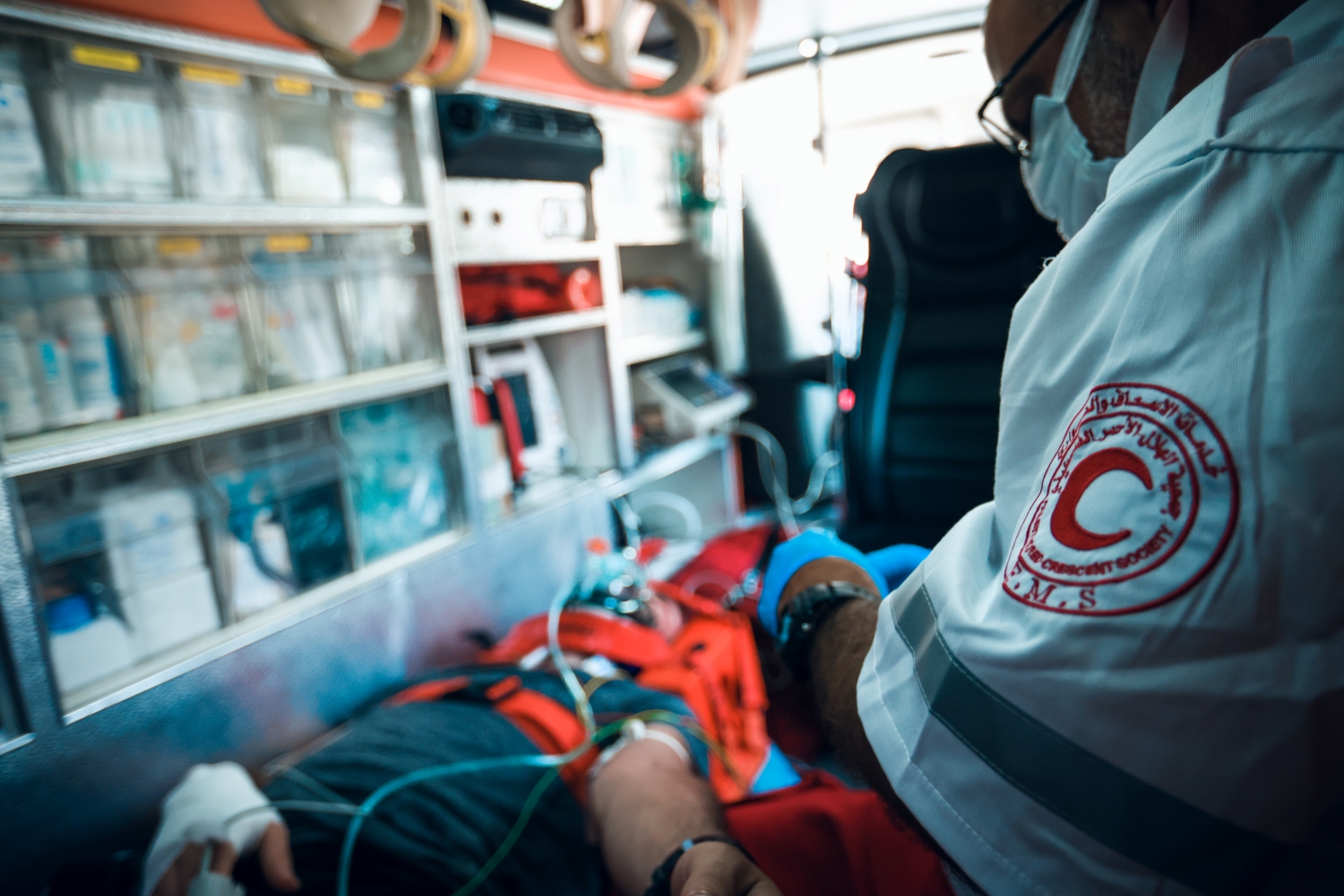
32-year-old Ahmad from the town of Tulkarem in the West Bank has been a volunteer paramedic with the Palestine Red Crescent Society (PRCS) for ten years.
In the early hours of Tuesday, 5 September, Ahmad travelled with other paramedics to Nur Shams refugee camp, southeast of Tulkarem, to respond to emergency medical needs of the residents during an Israeli incursion. Three PRCS ambulances and one private ambulance reached different entrances to the refugee camp after being notified of injuries. However, they were all prevented from entering the camp by Israeli military jeeps.
Ahmad received a call from within the refugee camp informing him that a person had been critically injured with live ammunition. After the ambulance was prevented access, Ahmad and another PRCS paramedic entered the camp on foot. There they found 21-year-old Ahed Abu Harb. He had sustained a severe head injury and showed no signs of life. Ahmad and his colleague took Ahed to the ambulance, which transferred him to Thabet Thabet Hospital in Tulkarem.
“On the way to the hospital, we noticed the military jeep that had previously prevented our access to the camp was following us. The driver of the jeep kept honking and signalling us to stop, but we knew we had to transfer the patient. At the hospital, Ahed was examined by the medical team and pronounced dead.”
On the way back to the PRCS centre in Tulkarem, Ahmad recalls how a military jeep pulled up beside the ambulance at a traffic light and signalled them to stop. Other military jeeps (around five in total) then surrounded the ambulance, and a military officer ordered the driver to get out.
“Two military officers came from behind the ambulance, pointed their guns at me and the other paramedic inside, and ordered us to get out. As we got out of the vehicle, the soldiers started pushing us and ordered us to take off our paramedic vests. They pushed the three of us towards a wall and forced us to stand facing it, while shouting at us. At some point, one of the soldiers started shooting in the air to intimidate us. They violently searched us and ordered us to pull up our shirts, assaulting us physically and insulting us. While we were standing next to the wall, the ambulance driver’s phone rang. A soldier took the phone and threw it on the ground. They continued detaining us, while other soldiers entered the ambulance and started throwing out the medical kit from inside. A soldier broke one of the ambulance windows. After throwing all the equipment out of the ambulance, they left without saying anything.”
Ahmad joined PRCS as a volunteer ten years ago, during Eid. He said, “This is not the first attack we have faced, but I have not experienced any as violent as this. We are frequently stopped and prevented access, ordered to turn back, and verbally attacked, and have guns pointed at us.”
Despite the difficulties, Ahmad remains committed to his volunteer work. “Such attacks will not stop me from going to the field. During one of the incursions of the camp, a bullet went through the window of the ambulance. The next day there was another incursion, and we were back in the field. I am not scared or put off continuing my work because of such experiences. On the contrary, I still volunteer even when I am not scheduled to be on duty. I see firsthand the impact and importance of our work and, when I’m in the field, all I think of is the people who need our support.”
WHO and KOICA sign US$ 6 million cooperation agreement to strengthen mental health and psychosocial services in Palestine
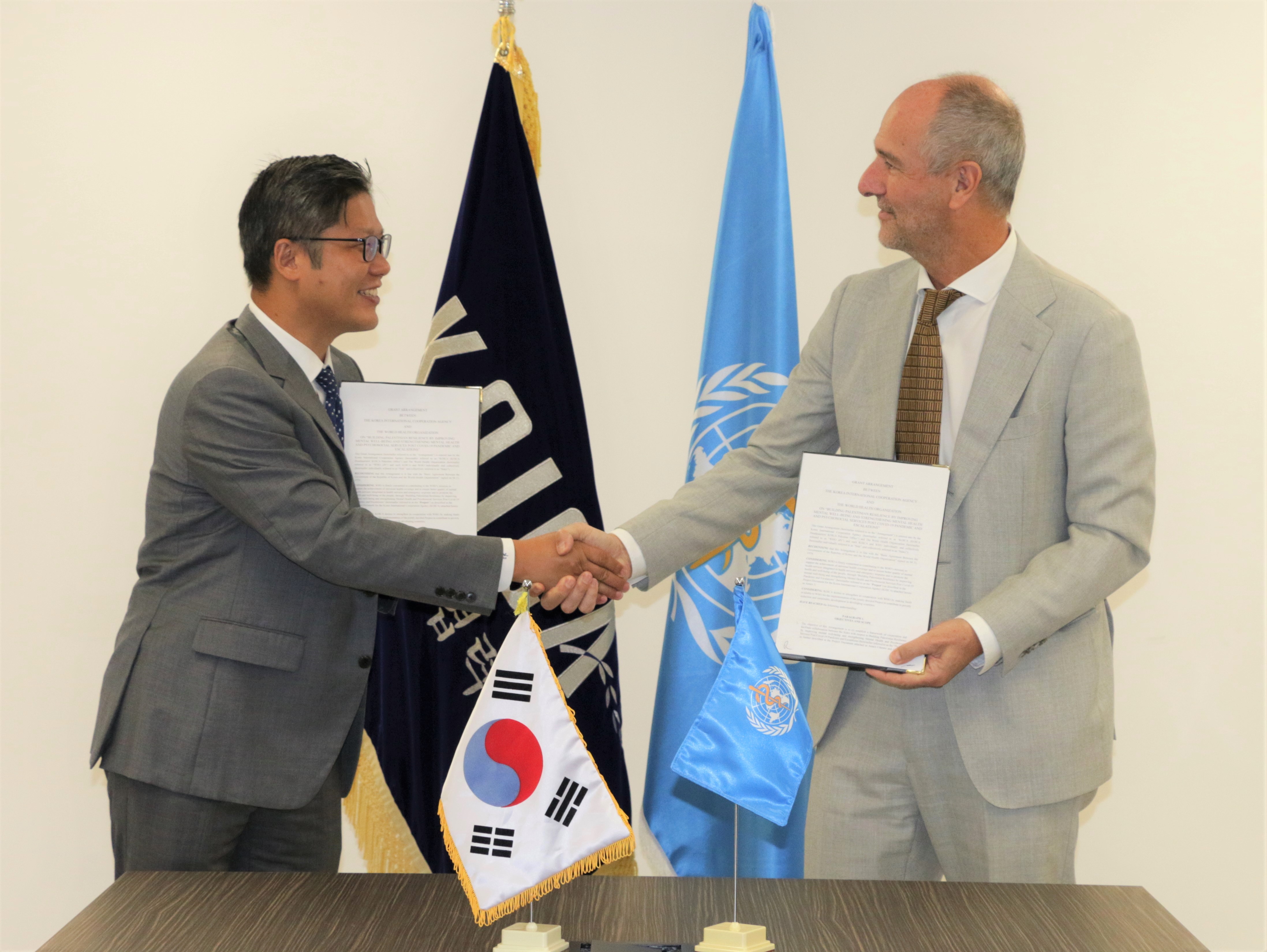
Ramallah, West Bank, 28 August 2023 - Mr. Minjong Kim, the Country Director of the Korea International Cooperation Agency (KOICA) in Palestine, and Dr. Richard Peeperkorn, Representative of the World Health Organization (WHO) in the occupied Palestinian territory (oPt), signed a US$ 6 million cooperation agreement to strengthen the quality and accessibility of mental and psychological health services for Palestinians in the West Bank, including East Jerusalem, and the Gaza Strip.
According to Ministry of Health (MoH) data, newly registered psychiatric cases in oPt rose by 13% between 2021 and 2022. Regular escalations, ongoing surge in violence and the long-term impact of the COVID-19 pandemic continue to further increase the need for mental and psychological support among adults, adolescents, and children, making it one the most significant public health challenges in oPt.
“Everyone’s life touches someone with a mental health condition. Yet many Palestinians don’t receive the health care they need because mental and psychological disorders often go under-reported, under-treated, and under-supported. I sincerely thank KOICA for its longstanding partnership and generous support in addressing this invisible crisis. Investment in mental health is an investment in a better life and future for all,” said Dr Peeperkorn.
The three-and-half year project focuses on three paths for enhancing mental and psychological health services in oPt, which include, improving the quality and effectiveness of services at 20 community mental health centres and two psychiatric hospitals, expanding the availability of services by integrating mental health into selected MoH and UNRWA primary health care clinics and general hospitals, and strengthening mental health programmes in schools to support adolescents with risky behaviours. This will be achieved through training and building the capacity of 5,200 MoH and UNRWA health workers and Ministry of Education school staff, delivery of psychotropic drugs to address chronic shortages, introduction of rehabilitation programmes for patients experiencing mental health disorders, and renovation of psychiatric hospitals in Gaza and the West Bank.
“KOICA and WHO have worked together to achieve global health security and overcome the pandemic crises, including COVID-19 and Ebola. For this, the two institutions have implemented ten projects globally based on a solid partnership. I’m pleased to see our partnership continue in Palestine to build a healthier, more resilient society,” said Minjong Kim, KOICA Country Director.
KOICA has supported the health sector in Palestine since 2011. KOICA’s programmes focus on providing health services for all, quality education for youth, creating job opportunities, and government capacity building for improving public services.
Attacks on health care during the military incursion of Jenin refugee camp
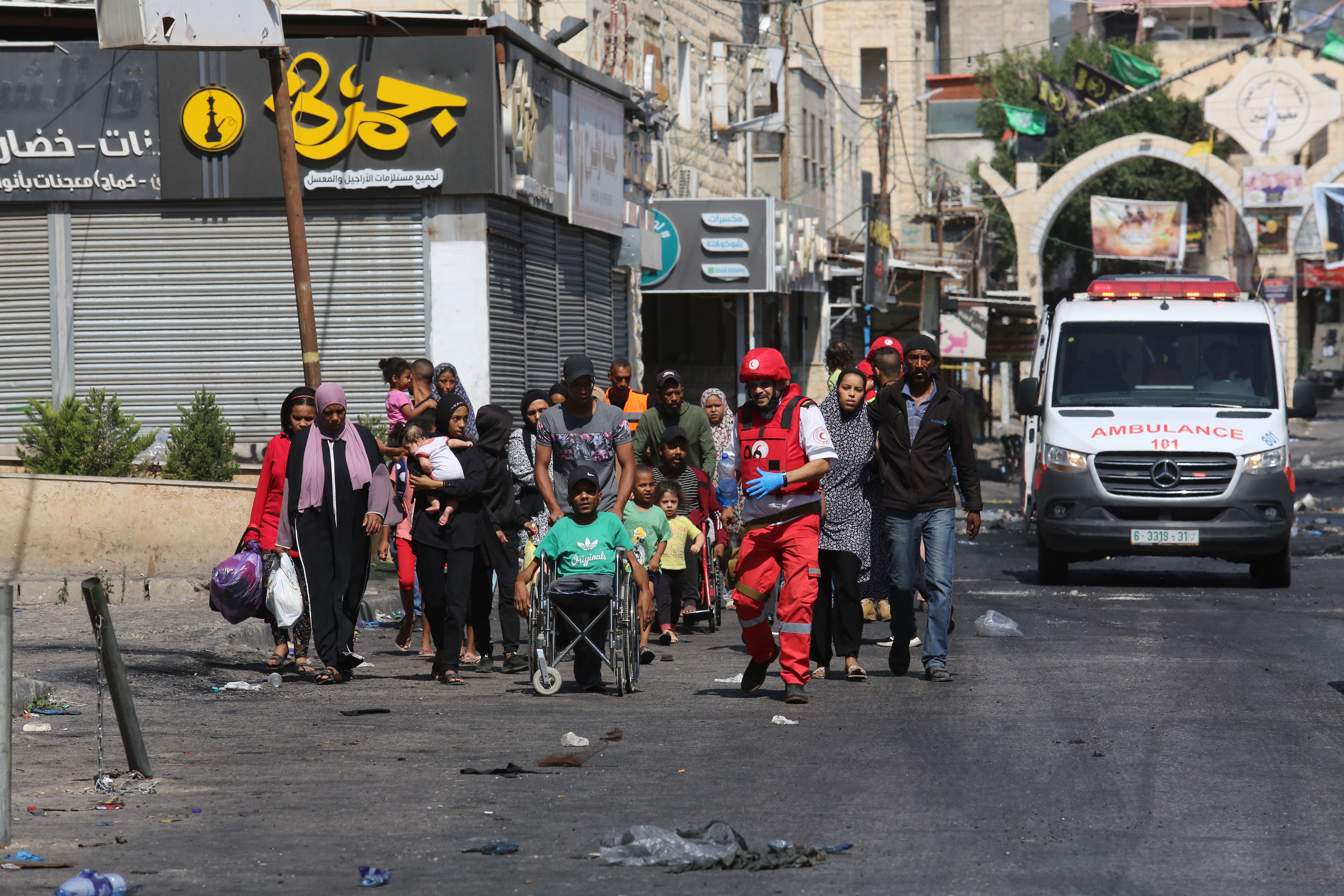
Sabrin is 32 years old and a paramedic from Silat al-Harithiya village, near Jenin in the West Bank. She has worked with the Palestine Red Crescent Society for the past five years.
On Monday 3rd July, Sabrin woke up to news of the military operation on Jenin refugee camp. She tried to reach the PRCS ambulance centre in Jenin for duty but faced difficulties. She stated, “The taxi driver told me it would be difficult to reach Jenin, but I told him I had to reach the ambulance centre to go and help. We agreed to go to the entrance of Jenin, after which I had to find my own way to the ambulance centre.”
Sabrin contacted a private ambulance, who helped her reach. All PRCS ambulances were busy responding to the injuries.
Sabrin accompanied an ambulance team to assist a woman who had gone into delivery inside the camp. The team coordinated for access with the International Committee of the Red Cross (ICRC). However, as the team approached the refugee camp, they encountered difficulties. Sabrin explains, “We came to an intersection, where a military jeep in front of us started ordering us to go backwards. But we could see there were already some military jeeps and a bulldozer behind us.” The driver attempted to negotiate, but discussion began to escalate. “I was worried that the soldiers would shoot towards us. I felt that we could be shot at at any moment. I was scared but I also felt responsibility for the woman who was in delivery. I was worried about her and her baby. The occupation forces insisted that we had to go back, but there was nowhere to reverse as two jeeps were blocking our way from behind. The military jeeps moved and as we began to reverse the military jeep in front of us rammed into our front, pushing us backwards. It was intense, we were all so stressed.”
Another ambulance was sent from the ambulance dispatch centre to respond to the woman in delivery, with coordination through the ICRC. However, this second ambulance was also unable to reach the woman.
On the same day, the same ambulance team was prevented access when trying to evacuate families with children from their homes. Sabrin said, “We wanted to evacuate people suffering with tear gas inhalation. On one occasion I had to get out of the ambulance vehicle to request a military officer to allow us to reach the homes. I told him there were children inside, but he only shouted at me to go back. I tried to talk to another military officer, but he also didn’t allow us.”
The next day, Tuesday, 4th July, Sabrin was unable to reach the PRCS ambulance centre and report on duty due to severe movement restrictions in the area.
“This isn’t the first time we faced difficulties,” she said. “We’ve been shot at and targeted with live ammunition. I get scared every time. I have two daughters and I worry that I would not return to them. But I still feel a strong obligation towards the people. The attacks scare me, but they won’t stop me from continuing my work. In fact, they encourage me to continue because I understand that people depend on us.”