

Sélectionnez votre langue
WHO appeals for protection of the health system from further attacks and degradation of its capacity
4 December 2023, Cairo/Geneva – Once again, nowhere is safe in Gaza. WHO is gravely concerned about the resumption of hostilities, including heavy bombardment in Gaza, and reiterates its appeal to Israel to take every possible measure to protect civilians and civilian infrastructure, including hospitals, as per the laws of war.
We have seen what happened in northern Gaza. This cannot be the blueprint for the south. Gaza cannot afford to lose another hospital as health needs continue to soar.
As more civilians in southern Gaza receive immediate evacuation orders and are forced to move, more people are being concentrated into smaller areas, while the remaining hospitals in those areas run without sufficient fuel, medicines, food, water, or protection of health workers.
WHO and other partners are less able to provide support, given dwindling access to our supplies or any assurance of safety when we move supplies or staff.
This morning WHO was contacted with advice to move as many medical supplies as possible from a warehouse in Gaza, situated in an area ordered to be evacuated. Access to storage could become challenging over the coming days due to ground operations.
Intensifying military ground operations in southern Gaza, particularly in Khan Younis, are likely to cut thousands off from health care - especially from accessing Nasser Medical Complex and European Gaza Hospital, the two main hospitals in southern Gaza - as the number of wounded and sick increases.
Lack of access would also limit WHO’s ability to deliver aid to these hospitals.
About 1.9 million people, nearly 80% of Gaza's population, are estimated to be internally displaced. Recent evacuation orders cover 20% of Khan Younis and localities east of Khan Younis, which prior to the hostilities were home to nearly 117,000 and 352,000 people, respectively.
In less than 60 days, the number of functioning hospitals has dropped from 36 to 18. Of these, three are only providing basic first aid, while the remaining hospitals are delivering only partial services. Those able to admit patients are delivering services well over their intended capacities, with some treating twice to three times as many patients as they were designed for. The 12 hospitals that are still operational in the south are now the backbone of the health system.
On a recent visit to Nasser Medical Complex in Khan Younis, WHO team described the situation inside as catastrophic, with the building and hospital grounds grossly overcrowded with patients and displaced people seeking shelter. The emergency ward is overflowing with patients. There is a shortage of health workers compared to the overwhelming needs. Those who are available have been working non-stop and are exhausted. Many patients are being treated on the floor. Bed capacity has been overwhelmed. Patients and families sheltering at the hospital are scared for their security.
Disease surveillance systems are hampered, but syndromic surveillance has noted increases in infectious diseases, including acute respiratory infections, scabies, jaundice, diarrhea, and bloody diarrhea. Shelters in the south are also reporting cases of acute jaundice syndrome, a worrisome signal of hepatitis.
From 7 October to 28 November , WHO has recorded an unprecedented number of attacks on health care: 203 attacks on hospitals, ambulances, medical supplies, and the detention of health care workers. This is unacceptable. There are means to protect civilians and civilian infrastructure, and they should be instituted.
The only viable solution is a sustained ceasefire.
Note to editors:
On 3 December alone, 349 people have been killed and 750 injured according to reports from the Ministry of Health.
According to the Ministry of Health, the bed occupancy rate at operational hospitals stands at 171%, while in the intensive care units the occupancy rate is up to 221%.
Currently, there are 1000 patients and thousands of people sheltering at the 350-bed Nasser Medical Complex, and 1000 patients and an estimated 70,000 people sheltering at 370-bed European Gaza Hospital. Both hospitals are three times beyond their capacity.
As of 3 December, per Ministry of Health reports, more than 15,899 people have died, over two-thirds of them women and children. An additional 42,003 people, also mostly women and children, have been injured.
WHO and King Salman Humanitarian Aid and Relief Centre (KSrelief) sign a Letter of Intent to scale up health response assistance in Gaza Strip
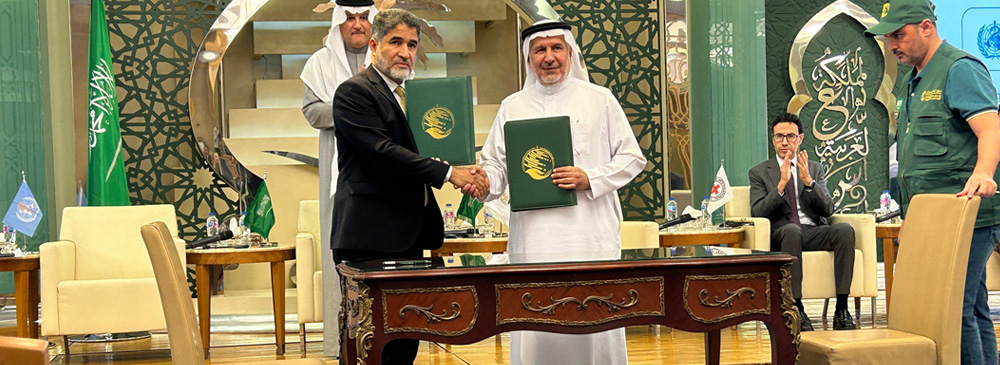
23 November 2023, Cairo, Egypt – The World Health Organization (WHO) and the King Salman Humanitarian Aid and Relief Centre (KSrelief) today signed a letter of intent to solidify their commitment to collaborative humanitarian efforts in the Gaza Strip.
The letter of intent, for US$ 10 million, was signed by Dr Ahmed Al-Mandhari, WHO Regional Director for the Eastern Mediterranean, and His Excellency Dr Abdullah Al Rabeeah, Supervisor General of KSrelief. The document reflects the continued shared vision and dedication of both organizations to address urgent health needs of people in the Region.
The support funded by KSrelief will be aligned with WHO’s operational plan for the occupied Palestinian territory, with a focus on ensuring the availability of life-saving medical supplies and equipment in the Gaza Strip, as well as fuel availability.
As deaths and injuries in the Gaza Strip continue to rise, this support will allow WHO to procure additional life-saving trauma supplies for delivery to health facilities in the Gaza Strip as soon as access is possible. Intense overcrowding and disrupted health, water and sanitation systems are contributing to the rapid spread of infectious diseases, which also demand an urgent scaled-up response. Fuel is also urgently needed, to power the delivery of essential service at health facilities as well as ambulance services. This response, however, is dependent on the unimpeded delivery of safe water, food, fuel and other humanitarian aid to health facilities, so that they can function and provide the life-saving health services that are desperately needed.
KSrelief is a long-standing partner of WHO, working to preserve health systems and facilitating the provision of life-saving services and supplies in emergency-affected countries and territories across the Region and beyond. Since 2016, WHO and KSrelief have collaborated on multiple health projects in emergency settings at a total cost of more than US$ 300 million.
Joint UN mission transfers critical patients from Al-Shifa Hospital in Gaza, under intense fighting
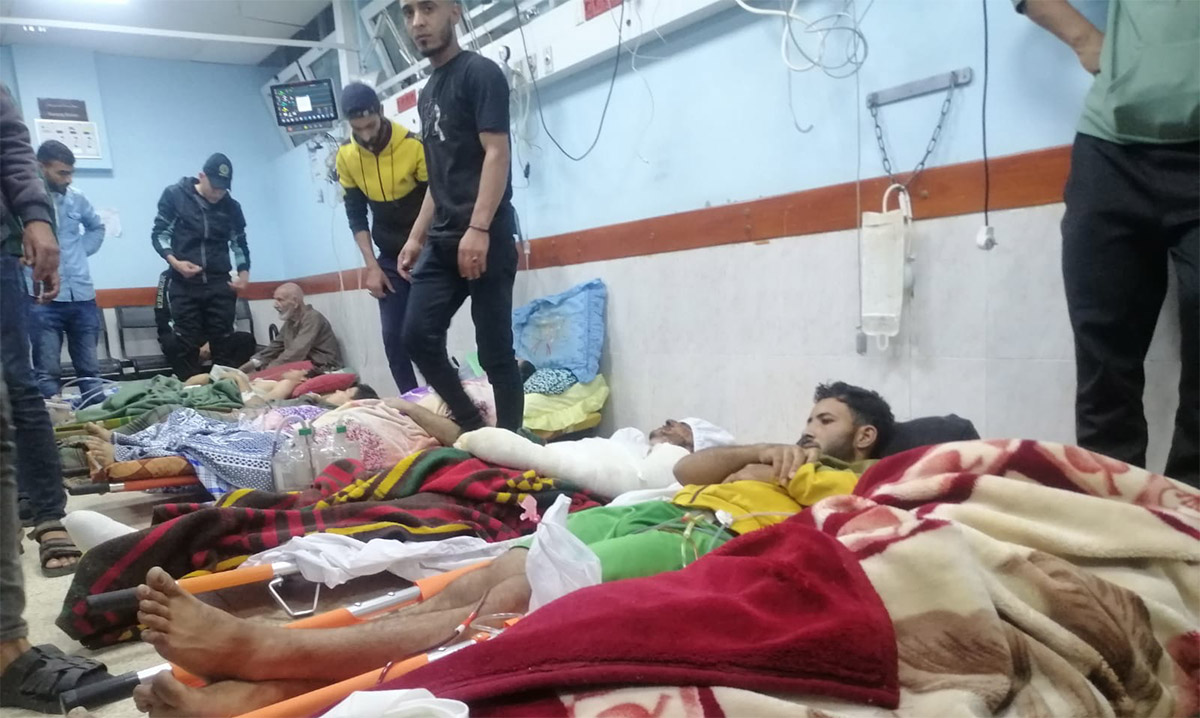
24 November 2023, Geneva/Cairo - On 22 November, in cooperation with the Palestine Red Crescent Society, WHO participated in another joint-UN mission to transfer 151 patients, relatives and health workers accompanying them from Al-Shifa hospital in northern Gaza. The mission was undertaken following specific requests from health authorities and hospital officials in Gaza.
This was the third mission to Al-Shifa carried out by WHO, other UN agencies and partners in less than a week; the first was an assessment mission (18 November) and the second was an evacuation mission to transport 31 infants (19 November).
During this mission, the team transferred 73 severely ill or injured patients, including 18 dialysis patients; 26 patients with serious spinal injuries; 8 patients with severe chronic conditions; two in need of critical care; and 19 patients in wheelchairs. The patients were transported in 14 ambulances supplied and staffed by the Palestine Red Crescent Society, and two buses, with 8 health workers and 70 family members accompanying them.
This was a high-risk mission, as intense fighting and shelling continued in proximity of Al-Shifa hospital.
It took 20 hours for the team to complete the evacuation, including 6 hours at a checkpoint where the team and patients were screened by the Israeli Defense Force. This was despite an initial agreement to only screen participants at the origination point in Al-Shifa Hospital.
The screening process involved checks on the patients, their relatives, and the personnel; these included elderly, children and severely ill patients. Three medical personnel from the Palestine Red Crescent Society and three from the Ministry of Health were detained.
After 6 hours at the security checkpoint, the convoy proceeded as the condition of some of patients was already deteriorating. Patients reached their final destination late at night.
Most of the patients were ultimately transferred to the European Gaza Hospital, with the dialysis patients admitted to Al Najjar Hospital. Both facilities are in the south of Gaza.
WHO is extremely concerned about the safety of the estimated 100 patients and health workers remaining at Al-Shifa. Due to the limited time that the mission members were able to spend in the hospital and the urgency of moving the most critical, it was difficult to determine exactly how many remain.
Two of the six detained health workers have reportedly been released. We do not have information about the well-being of the four remaining health staff, including the director of Al-Shifa hospital. WHO calls for their legal and human rights to be fully observed during their detention.
This and other evacuations were requested by health authorities, health workers and patients, and became necessary as Al-Shifa Hospital is no longer able to function due to lack of water, fuel, medical supplies, food, and staff, and recent military incursions.
Also on 21 November, WHO and partners undertook a mission to Al-Ahli Hospital in northern Gaza to assess medical priorities. Al-Ahli, which is one of the only functional hospitals in the north, must be urgently and regularly supplied with fuel, water, food and medical supplies to ensure the continuity of care. Today, 22 patients along with 19 companions arrived at the European Gaza hospital, in the transfer mission undertaken with the Palestine Red Crescent Society, following the assessement mission.
WHO again asks all relevant authorities to ensure that the medical evacuations that WHO has been requested to assist in can proceed safely, under agreed procedures, without endangering the lives of patients. Ultimately, the safety, security and evacuation decisions rest with the relevant authorities.
Gaza Health Emergency Response Project