

Sélectionnez votre langue
Six months of war leave Al-Shifa hospital in ruins, WHO mission reports
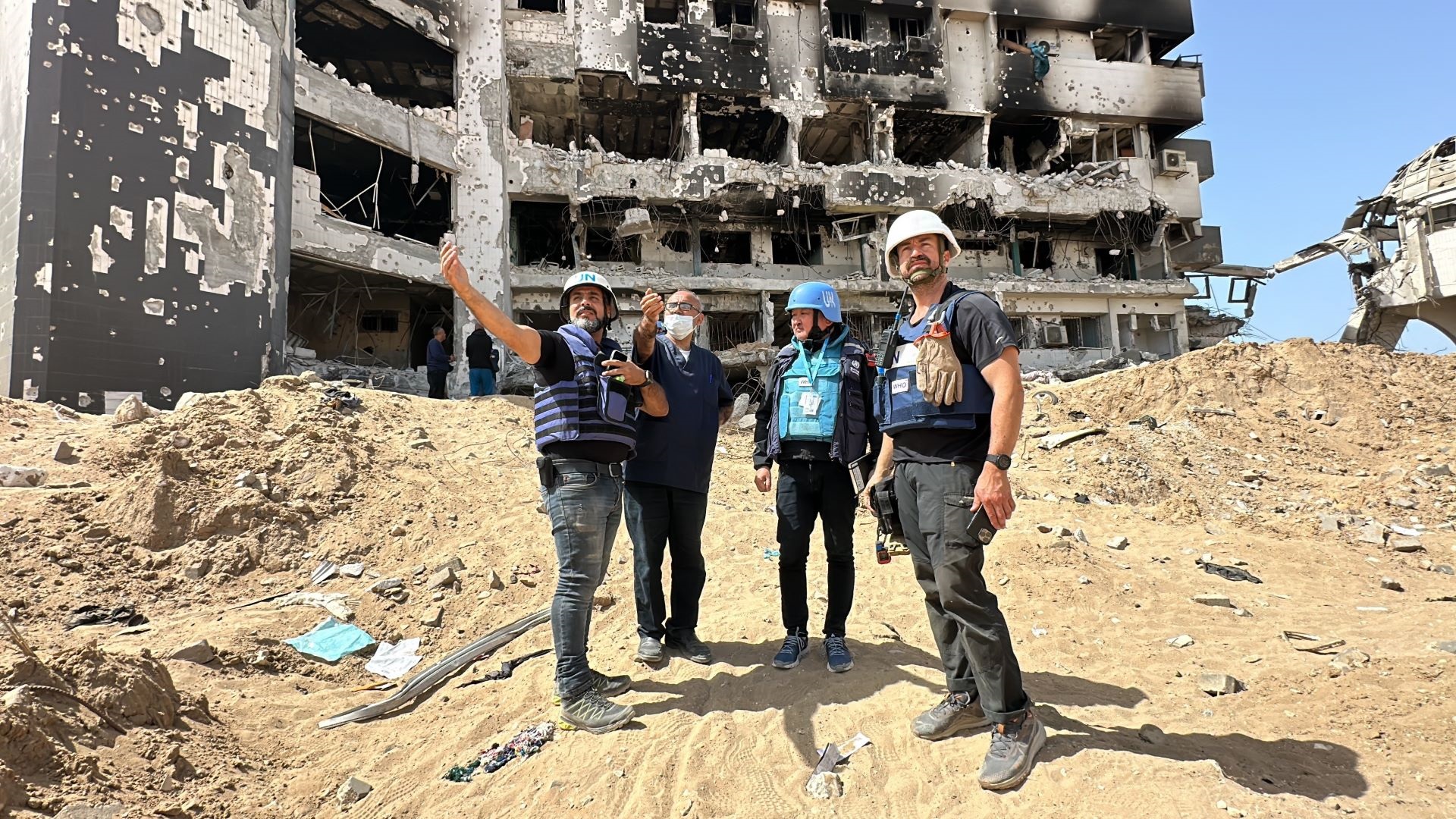
6 April 2024 - A WHO-led multi-agency mission accessed Al-Shifa Hospital in north Gaza on 5 April to conduct a preliminary assessment of the extent of destruction and identify needs to guide future efforts to restore the facility. The highly complex mission was conducted in close partnership with the United Nations Office for the Coordination of Humanitarian Affairs (OCHA), United Nations Mine Action Service (UNMAS), United Nations Department for Safety and Security (UNDSS), and in collaboration with the acting Hospital Director.
Prior to the mission, WHO’s efforts to reach the hospital to medically evacuate patients and staff and conduct an assessment were denied, delayed or impeded 6 times between 25 March and 1 April.
Like the majority of the north, Al-Shifa Hospital – once the largest and most important referral hospital in Gaza – is now an empty shell after the latest siege. No patients remain at the facility. Most of the buildings are extensively damaged or destroyed and the majority of equipment is unusable or reduced to ashes. The WHO team said that the scale of devastation has left the facility completely non-functional, further reducing access to life-saving health care in Gaza. Restoring even minimal functionality in the short term seems implausible and will require substantial efforts to assess and clear the grounds for unexploded ordnance to ensure safety and accessibility for partners to bring in equipment and supplies.
The hospital’s emergency department, surgical, and maternity ward buildings are extensively damaged due to explosives and fire. The western wall of the emergency department and northern wall of the neonatal intensive care department (NICU) have been torn down. At least 115 beds in what once was the emergency department have been burnt and 14 incubators in the NICU destroyed, among other assets. An in-depth assessment by a team of engineers is needed to determine if these buildings are safe for future use.
The hospital's oxygen plant has been destroyed, leaving Kamal Adwan Hospital as the only source of medical oxygen production in the north. Further comprehensive assessment is essential to evaluate the functionality of vital equipment such as CT scanners, ventilators, sterilization devices, and surgical equipment, including surgical tools and anaesthesia devices. The current situation has left north Gaza without CT scanning capabilities and significantly diminished laboratory capacity, severely compromising effective diagnosis, which will increase avoidable deaths.
Numerous shallow graves have been dug just outside the emergency department, and the administrative and surgical buildings. In the same area, many dead bodies were partially buried with their limbs visible. During the visit, WHO staff witnessed at least 5 bodies lying partially covered on the ground, exposed to the heat. The team reported a pungent smell of decomposing bodies engulfing the hospital compound. Safeguarding dignity, even in death, is an indispensable act of humanity.
According to the acting Hospital Director, patients were held in abysmal conditions during the siege. They endured severe lack of food, water, health care, hygiene and sanitation, and were forced to relocate between buildings at gun point. At least 20 patients have reportedly died due to the lack of access to care and limited movement authorized for health personnel.
Despite deconfliction, yesterday’s mission faced significant delays at the military checkpoint en route to Al-Shifa Hospital. On the same day, another WHO-led mission bound for Al-Awda and Kamal Adwan hospitals in northern Gaza – to deliver medical supplies, fuel, deploy emergency medical teams, and support referral of critical patients – encountered unnecessary delays, including the detention of a supply truck driver who was part of the convoy. He was detained for over an hour at a separate location, out of view of the mission team. Eventually this mission was aborted due to safety concerns as the delays left insufficient time for safe completion and return before nightfall.
Between mid-October and end March, over half of all WHO missions have been denied, delayed, impeded or postponed. As health needs soar, the lack of a functional deconfliction system is a major obstacle in delivering humanitarian aid – including medical supplies, fuel, food and water to hospitals – anywhere close to the scale needed.
Six months – half a year – into the war, the destruction of Al-Shifa Hospital and Nasser Medical Complex has broken the backbone of the already ailing health system. Prior to the latest siege, WHO and partners had supported the revival of basic services at Al-Shifa Hospital, and Nasser Medical Complex was regularly supplied to continue serving as the main hospital in south Gaza. These efforts are now lost.
As WHO marks World Health Day tomorrow, under the theme “My health, my right”, this basic right is utterly out of reach for the civilians of Gaza. Access to health care in Gaza has become totally inadequate, and the ability of WHO and partners to help is constantly disrupted and impeded.
Of the 36 main hospitals that used to serve over 2 million Gazans, only 10 remain somewhat functional, with severe limitations on the types of services they can deliver. The proposed military incursion into Rafah can only result in further diminution of access to health care and would have unimaginable health consequences. The systematic dismantling of health care must end.
WHO repeats its calls for the protection of patients, health and humanitarian workers, health infrastructure, and civilians. Hospitals must not be militarized, misused, or attacked. WHO demands an effective, transparent and workable deconfliction mechanism, and safety guarantees, ensuring that the movement of aid within Gaza, including through checkpoints, is safe, predictable and expedited. WHO calls for additional land crossings to allow access into and across Gaza more safely and directly.
As famine looms, disease outbreaks spread, and traumatic injuries increase, WHO calls for unimpeded access of humanitarian aid into and across the Gaza Strip, and a lasting ceasefire.
France and the UN join hands to strengthen maternal and neonatal health services in the Gaza Strip and the West Bank
In the framework of France’s efforts to support the civilian population in Gaza and more particularly women and children, who are the first victims of this conflict.
EAST JERUSALEM, 16 April 2024 – France, through the French Development Agency (AFD), UNICEF, UNFPA and WHO will continue supporting the health system in the State of Palestine, with a particular focus on addressing the acute crisis in the Gaza Strip caused by the ongoing hostilities. The agreement, signed today in the Prime Minister Office in Ramallah by the General Consul of France in Jerusalem, M. Nicolas Kassianides, AFD Country Director, Mrs. Véronique Sauvat, and the UNICEF Special Representative to the State of Palestine, Ms. Jean Gough, increases the support already received from France, through AFD, of € 9 million, for a total of € 19,9 million.
This is a concrete translation of the 100 million euros support that was announced by France during the Paris humanitarian conference on 9 November 2023, convened by the French President. The delivery of health services, in particular to women and children who are the first victims of the conflict, is at the core of this effort. Indeed, the ongoing escalation of hostilities in the Gaza Strip continues to have severe health consequences, especially for women and children. Access to healthcare remains disrupted, leading to malnutrition among children. Women face challenges in accessing maternal health services and limited access to food, medicines, water and sanitation services amplify health risks. This programme is a continuation of an existing initiative, supported by AFD, which focused on restoring and strengthening sexual, reproductive, maternal, neonatal, children and adolescents' health (SRMNCH) services, while also strengthening emergency response mechanisms, providing maternity equipment and replenishing stocks of medicines and supplies vital to the operation of health centers, particularly in the Gaza Strip. Additionally, the programme focuses on further supporting and strengthening health centers and reproductive, maternal, neonatal, and infant (RMNI) services by supporting healthcare staff including midwives. The programme aims at reducing gender inequalities in health care provision and addressing specific needs of women and girls in accessing services, particularly in crisis and post-crisis contexts. While most activities will support children in the Gaza Strip, the West Bank will also be included in the programme to address the consequences of the crisis in the Gaza Strip.
This collaboration aims at improving access to health services for the population reaching more than 145,000 people both in the context of the crisis and in the long-term striving to deliver on transformative changes for the benefit of the most vulnerable groups and particularly now where the population faces unprecedented and unparalleled challenges.
In the framework of the previous phase of this project, 504,700 women (108,500) and children (396,200) in the Gaza Strip were provided with improved access to gender sensitive SRMNCH services, through the renovation of six hospitals and primary centers in Khan Younes and health training of around 7.000 persons. In the framework of the conflict, the emergency component of the project was used to provide medical supplies to treat 1,600 trauma patients, postpartum kits for around 600 women, hygiene kits to 1,000 pregnant women, 26 incubators and 30 oxygen pumps.
About AFD
The Agence Française de Développement (AFD) Group is a public entity which finances, supports and expedites transitions toward a more just and sustainable world. As a French overseas aid platform for sustainable development and investment, we and our partners create shared solutions, with and for the people of the global South.
Active in more than 4,000 projects in the French overseas departments and some 115 countries, our teams strive to promote health, education and gender equality, and are working to protect our common resources — peace, education, health, biodiversity and a stable climate.
It’s our way of honoring the commitment France and the French people have made to fulfill the Sustainable Development Goals. Towards a world in common.
About WHO
Dedicated to the well-being of all people and guided by science, the World Health Organization leads and champions global efforts to give everyone, everywhere an equal chance at a safe and healthy life. We are the UN agency for health that connects nations, partners and people on the front lines in 150+ locations – leading the world’s response to health emergencies, preventing disease, addressing the root causes of health issues and expanding access to medicines and health care. Our mission is to promote health, keep the world safe and serve the vulnerable. www.who.int
About UNFPA
UNFPA is the United Nations sexual and reproductive health agency. Our mission is to deliver a world where every pregnancy is wanted, every childbirth is safe and every young person's potential is fulfilled. Our goal is ending unmet need for family planning, preventable maternal death, and gender-based violence and harmful practices including child marriage and female genital mutilation by 2030.
About UNICEF
UNICEF promotes the rights and wellbeing of every child, in everything we do. Together with our partners, we work in 190 countries and territories to translate that commitment into practical action, focusing special effort on reaching the most vulnerable and excluded children, to the benefit of all children, everywhere.
WHO and Dubai’s International Humanitarian City to send life-saving health supplies to Gaza Strip
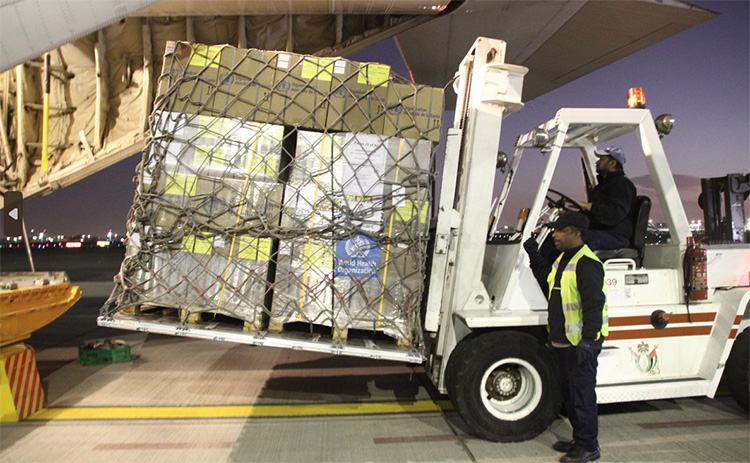
21 February, Dubai, United Arab Emirates – Amid a worsening health emergency, the World Health Organization (WHO) logistics hub in Dubai, in partnership with Dubai’s International Humanitarian City, will be delivering critical health supplies worth over US$ 1.7 million to the Gaza Strip.
In total, 80 metric tonnes of life-saving medicines, including insulin, are being delivered through a temporary air bridge between the United Arab Emirates and Egypt. Several air rotations are anticipated to deliver the supplies, which will support about 2 million people in the Gaza Strip.
“WHO’s logistics hub in Dubai provides a lifeline to countries affected by health emergencies across the WHO Eastern Mediterranean Region and beyond. As the health crisis in the Gaza Strip unfolds and as hostilities in Rafah escalate, these medicines are critical for people whose access to medical care has been severely restricted owing to shortages facing the health system as a whole,” said Dr Hanan Balkhy, WHO Regional Director for the Eastern Mediterranean.
“WHO is grateful for the support of Dubai’s International Humanitarian City, the Government of Dubai and the Government of the United Arab Emirates to deliver life-saving supplies to the world’s most vulnerable populations in their greatest time of need,” Dr Balkhy added.
Rafah’s population has increased five-fold to 1.5 million as it now houses half of Gaza’s displaced people. Still more families continue to arrive in Rafah as violence intensifies in the southern Gaza Strip.
“Since 2018, the logistics hub at Dubai’s IHC has been at the forefront of WHO’s humanitarian response, reaching over 100 million people with humanitarian health supplies. Our coordination for the response to the humanitarian emergency in Gaza began in October. Today, we continue to closely coordinate with WHO and all our partners to address the pressing needs for humanitarian health assistance in Gaza, with the ongoing airbridge and at least four additional airlifts,” Giuseppe Saba, CEO of Dubai’s International Humanitarian City said.
Through its logistics hub in Dubai, WHO has delivered enough medicines to reach over 1 million people in Gaza since October 2023. Yet the needs continue to grow, and the delivery of supplies continues to be impeded by denials of access for humanitarian aid.
WHO has persevered to deliver vital medical supplies and to support health services in Gaza, navigating complex logistical and security obstacles to do so. The needs, however, far exceed the aid, and the sustained delivery of health supplies from Egypt into the southern Gaza Strip is vital to WHO’s ongoing operations to address severe medicine shortages and to bolster an ailing health system.
WHO transfers critical patients out of Nasser Medical Complex, fears for safety of remaining patients
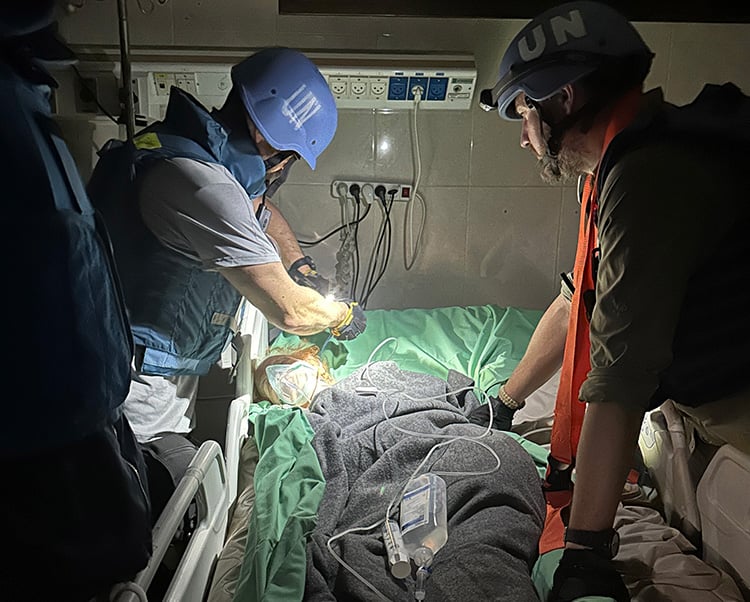
20 February 2024 – WHO led two life-saving missions to transfer 32 critical patients, including two children, from Nasser Medical Complex in southern Gaza on 18 and 19 February, amid ongoing hostilities and access restrictions. The high-risk missions were conducted in close partnership with the Palestine Red Crescent Society (PRCS) and the United Nations Office for the Coordination of Humanitarian Affairs (OCHA). The team also provided limited supplies of essential medicines and food for the remaining patients and staff who are otherwise cut off from aid.
Four PRCS ambulances ensured the safe transportation of the patients, who underwent medical assessment and triage under the coordination of the hospital director. Patients were moved to the European Gaza Hospital in Khan Younis, Al-Aqsa hospital in Gaza’s middle area, and the International Medical Corps, UAE and Indonesia field hospitals in Rafah.
The transfer of patients was requested by the hospital staff after the facility became non-functional following a military raid on 14 February, after a week-long siege. Weak and frail patients were transferred amidst active conflict near the aid convoy. Road conditions hindered the swift movement of ambulances, placing the health of patients at further risk. Patients transferred during the missions included three suffering from paralysis - two of them with tracheostomy - and several others with external fixators for severe orthopedic injuries. Two of the paralyzed patients required continuous manual ventilation throughout the journey, due to the lack of portable ventilators. A patient with a spinal fracture, previously referred to Nasser by WHO during a mission to Al-Ahli Hospital in northern Gaza, had to be transferred again despite his condition.
Nasser Hospital has no electricity or running water, and medical waste and garbage are creating a breeding ground for disease. WHO staff said the destruction around the hospital was ‘indescribable.’ The area was surrounded by burnt and destroyed buildings, heavy layers of debris, with no stretch of intact road.
An estimated 130 sick and injured patients and at least 15 doctors and nurses remain inside the hospital. As the ICU was no longer functioning, WHO staff transferred the only remaining ICU patient to a different part of the complex where other patients are receiving basic care.
WHO fears for the safety and well-being of the patients and health workers remaining in the hospital and warns that further disruption to lifesaving care for the sick and injured would lead to more deaths. Efforts to facilitate further patient referrals amidst the ongoing hostilities are in process.
Prior to the missions, WHO received two consecutive denials to access the hospital for medical assessment, causing delays in urgently needed patient referral. Reportedly, at least five patients died in the Intensive Care Unit before any missions or transfers were possible.
On 17 February, an UNRWA-led mission, which included WHO staff, delivered 24,000 liters of fuel and limited food and water supplies to the hospital, after not being able to reach it on 16 February due to unforgiving road conditions, including a deep, muddy, impassable ditch 50 meters from the hospital. That day, despite the risks, WHO staff, accompanied by an engineer, managed to reach Nasser Medical Complex on foot. However, they were only permitted to examine the generator, which had ceased functioning after running out of fuel. During both missions, senior WHO staff clearly identified themselves upon entering the hospital compound and requested approval to assess patients and evaluate hospital functionality. These requests were denied.
As the raid continues, any further damage to Nasser Medical Complex will mean even more delays in restoring functionality. The hospital’s large medical warehouse, along with supplies provided by WHO and partners, has burnt down, and the warehouse for day-to-day medical supplies is partly damaged. The WHO-supported limb reconstruction center, housed within the hospital, is no longer operational. These are tragic developments that will further limit access to health care in a context where needs continue to soar.
The dismantling and degradation of the Nasser Medical Complex is a massive blow to Gaza’s health system. Facilities in the south are already operating well beyond maximum capacity and are barely able to receive more patients.
WHO repeats its calls for the protection of patients, health workers, health infrastructure, and civilians. Hospitals must not be militarized, misused, or attacked.
WHO reiterates its calls for all parties to uphold international humanitarian law and the principles of precaution, distinction, and proportionality, and to ensure sustained access so hospitals can continue providing lifesaving care.
Photos: https://multimedia.who.int/asset-management/2AOJ8ZZYWFRL?WS=everydayWorkflow&Flat=y
UNIFEED b-roll: https://www.unmultimedia.org/tv/unifeed/asset/3175/3175146/