


Sélectionnez votre langue

 The WHO held a three-day regional workshop on new vaccine introduction prioritization and sequencing, in Cairo, Egypt, from 31 August to 2 September 2025. The workshop brought together representatives from 14 countries of the WHO Eastern Mediterranean Region to strengthen national capacity for making proactive, evidence-informed decisions on the timing, sequencing and optimization of new vaccine introductions.
The workshop was opened by Dr Benedetta Allegranzi, Director of the Department of Communicable Diseases at the Regional Office, who called for stronger collaboration across countries and partners, stressing that “working together is key to ensuring that every child and every person in the Region benefits from the life-saving power of vaccines.”
Over the three days, participants took part in technical presentations, poster walks, panel discussions and group exercises designed to enhance national decision-making on new vaccine introduction. The first day set the scene with an overview of regional immunization goals and priorities and provided updates from the Strategic Advisory Group of Experts (SAGE) on immunization, including guidance on priority diseases and recommended vaccines for the Region.
 Participants also engaged in a poster walk to share experiences from their countries and joined a panel discussion with partners on how immunization programmes are adapting to current global and regional health challenges.
The second day introduced the New Vaccine Introduction Prioritization and Sequencing Tool, with participants working in groups to apply its different phases – from defining criteria to collecting data and ranking vaccines – supported by examples of country experience.
The final day highlighted vaccine optimization practices and featured case studies from the Region and beyond, before concluding with the development of draft national action plans and discussions on next steps to support implementation at country level.
The recommendations and draft action plans developed during the workshop will serve as a foundation for participating countries to conduct their own vaccine prioritization and optimization exercises in the coming months. These country-led efforts will inform the development or revision of national immunization strategies, ensuring that new vaccines are introduced in ways that are timely, sustainable and adapted to national health priorities. The event also provided an opportunity for participants to expand their professional networks, exchange experiences and gain new perspectives from peers across the Region. The workshop outcomes will strengthen immunization systems across the Region and contribute to global efforts to expand equitable access to life-saving vaccines. This will be achieved by reinforcing the role of National Immunization Technical Advisory Groups (NITAGs), enhancing collaboration with ministries of health and partners, and promoting cross-country learning.
The success of the workshop was made possible through the contributions and support of WHO headquarters and partner organizations, including Development Catalyst, Gavi, the Vaccine Alliance, John Snow, Inc., the NITAG Support Hub, the Task Force for Global Health, and UNICEF.
 On 10 September 2025, the World Health Organization (WHO) Regional Office for the Eastern Mediterranean brought together an influential panel of more than 40 experts, health professionals ministry of health officials from Gaza and West Bank, and humanitarian organizations for a critical discussion on antimicrobial resistance (AMR) in the Gaza Strip.
Gaza faces a convergence of crises that fuel AMR. This includes overcrowding and disrupted health services, limited access to diagnostics and antibiotics, high infection rates and a fragile health system. This panel discussion highlighted the urgent need to address AMR amidst these complex challenges.
A recent comment in The Lancet revealed that nearly two thirds of bacterial isolates from Al-Ahli Arab Baptist Hospital (1 November 2023–31 August 2024) were resistant to multiple antibiotics. War injury and trauma-related wounds showed particularly high rates of resistance, underscoring the gravity of the challenges – poor hygiene and infection prevention and the non-availability of proper antibiotics. Panellists and experts stressed that the collapse of routine laboratory surveillance and diagnostic testing hampers antimicrobial stewardship efforts.
The crisis is compounded by the blockade restricting medical supplies. Delays and denials at border crossings have resulted in the expiration of vital diagnostic reagents and medicines, severely impacting patient care.
Panellists emphasized the urgent need for coordinated action to:
Lift restrictions on medical supplies to Gaza.
Restore laboratory infrastructure and standardize microbiology practices.
Update clinical guidelines to address complex conflict-related injuries.
Strengthen infection prevention and control measures.
The discussion closed with a call for an urgent ceasefire and open borders to enable humanitarian aid and the rebuilding of Gaza’s fragile health system. There is also a need to integrate AMR mitigation into humanitarian health programming. Without sustained global support and political commitment, the spread of multidrug resistant infections poses a grave threat not only to Gaza but to the wider region and beyond.
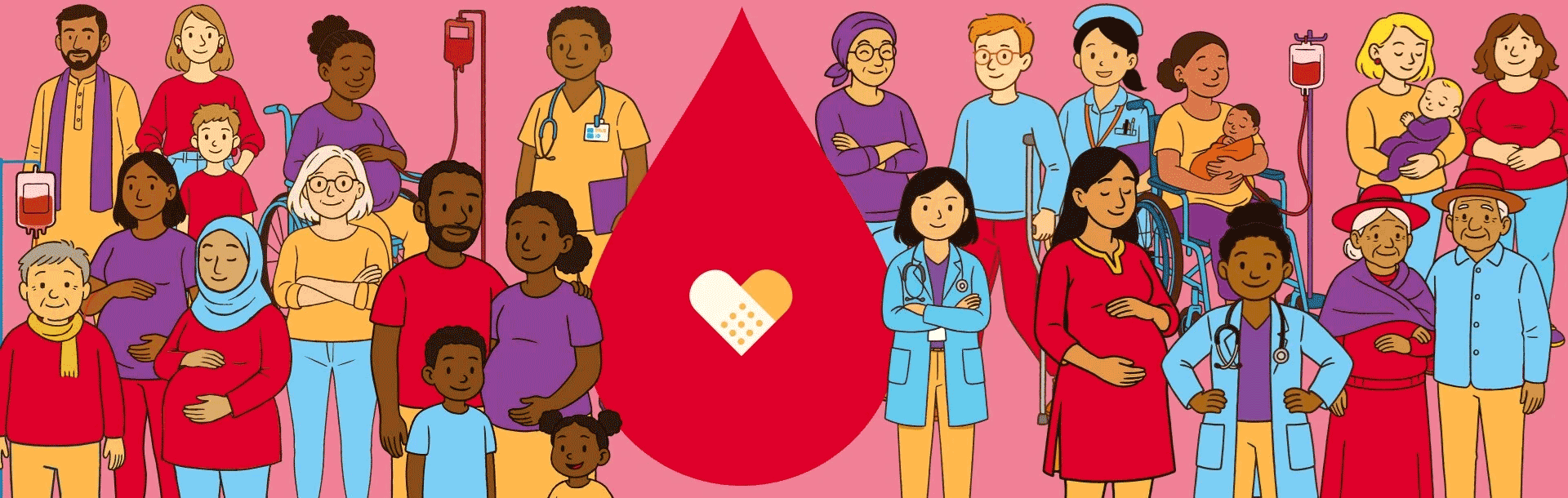
4 June 2025, Cairo, Egypt –World Blood Donor Day (WBDD), observed each year on 14 June, serves to raise awareness of the need for safe blood and blood products and to thank voluntary, unpaid blood donors for their lifesaving gifts of blood.
A blood service that gives patients access to safe blood and blood products in sufficient quantity is a key component of an effective health system. This year’s banner, Give blood, give hope – together we save lives, underscores the lifesaving impact of blood transfusion and how, by donating regularly, we can all play a part in building a healthier, more compassionate world.
In low-income countries, women of childbearing age and children under 5 are among the most frequent recipients of blood. Blood transfusions provide lifesaving support for women experiencing bleeding related to pregnancy and childbirth and for children suffering from severe anaemia due to malaria or malnutrition.
Access to safe blood remains a pressing concern in the World Health Organization (WHO) Eastern Mediterranean Region where many countries fall below the WHO recommended minimum of 10 blood donations per 1000 people per year. Each blood donation has the potential to save up to 3 lives. Despite some advances, voluntary non-remunerated donations often account for less than 50% of the blood supply.
In a Region facing complex challenges due to ongoing humanitarian emergencies, blood shortages can lead to life-threatening situations for vulnerable groups and victims of conflict or disaster.
“Voluntary blood donation can save lives and bring hope,” says WHO Regional Director for the Eastern Mediterranean Region Dr Hanan Balkhy. “We commend every blood donor whose selfless act of generosity brings hope to the lives they touch.”
Stringent safety protocols make the blood donation process safe for donors and recipients. By ensuring that hospitals have the blood they need for surgeries and emergencies, at all time, we ensure access to a lifesaving health product for those who need it, and cultivate a culture of community support.
To ensure that everyone who needs a transfusion has access to safe blood, countries rely on a pool of voluntary, unpaid donors who give blood regularly. A strong and sustainable blood donor programme, with broad, active participation from the community, is essential to meet the need for blood.
WHO calls on all stakeholders – individuals, communities, governments, partners and civil society – to work together to ensure that every patient who needs blood can receive it.
“We urge governments, partners and communities to invest in developing sustainable, regulated blood systems that enhance the collection of blood from voluntary, unpaid donors. To our youth – your donation can save lives. Together, we can give blood and, in doing so, give hope,” adds Dr Balkhy.
As part of the activities marking WBDD 2025, the Regional Office for the Eastern Mediterranean and the WHO Country Office in Egypt, in collaboration with Egypt’s National Blood Transfusion Service, are organizing a blood donation drive in the Regional Office where WHO staff can donate blood and contribute to this momentum.
Note to editors
For additional statistics and information, please refer to the WHO's website
