

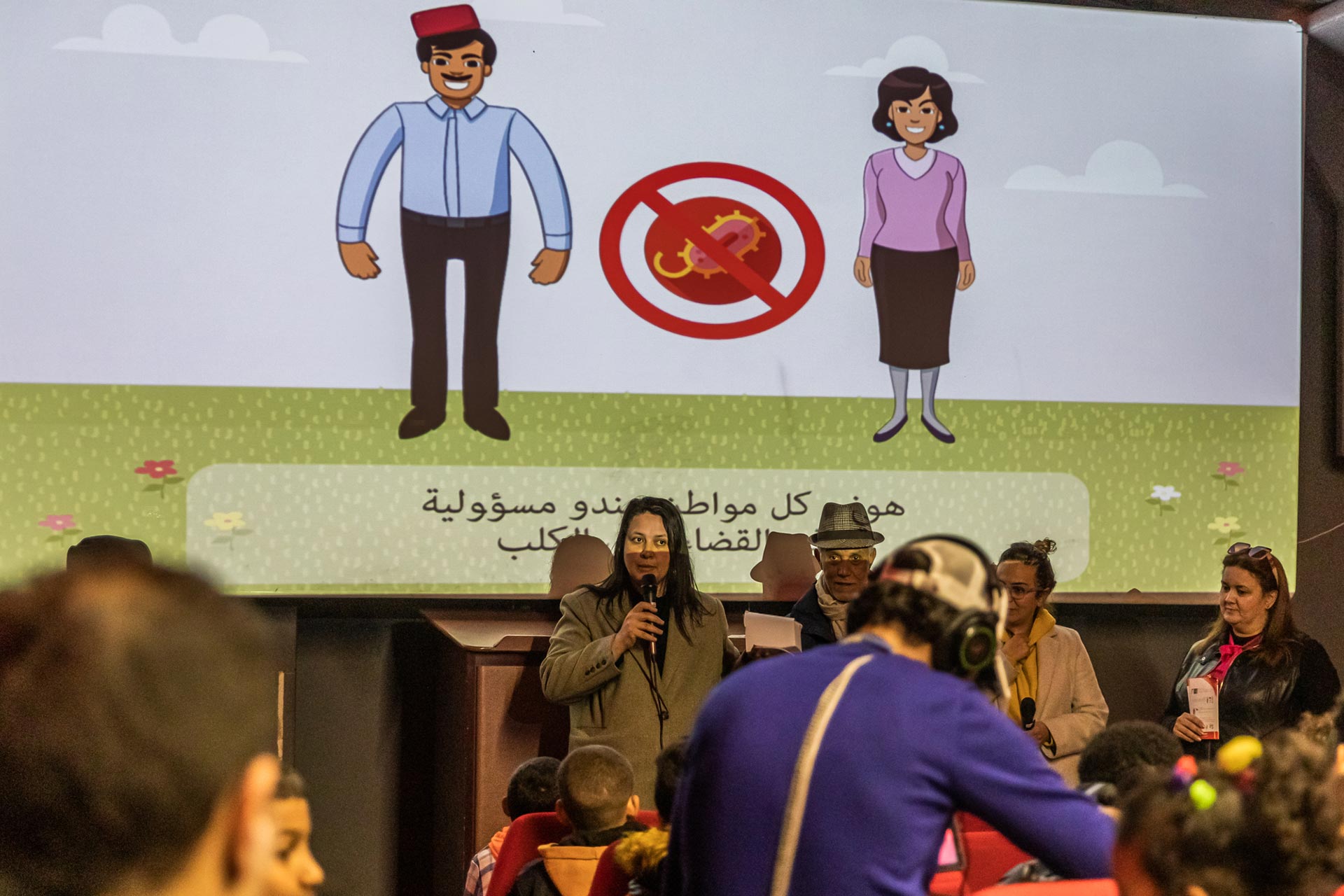
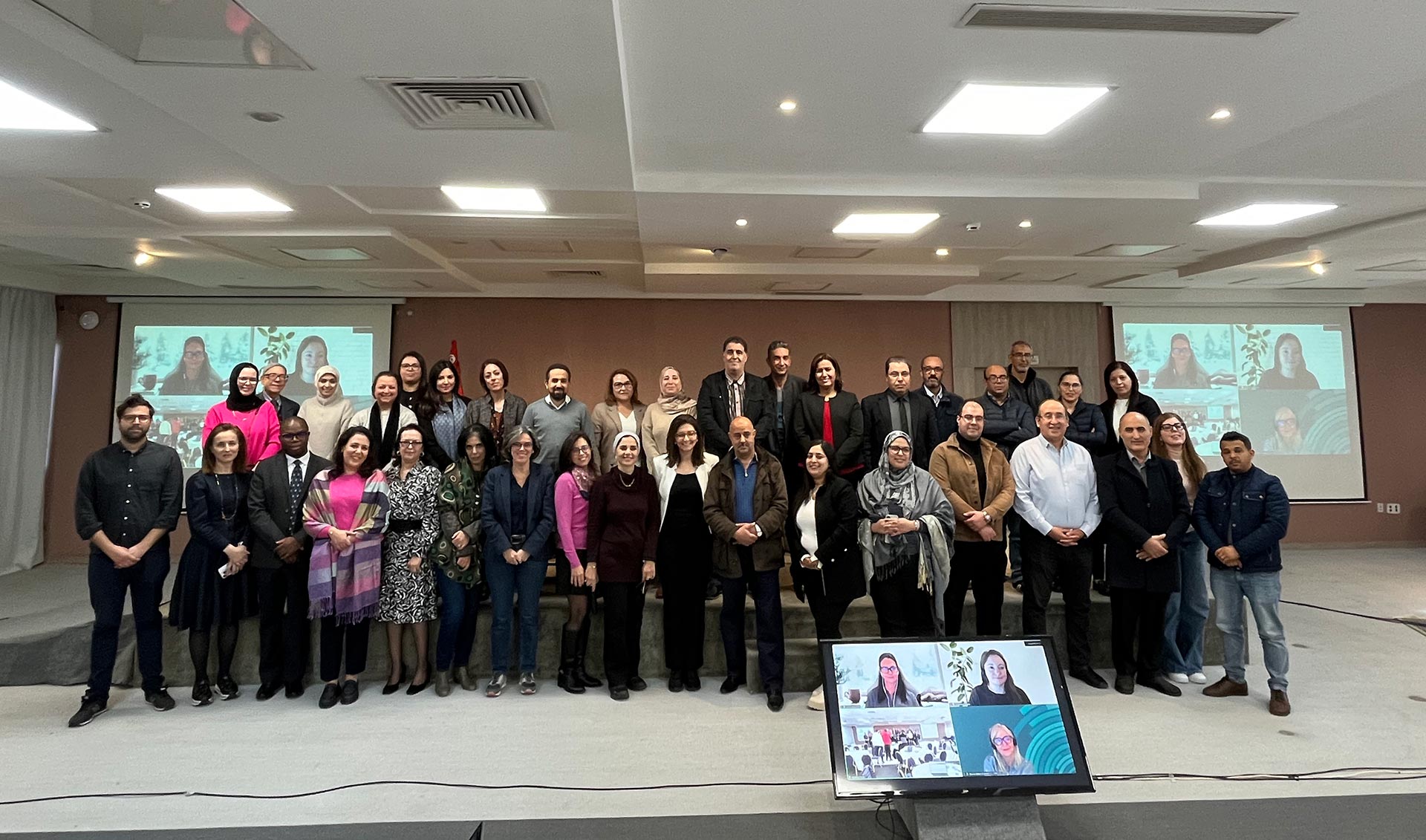
 Capacity-building in ICD-11 coding, December 2024
The 11th revision of the International Classification of Diseases (ICD-11) is an electronic tool that standardizes the language used by health professionals worldwide in diagnosing, reporting and monitoring diseases, injuries and causes of death.
Compared with the old version of the International Classification of Diseases that used manual and paper-based coding, the use of a digital tool, available on the WHO website, allows the integration of the multiple electronic tools used in the countries of the Eastern Mediterranean Region.
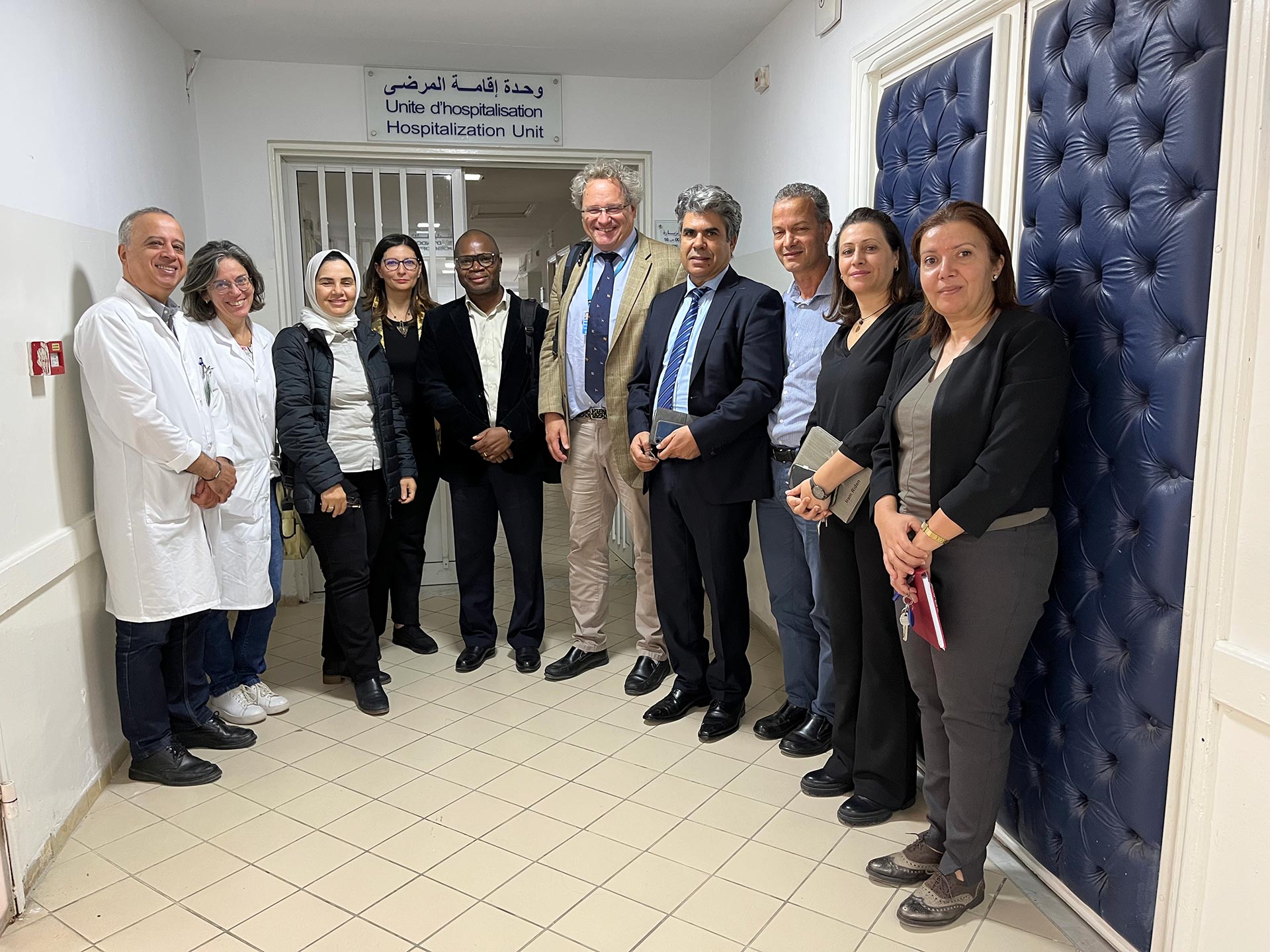 WHO mission conducting a site visit, November 2023
To support implementation in Tunisia, a transition and capacity-building plan was developed in 2023 to guide field implementation of ICD-11 for patient medical records in 2 public hospitals in the country.
The initiative had 3 major phases:
- Firstly, an in-country WHO mission lead by the regional WHO technical focal point was undertaken in November 2023 and a national transition plan was developed. The mission reviewed the system in use (ICD9) for patient medical records. This was followed by a national workshop to develop a transition plan and timeline for pilot implementation in the selected hospitals and to identify a list of actions.
- Secondly, virtual meetings were held during 2023–2024 between information technology (IT) teams from the National Center for Health Information, a WHO Collaborating Centre, in Kuwait and the Tunisian Ministry of Health to provide guidance on the technical steps required for adoption of the ICD-11 application programming interface (API) in hospitals. This phase was supported by the global WHO IT team.
- Thirdly, the Canadian Institute for Health Information, a French-speaking WHO Collaborating Centre in Canada, conducted French-language training on ICD-11 over 3 days in December 2024 for more than 40 participants on standards for ICD-11 registration of diagnosis and coding.
The collaboration with the WHO Collaborating Centres led to implementation of ICD-11 in the 2 public hospitals in Tunisia within 9–12 months.