


Select your language

A cross-sectional study of scorpion stings in high-risk areas of Islamic Republic of Iran
Esmail Amiri Ghannat Saman1,2, Hossein Dehghan1,2 and Ehsan Movahed1
1Department of Public Health, School of Health, Jiroft University of Medical Sciences, Jiroft, Islamic Republic of Iran (Correspondence to Hossein Dehghan:
Abstract
Background: Scorpion sting is one of the most serious health problems in Islamic Republic of Iran.
Aim: To investigate the epidemiology and clinical characteristics, as well as the knowledge, attitude and practices of health workers, physicians and residents regarding scorpion stings in the scorpion-prone southern areas of Kerman Province, Islamic Republic of Iran.
Methods: Using SPSS version 20, we analysed the 2021 annual epidemiological report of scorpion stings for the southern counties of Kerman Province, including the clinical features of scorpion sting patients.
Results: A total of 3106 scorpion stings were recorded in 2021, with an average incidence of 390.3 per 100 000. Most (37.5%) stings occurred during the summer months, among children less than 10 years old (22.2%), in rural areas (82.6%), and in the hands (42.3%) and feet (41.2%). Localized reactions included immediate pain and redness (52%), severe pain (8.7%), local burning pain (17.4%), swelling (4.3%) at the site of envenomation, and no reaction (17.6%). Knowledge of health workers and physicians about scorpion stings was generally weak. Health workers were significantly more knowledgeable about the biology of dangerous scorpions (P = 0.003) while physicians were more knowledgeable about black scorpion venom compounds (P = 0.01).
Conclusion: Efforts should be made to ensure safe housing designs and provide comprehensive education to health workers and community members to help reduce scorpion sting incidence and enhance the management of cases in the province.
Keywords: scorpion sting, scorpion venom, envenomation, health worker, physician, Iran
Citation: Saman IAG, Dehghan H, Movahed E. A cross-sectional study of scorpion stings in high-risk areas of Islamic Republic of Iran. East Mediterr Health J. 2026;32(2):77–85. https://doi.org/10.26719/2026.32.2.77. Received: 04/12/2024; Accepted: 08/04/2025
Copyright © Authors 2025; Licensee: World Health Organization. EMHJ is an open-access journal. This paper is available under the Creative Commons Attribution Non-Commercial ShareAlike 3.0 IGO licence (CC BY-NC-SA 3.0 IGO; https://creativecommons.org/licenses/by-nc-sa/3.0/igo).
Introduction
Scorpion stings are commonly reported in tropical and subtropical regions of the world. A national health data estimates the annual global incidence at about 1.5 million with 2600 deaths (1−3). Scorpion stings are the most important venomous bites in Islamic Republic of Iran, accounting for an average 50 000 cases and 20 deaths annually (4−8). Over 80% of these scorpion stings occur in the southern provinces of the country. The differences in morbidity and mortality rates due to scorpion stings worldwide can be attributed to factors such as climate, biodiversity, the presence of dangerous scorpions, lifestyle of residents, social and economic status, health care services, availability of medical facilities, as well as the knowledge, attitude and practices of residents, health care professionals and physicians in high-risk areas (4−7).
The special ecological and climatic characteristics of the southern provinces of Islamic Republic of Iran have contributed to the variety of scorpion species and suitability of habitats for scorpions (9−11). Marginalization, rural lifestyle and uncontrolled expansion of cities are also important factors to consider (7,9,11). The distribution of medically important scorpions in this region necessitates the study of scorpion stings (1,9,10).
This study examined the epidemiologic status, clinical characteristics and knowledge, attitude and practices of health care workers, physicians and residents about scorpion stings in the scorpion-prone southern areas of Kerman Province in Islamic Republic of Iran. It describes the clinical features of patients who had been stung by scorpions.
Methods
Study area
This study was conducted in the southern areas of Kerman Province, including Jiroft, Kahnooj, Anbarabad, Manujan, Roodbar, Faryab, and Ghaleh-Ganj counties, under the healthcare supervision of Jiroft University of Medical Sciences (JMU) (Figure 1). The area had a population of 795 812 in 2022 and the climate is cold and dry in the highlands, hot and humid in the plains, and hot and dry in the southern parts. The temperature in the highlands reaches a maximum of 33°C during summer and minimum of -15°C during winter (12). The JMU healthcare system reported 3106 scorpion sting cases in the area from March 2021 to 2022.
Study design
This community-based cross-sectional study was conducted from March to August 2022. It assessed the knowledge, attitude and practices of residents regarding scorpion stings, as well as the environmental and human factors contributing to the problem in 7 counties. The study population was selected using multi-stage sampling and random selection of health centres, health houses and households. In the first stage, the health centre of each county was visited. In the second stage, a list of comprehensive health centres was obtained. In the third stage, one rural comprehensive health centre and one urban comprehensive health centre were randomly selected. In the fourth stage, the number of health houses and health bases covered by each comprehensive health centre was collected and listed. In the final stage, a simple random sampling was conducted, selecting 2 health houses from each rural comprehensive health centre and 2 health bases from each urban comprehensive health centre until the desired sample size was reached. Ultimately, in the entire southern region of Kerman, 14 comprehensive health centres (rural and urban) and 28 health houses and health bases were randomly selected.
The sample size for residents was calculated as 384 using the sample size formula, 95% confidence, and P = 0.5. The sample size was divided proportionately between the populations of the studied counties. Accordingly, in Jiroft 132 (population: 273 337), Anbarabad 43 (population: 89 167), Manujan 36 (population: 75 372), Faryab 18 (population: 36 835), Roodbar 63 (population: 131 174), Kahnooj 50 (population: 103 225), and Ghaleh-Ganj 42 (population: 86 702) households were considered in the study.
For the health workers and physicians, the sample size was calculated to be 151, after health centres were selected and available sampling was considered in the 7 counties.
Data collection
Two questionnaires, one for the residents and the other for health workers and physicians, were developed and used for data collection through face-to-face interviews conducted by trained research assistants, under the supervision of the chief investigator. The questionnaires were designed and revised by 10 epidemiology, health education and medical entomology experts.
For the residents, the questionnaire was pretested in 7 villages and revised based on the feedback received. Its validity was 0.78% using Cronbach's Alpha coefficient. It contained 33 close-, open-, and semi-open-ended questions in 4 sections: demographic characteristics and residents' knowledge of scorpions (6 questions), assessment of scorpion exposure (18 questions), attitude after exposure to scorpion and scorpion stings (6 questions), and knowledge of initial actions in dealing with scorpion stings (3 questions). The inclusion criteria were: being a permanent member of the community, a head of the household, a resident in a rural area, attending a health centre in the covered area, and living in that area for at least 2 years. Individuals who could not communicate normally or were not willing to provide the requested information were excluded from the study.
For health workers and physicians, the questionnaire was pretested among 30 health workers and physicians and revised based on the feedback received. Its validity was found to be 0.78% using Cronbach's Alpha coefficient. It had 2 parts: knowledge (39 questions) and practice (6 questions). Questions in the first part collected information on the abundance of dangerous scorpions based on digging burrow and non-digging burrow types (2 questions), knowledge of the morphological features of extremely dangerous scorpions (black fat-tailed and gadim scorpions) (10 questions), knowledge of the morphology of extremely dangerous scorpions (5 questions), knowledge of the venom compounds of extremely dangerous scorpions (10 questions), knowledge of the symptoms of extremely dangerous scorpion stings (10 questions), and knowledge of the age group of those most exposed to scorpion stings (2 questions). The second part of the questionnaire (practice section) asked questions about recommendations for first aid after a scorpion sting (5 questions) and the ability to recognize dangerous scorpions (1 question).
The questionnaire used 3-point Likert scale (0 = disagree, 1 = neutral, 2 = agree). Scores for the age groups in which scorpion stings occurred more often ranged from 0 to 4 including 0–1, 1–3 and 3–4 indicating weak, moderate and strong knowledge, respectively. For other questions, the scores ranged from 0–10. A score of 0–4, 4–6 and 6–10 indicated weak, moderate and strong knowledge, respectively.
Clinical characteristics of patients
Using a checklist, clinical features and other characteristics of 48 patients who were stung by scorpions were recorded during hospitalization at a referral hospital in Jiroft County in August 2023. The checklist comprised 2 sections. The first section included demographic information of the patients, the location of the scorpion sting, the pre-hospital measures, the timing of medical assistance received, the time of the scorpion sting and the name of scorpion that caused the sting (if the patient or their companion could identify the scorpion using pictorial representations). The representations illustrated the discriminate characteristics of Hemiscorpious (local name: gadim), Androctonus (local name: haft-boog) and other common buthid scorpions (local name: yellow scorpions or zartook). The second section contained a comprehensive inventory of systemic clinical symptoms, local clinical symptoms resulting from scorpion stings and details of the administration of antivenoms and medications.
Statistical analysis
All analyses were conducted using SPSS version 20, Pearson correlation and chi-square test. The qualitative data were expressed as percentages.
Results
Epidemiologic characteristics
The Health Department of JMU reported 3106 cases of scorpion stings in 2021. Demographic analysis of the stings showed a higher frequency of scorpion stings among women than men, with a male to female ratio of 1.12. The ratio among the <10 years age group was 1.23 and in other age groups, more stings were reported among women. Most cases of scorpion stings were reported among children less than 10 years old (689 cases, 22.18%); in rural areas (95.5%) (rural:urban ratio 3.93); at night (87.5%) during spring and summer (January to October) or during the day in winter; and in the hands (1314 cases, 42.30%) and feet (1278 cases, 41.15%) (Figure 2). The lowest frequency was in the head and neck (151 cases, 4.46%). Faryab and Roodbar counties were the highest risk areas, with 1200 per 100 000 and 723 per 100 000, respectively (Figure 1).
Demographic characteristics and knowledge of residents
Of those interviewed, 243 households (72.1%) had under-5 children and most respondents worked in livestock or agriculture sectors. Thirty-one (8.1%) of the respondents had no knowledge of scorpion shelters. Most of them (83.6%) shook their clothes before wearing them, shook their shoes before use (86.2%), shook their beds before sleeping (96.1%), and left their shoes on the floor outside the door (63.5%).
Of the households, 36.7% experienced scorpion stings and most cases (64.0%) occurred indoors. Most of the respondents (60.4%) went to the hospital after exposure to scorpion sting and 31.2% applied traditional treatment (Table 1). Most of them (73.5%) were exposed to scorpions at home or observed scorpions indoors (55.0%). Most houses had no walls and were unsafe (74.8%) with no barrier to prevent scorpions from entering (78.3%).
Knowledge of health workers and physicians
Physicians were significantly more knowledgeable about black scorpion sting symptoms (P = 0.001) and black scorpion venom compounds (P = 0.01) than health workers (Table 2), but the health workers were significantly more knowledgeable about the biology of dangerous scorpions (P = 0.003) than physicians (Table 2). Respondents were knowledgeable about the age group most likely to be stung by a scorpion (physicians 68.8%, health workers 73.9%) but only few of them had adequate knowledge about the morphological characteristics of black fat-tailed (17.6% health workers, 12.5% physicians) and gadim scorpions (13.4% health workers, 31.3% physicians). Conversely, 41.2% of health workers and 56.3% of physicians knew the external characteristics of the gadim and black fat-tailed scorpions.
Their knowledge of the properties of scorpion venom (neurotoxic, cytotoxic and hemotoxic effects) was inadequate; only 3.4% of health workers and 3.1% of physicians knew. Health workers had inadequate knowledge of the symptoms of black fat-tailed scorpion stings (7.6%) (Table 2).
Physicians were significantly more knowledgeable than health workers about the management of scorpion stings (P < 0.001) (62.5% physicians, 39.5% health workers), and 15.6%of physicians and 50.4% of health workers knew the diagnosis of very dangerous scorpions stings (black fat-tailed and gadim scorpions) (Table 3).
Clinical and other characteristics of patients
A total of 48 patients participated in this study, male to female ratio 1:1.03. Most of the patients (33.3%) were less than 10 years old and had gone to the hospital without any pre-hospital measures, although 2 cases used a constricting band above the sting site to limit the venous flow. The time between scorpion sting and receiving medical care (patient delay) varied: 55% < 1 hour, 40.1% 1–3 hours and 5.0% <3 hours. Some patients or their companions were able to identify the scorpion that stung them: Hemiscorpious (gadim scorpion) 23.0%, Androctonus (black scorpion) 30.7% and other buthid scorpion 46.3%.
Localised reactions included immediate pain and redness (52.0%), severe pain (8.7%), local burning pain (17.4%), swelling (4.3%) at the site of envenomation, and no reaction. Stings were mainly at the upper extremities (37.5%) and lower limbs (33.3%) with some in the trunk (16.7%) or head/neck (12.5%). The systemic symptoms included fever, lethargy, abdominal pain, chills, xerostomia and thirst, malaise, nausea, drowsiness, tachycardia, insomnia, xerostomia, headache, dyspnoea, dizziness, stress, chest pain, fatigue, sweating, vomiting, muscle weakness, swelling orthostatic hypotension, agitation, and anaesthesia. Local symptoms included burning, pain or painlessness at the bite site, local necrosis, tenderness, erythema, oedema, warmth, tingling in the limbs, bruises on the body, and severe diffuse pain.
Antivenom, chloramphenicol and hydrocortisone had been suggested as the first-line drugs for the management of severe scorpion envenomation, however, some cases (29.2%) were treated with only antivenom. Twenty percent of cases were managed with hydrocortisone without antivenom to reduce the pain, swelling, itching, and redness that occurred at the sting site.
Discussion
Faryab, Roodbar, Manujan, and Kahnooj counties had >500 scorpion sting cases per 100 000 population, indicating the need for urgent actions especially during the warm seasons. Children aged ˂10 years were at high-risk and children generally had the highest mortality rate.
Epidemiologic data showed that most scorpion sting cases were reported during summer, similar to other studies in Islamic Republic of Iran (13–15). Temperatures in the study areas reach 50°C during summer and non-digging scorpions, especially Hemiscorpius acanthocercus, Androctonus crassicauda and Mesobuthus spp., most frequently enter houses (11,14,16), resulting in increased contact with residents (13).
Most scorpion stings (82.6%) occurred in rural areas, similar to reports from Islamic Republic of Iran and other countries (2,11,17). The ecological conditions make rural areas appropriate habitats for scorpions. Resting and sleeping on the ground, walking barefooted outside the house, putting on clothing, and laying beddings on the floor can increase scorpion stings in rural areas (13).
Although the knowledge of respondents about scorpion shelters and sting symptoms was high, the findings indicate the need for awareness and education among the study population. For example, there were debris, tree trunks and other scorpion habitats in 64% of residents' homes, houses were unsafe in terms of scorpion entry because of seams around the walls and doors in 78% of homes, and the custom of putting shoes outside the doors provide appropriate shelter for scorpions.
This study revealed that residents prioritised referral to the hospital (60.4%) and application of cold compress (12.8%) after a scorpion sting. Albuquerque et al reported low awareness among indigenous people of Pernambuco, Mexico, about appropriate first aid after a scorpion sting; 35.3% of sting cases did not seek medical care (1). Knowledge by high-risk individuals of the early symptoms of scorpion sting, especially stings by Hemiscorpius spp. and quick referral to a medical centre for antidote after exposure could be helpful in the management of sting cases. If residents lack knowledge of dangerous scorpions, such as the gadim scorpion, they may not seek medical service for scorpion sting cases.
Understanding by physicians of dangerous scorpions could play a crucial role in effectively treating scorpion sting cases (18–20). Jaberhashmi et al investigated the understanding of health workers and rural residents of Hormozgan Province, south Islamic Republic of Iran and found that participants had sufficient knowledge about scorpion stings, with most of the residents obtaining their information from health workers (21). In our study, knowledge of health workers and physicians about the morphology, biology and other characteristics of dangerous scorpions was inadequate. Hemiscorpius acanthocercus, with the local name of gadim/almas/almasak, is a dangerous and deadly scorpion found in southern areas of Islamic Republic of Iran (4,11,22). Scorpions of this species are non-diggers with thin bodies and can easily enter human buildings. The delicate and small shape of the stinger and the low neurotoxic effects of the venom cause only mild pain and make people to delay referral to medical centres. Because of the painless and cytotoxic effect of the venom, the possibility of death is very high, particularly among children with serious clinical symptoms such as haemoglobinuria, proteinuria, haematuria, haemolysis of blood cells and increased creatinine excretion (4,22–26).
Because of the biodiversity, wide distribution and medical significance of Hemiscorpius in southern Iran, it is essential to understand the species diversity, geographical distributions and differences in venom compounds among the species of this genus. This knowledge is vital for implementing effective medical response to envenomation caused by these scorpions (28).
Conclusion
Preventive measures are needed to minimise cases and mortality due to scorpion stings in southern areas of Islamic Republic of Iran. In this regard, negotiating and consulting with regional officials to identify solutions and design comprehensive educational programmes could be helpful. Training should be provided to physicians, nurses, pre-hospital emergency personnel, and health workers on the subject matter. Previous studies in southeastern Islamic Republic of Iran have shown that 64% of scorpion stings occurred inside the homes, and that most rural buildings (78.3%) in rural areas had no walls or favourable fencing to prevent the entry of scorpions (11,27). This calls for actions by municipalities to reduce scorpion exposure inside houses by monitoring the construction of houses and ensuring that they are made with standard materials and design. Municipalities could also reduce people's exposure to scorpions by asphalting the alleys and streets in rural areas, destroying possible scorpion shelters within human habitation and building safe playgrounds for children. Non-government organizations can help improve housing by providing financial support to residents in high-risk areas. As the occupation of rural residents is mainly agriculture, agricultural organizations can educate farmers on ways to prevent scorpion stings. During summer, due to power outages and the inability to cool their homes, people in rural areas often rest outside their homes at night, and this could increase their contact with scorpions. Permanent electricity supply, especially in rural areas, could help reduce the need to rest outside and in turn the incidence of scorpion stings.
Funding: This research was funded by Jiroft University of Medical Sciences, approval ID: IR.JMU.REC.1399.020.
Conflict of interest: None declared.
Étude transversale des piqûres de scorpions dans les zones à haut risque de la République islamique d’Iran
Résumé
Contexte : Les piqûres de scorpion comptent parmi les problèmes de santé les plus graves en République islamique d’Iran.
Objectif : Étudier les caractéristiques épidémiologiques et cliniques ainsi que les connaissances, les attitudes et les pratiques des agents de santé, des médecins et des résidents concernant les piqûres de scorpions dans les zones méridionales affectées par des scorpions de la province de Kerman (République islamique d’Iran).
Méthodes : À l’aide de la version 20 du logiciel SPSS, nous avons analysé le rapport épidémiologique annuel 2021 des piqûres de scorpion dans les comtés méridionaux de la province de Kerman, incluant les caractéristiques cliniques des patients ayant été piqués par des scorpions.
Résultats : Au total, 3106 piqûres de scorpions ont été enregistrées en 2021, avec une incidence moyenne de 390,3 pour 100 000 habitants. La plupart des piqûres (37,5 %) se sont produites pendant les mois d’été, chez des enfants de moins de 10 ans (22,2 %), dans des zones rurales (82,6 %) ; les parties touchées étaient les mains (42,3 %) et les pieds (41,2 %). Les réactions localisées comprenaient une douleur immédiate et une rougeur (52 %), une douleur sévère (8,7 %), une douleur localisée avec brûlure (17,4 %), un œdème (4,3 %) au site de l’envenimation et l’absence de réaction (17,6 %). Les connaissances des agents de santé et des médecins sur les piqûres de scorpions étaient généralement faibles. Les connaissances des agents de santé sur la biologie des scorpions dangereux (p = 0,003) étaient meilleures tandis que les médecins avaient davantage d’informations sur les composés du venin de scorpion noir (p = 0,01).
Conclusion : Des efforts devraient être déployés pour concevoir des logements sûrs et fournir une éducation complète aux agents de santé et aux membres de la communauté afin de contribuer à réduire l’incidence des piqûres de scorpions et d’améliorer la prise en charge des cas dans la province.
دراسة مقطعية للسعات العقارب في المناطق الشديدة الخطورة في جمهورية إيران الإسلامية
إسماعيل أميري غنات سامان، حسين دهقان، إحسان موحد
الخلاصة
الخلفية: تُعد لسعات العقارب واحدة من أخطر المشكلات الصحية في جمهورية إيران الإسلامية.
الأهداف: هدفت هذه الدراسة الى استقصاء الخصائص الوبائية والسريرية، فضلًا عن معلومات العاملين الصحيين والأطباء والمقيمين ومواقفهم وممارساتهم بشأن لسعات العقارب في المناطق الجنوبية المعرَّضة للعقارب في مقاطعة كرمان، جمهورية إيران الإسلامية.
طرق البحث: أجرينا تحليلًا للتقرير الوبائي السنوي لعام 2021 عن لسعات العقارب في المناطق الجنوبية من مقاطعة كرمان، بما يشمل الخصائص السريرية للمرضى الذين تعرَّضوا للسعات العقارب، وذلك باستخدام الإصدار 20 من برمجية SPSS.
النتائج: سُجِّل ما مجموعه 3106 لسعة عقارب في عام 2021، بمتوسط معدل حدوث قدره 390.3 لكل 100000. وحدثت معظم اللسعات (37.5%) خلال أشهر الصيف، في أوساط الأطفال الذين تقل أعمارهم عن 10 سنوات (22.2%)، وفي المناطق الريفية (82.6%)، وفي اليدين (42.3%) والقدمين (41.2%). وشملت التفاعلات الموضعية الألم والاحمرار الفوريين (52%)، والألم الشديد (8.7%)، والألم الحارق الموضعي (17.4%)، والتورُّم (4.3%) في موضع التَّأثُّر بزُعاف الحشرات، وعدم حدوث أي تفاعل (17.6%). وكانت معلومات العاملين الصحيين والأطباء عن لسعات العقارب ضعيفة بوجه عام. وكان العاملون الصحيون أكثر دراية إلى حد كبير ببيولوجيا العقارب الخطرة (القيمة الاحتمالية = 0.003)، في حين كان الأطباء أكثر دراية بمركبات سم العقرب الأسود (القيمة الاحتمالية = 0.01).
الاستنتاجات: ينبغي بذل جهود لضمان وضع تصاميم سكنية مأمونة وتوفير التعليم الشامل للعاملين الصحيين وأفراد المجتمع المحلي للمساعدة في الحد من حالات لسع العقارب وتعزيز علاج الحالات التي تحدث في المقاطعة.
References
- Albuquerque CMRd, Barbosa MO, Iannuzzi L. Tityus stigmurus (Thorell, 1876)(Scorpiones; Buthidae): response to chemical control and understanding of scorpionism among the population. Rev Soc Bras Med Trop. 2009;42:255–259. https://doi.org/10.1590/S0037-86822009000300004.
- Dehghani R, Arani MG. Scorpion sting prevention and treatment in ancient Iran. J Tradit Complement Med. 2015;5(2):75–80. https://doi.org/10.1016/j.jtcme.2014.11.007.
- Chippaux JP. Emerging options for the management of scorpion stings. Drug Des Devel Ther. 2012;6:165–173. https://doi.org/10.2147/DDDT.S24754.
- Dehghani R, Kamiabi F, Mohammadi M. Scorpionism by Hemiscorpius spp. in Iran: a review. J Venom Anim Toxins incl Trop Dis. 2018;24. https://doi.org/10.1186/s40409-018-0145-z.
- Shahbazzadeh D, Amirkhani A, Djadid ND, Bigdeli S, Akbari A, Ahari H, et al. Epidemiological and clinical survey of scorpionism in Khuzestan province, Iran (2003). Toxicon. 2009;53(4):454–459. https://doi.org/10.1016/j.toxicon.2009.01.002.
- Bosnak M, Ece A, Yolbas I, Bosnak V, Kaplan M, Gurkan F. Scorpion sting envenomation in children in southeast Turkey. Wilderness Environ Med. 2009;20(2):118–124. https://doi.org/10.1580/07-WEME-OR-098RR3.1.
- 7. Dehghani R, Fathi B. Scorpion sting in Iran: a review. Toxicon. 2012;60(5):919–933. https://doi.org/10.1016/j.toxicon.2012.06.002.
- 8. Bavani MM, Rafinejad J, Hanafi-Bojd AA, Oshaghi MA, Navidpour S, Dabiri F, et al. Spatial distribution of medically important scorpions in north west of Iran. J Arthropod Borne Dis. 2017;11(3):371-382. https://pmc.ncbi.nlm.nih.gov/articles/PMC5758633/.
- Motevalli Haghi F, Dehghani R. A review of scorpions reported in Iran. J Mazandaran Univ Med Sci. 2017;10;27(151):213–226. https://pubmed.ncbi.nlm.nih.gov/30918902/.
- Hanafi-Bojd AA, Sharififard M, Jahanifard E, Navidpour S, Vazirianzadeh B. Presence probability of Hemiscorpius lepturus Peters, 1861 using maximum entropy approach in the western areas of Zagros Mountains, Iran. Vet World 2020;13(2):296. https://doi.org/10.14202/vetworld.2020.296-303.
- Amiri Qanat Saman I, Dehghan H, Rahimi T, Shahi M, Ahmadzadeh S, Nasiri N, et al. Knowledge, attitude and practice of residents in southeastern Iran regarding scorpion stings (Persian). Qom Univ Med Sci J. 2022;16(1):66–81 https://journal.muq.ac.ir/browse.php?a_id=3290&sid=1&slc_lang=en&html=1.
- Akbari H, Mesbahzadeh T, Zehtabian G. Prediction of climate change in arid and semi-arid regions of the western basin of Jazmourian Wetland. Environ Res. 2021;11(3):27–43. https://magazine.hormozgan.ac.ir/article-1-620-en.html.
- Shahi M, Habibi-Masour R, Salehi M, Ghasemi-Nang M, Rafizad E, Abbasi M, et al. Scorpions and scorpionism in Roudan County, southern Iran. J Arthropod Borne Dis. 2019;13(4):353–361. https://pmc.ncbi.nlm.nih.gov/articles/PMC7188763/.
- Rafizadeh S, Rafinejad J, Rassi Y. Epidemiology of scorpionism in Iran during 2009. J Arthropod Borne Dis. 2013;7(1):66-70. https://pmc.ncbi.nlm.nih.gov/articles/PMC3684498/.
- Kassiri H, Mahijan NM, Hasanvand Z, Shemshad M, Shemshad K. Epidemiological survey on scorpion sting envenomation in South-West, Iran. Zahedan J Res Med Sci. 2012;14(8). https://repository.brieflands.com/items/c2701bc2-69ac-46a2-ae75-3eb85bc485b8.
- Salari M, Sampour M. First two records of Hemiscorpius species (Scorpiones: Hemiscorpiidae) from Kerman province, southeast of Iran. J Appl Sci. 2017;5(1). https://www.ajouronline.com/index.php/AJAS/article/view/4220.
- Jahan S, Al Saigul AM, Hamed SAR. Scorpion stings in Qassim, Saudi Arabia A 5-year surveillance report. Toxicon. 2007;50(2):302-305. https://doi.org/ 10.1016/j.toxicon.2007;03.013.
- Kutty C. Ethnomedicinal plants used for treating scorpion sting and snake bite poison by the tribes of Rahatgaon, Harda. Inter J Ethnobiol Ethnomed. 2015;1(1):1-2. https://citeseerx.ist.psu.edu/document?repid=rep1&type=pdf&doi=f9a76f30386e18b46aa9b43da300534dc67c2ef3.
- Jalali A, Pipelzadeh MH, Sayedian R, Rowan EG. A review of epidemiological, clinical and in vitro physiological studies of envenomation by the scorpion Hemiscorpius lepturus (Hemiscorpiidae) in Iran. Toxicon. 2010;55 (2-3): 173-179. https://doi.org/10.1016/j.toxicon.2009.09.012
- Zare Mirakabadi A. Hemiscorpius lepturus envenomation: manifestations and management with specific antivenom. Archives of Razi Institute. 2013;68(2):91-99. https://archrazi.areeo.ac.ir/article_103916.html.
- Jaberhashemi SA, Amiri Z, Norouzi M, Shahi M. Epidemiological factors and indicators related to venomous bites and stings in high-risk areas of southern Iran. J Prev Med. 2023;10(1):36-47. http://jpm.hums.ac.ir/article-1-639-en.html.
- Shahi M, Rafinejad J, Az-Khosravi L, Moosavy SH. First report of death due to Hemiscorpius acanthocercus envenomation in Iran: Case report. Electron Physician 2015;7(5):1234–1238. https://doi.org/10.14661/1234.
- Moosavy SH, Shahi M, Rafinejad J, Zare S, Madani A, Navidpour S. Epidemiological aspect of scorpion sting in Bandar Abbas, Iran, during 2009–2011. Electron Physician 2016;8(4):2286. https://doi.org/:10.19082/2286.
- Dehghani R., Ghorbani A, Varzandeh M, Karami-Robati F. Toxicity mechanism of dangerous scorpion stings in Iran. Journal of arthropod-borne diseases, 2023;17(2):105-119. https://doi.org/10.18502/jad.v17i2.13616.
- Firoozfar F, Saghafipour A, Jesri N. Scorpions and their human mortality report in Iran: a review article. Iranian J Pub Health 2019;48(12):2140. https://pmc.ncbi.nlm.nih.gov/articles/PMC6974856/.
- Adeli-Sardou M, Shahi M, Dehghan H, Ahmadyousefi-Sarhadi M, Falah G, Barahoei H. Geographical distribution of scorpions (Arachnida: Scorpiones) in southern regions of Kerman Province, Iran. Biol Bull Russ Acad Sci. 2024;51:644–654. https://doi.org/10.1134.
- Dehghan H, Bahonar A, Heydari S, Faryabi R, Ghorshi Nasab FS, Rezabeigi-Davarani E, Daneshi S. Epidemiological investigation and sensitivity of surveillance system in the report of scorpion stings in the southeast of Iran using the network scale-up method. Open Public Health J. 2023;16(1). http://dx.doi.org/10.2174/18749445-v16-230621-2022-146.
- Saman EA, Barahoei H, Dehghan H, Oshaghi MA, Rafinejad J, Azarm A, Prendini L. A New species of the medically important scorpion genus, Hemiscorpius Peters, 1861 (Hemiscorpiidae), from southern Iran. Diversity 2025;17(5):321.
Courses and trainings
WHO Academy malaria elimination course in Arabic
WHO Academy malaria elimination course in English
Malaria case management training
The WHO Eastern Mediterranean regional training course on malaria case management for resource persons and focal points comprises eight sessions. The course was conducted virtually in 2020 by the WHO Regional Office for the Eastern Mediterranean in collaboration with the Global Malaria Programme at WHO headquarters.
The objective of the training was to give participants the skills and competence to understand the basis of malaria diagnosis and treatment, and to plan and implement malaria case management services and understand antimalarial treatment policy formulation, using the WHO malaria treatment guidelines and case management training manuals.
Regional online training of trainers on vector surveillance and control
The regional online training of trainers on vector surveillance and control was organized by WHO in collaboration with Singapore’s National Environment Agency. The training was conducted virtually in 2021 to strengthen vector surveillance and control capacities in the Eastern Mediterranean Region during the COVID-19 emergency.
The training covers the surveillance of the major disease vectors that transmit dengue, chikungunya, malaria and leishmaniasis. It focuses on the methodology of collection of the disease vectors for monitoring, including novel tools for vector surveillance and the current WHO-recommended vector control interventions. The training also looks at the important issue of the invasive Anopheles stephensi in the Horn of Africa.
The Malaria and Vector-borne and Tropical Diseases Unit (MVC) helped develop this diploma course to strengthen capacity on vector surveillance and control of vector-borne diseases in the Eastern Mediterranean Region. The MVC unit worked with the Department of Vector Biology and Control of Diseases at the School of Public Health, Tehran University of Medical Sciences, to develop the course.
The diploma programme is designed to provide up-to-date and fundamental skills in the core areas of vector biology and control. The in-person course, which runs even September, comprises 10 modules and a field internship.
WHO calls for urgent support to rebuild Syria’s health system
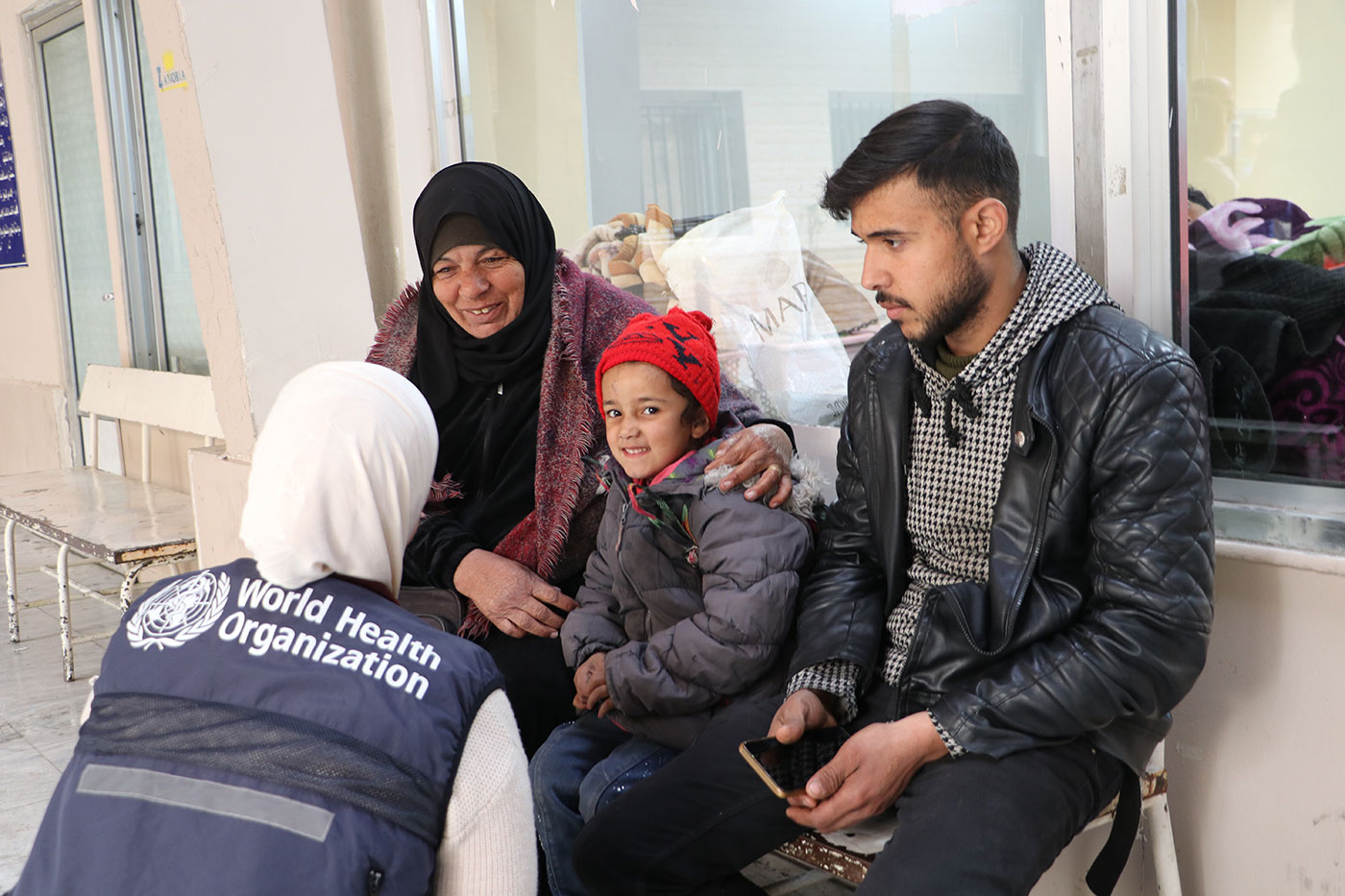 17 March 2025, Damascus, Syrian Arab Republic – On the 14th anniversary of the start of the Syrian conflict, WHO is calling for predictable, multi-year funding to sustain critical humanitarian health services and enable a stable transition towards recovery and national unity.
Continued instability threatens essential health care delivery at a time when nearly 15.8 million people require urgent health assistance. Only 57% of Syria’s hospitals, and just 37% of primary health care centres, are fully operational. Shortages of medical supplies, outdated equipment and damaged infrastructure continue to strain services. Many hospitals operate at minimal capacity or close due to funding shortfalls.. Across northwest and northeast Syria, 246 health facilities are at risk of imminent closure due to lack of funds.
Three out of four people in Syria rely on humanitarian aid and require urgent development assistance. Malnutrition rates have tripled in the past 4 years, placing Syria among the world’s top 10 hunger-affected countries.
“Keeping humanitarian health services running is essential as Syria moves towards recovery. Any break in humanitarian aid could deepen vulnerabilities and leave more people without care,” says Acting WHO Representative in Syria Christina Bethke.
“The transition presents an opportunity to rebuild, but it must be managed carefully. WHO remains committed to supporting Syria, working closely with the Ministry of Health and health partners.”
With up to 70% of Syria’s health workforce having left the country, WHO stresses that rebuilding healthcare capacity is essential. “Investing in medical training, upskilling, and education programmes is critical to restoring the workforce and ensuring sustainable health services,” Bethke added.
To sustain essential health services, strengthen emergency response, enhance disease surveillance and rebuild a resilient health system, WHO requires US$ 141.5 million in 2025, including a US$ 56.4 million emergency flash appeal. With an 81% funding gap, urgent support is needed to prevent further deterioration.
On 17 March, the Ninth Brussels Conference on Syria will convene to mobilize global support and resources for the country’s transition. Ahead of the conference, WHO calls for a well-managed shift from humanitarian aid to long-term recovery, greater investment in rebuilding Syria’s health workforce and predictable, multi-year funding to ensure continuity of care and stability.
Media contacts:
For WHO:
In Damascus, Syria: Halah Kabash,
In Gaziantep, Türkiye: Mrinalini Santhanam,
Information resources Article Count: 26
Afghanistan-news Article Count: 326
Afghanistan-events Article Count: 29
Afghanistan-infocus Article Count: 56
Donors Article Count: 1
Links Article Count: 1
WHO representative Article Count: 2
Programmes - Afghanistan Article Count: 29
WHO presence Article Count: 8
Photo essays Article Count: 13
Front page Article Count: 1
