

Sélectionnez votre langue
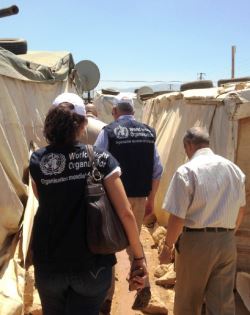 The WHO Regional Office for the Eastern Mediterranean is organizing public health emergency pre-deployment training course in Tunisia, in collaboration with the US Centers for Disease Control and Prevention, Atlanta, Humanitarian U in Canada and Le Sagasse University in Lebanon, from 1 to 7 December 2015.
The course is designed to prepare WHO country staff and Ministry of Health personnel to work effectively and safely in defined incident command systems in emergency and crisis situations, including epidemic and other disease outbreaks. The pre-deployment training will support government and UN cluster systems to implement humanitarian assistance in the case of a large-scale emergency, as well as comply with administrative, financial, human resources and reporting systems and standard operating procedures governing WHO health activities in crises.
Programme
The training programme will include 5 days of classroom instruction and simulation exercise. Study will proceed progressively with major themes, from risk assessment and preparedness on Day 1, responding to a sudden onset event on Day 2, administration and management on Day 3, responding to a chronic event on Day 4, and stabilization/recovery on Day 5.
Methods and materials
The course will include core materials needed for any hazard event. Examples, case studies and simulations will be modified to highlight the most common events for participants. This will include infectious disease outbreaks, radiological and chemical events, foodborne outbreaks, mass gatherings, natural disasters, and complex emergencies.
Assessment and accreditation
Certificates of attendance will be provided to participants based on full participation during all sessions, including completion of exercises. Successful candidates will be entered into a roster for possible mobilization in future emergency events.
Course costs
The costs of course will be fully covered by WHO.
Selection of applicants
Essential
- You are a public health professional in the area of national or international emergency response/ outbreak preparedness, alert and response
- You have or may be required to have coordination, operational or management responsibilities/duties in your current occupation
- You seek skills and knowledge as a generalist in responding to emergencies and outbreaks
- You are fluent in written and spoken English.
Desirable
- You have knowledge, understanding and experience in the field of disease prevention and control
- You have experience of field response in emergency or outbreak situations in humanitarian emergencies.
Please send completed application to:
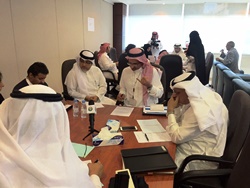 High-level officials from the Ministry of Health of Saudi Arabia participated in a risk communication workshop from 4 to 6 August 2015. The training workshop was jointly organized by the WHO Regional Office for the Eastern Mediterranean and the Global Center for Mass Gathering Medicine (GCMGM), at the request of the Ministry of Health. Participants included delegates from the Ministry of Health, GCMGM, as well as from the MERS coronavirus command control centre.
Dr Hamad Al Duweila, Vice Minister for Health Affairs complimented the workshop, "We want to build on the cooperation from here onward after this very successful workshop on emergency risk communication. It takes the effort of all actors to respond effectively in public health events."
The purpose of the workshop was to equip public health policy-makers and other decision-makers with skills for communicating risk among the population, as well as keeping media informed, during mass gatherings. Risk communication priorities and principles were examined thoroughly. The workshop provided an opportunity for key stakeholders to arrive at a common understanding of risk communication and how to coordinate their efforts to bring about better public health outcomes during a puublic health emergency or outbreak.
The workshop was tailored for the senior management of Saudi Arabia's Ministry of Health. Among the participants were Dr Abdulaziz bin Saeed, Deputy Minister Public Health; Dr Hail Mater Al Alabdely, Director General of Health Facilities; Dr Rafat Hakeem, Director General Infectious Disease Control; Dr Mostafa Jamil Baljoon, General Directorate of Health Affairs in Makkah Region; Dr Abdul Hafiz Maaroof Turkistani, Assistant Director General of Health Affairs for Public Health, Makkah region; Dr Khalid Al Marghalani, the Advisor to the Minister and Supervisor General of Public Relations; and Dr Tariq bin Salem Al-‘Arnous, Director-General of Health Emergency.
Highly energetic and interactive discussion sessions took place to address how to mitigate public health threats. Table-top exercises, using real-life examples, were conducted to anchor all learning throughout the three-day workshop.
Communications is one of the core capacities in the public health response under the International Health Regulations (IHR). Risk communications at best brings better health outcomes in the event of a public health emergency of international concern.
The Global Centre for Mass Gatherings Medicine, a WHO collaborating centre, is hosting an international conference on mass gatherings medicine from 20 to 23 September 2013 in Riyadh, Saudi Arabia.
Mass gatherings, such as hajj and umrah, pose a challenge to global public health because of the potential for the spread of diseases both during and after the event as a result of crowd density and population movement. It is expected that this conference, the second of its kind, will contribute to establishing a virtual network of institutions and individuals to work in partnership and promote collaborative global research efforts in mass gathering medicine.
Related links
Second international conference on mass gathering medicine web site