


Select your language

News
Following the success of mental health tele-sessions by WHO and UOSSM partnership, tele-medicine reaches Northwest Syria
24 February 2022
Early Warning Alert and Response Network launched in Djibouti to detect epidemic-prone diseases
24 November 2021
Libya’s EWARN receives electronic boost from WHO
2 August 2021
WHO supporting evaluation of Libya’s EWARN system
4 May 2021
EWARN increases surveillance for COVID-19
23 April 2021
Digital health and innovation in the Eastern Mediterranean Region
10 March 2020
WHO and ITU regional directors discuss collaboration on digital health and innovation
21 September 2020
Strengthening Yemen’s disease early warning system during the COVID-19 pandemic
2 November 2020
Using technology to contain COVID-19 in Oman
17 June 2020
Building capacity in developing national eHealth strategies
22 January 2019
National stakeholder workshop on developing a digital health strategy in Pakistan
17 December 2019
Building capacity for the development of national eHealth strategies
2 February 2018
Building capacity for the development of national eHealth strategies
2 February 2018, Cairo – The first regional capacity-building workshop on the development of national eHealth strategies was conducted during 25–27 December 2017 in coordination with International Telecommunication Union (ITU) guided by the WHO/ITU National eHealth Strategy Toolkit. Participants included 24 national/WHO country office eHealth focal points from 15 countries.
eHealth is changing health care delivery today and is at the core of responsive health systems. Developing and implementing a national eHealth strategy gives the evidence base for cost-effective health investments in a country. Without a strategy, decisions at different levels could pursue conflicting priorities. WHO and ITU have developed a toolkit for assisting countries to develop their own national eHealth strategies. The WHO Regional Office has conducted the above workshop aiming at building capacity of national and country office eHealth focal for stepwise development of national eHealth strategy, including developing a national eHealth vision, work-plan, monitoring and evaluation criteria and indicators, taking into account local socio-economic, cultural and possible emergency contexts.
Dr Arash Rashidian, Director, Information, Evidence, and Research, inaugurated the workshop that was facilitated by 5 eHealth experts (2 WHO, 2 ITU and one external facilitator). Participants from Afghanistan, Egypt, Iraq, Jordon, Lebanon, Libya, Morocco, Oman, Pakistan, Palestine, Somalia, Sudan, Syria, Tunisia, United Arab Emirates, and United Kingdom were in attendance. In addition to the WHO/ITU toolkit content, and aiming to foster integration and partnership, the workshop included presentations on UNRWA (Dr Yousef Shahin, Chief, Disease Prevention and Control; Ms Ghada Ballout, e-health Coordinator); strategy for emergency readiness (Dr Dalia Samhouri, Manager, WHO Country Preparedness and International Health Regulations); health economics (Dr Awad Mataria, Regional Advisor, Health Economics and Financing).
At the end of the workshop, participants were able to identify national eHealth context of their countries relevant to building a national eHealth strategy. This qualifies them to participate in building the case for development and implementing their countries’ national eHealth strategies.
Related links

Building capacity in developing national eHealth strategies
22 January 2019, Cairo – WHO’s Thirteenth General Programme of Work (2019–2023) emphasizes the potential of digital technologies (eHealth) to advance the Sustainable Development Goals and support health systems in all countries in health promotion and disease prevention by improving the accessibility, quality and affordability of health services. To enable countries to develop and effectively implement national eHealth strategies, a regional capacity-building workshop was held in Beirut, Lebanon, from 19 to 21 November, 2018.
The objective of the workshop was to enable countries to plan, develop and implement a national eHealth strategy, guided by the step-by-step approach to achieving results outlined in a WHO/International Telecommunication Union (ITU) toolkit. Participants included 35 eHealth focal points from 18 countries (nationals and WHO country office representatives). Dr Iman Shankiti, WHO Representative, Lebanon, inaugurated the workshop, which was facilitated by five eHealth experts (two from the WHO Regional Office, one from WHO headquarters, one from ITU, and one external consultant).
The workshop followed an earlier workshop held in Cairo, Egypt, from 25 to 27 December 2017, attended by 24 eHealth focal points from 15 countries and UNRWA. Overall, eHealth focal points from 21 out of the 22 countries of the Region have now attended at least one of the two workshops. As a result, these focal points have become a network of trained professionals, able to foster innovation and catalyse the development and implementation of national eHealth strategies in their home countries.
All workshop participants have committed to sharing their national eHealth strategies and identifying the support needed to achieve them, by March 2019. Moreover, the focal points of countries with advanced plans have expressed their willingness to share any lessons learnt and provide support to countries that are starting the process of strategy development.
The workshop was organized by the innovation and eHealth team of the Department of Information, Evidence and Research, WHO Regional Office for the Eastern Mediterranean, in collaboration with the Service Delivery and Safety Department, WHO headquarters, and ITU.
Related links
National stakeholder workshop on developing a digital health strategy in Pakistan
17 December 2019, Cairo – For the first time in the Region, a stakeholder workshop to develop a national digital health strategy was held in Islamabad, Pakistan, on 26–27 September 2019. As a result of the workshop, participants drafted a vision and mission for digital health, proposed priority digital health applications in the areas of communicable and noncommunicable diseases, reproductive, maternal, neonatal and adolescent health, emergencies and health care delivery, developed a draft action plan for 2020–2021 and proposed monitoring and evaluation mechanisms for the assessment of progress in the proposed digital health strategy action plan.
The objectives of the workshop were to establish a national digital health vision, develop a plan of action on digital health and propose indicators for monitoring and evaluation. During the workshop, the modules of a WHO/ITU toolkit on the development of a national digital health strategy were introduced and followed by detailed discussion. As a result of the workshop, participants drafted a vision and mission for digital health, proposed priority digital health applications in the areas of communicable and noncommunicable diseases, reproductive, maternal, neonatal and adolescent health, emergencies and health care delivery, developed a draft action plan for 2020–2021 and proposed monitoring and evaluation mechanisms for the assessment of progress in the proposed digital health strategy action plan.
The workshop was inaugurated by Dr Palitha Mahipala, WHO Representative in Pakistan, with opening remarks given by Dr Sayed Jaffar Hussain, WHO Chef De Cabinet and Dr Samra Mazhar representing the Ministry of National Health Services, Regulation and Coordination. Participants were drawn from the public and private health sectors at the national and provincial level, and included representatives from the Ministry of Information Technology and Telecommunication, Ministry of Planning and Reform, Ministry of Science and Technology, research institutes, national and international nongovernmental organizations, academia, and UN agencies such as WHO, UNICEF and IOM.
The workshop was a collaboration between WHO and the Ministry of National Health Services, Regulation and Coordination and was the first national stakeholder workshop on digital health. It follows on from two regional capacity-building workshops for developing national eHealth strategies that were held in Cairo in December 2017 and Beirut in November 2018, attended by 21 countries, and advances WHO's regional strategic vision to harness the power of science and innovation for health.
Digital health and innovation in the Eastern Mediterranean Region
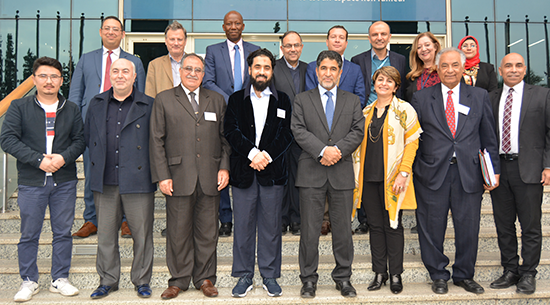 10 March 2020, Cairo – An expert consultation on digital health and innovation in the Region was held at the Regional Office by the Science, Information and Dissemination Department on 23–25 February 2020 to build consensus on a regional digital health and innovation strategic framework. The meeting was inaugurated by Dr Ahmed Al-Mandhari, Regional Director for the Eastern Mediterranean, and Mr Bernardo Mariano, Director, Digital Health and Innovation, at WHO headquarters outlined WHO’s vision for harnessing the power of digital health to achieve the health-related SDGs in his address to the meeting.
During the consultation key findings from global and regional surveys were reviewed, opportunities and challenges explored, and presentations given on needs and expectations in relation to DHI. The participating experts came from Egypt, Jordan, Morocco, Pakistan, Saudi Arabia, Switzerland and United Kingdom, in addition to the ITU/Arab States, Asian Development Bank (Philippines) and WHO. Discussions were held on the following themes: 1) health care delivery: needs and expectations; 2) GPW13 priorities; 3) essential requisites; 4) technologies and applications; and 5) innovation and partnerships. Working groups developed regional digital health and innovation strategic objectives and priorities with the aid of SWOT analysis, and consensus was built on a draft vision and mission for the Region.
WHO and ITU regional directors discuss collaboration on digital health and innovation
21 September 2020, Cairo – The WHO Regional Director discussed collaborative activities with the newly appointed ITU Regional Director for Arab States, Dr Adel Darwish, during a joint WHO-ITU meeting, which was held on Thursday 17 September 2020. The importance of inter-agency work was emphasized, especially during the COVID-19 pandemic that has seen innovative digital technologies being used at an unprecedented scale to keep people connected, safe and productive while being physically and socially apart. Joint areas of collaboration discussed included supporting utilization of mobile technology for health promotion and protection (mHealth), developing national digital health strategies (using the ITU/WHO toolkit), building capacity in digital health and holding joint expert consultations and webinars.
Discussions about implementing the Global Action Plan for healthy lives and wellbeing focused on two accelerator themes: research and development, access and innovation as well as data and digital health. Both regional directors promised to foster continued inter-agency work and move forward the common agenda of digital health and innovation focusing especially on work at the country level, within our Region.
Collaboration between between WHO and ITU include:
Global Action Plan on Healthy Lives and Wellbeing (GAP) – a collaboration on 12 health and development partners to support countries in meeting the health-related SDGs launched in September 2019. Together, 12 UN Agencies, including THe World Bank, have prepared the regional joint workplan, 2020–2021 and a regional health alliance, which formally recognizes this collaboration, orginally planned for March 2020 will be launched later this year.
WHO-ITU Collaboration on (1) research & development, innovation and access; and (2) data and digital health, including:
Mapping innovations on improved health care delivery, and key health technologies in the context of COVID-19
Raising awareness on importance of ethics in COVID-19 research
Supporting countries on research prioritization towards achievement of health-related SDG targets
Strengthening CRVS systems in the Region, including birth and death registration
Assisting with generating real-time data and supporting initiatives to improve data quality and disaggregation to improve resource allocation and decision-making
Assisting countries in developing national strategies for digital health and the digital architecture blueprints for health
Promoting joint statement of WHO/ITU/UNICEF on COVID-19
Promoting use of digital health technology and artificial intelligence in linkage of information using digital platforms
Supporting mHealth (utilization of modern/mobile technology in health promotion and protection) projects in countries (since 2016), as per the Be-Healthy-Be-Mobile initiative (now operating in: Egypt, Tunisia, Libya and Sudan). Such projects include work on diabetes control, tobacco cessation, TB-tobacco control, bronchial asthma control and cervical cancer control and involve the 3 levels of both UN agencies and ensure the complimentary working of health, telecommunications, science and technology public/private sectors in countries, a reflection of the complimentary mandate of both agencies in support of health in the Region.
Capacity-building on developing national eHealth strategies, including 2 joint workshops in Cairo (2017) and Beirut (2018), based upon the joint ITU/WHO National eHealth Strategy Toolkit.
Reciprocal invitations to activities held by either agency, including conferences, meetings and consultations (whether in-person or virtual), such as an expert consultation on digital health and innovation (February 2020) and a regional webinar on digital health and innovation (May 2020).
Related links
