


30 November 2025, Manama, Bahrain – The World Health Organization (WHO) Country Office in Bahrain conducted a 3-day training – from 18–20 November 2025 – on the Mental health gap action programme (mhGAP).
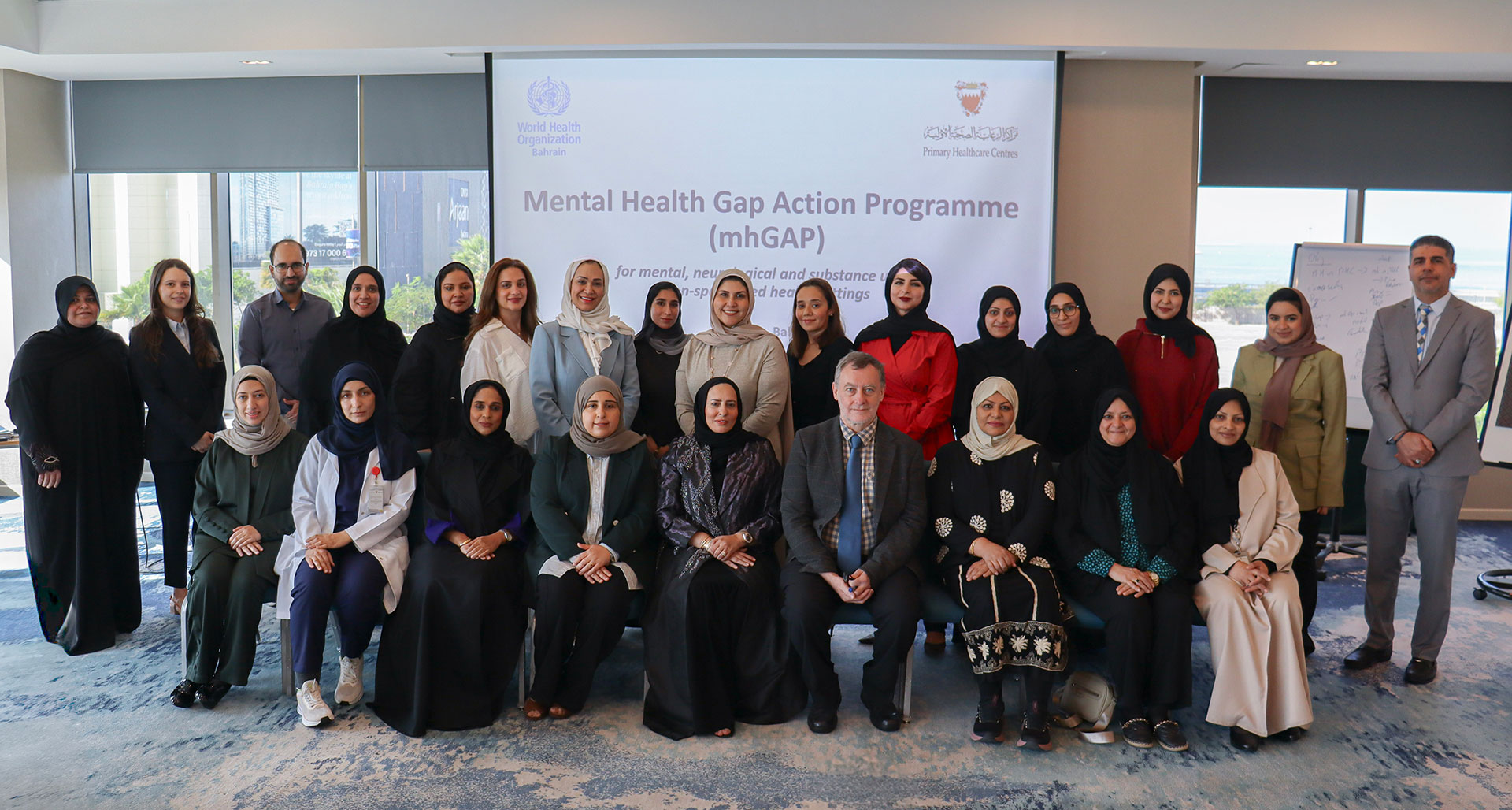 Mental health gap action programme training participants. Photo credit: WHO/WHO Bahrain
Mental, neurological and substance use (MNS) disorders are major contributors to morbidity and premature mortality. About 1 person in every 10 worldwide suffers from a mental health disorder, but only 1% of the global health workforce provides mental health care.
To address the gaps, WHO launched mhGAP in 2008. The programme aims to scale up services for MNS disorders in countries and provides diagnostic and management algorithms for priority mental health conditions. The mhGAP Intervention Guide (mhGAP-IG) was initially released in 2010. In 2016, mhGAP IG Version 2.0 was launched. It includes evidence‐based interventions for depression, psychoses, epilepsy, child and adolescent mental and behavioural disorders, dementia, substance use, suicide and self‐harm and other disorders.
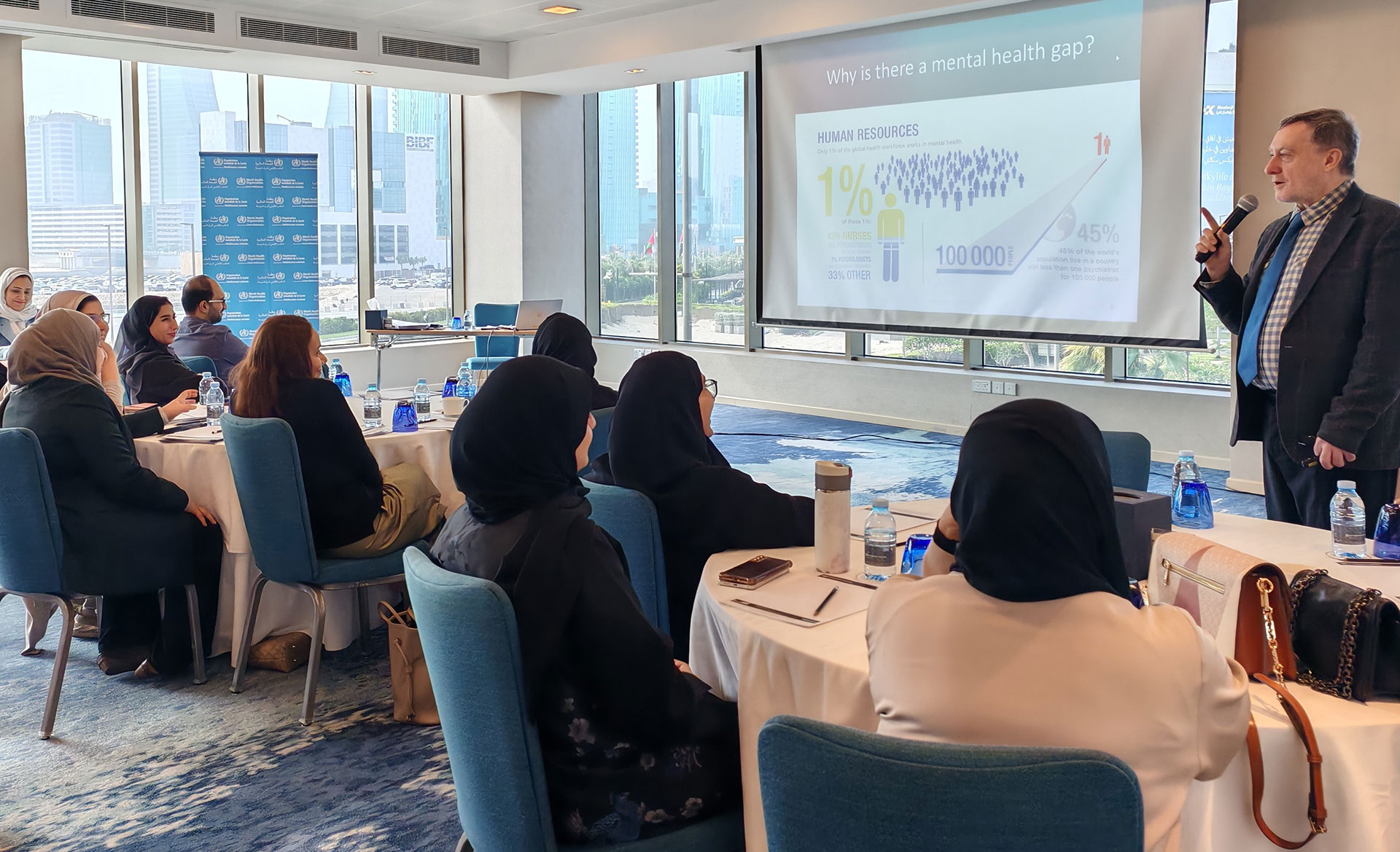 A Mental health gap action programme training session. Photo credit: WHO/WHO Bahrain
The training brought together more than 20 health workers from Primary Health Care Centres. It aimed to strengthen their capacity to assess, manage and follow up on MNS conditions in non-specialized health settings.
“The training will build the capacities of primary care professionals as the first point of contact in providing care for MNS disorders, reduce stigma and barriers to accessibility and help ensure universal health coverage”, said Acting WHO Representative in Bahrain Dr Assad Hafeez.
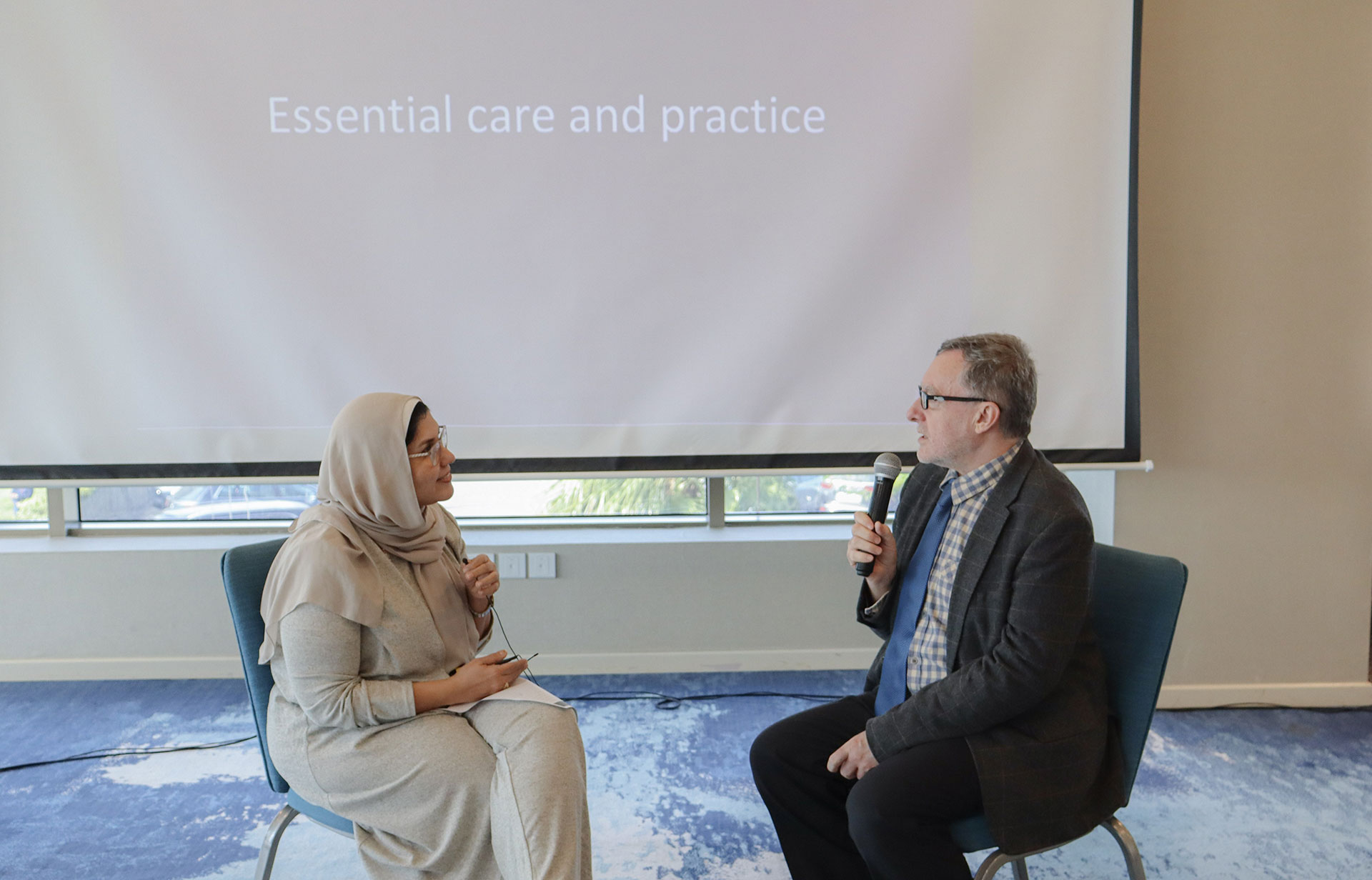 Role play during a Mental health gap action programme training session. Photo credit: WHO/WHO Bahrain
Sessions involved interactive, practical scenarios and role play focused on 6 priority areas – child and adolescent mental and behavioural disorders, conditions related to stress, anxiety, depression, substance use and self-harm and suicide.
While pre- and post-training assessments, conducted to identify gaps in knowledge of common MNS disorders, revealed a need for ongoing supervision, the mhGAP training in Bahrain will help enhance accessibility to treatment and reduce stigma and barriers to care for people with MNS disorders.
Related links:
