


2 December 2025, Sakhir, Bahrain – On 19 November 2025, WHO conducted a 1-day mission to evaluate the University of Bahrain (UOB) as a health-promoting university.
The health-promoting university programme is an extension of the healthy-settings approach to health promotion. It recognizes that, as the Ottawa Charter for Health Promotion states, “Health is created and lived by people within the settings of their everyday life; where they learn, work, play and love”.
Universities are large organizations in which people learn and work, socialize and make use of a wide range of services. As major employers, they have the potential to positively affect the lives and health of their communities and are important contributors to sustainable development. The programme seeks to embed health and well-being into university culture, policies and practices to support students, faculty and staff.
 President of the University of Bahrain Dr Fuad Alansari and representatives from WHO and the Ministry of Health take part in the University of Bahrain’s external evaluation. Photo credit: WHO/WHO Bahrain
UOB, established in 1986, is a public university with 3 campuses across the country, in Sakhir, Isa Town and Salmaniya. It has a student body of over 30 000, runs over 120 programmes and has 90 000+ graduates to date. It is also home to the first WHO Collaborating Centre (WHOCC) for Nursing Development in the Eastern Mediterranean Region (EMR), located in the College of Health and Sport Sciences.
The external evaluation of the UOB Sakhir campus was conducted by the Ministry of Health, the Higher Education Council, WHO Country Office in Bahrain and the WHO Regional Office for the Eastern Mediterranean. On 12 November 2025, during the self-assessment phase, the Ministry of Health and WHO Bahrain visited the UOB Salmaniya campus and provided technical support across the programme’s 6 domains – general indicators, the university environment, promoting healthy lifestyles, health development, safety and emergency preparedness and response and community participation and sustainability.
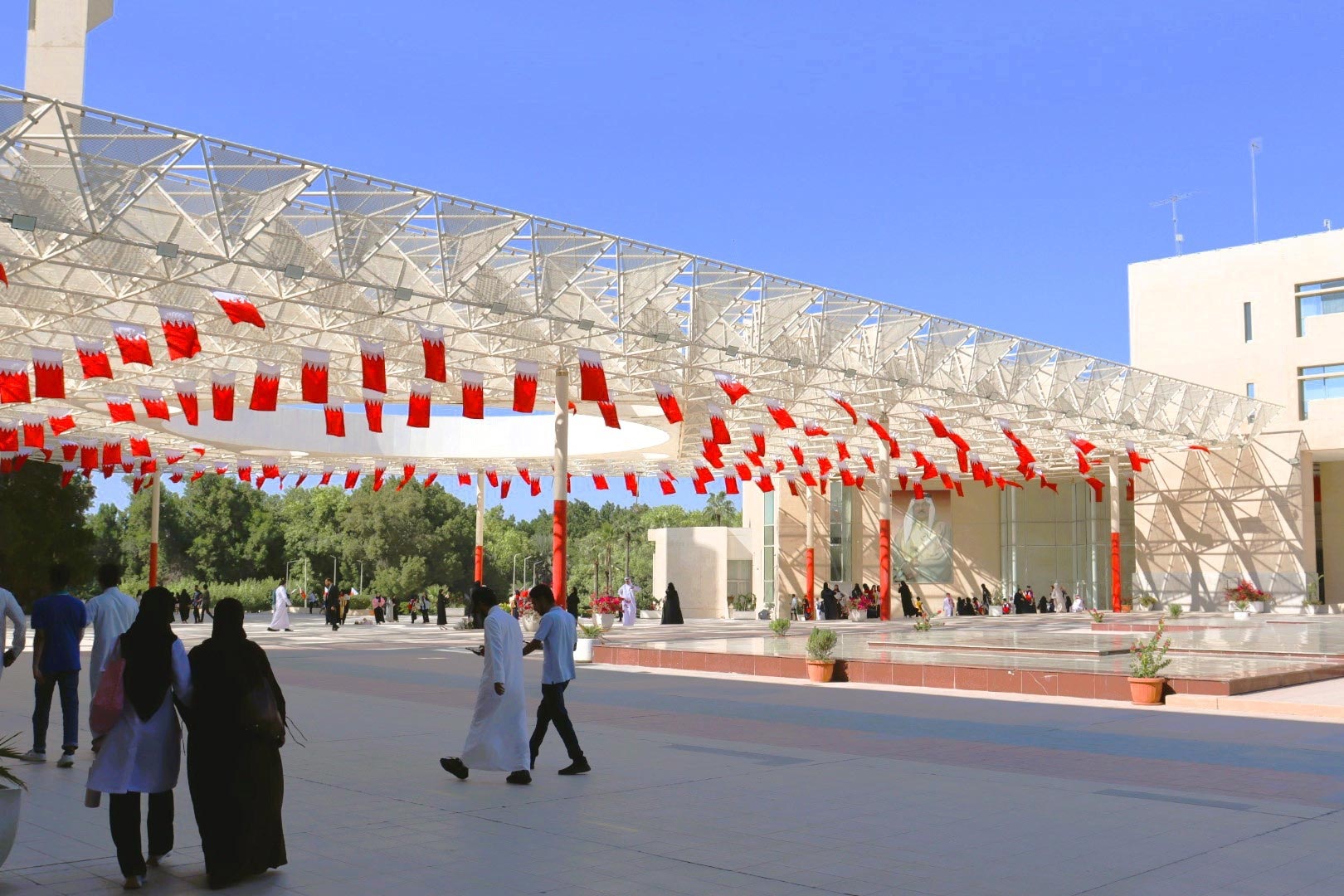 Students at the University of Bahrain. Photo credit: WHO/WHO Bahrain
A health-promoting university must meet at least 80% of the indicators developed by the WHO Regional Office for the Eastern Mediterranean. Certification is valid for 3 years, after which institutions are re-evaluated.
In 2025, 7 universities in Bahrain – Ahlia University, American University of Bahrain, Arabian Gulf University, Kingdom University, Royal College of Surgeons in Ireland - Medical University of Bahrain, University College of Bahrain and University of Technology Bahrain – were recognized as health-promoting universities.
Higher education plays a key role in protecting and advancing the health and well-being of students, staff and the wider community, contributing to health for all. Investing in a health-promoting university is an investment in the future.
Related links:
WHO visits University College of Bahrain as part of the Health Promoting Universities programme
WHO conducts a refresher workshop on health-promoting universities in Bahrain
American University of Bahrain moves closer to being recognized as a health-promoting university
WHO designates 5 pioneering universities in Bahrain as health-promoting universities
