


اختر لغتك

11 February 2026, Aden, Yemen – In Yemen, emergencies arrive without warning – and often in numbers that overwhelm fragile health systems.
Across Marib and Taiz, hospitals are receiving a steady flow of patients injured by road traffic crashes, explosions and gunfire. Many arrive in critical condition. For them, survival depends on minutes: on whether trained teams are available, operating theatres are functional and essential supplies are within reach.
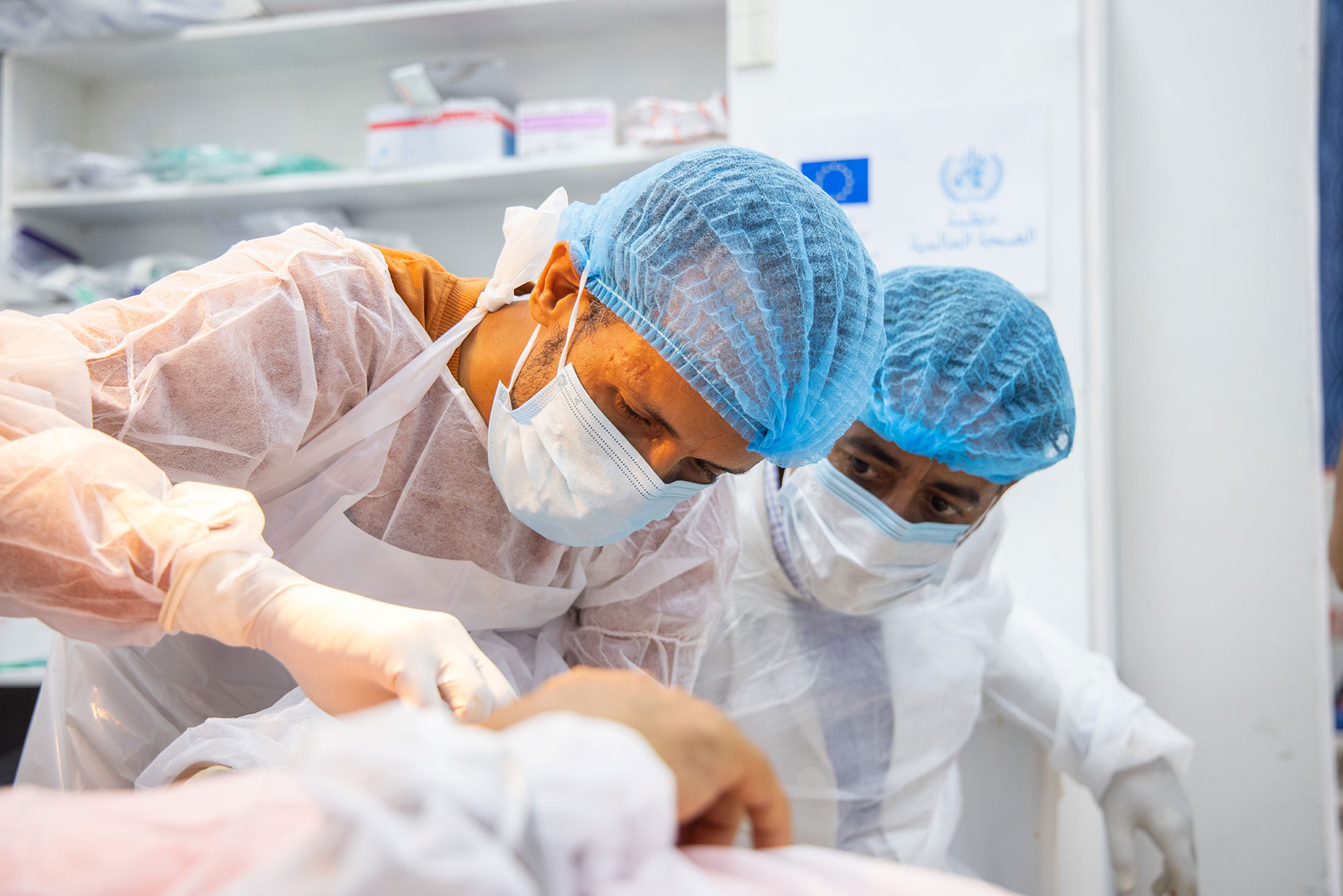 The medical team at Al-Thawarah Hospital performs a surgical operation, providing critical and lifesaving care to patients. Photo credit: WHO
At Marib General Hospital, one of the country’s busiest referral facilities, trauma cases frequently arrive in waves. Dr Abdulrab Al-Salihi, a general surgery consultant who has worked at the hospital since its establishment, describes the pressure facing frontline teams: “Sometimes we receive 5 to 15 critical cases at the same time – from traffic accidents, explosions, or shootings. We must triage immediately and act fast to save lives.”
Marib now hosts one of the largest populations of internally displaced people in Yemen, placing extraordinary strain on already stretched health services. Despite these challenges, emergency surgeries continue around the clock – saving women, young adults and families arriving with little more than hope.
According to Abdulkareem Ali Hussein Hamid, Acting Chairman of the Marib Hospital Authority, recent support has made a tangible difference in how emergencies are managed. He explains that the presence of supported surgical teams has reduced waiting times and improved staff efficiency in handling complex and critical cases, strengthening the hospital’s overall emergency response capacity.
These gains are being sustained through strengthened emergency systems supported by the World Health Organization (WHO), with funding from the European Civil Protection and Humanitarian Aid Operations (ECHO), helping ensure that operating theatres remain functional and life-saving care continues when it is needed most.
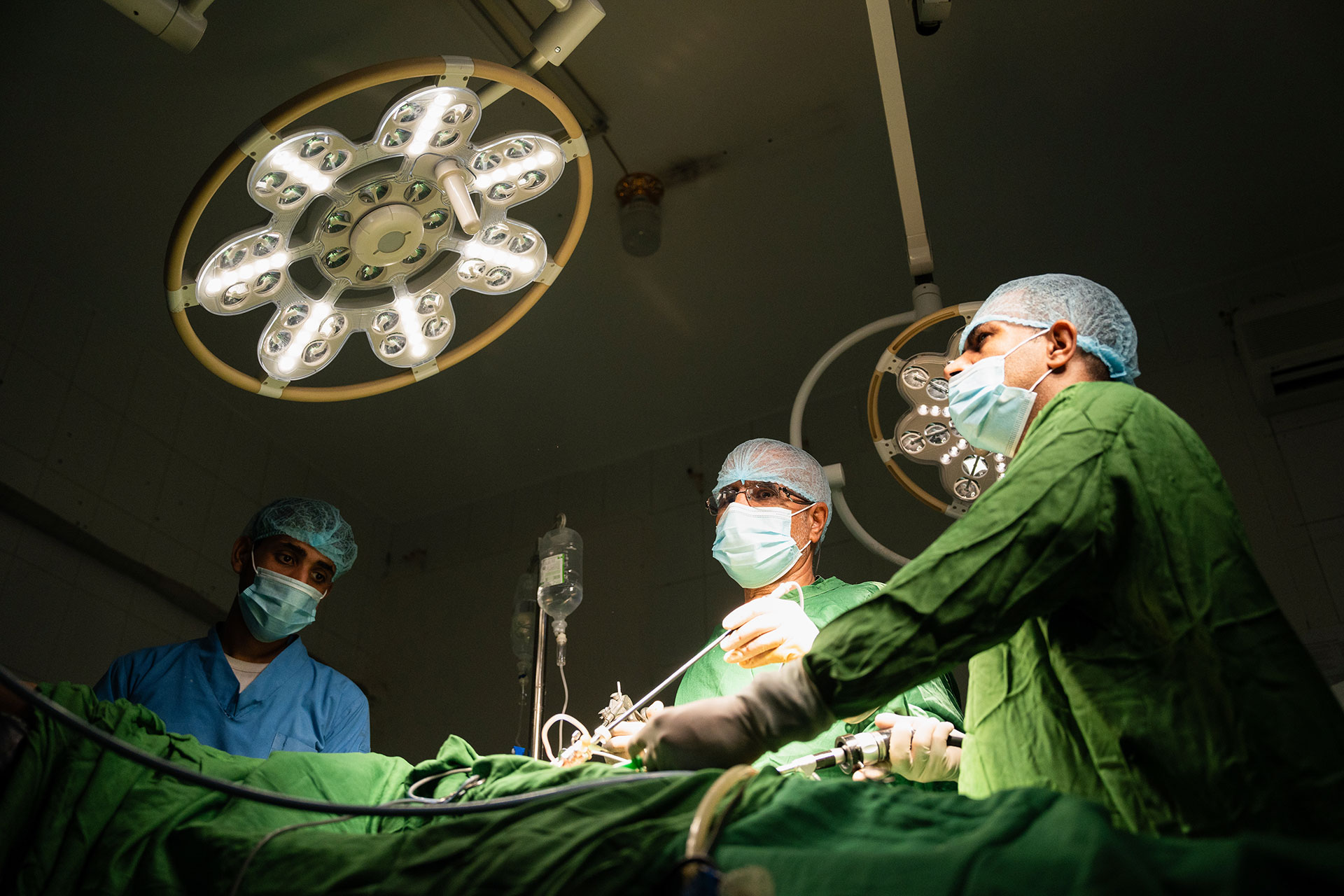 Doctors perform an endoscopy procedure on a patient, carefully examining the internal organs. They work together to ensure the procedure is safe, while monitoring the patient’s condition throughout. Photo credit: WHO
Between October and December 2025, this support translated into tangible, life-saving impact across three referral hospitals—Al Thawrah and Al Gamhouri hospitals in Taiz, and Marib General Hospital. More than 700 surgical procedures were performed, restoring mobility and saving lives, while 3,572 patients received critical consultations, triaging, and timely care. For frontline staff, however, impact is not measured in numbers alone, but in lives touched. Salma Abdulilah Abdullah Shard, a pharmacist at Marib General Hospital, recalls a moment that continues to define her work: “A child was brought to the emergency room with no heartbeat. The team continued resuscitation for more than 40 minutes. When the heartbeat returned, it felt as if life itself had been restored.”
Hundreds of kilometres away, the same urgency defines care at Al-Thawra General Hospital in Taiz. Once severely damaged by years of conflict – some facilities losing up to 80–90% of their capacity – the hospital is gradually restoring emergency and surgical services and now serves patients from four neighbouring governorates.
For patients, the impact of improved emergency care is immediate and deeply personal. Ibrahim Ali Ghaleb, who was rushed to Al-Thawra Hospital after a serious road accident, recalls the speed and coordination of the response: “All the doctors came immediately and worked as one team. I was treated, taken to surgery and cared for without neglect. This hospital saves lives and needs continued support.”
Across both Marib and Taiz, emergency trauma care remains fragile – but operational. Surgeons work through the night, pharmacists manage scarce supplies and generators keep operating theatres running during power cuts.
With ECHO’s support, these hospitals are not only responding to emergencies – they are restoring trust, dignity and the chance of survival for people injured by conflict and displacement.
In a country where every minute can decide a life, this support is not optional.
It is lifesaving.
