


اختر لغتك

7 May 2026, Damascus, Syrian Arab Republic – In a training room in Damascus, health workers from across Syria are learning how to detect the first signs of an outbreak – before it spreads.
For many, this is a shift from routine reporting to something more proactive: understanding patterns, analysing data, and responding early to protect communities.
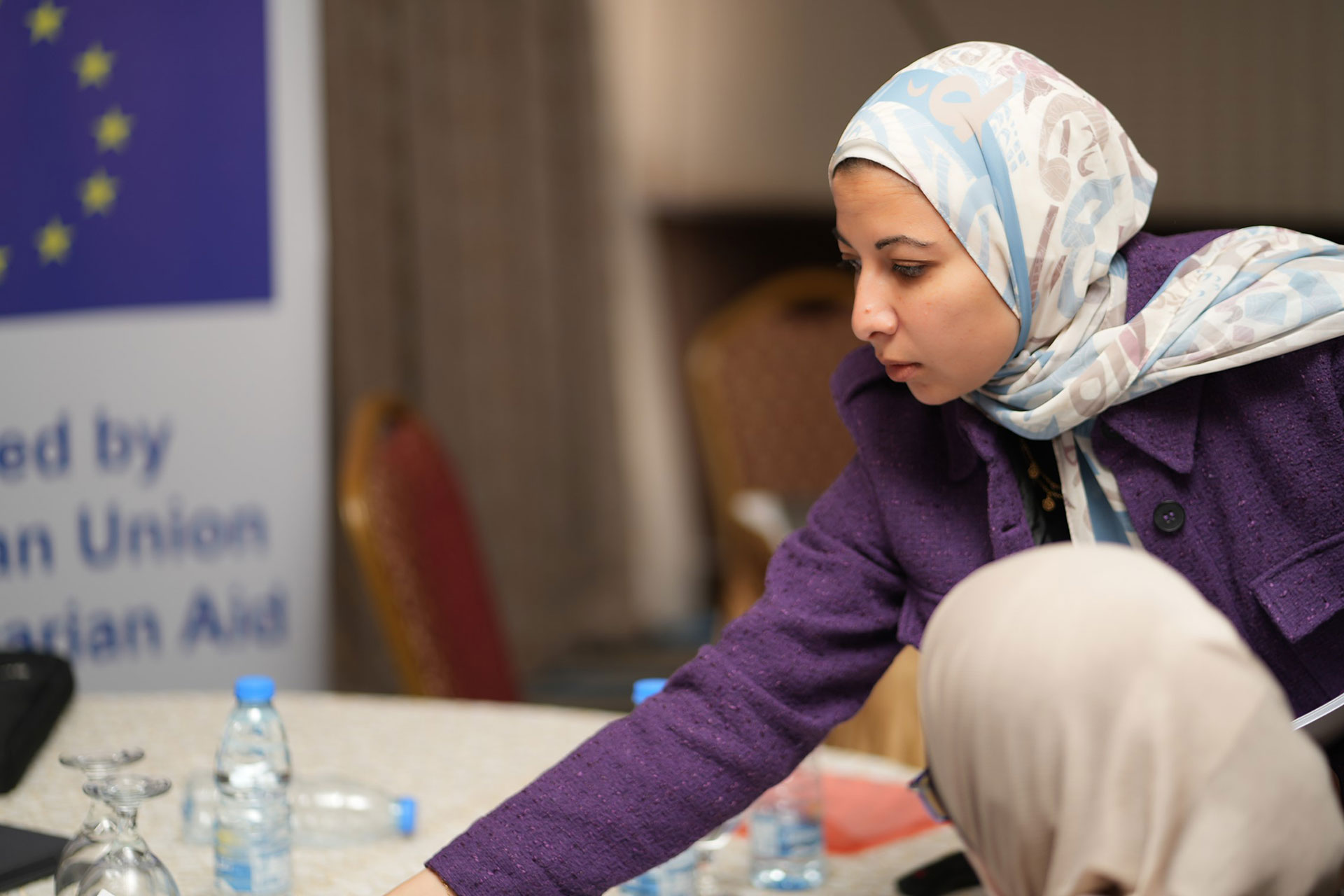 Dr Sherein Elnossery, Medical Officer for the Field Epidemiology Programme at WHO’s Regional Office for the Eastern Mediterranean, during the Frontline FETP training in Damascus. Photo credit: WHO
The Field Epidemiology Training Programme (FETP) is helping build these skills across the health system, strengthening how Syria detects and responds to public health threats. This Ministry of Health initiative will add to existing efforts to sustainably expand human resources for health.
Implemented over three months from February to May 2026, with support from WHO, ECHO and EMPHNET, the Frontline FETP combines classroom learning with fieldwork, equipping health workers to apply surveillance and response skills directly within their communities.
“This is not just a training – it’s a comprehensive programme,” says Dr Shireen Nseiri from WHO’s Regional Office. “It aims to build national capacity in surveillance and outbreak response, so countries can detect health threats early and act quickly.”
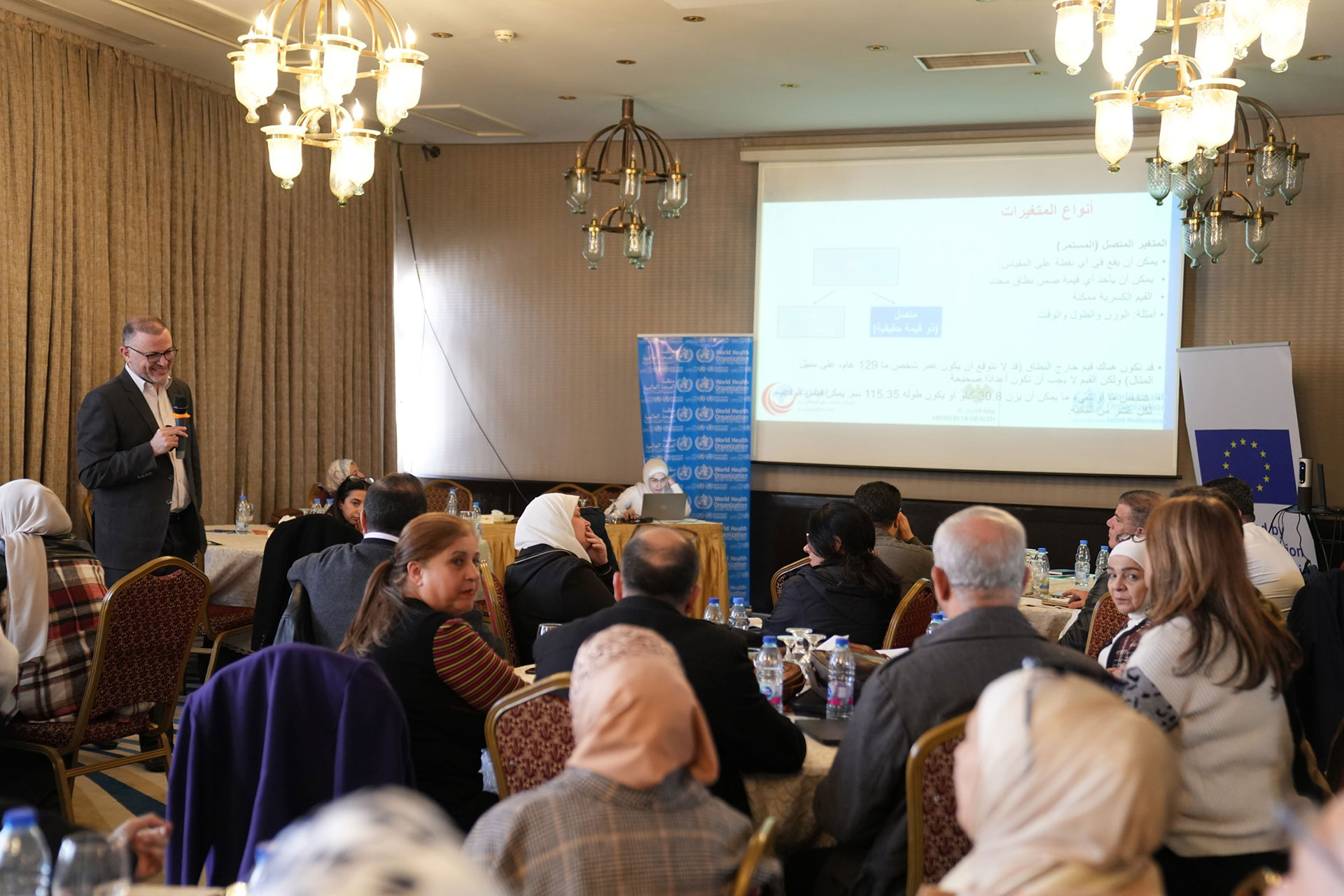 Health workers participate in the Frontline Field Epidemiology Training Programme in Damascus, strengthening skills in disease surveillance and outbreak response. Photo credit: WHO
Strengthening public health preparedness and response systems
Participants in the programme include health workers drawn from central Ministry of Health departments, governorate-level surveillance teams, and the Ministry of Interior reflecting a coordinated, system-wide approach to outbreak detection and response.
For Yasir Al Edlebi, working in surveillance and rapid response at the Ministry of Health, the training introduces updated approaches that are already shaping how teams work.
“It gives us modern methods to track diseases, analyse data, and respond effectively,” he says. “This will help strengthen and integrate disease surveillance systems across the country.”
The sessions cover core public health functions – case definitions, data collection, analysis, and outbreak investigation – ensuring that teams across different locations are working with the same standards and approaches. Delivered across three workshops, the training includes 17 days of theoretical sessions, alongside practical components that strengthen data analysis and interpretation.
“It’s helping us update our knowledge and align how we work,” says Ibtisam Mohammad Ali, a surveillance officer from Tartous. “We can take this back and train our teams so the response to public health events is more consistent.”
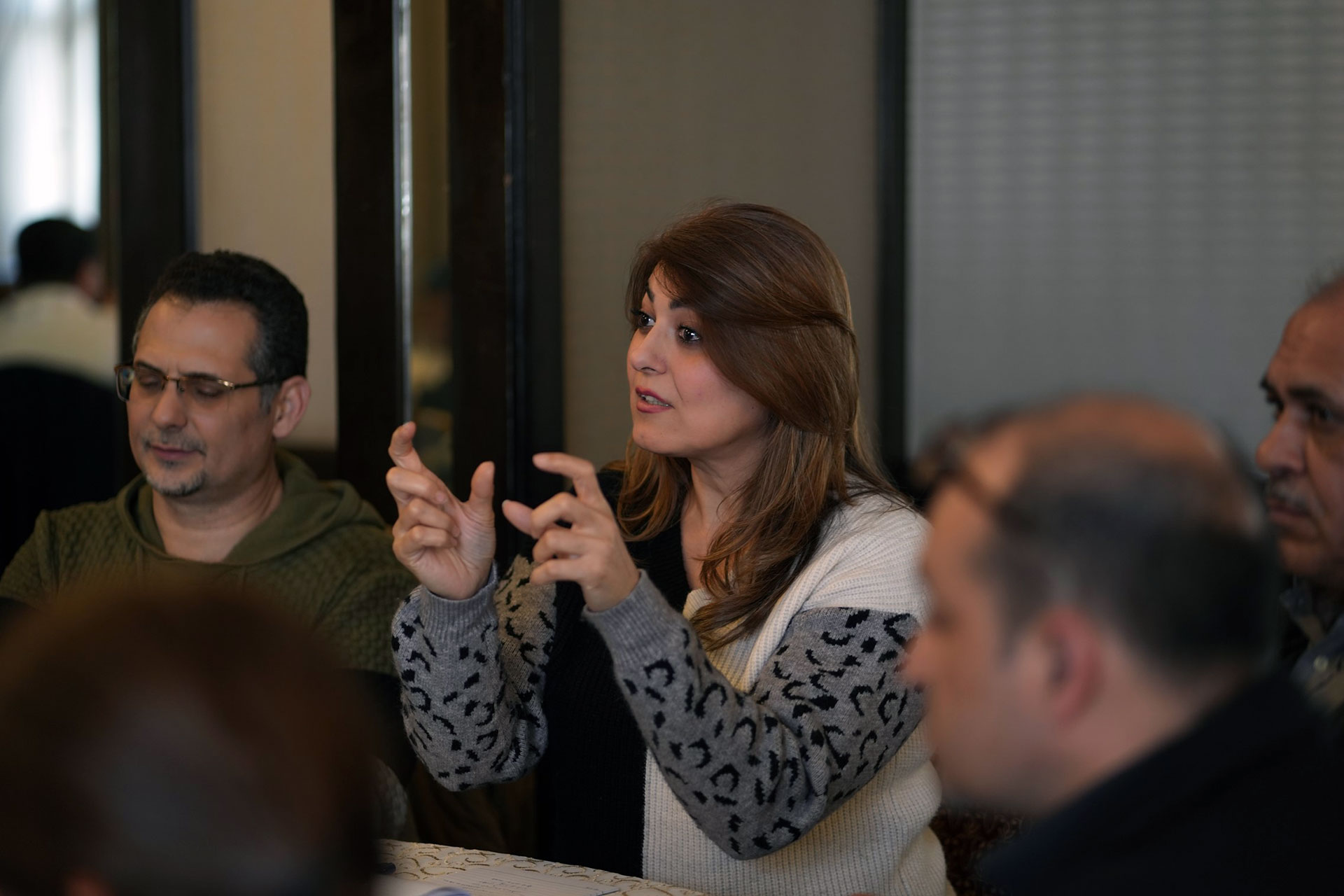 During a training session in Damascus, Ibtisam Mohammad Ali, Surveillance Officer from Tartous, shares insights on strengthening disease surveillance. Photo credit: WHO
From training to field impact
The programme combines classroom learning with practical application, with participants expected to apply these skills in their day-to-day work.
“We are currently in the theoretical phase, but this extends into field work. Each participant will execute tasks to practice public health data analysis and investigation of disease outbreaks,” says Dr Nael Al-Zoubi, Manager of Communicable Disease program in DOH Dar’a. “It helps improve how we respond to outbreaks and strengthens public health surveillance.”
This approach is critical in a context where health workers are often the first to detect unusual patterns of disease in their communities.
Within the first three months, participants have already translated training into action producing surveillance reports, improving data quality, and supporting outbreak investigations, demonstrating early gains in detection and response capacities at the frontline.
Building capacity for early detection
Strengthening early detection and rapid response remains a priority for the health system.
“With the increase in diseases and the current context, there is a need for trained teams ready to respond,” says Dr Jamal Haj Ali from the Ministry of Health. “This programme helps build a workforce that can act quickly and effectively.”
The first cohort of trainees is expected to form the foundation of a national network of field epidemiologists, deployed across governorates to support surveillance and response. The cohort spans multiple governorates, including Aleppo, Homs, Lattakia, Tartous, Damascus, Rural Damascus, Idleb, Hama, Deir-ez-Zor, Quneitra and Dar’a—extending surveillance capacity across diverse contexts.
“These teams will be on the ground, ready to respond to any health emergency,” says Dr Khaled Mustafa, Director of the Integrated Management of Childhood Illness (IMCI) unit at the Ministry of Health. “This is the first cohort, and more will follow.”
Improving data for better decisions
A key part of the programme focuses on improving how health data is collected and used – ensuring that signals of outbreaks are identified early and acted upon.
“Early detection and rapid response are essential,” says Dr Ahmad Sbeih from Idleb. “This training strengthens our ability to recognise unusual increases in disease and respond immediately.”
Better data quality and analysis also support more informed decision-making at all levels of the health system.
Investing in people to strengthen the system
At its core, the programme is about investing in people – health workers who play a critical role in protecting communities. “Building these capacities means we can better safeguard people’s health,” says Dr Haj Ali.
As Syria continues to strengthen its health system, programmes like FETP are helping rebuild core public health functions – supporting earlier detection, faster response, and more resilient systems.
The three-month programme brought together 19 residents working across central and subnational levels of the health system. Led by the Ministry of Health, with support from WHO and Eastern Mediterranean Public Health Network (EMPHNET), and funding from EU Civil Protection & Humanitarian Aid, it strengthens surveillance, outbreak investigation, data analysis, and rapid response across the health system.
