


اختر لغتك

Drowning prevention in the Eastern Mediterranean Region. Facts from the first Global status report on drowning prevention, 2024
Drowning prevention in the Eastern Mediterranean Region. Facts from the first Global status report on drowning prevention, 2024
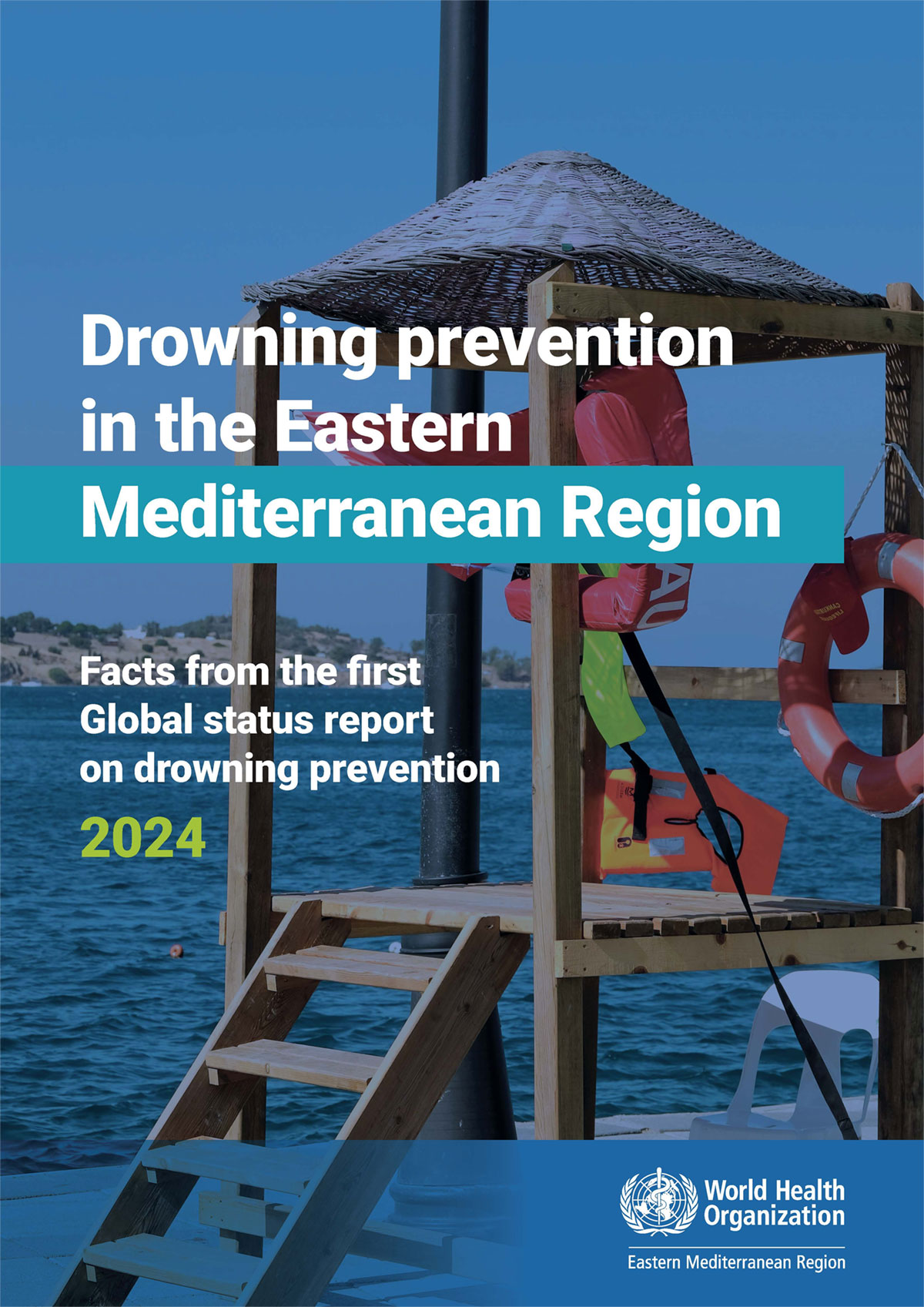 Globally, at least 3 million people have lost their lives to drowning over the past decade. An estimated 300 000 of these drowning deaths occurred in 2021 alone and 43% of these were children aged 14 years or younger. In 2021, drowning prevention became more prominent on the global agenda when the United Nations General Assembly adopted its first ever resolution on drowning prevention, A/75/L.76, setting a global framework for related efforts in all countries. The resolution reinforced the linkage of drowning prevention with the Sustainable Development Goals (SDGs), in particular with target 3.2, to “By 2023, end preventable deaths of newborns and children under 5 years of age”. An important contribution can be made by ensuring safe child access to day care and preschool services in communities near waterbodies, which relates to SDG target 4.2 on equal access to quality pre-primary education and SDG target 5.4 on unpaid care work.
Bridging the divide. A guide to implementing the humanitarian-development-peace nexus for health (second edition)
Bridging the divide. A guide to implementing the humanitarian-development-peace nexus for health (second edition)
 Despite growing consensus on the value of the humanitarian development and peace nexus (HDPNx) approach also known as the New Way of Working practical guidance on how to apply it effectively in the health sector has long been lacking. The HDPNx approach seeks to leverage the comparative advantages of different actors to improve efficiency and sustainability reduce duplication and service delivery gaps address the root causes of emergencies and support transitions from humanitarian response to stabilization recovery and development. To address this gap this guide was developed as a practical tool to support the implementation of the HDPNx approach in health-related contexts. The first edition published in 2020 aimed to help health actors operationalize the approach in a coordinated multisectoral manner. Since then advances in both understanding and application of the approach have emerged. This second edition builds on the foundation of the original guide incorporating recent developments and operational learning to ensure continued relevance and effectiveness.
Evidence-informed policy-making: a glossary of key terms
Evidence-informed policy-making: a glossary of key terms
 A significant challenge within the ecosystem of evidence-informed policy-making is the absence of a shared vocabulary and consistent application of related terminology. Although various fields – including health, research, epidemiology and policy-making – offer definitions for certain terms, few are specifically tailored to evidence-informed policy-making, and none offer a fully comprehensive definition. As a result, there is considerable overlap among terms and confusion regarding their usage among practitioners and policy-makers. This glossary has been developed to address these gaps by clarifying the existing definitions of terms related to evidence-informed policy-making and by incorporating newly introduced terms previously lacking proper definitions.
