


Select your language

Courses and trainings
WHO Academy malaria elimination course in Arabic
WHO Academy malaria elimination course in English
Malaria case management training
The WHO Eastern Mediterranean regional training course on malaria case management for resource persons and focal points comprises eight sessions. The course was conducted virtually in 2020 by the WHO Regional Office for the Eastern Mediterranean in collaboration with the Global Malaria Programme at WHO headquarters.
The objective of the training was to give participants the skills and competence to understand the basis of malaria diagnosis and treatment, and to plan and implement malaria case management services and understand antimalarial treatment policy formulation, using the WHO malaria treatment guidelines and case management training manuals.
Regional online training of trainers on vector surveillance and control
The regional online training of trainers on vector surveillance and control was organized by WHO in collaboration with Singapore’s National Environment Agency. The training was conducted virtually in 2021 to strengthen vector surveillance and control capacities in the Eastern Mediterranean Region during the COVID-19 emergency.
The training covers the surveillance of the major disease vectors that transmit dengue, chikungunya, malaria and leishmaniasis. It focuses on the methodology of collection of the disease vectors for monitoring, including novel tools for vector surveillance and the current WHO-recommended vector control interventions. The training also looks at the important issue of the invasive Anopheles stephensi in the Horn of Africa.
The Malaria and Vector-borne and Tropical Diseases Unit (MVC) helped develop this diploma course to strengthen capacity on vector surveillance and control of vector-borne diseases in the Eastern Mediterranean Region. The MVC unit worked with the Department of Vector Biology and Control of Diseases at the School of Public Health, Tehran University of Medical Sciences, to develop the course.
The diploma programme is designed to provide up-to-date and fundamental skills in the core areas of vector biology and control. The in-person course, which runs even September, comprises 10 modules and a field internship.
WHO calls for urgent support to rebuild Syria’s health system
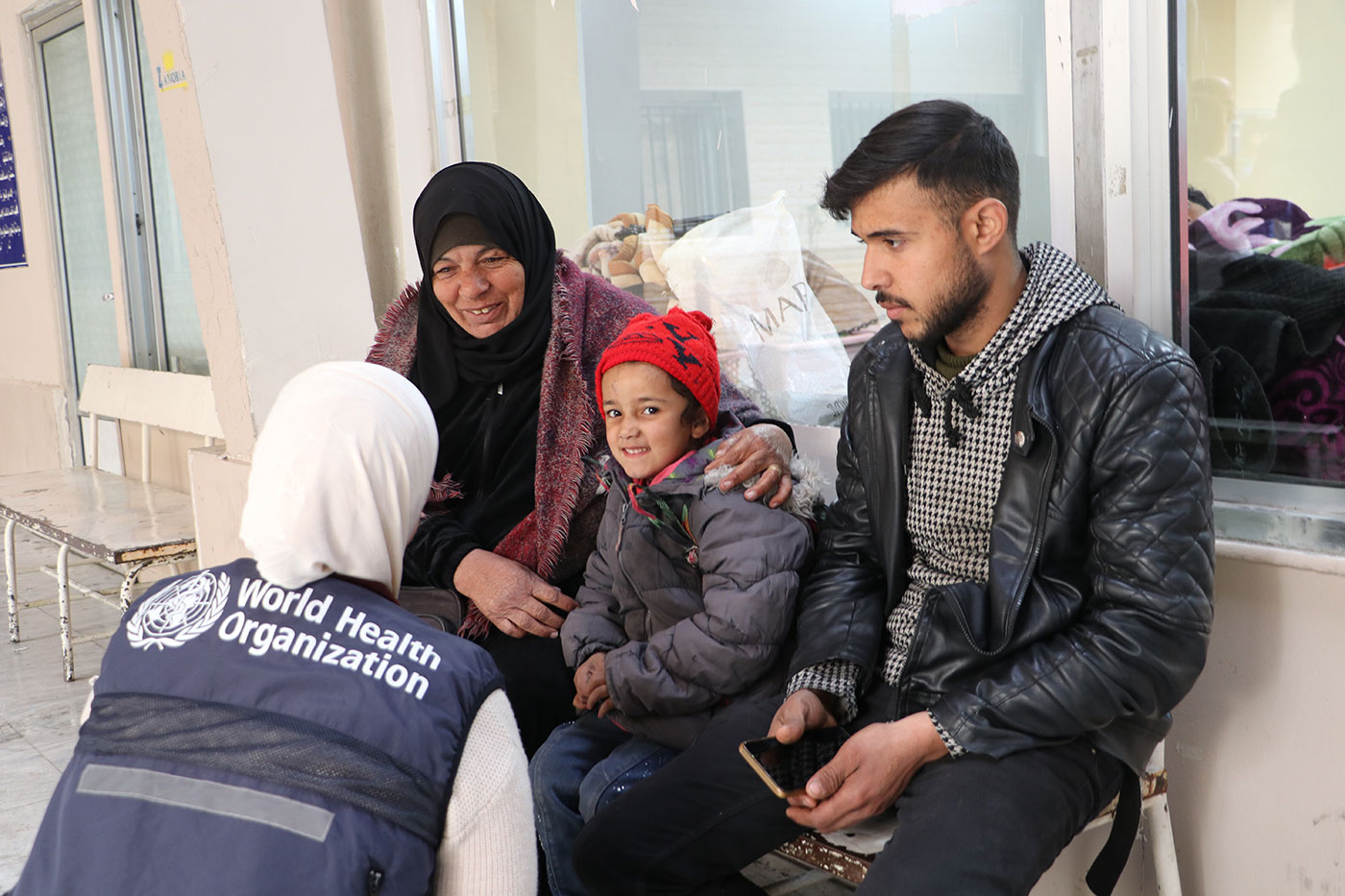 17 March 2025, Damascus, Syrian Arab Republic – On the 14th anniversary of the start of the Syrian conflict, WHO is calling for predictable, multi-year funding to sustain critical humanitarian health services and enable a stable transition towards recovery and national unity.
Continued instability threatens essential health care delivery at a time when nearly 15.8 million people require urgent health assistance. Only 57% of Syria’s hospitals, and just 37% of primary health care centres, are fully operational. Shortages of medical supplies, outdated equipment and damaged infrastructure continue to strain services. Many hospitals operate at minimal capacity or close due to funding shortfalls.. Across northwest and northeast Syria, 246 health facilities are at risk of imminent closure due to lack of funds.
Three out of four people in Syria rely on humanitarian aid and require urgent development assistance. Malnutrition rates have tripled in the past 4 years, placing Syria among the world’s top 10 hunger-affected countries.
“Keeping humanitarian health services running is essential as Syria moves towards recovery. Any break in humanitarian aid could deepen vulnerabilities and leave more people without care,” says Acting WHO Representative in Syria Christina Bethke.
“The transition presents an opportunity to rebuild, but it must be managed carefully. WHO remains committed to supporting Syria, working closely with the Ministry of Health and health partners.”
With up to 70% of Syria’s health workforce having left the country, WHO stresses that rebuilding healthcare capacity is essential. “Investing in medical training, upskilling, and education programmes is critical to restoring the workforce and ensuring sustainable health services,” Bethke added.
To sustain essential health services, strengthen emergency response, enhance disease surveillance and rebuild a resilient health system, WHO requires US$ 141.5 million in 2025, including a US$ 56.4 million emergency flash appeal. With an 81% funding gap, urgent support is needed to prevent further deterioration.
On 17 March, the Ninth Brussels Conference on Syria will convene to mobilize global support and resources for the country’s transition. Ahead of the conference, WHO calls for a well-managed shift from humanitarian aid to long-term recovery, greater investment in rebuilding Syria’s health workforce and predictable, multi-year funding to ensure continuity of care and stability.
Media contacts:
For WHO:
In Damascus, Syria: Halah Kabash,
In Gaziantep, Türkiye: Mrinalini Santhanam,
Multimedia
Videos

Campaigns

Information resources Article Count: 26
Afghanistan-news Article Count: 322
Afghanistan-events Article Count: 29
Afghanistan-infocus Article Count: 56
Donors Article Count: 1
Links Article Count: 1
WHO representative Article Count: 2
Programmes - Afghanistan Article Count: 29
WHO presence Article Count: 8
Photo essays Article Count: 13
Front page Article Count: 1
