


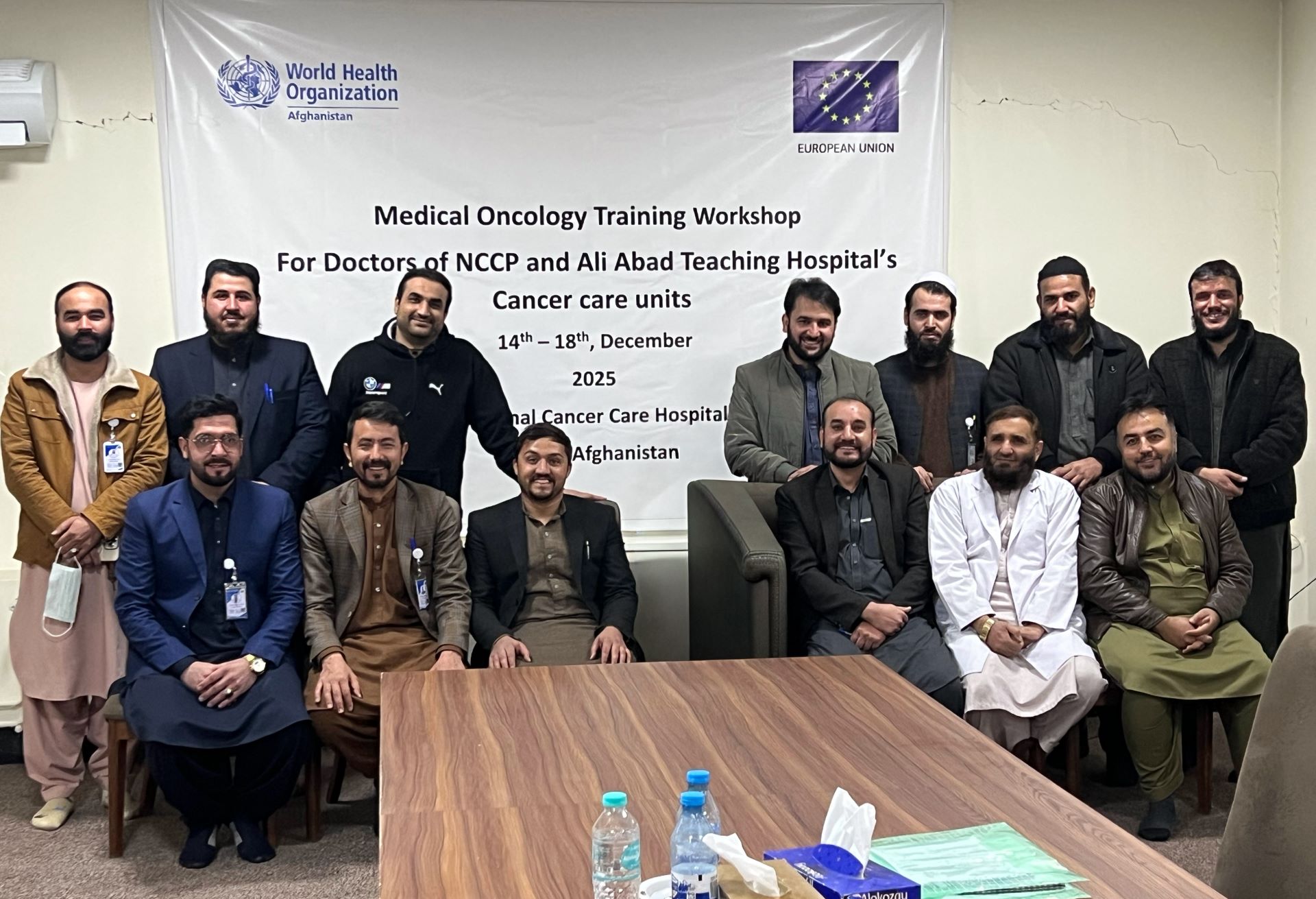
 Group photo of doctors following an in-person cancer training workshop to strengthen oncology practice and patient care. Photo credit WHO Afghanistan. Photo Credit: WHO Afghanistan
24 December 2025, Kabul, Afghanistan – A World Health Organization (WHO)-supported multidisciplinary training programme to strengthen cancer and palliative care in Afghanistan has concluded on 22 December 2025. The training, which started in November, combined online learning with in-person practical sessions and examinations.
The programme brought together more than 60 Afghan health professionals, including doctors, nurses and pharmacists, from four major public oncology centres and key private health facilities. The aim was to help health workers deliver better, more consistent and more patient-centred cancer and palliative care across the country.
The training sessions were adapted to each profession. Nurses and pharmacists focused on cancer treatments, managing side effects, chemotherapy safety and emergency care. Doctors explored different types of cancer, diagnosis and treatment planning, and learning how to apply international guidance in ways that work within Afghanistan’s health system.
A central part of the programme focused on palliative care, helping health workers learn how to care for the whole patient, not only physical symptoms, but also their emotional, social and spiritual needs, and how to speak with patients and families with care and respect, especially when sharing difficult news.
To support ongoing learning, WHO made all training materials available through a dedicated Moodle platform in English and Pashto, with assignments in English and Dari, and created a WhatsApp group to allow participants to stay connected, share experiences and receive continued guidance.
“Cancer care is about people, not just treatment,” says Dr Edwin Ceniza Salvador, WHO Representative to Afghanistan. “By combining online learning with hands-on training, we are giving Afghan health workers the skills and confidence they need to care for patients with safety, dignity and compassion. This is a real step forward for families facing cancer across the country.”
The initiative is part of WHO’s wider efforts to strengthen services for noncommunicable disease and improve access to quality cancer and palliative care nationwide. WHO extends its sincere thanks to partners and donors, especially the European Union, whose continued support has made this work possible.
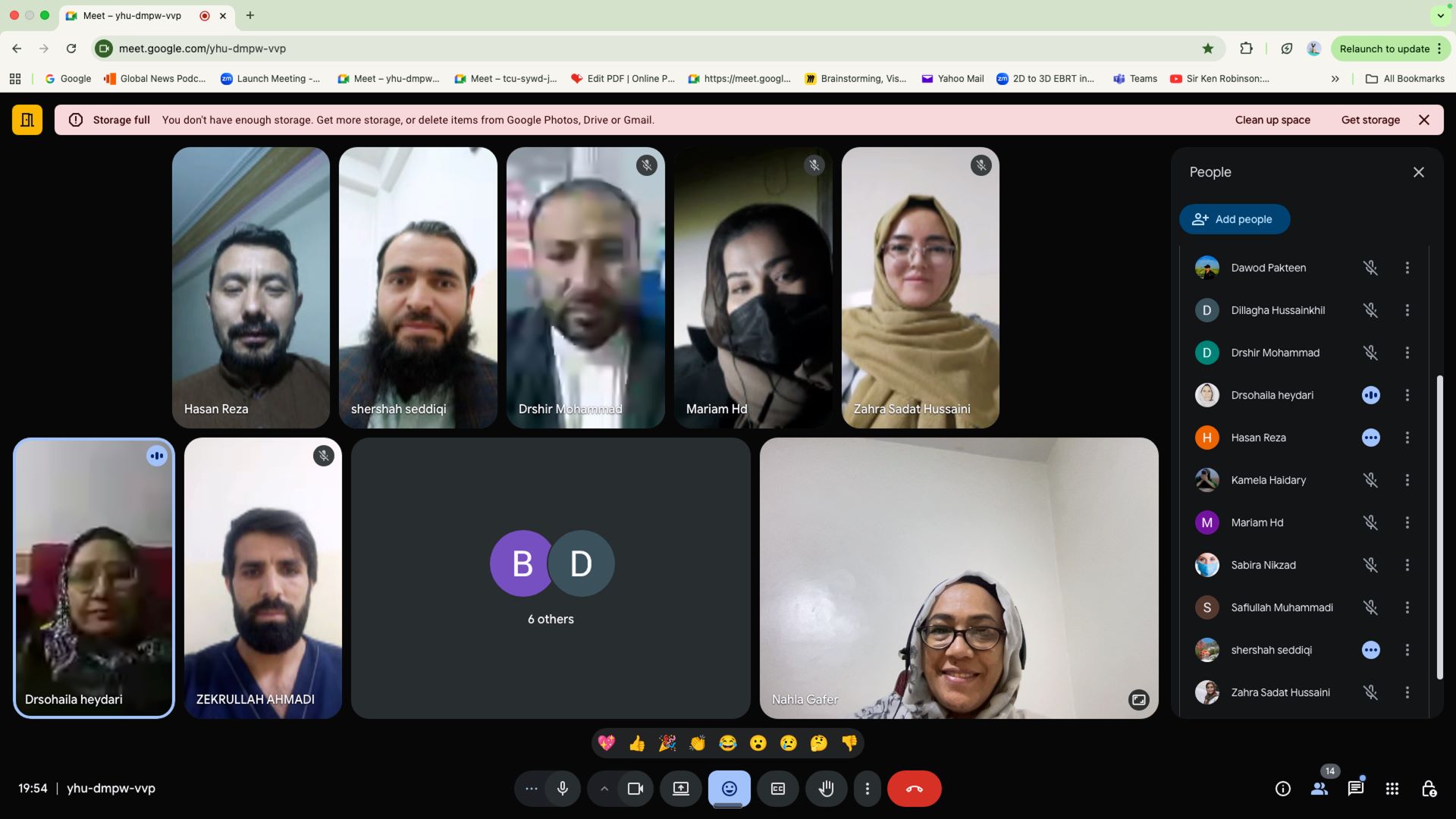 Screenshot from a virtual cancer training session.
