


25 May 2026, Kabul, Afghanistan – In remote Yaftale Bala district in Badakhshan Province, where access to essential health services is limited and many people seek care only when illnesses become severe, ensuring accurate health information reaches families in a timely manner helps save lives.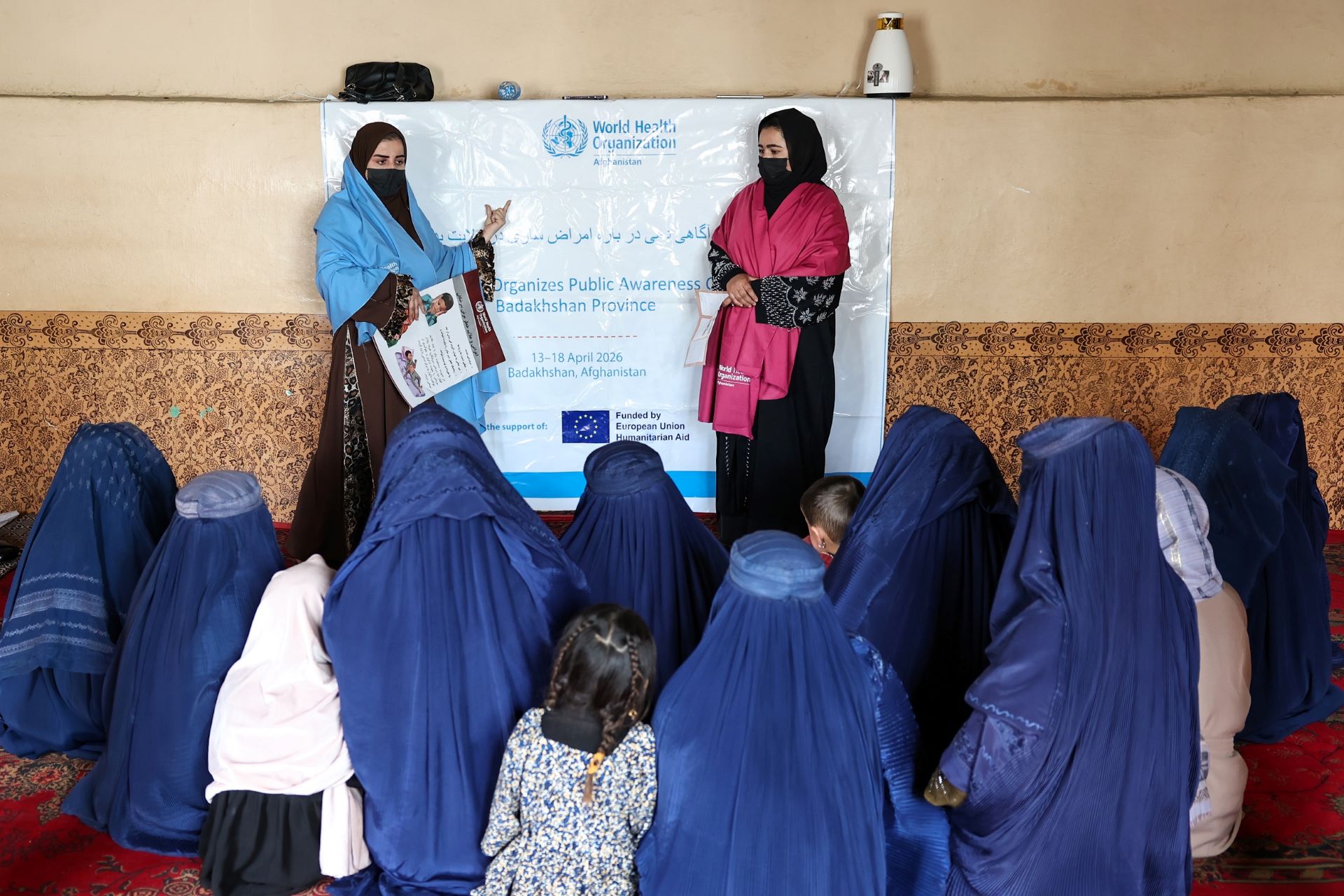
The World Health Organization (WHO) in Afghanistan, with funding from the European Civil Protection and Humanitarian Aid Operations (ECHO), has implemented a week-long risk communication and community engagement (RCCE) campaign across Yaftale Bala and 9 other districts in Badakhshan, reaching more than 37 000 people.
Health awareness sessions were delivered by 28 trained male and female community mobilizers in villages, mosques, homes, schools and other community spaces. During separate sessions for men and women, communities learned about the symptoms, prevention and early treatment of priority infectious and vaccine-preventable diseases, including acute watery diarrhoea, acute respiratory infections, measles, Crimean-Congo haemorrhagic fever, malaria and dengue fever.
Hamid Kosha, a male community mobilizer, highlighted the importance of timely information. “In remote communities, health information can save lives. When people understand how to recognise the early signs of disease, and how to prevent diseases, they are better prepared to protect themselves and their families.”
“Many women were unsure which symptoms needed urgent attention,” said female community mobilizer Sara Ahmadi. “During the sessions, they started asking more questions about protecting their children and caring for their own health. It showed how important these discussions are for the community.”
Following the sessions, community members said they felt more confident about recognizing warning signs and seeking care earlier. Many women requested regular awareness sessions covering additional health topics.
“RCCE is central to disease prevention and outbreak preparedness,” said WHO Representative in Afghanistan Dr Edwin Ceniza Salvador. “By building trust and engaging communities directly, we empower people to take informed action to protect their health and bridge the gap between health services and outreach communities.”
WHO would like to extend its thanks to ECHO for its continued support in strengthening community-based health awareness and disease prevention efforts in Afghanistan.
