


17 February 2026, Kabul, Afghanistan - The World Health Organization (WHO) has concluded its malaria programme review mission in Afghanistan, stepping up efforts to reduce the country’s rising malaria cases.
Each summer, heavy rains and rising temperatures create ideal breeding conditions for mosquitoes. From June to November, malaria threatens more than three-quarters of Afghans living in high-risk eastern and south-eastern provinces. Climate change has intensified the problem, with hotter summers and heavier rainfall expanding mosquito habitats.
 A member of the WHO malaria mission examines samples under a microscope during a monitoring visit to a laboratory in Laghman Province. Photo credit: WHO Afghanistan
After declining between 2018 and 2021, malaria cases began increasing again in 2022, peaking in 2024 and remaining high through 2025.
Nangarhar, Laghman, Kunar and Nuristan are among the most affected provinces where nearly every household faces malaria during the peak season. Most cases are caused by Plasmodium vivax, a parasite that can remain in the body and cause malaria to return weeks or months later.
WHO review identifies key priorities
In partnership with national health authorities and experts from WHO headquarters and the WHO Regional Office for the Eastern Mediterranean, WHO Afghanistan carried out a comprehensive review of the national malaria programme. The field visits provided a clear picture of what communities need most to stay protected.
The mission identified key priorities:
- increasing community awareness on the correct use of insecticide-treated mosquito nets;
- making sure malaria testing and treatment are available in all high-burden health facilities; and
- improving the supply of essential malaria medicines, including in private clinics and pharmacies where many families seek care.
These priorities will be taken forward with national counterparts based on feasibility and seasonal needs.
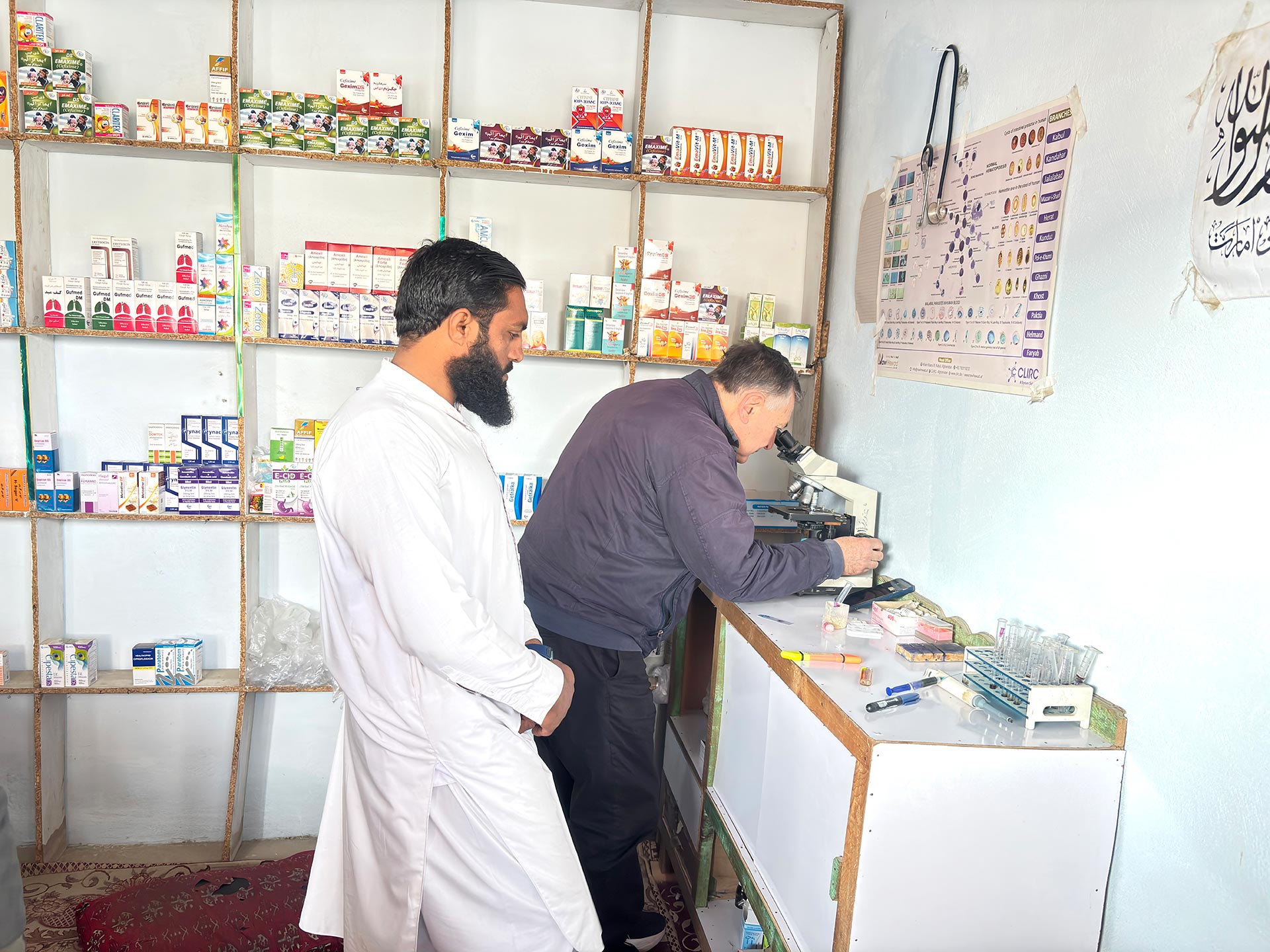 During a malaria mission visit to Nangarhar Province, a WHO specialist reviews laboratory samples under a microscope. Photo credit: WHO Afghanistan
“Malaria continues to strain vulnerable communities in Afghanistan, particularly in provinces where repeated infections affect children’s education, household incomes and access to care,” said Dr Edwin Ceniza Salvador, WHO Representative to Afghanistan. “This review will help us build on the progress already made by strengthening community awareness, encouraging people to seek care early and making sure malaria testing and treatment are available in health facilities where they are most needed.”
With sustained prevention, reliable treatment and close coordination across health partners, Afghanistan can reduce the burden of malaria and better protect communities during the peak transmission season.
