


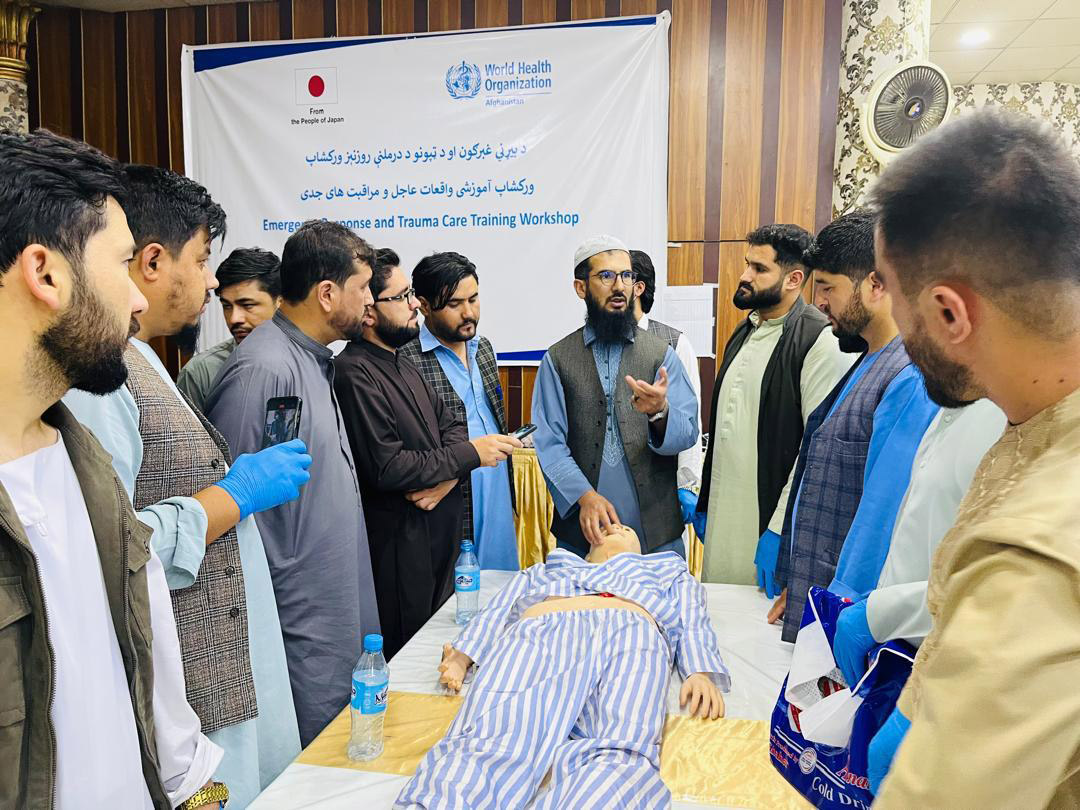
 Participants practice life-saving skills during Basic Emergency Care training in Mazar-e-Sharif, Balkh Province. Photo credit: WHO
1 March 2026, Kabul, Afghanistan, - WHO Afghanistan has been strengthening emergency care services across the country through its Basic Emergency Care (BEC) training programme, enabling frontline health workers to respond faster and more effectively to trauma and life-threatening emergencies.
One of the most recent successfully completed training courses was in Balkh Province, where 54 health professionals from Balkh, Faryab, Jawzjan, Samangan and Sar-e-Pol provinces enhanced their lifesaving skills with the generous support of the People and Government of Japan.
For many communities, district hospitals are the only point of care when emergencies happen. To address this, the BEC training focused on practical, hands-on skills that help health workers quickly assess injuries, stabilize patients and organize emergency response systems to save lives before referral to specialized facilities.
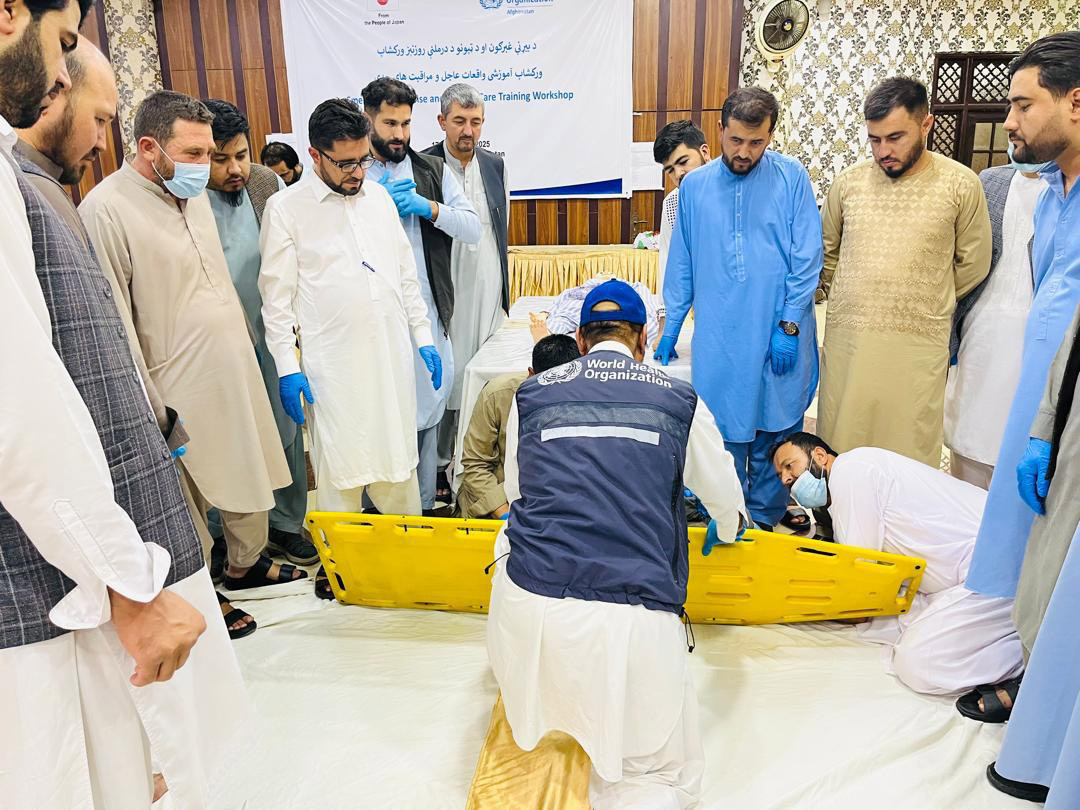 Participants practice life-saving skills during Basic Emergency Care training in Mazar-e-Sharif, Balkh Province. Photo credit: WHO
Aminullah Safi, an emergency room nurse at Sholgara District Hospital in Balkh, applied the skills gained from the training immediately upon returning to his hospital. He implemented practical actions to reorganize surgical and emergency equipment and strengthen trauma management practices.
“Before the training, we did our best with the equipment and knowledge we had,” he said. “Now, the knowledge learned has enabled us to use our existing equipment and limited resources much more efficiently, so people in my district no longer have to wait helplessly during emergencies. We are ready to provide lifesaving care from the moment patients arrive.”
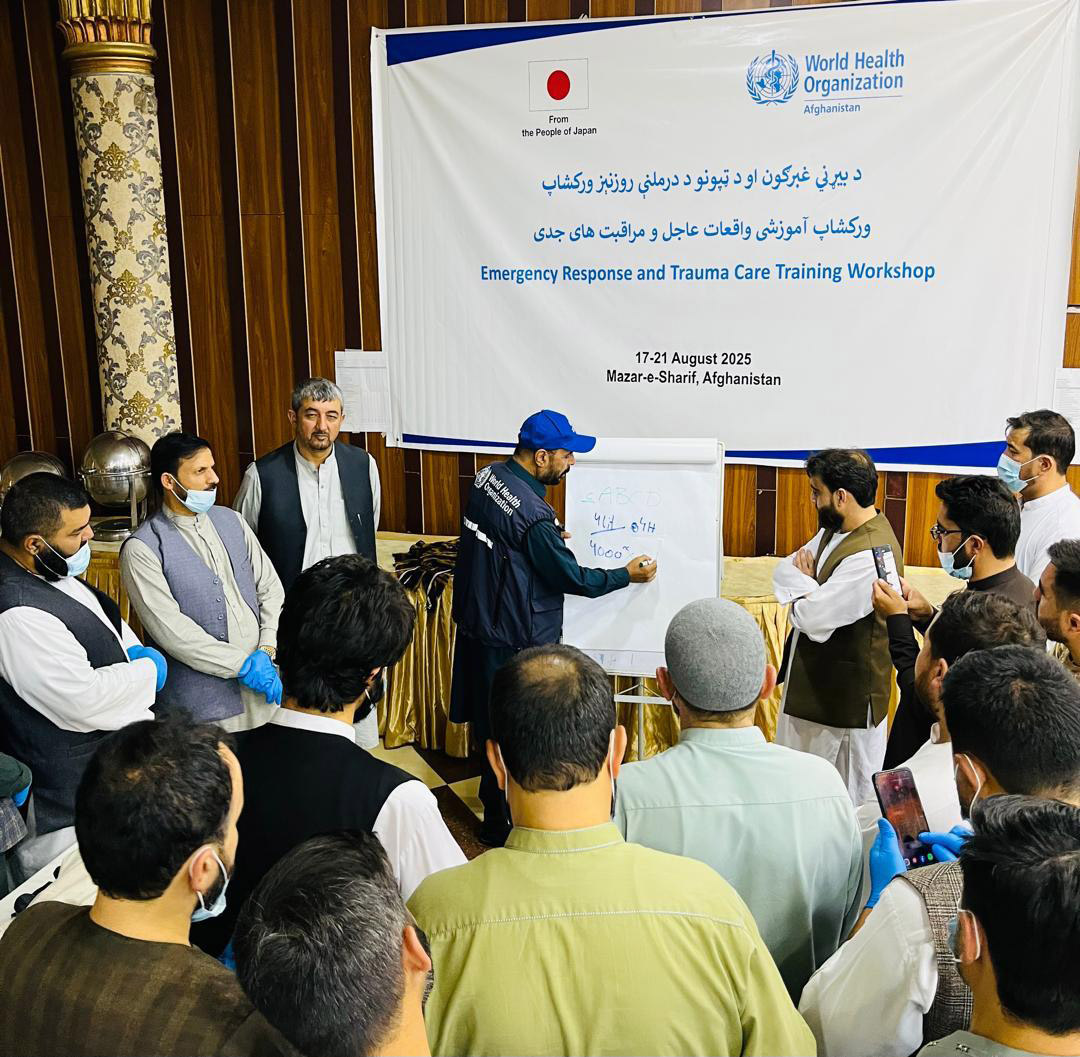 A trainer leads a practical session on Basic Emergency Care during training in Mazar-e-Sharif, Balkh Province, strengthening frontline responders’ lifesaving skills. Photo credit: WHO
“Every minute matters in an emergency,” said Dr Edwin Ceniza Salvador, WHO Representative to Afghanistan. “By strengthening the skills of frontline health workers and improving emergency readiness in district hospitals, we are helping save lives where people live - especially in communities far from specialized care. This is the real impact of sustained donor support.”
Through continued partnership with Japan and other health partners, WHO Afghanistan is bringing lifesaving emergency care closer to families, reducing preventable deaths and helping hospitals stand ready during emergencies.
For more information, please contact:
Mariam Amiry
RCCE Officer, WHO Afghanistan (Kabul)
Mob.: +93 784100496
E-mail:
