

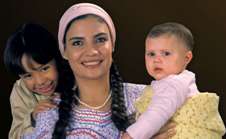
 Every mother and child countsThe concept of "reproductive health", as an essential component of public health, has been receiving increasing attention and has now been adopted in almost all countries of the Eastern Mediterranean Region. Research, surveillance and data use for evidence-based decision-making and advocacy are strategic priorities for reproductive health and research programme development at regional and country levels.
Due to the high rates of maternal and neonatal death in some countries, specific focus has been given to the Making Pregnancy Safer programme. Other priority areas include:
- reproductive tract infections
- sexually transmitted infections including HIV/AIDS
- reproductive health in adolescence and post-menopause
- reproductive system cancers
- practices harmful to reproductive health
- premarital and genetic counselling
- neonatal screening for inherited disorders.


