

Dr Hanan Balkhy, WHO Regional Director for the Eastern Mediterranean
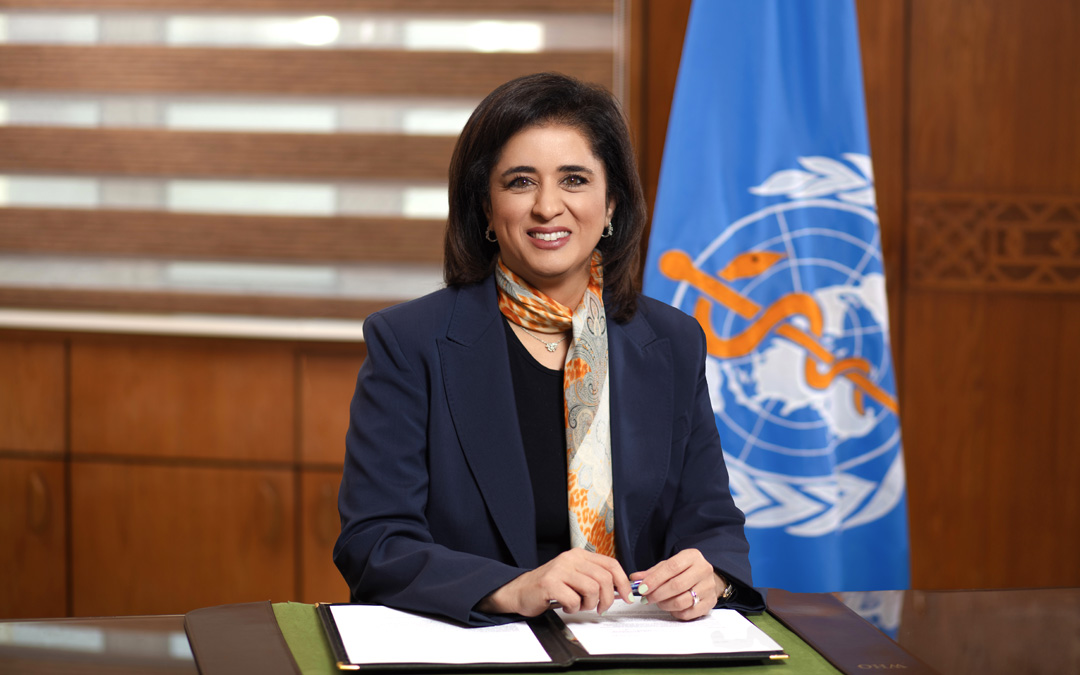 Dr Hanan Balkhy, WHO Regional Director for the Eastern Mediterranean
Dr Hanan Balkhy was appointed WHO Regional Director for the Eastern Mediterranean by the WHO Executive Board in January 2024. She took office on 1 February 2024.
Dr Balkhy has set 5 priorities for her tenure as Regional Director: make health care more accessible to all, especially hard-to-reach populations; expand country capacities to tackle emergency health demands of the climate crisis, pandemics, conflicts and other disasters; strengthen public health for disease prevention and health promotion; expand partnerships for financing, and to share knowledge and skills; and strengthen WHO Regional Office for the Eastern Mediterranean and country office capacities to boost cooperation and better influence global health.
Dr Balkhy was previously Assistant Director-General for Antimicrobial Resistance at WHO headquarters. Prior to this, she was Executive Director for Infection Prevention and Control, Ministry of National Guard, Saudi Arabia. She led the Gulf Cooperation Council Centre for Infection Control and the WHO Collaborating Centre for Infection Prevention and Control and Antimicrobial Resistance, Saudi Arabia.
A graduate of King Abdulaziz University, Saudi Arabia, Dr Balkhy completed her paediatric residency at Massachusetts General Hospital, United States of America. She later completed a paediatric infectious diseases fellowship with the Cleveland Clinic Foundation and Case Western Reserve University, USA.
» Director-General's Office – » Regional directors