

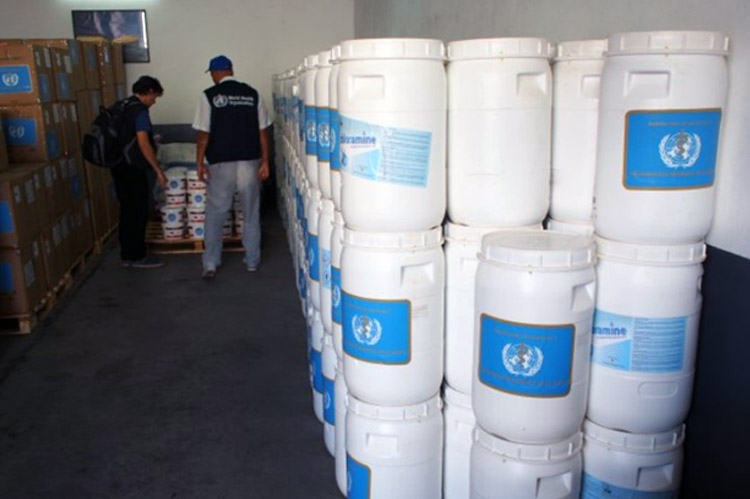
 WHO shipment of antibiotics to respond to the 2017 plague outbreak in Madagascar (Photo: WHO)
Plague is a zoonotic disease caused by enterobacteria Yersinia pestis. It is primarily carried by rodents and spreads to humans and other animals via fleas. Direct person-to-person transmission does not occur except in the case of pneumonic plague, when respiratory droplets may transfer the infection from the patient to others in close contact.
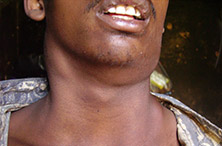
Infected persons usually start with “flu-like” symptoms after an incubation period of 3 to 7 days. Patients typically experience the sudden onset of fever, chills, head and body aches and weakness, vomiting and nausea. Clinical plague infection manifests itself in three forms depending on the route of infection: bubonic, septicaemic and pneumonic.
Plague continues to be a threat because of vast areas of persistent wild rodent infection, who are occasionally in contact with domestic rats. Wild rodent plague exist in scattered areas in the Americas, Asia and Africa including countries bordering the Mediterranean Sea. From 2010 to 2015 there were 3248 cases of plague reported worldwide, including 584 deaths. In the Eastern Mediterranean Region, plague has been reported sporadically in Iran (Islamic Republic of), Iraq, Libya and Pakistan over the past decades.
Antibiotic treatment is effective against plague bacteria, so early diagnosis and early treatment can save lives. Preventive measures include informing people when zoonotic plague is present in their environment and advising them to take precautions against flea bites, and not to handle animal carcasses. WHO aims to prevent plague outbreaks by supporting at-risk countries to build and maintain appropriate surveillance, improve laboratory detection capacity, risk communication and standardize case management.